

What if a well-planned trip felt less like a schedule to manage and more like a journey that unfolds at the right pace? With stays, transport, activities, and timing to coordinate, decisions can feel disconnected, and logistics can crowd out the reason you wanted to travel. Thoughtful end-to-end trip planning connects those pieces to your purpose, so practical details support the experience rather than compete with it.
You don’t need to fill every day to make a trip meaningful. A quiet morning on a trail, time to linger over lunch in a village, and space to follow an unexpected invitation can all belong in one considered itinerary. The key is deciding what to plan firmly and where to leave room.
In this guide, you’ll learn what the planning process can cover, how to shape a rhythm that feels personal rather than overfilled, and what to bring into a planning conversation. A few clear starting points, from your hopes for the journey to your pace, preferences, and practical needs, can turn scattered decisions into one coherent trip.
Key Takeaways
- Connect your priorities with an itinerary and the practical details that make it work.
- Use your dates, interests, energy, and flexibility to shape a balanced journey.
- Choose between DIY planning and tailored support by weighing your trip’s complexity and your appetite for research.
- Research seasonal conditions, plan around busier times, and pack for your activities.
- For nature-based travel, check official park, trail, and weather information and prepare to travel responsibly.
What End-to-End Trip Planning Means for the Journey You Want
End-to-end trip planning connects a trip’s purpose, itinerary, logistics, and preparation so each decision supports a coherent journey. It looks beyond a collection of reservations or attractions to consider how destinations, stays, transport, activities, and transitions fit together, while leaving room for rest and discovery.
A reservation list tells you where to be. A well-shaped plan also considers how it will feel to get there, what the day asks of you, and whether there’s space to pause. Pair a cool, quiet morning trail walk with an unhurried afternoon in a nearby village, for example, instead of squeezing in another stop. If the weather shifts or a local conversation leads somewhere unexpected, breathing room gives the day a chance to adapt.
What does a complete trip plan bring together?
Your preferences are the starting point: the landscapes you’re drawn to, the kind of accommodation that helps you rest, how you want to move between places, and the experiences that matter most. These choices influence one another. A remote stay may invite slower days; a guided outdoor activity may call for an easy evening afterward.
Transitions matter, too. Travel time, check-in, and the energy an activity takes all influence the day’s rhythm. Coordinating these details can prevent an itinerary that looks manageable on paper but feels hurried in practice. Anchor the important logistics without assigning every hour. Leave open space for a long lunch, a change in weather, or simply sitting still.
Why begin with purpose instead of a destination checklist?
Before adding places, ask what you hope to feel, learn, restore, or experience. Perhaps you want quiet time outdoors, a hands-on opportunity to develop a skill, or a closer connection with local food and culture. Those intentions help separate meaningful priorities from extra stops added just to make the itinerary look full.
A travel itinerary can organize destinations, activities, and arrangements. The deeper work is deciding how those pieces serve the experience you want. If restoration is the priority, for example, a slower stay with time to walk, rest, and eat locally may feel more rewarding than moving accommodation every night.
That’s the thinking behind custom itinerary design: shape the journey around your reasons for going, then let each practical choice reinforce them.
End-to-End Planning: From Intention to Itinerary
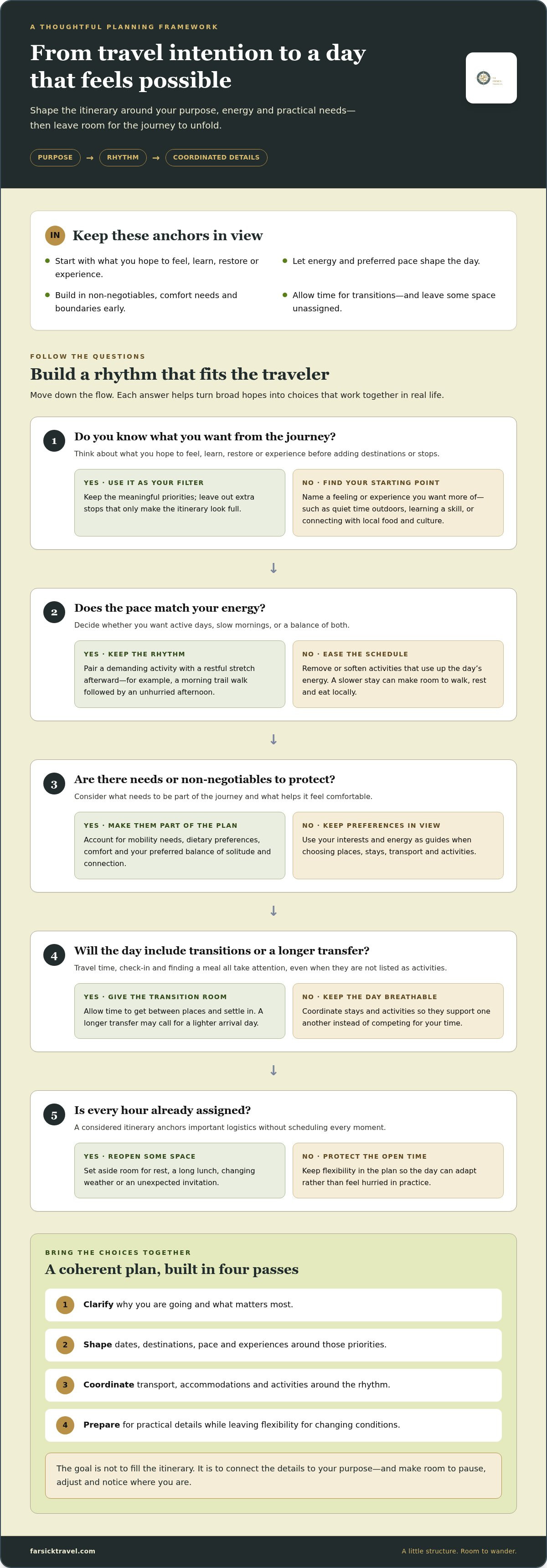
A personal brief becomes a workable itinerary when priorities are translated into a sequence of places, stays, activities, and transitions that suit the traveler. That’s the heart of end-to-end trip planning: moving from “what do I want this journey to be?” to a coordinated plan that feels possible in real life.
Shape the process in stages. Clarify why you’re going and what matters most. Consider dates, destinations, pace, and the experiences that fit. Then coordinate transport, accommodations, and activities around that rhythm. Finally, prepare for practical details, including what to pack and where to leave flexibility for changing conditions.
Start with the traveler’s priorities, constraints, and pace
Before comparing places or building a day-by-day schedule, jot down a few honest answers:
- Purpose: What would you like to feel, learn, restore, or experience?
- Pace: Do you want active days, slow mornings, or a balance of both?
- Non-negotiables: What needs to be part of the journey, and what would make it feel comfortable?
- Boundaries: Are there mobility needs, dietary preferences, or a preferred balance of solitude and connection to consider?
- What to leave out: Which activities or demands don’t belong in this trip?
That last question can be clarifying. A traveler who wants quiet time outdoors may not want a packed schedule of guided activities. Someone planning a skill-focused escape may prefer fewer location changes, leaving time to learn, practice, and absorb the place. Naming your limits early helps the itinerary protect your energy rather than use it all up.
Coordinate the details around the experience
Dates and seasonal conditions help determine what’s practical; interests and energy shape what belongs in each day. A morning activity might pair well with a restful afternoon, while a longer transfer may call for a lighter schedule on arrival. Allow time for transitions, too. Getting between places, settling in, and finding a meal can take more attention than a calendar suggests.
Accommodations, transport, and local activities should work together rather than compete for your time. For a restorative journey, that could mean fewer moves and open stretches between planned experiences. Explore restorative travel planning for ways to let rest and wellbeing guide the trip’s shape.
For wider context on the travel industry, the U.S. Travel Association shares information on its role and the issues shaping travel. The Farsick Travel Co. brings individual priorities together with the details of a custom journey.
Custom Planning or DIY: Which Approach Fits Your Trip?
There’s no single right way to plan a journey. The best fit depends on how much research you enjoy, how many details need to work together, and how much support you want. A simple trip with one base and a few flexible days may be satisfying to organize yourself. A journey with layered interests, several transitions, or nature-based activities may benefit from having its moving parts coordinated.
When might planning independently feel right?
DIY planning can suit travelers who enjoy comparing options and have few connections to manage. If your plans center on one comfortable stay and a small number of activities, you may prefer choosing each detail at your own pace. Keep essential reservations, addresses, transport details, and contact information in one shared itinerary so everyone can find them easily.
Leave some days open, too. A plan doesn’t need an activity in every time slot. Space to rest or follow a local recommendation can make an independently planned trip feel relaxed rather than like a checklist.
When can a custom travel planner help?
Custom planning can help when a trip combines different priorities, such as time outdoors, restorative practices, local experiences, or several changes of accommodation. Each decision affects the next: where you stay can shape your transport, while an activity’s timing and energy can influence what makes sense afterward. Coordinating these pieces can reduce the work of managing separate choices and help the journey feel cohesive.
Compare what each approach asks of you:
| Consideration | DIY planning | Custom planning |
|---|---|---|
| Time | You handle the research and organization. | Planning support helps bring the details together. |
| Complexity | Often a comfortable fit for a few straightforward arrangements. | Useful when activities, stays, and transitions are interdependent. |
| Personalization | You make each choice based on your preferences. | The itinerary is shaped around your priorities and preferred pace. |
| Coordination | You track the separate arrangements yourself. | Transport, accommodations, and local activities are coordinated as parts of the journey. |
Neither approach promises a perfect trip; each offers a different balance of control, research, and support. The World Travel & Tourism Council considers travel’s economic, environmental, and social impacts, a reminder that thoughtful planning can consider not only what you experience, but how you move through a place. The Farsick Travel Co. offers custom travel planning to shape a personal itinerary and coordinate its details.
Practical Details That Make an End-to-End Itinerary Work
Practical details can protect the feeling of a trip. Seasonal research, realistic timing, and adaptable plans help an itinerary stay useful without making each day feel fixed. On a trail, an early start may bring cool air, soft light, and birdsong before the day warms. A sheltered path can feel noticeably cooler than an exposed stretch, so conditions along the route matter as much as the forecast.
Build in seasonal nuance, weather, and breathing room
Before a nature-based activity, check current conditions and guidance from the relevant official park or trail authority, along with a reliable weather source. Review updates again close to the day itself. Seasonal daylight, trail conditions, and local weather patterns can affect what feels comfortable, so plan demanding walks for cooler, suitable times when conditions support them.
A flexible itinerary leaves room to adjust an outdoor activity when weather changes, a trail update alters the plan, or your energy calls for a slower day. Keep an alternative that fits the same spirit, such as swapping a long walk for a shorter route or an unhurried afternoon nearby. Flexibility isn’t a failure to plan; it’s part of planning thoughtfully.
To avoid the busiest periods, consider whether an early start or a quieter nearby experience would better suit your day. Leave enough space between activities to travel, eat, and pause. A schedule that works on paper should still feel humane once you’re moving through it.
Pack and move with care
Choose what you pack around the season and planned activities, rather than preparing for every possibility. Adaptable layers can help when cool morning air gives way to warmer conditions, while comfortable, activity-appropriate footwear matters on walking days. Bring water and the essentials for your plans, and check official guidance for any location-specific preparation before setting out.
- Keep layers easy to add or remove as conditions shift.
- Choose footwear suited to the terrain and length of your planned activity.
- Carry water and activity-specific essentials, guided by current local advice.
- Leave extra room in the day for breaks or a change of plan.
In natural spaces, follow Leave No Trace principles: stay on established paths where appropriate, pack out what you bring, and observe wildlife without disturbing it. Around local communities, choose quieter experiences, listen, and approach interactions with respect. The Farsick Travel Co. can shape your route and practical details around a more mindful pace.
Plan Your Custom Journey with The Farsick Travel Co.
Once you know what you want your trip to make room for, the next step is turning those priorities into a journey that works in practice. The Farsick Travel Co. offers custom travel planning shaped around your interests, preferences, and pace, with coordination of transport, accommodations, and local activities. The aim is not to fill every day. It’s to make the pieces feel connected, with enough breathing room to experience each place with care.
This approach can suit a wilderness adventure, a solo escape, or a milestone worth marking. It can also shape a retreat, a skillcation built around learning, a bespoke honeymoon, or an intentional group or bachelorette trip. Each journey begins with the people taking it and what they hope to carry home.
What a personalized planning conversation can explore
Start with the details that will give the itinerary its character. What draws you to this journey? Which experiences feel essential, and what pace would let you enjoy them? Sharing practical considerations, comfort preferences, and the balance you want between activity, rest, and connection helps guide the planning.
Your priorities might point toward quiet time outdoors, learning through a hands-on experience, restorative moments, or meaningful encounters with local culture. For nature-based travel, that can also mean considering how to move through landscapes respectfully and leave them as you found them. Use the custom travel planning form to share the starting details of your journey.
Take the next step toward a more cohesive trip
Thoughtful end-to-end trip planning brings your purpose and practical arrangements into the same conversation. The Farsick Travel Co. connects transport, stays, and local activities while shaping a rhythm that leaves room for rest, nature, and discovery. The result is a plan built around your priorities, not a template of stops to complete.
Explore curated hiking and yoga retreats, solo travel experiences, skillcations, bespoke honeymoons, or intentional group and bachelorette trips. Each offers a different way to travel with focus and connection. A journey can begin with a clear idea or just a feeling you want to follow.
Shape a Journey That Feels Like Yours
Thoughtful end-to-end trip planning connects what you hope to experience with the details that make a journey work. Begin with your purpose and preferred pace, then shape an itinerary that balances meaningful plans with room to rest, adapt, and discover. The right approach may be a simple itinerary you create yourself or personalized support for a trip with more moving parts.
The Farsick Travel Co. creates itineraries around individual preferences and coordinates transport, accommodations, and activities as parts of one considered journey. That care can support wilderness adventures, solo travel, retreats, skillcations, and milestone trips, keeping the focus on connection rather than checking off stops.
Your next trip doesn’t need to follow someone else’s template. Start with what matters to you, and let the journey take shape from there.
Frequently Asked Questions
What does end-to-end trip planning include?
End-to-end trip planning connects your reason for traveling with the itinerary, practical arrangements, and preparation. It can include clarifying priorities and pace, shaping destinations and activities, coordinating transport and accommodations, and considering what you’ll need before departure. The goal is a coherent journey, not simply a list of reservations. A thoughtful plan also leaves room to rest, adapt to conditions, and notice what unfolds along the way.
Is it worth using a travel planner instead of planning a trip myself?
It may be worthwhile if you have limited time for research, several connected logistics, or preferences that call for a particularly tailored itinerary. Planning independently can suit a simpler trip or someone who enjoys comparing options and organizing details. A custom planner can bring the moving parts together, but no approach is right for everyone. Consider the trip’s complexity, the time you want to spend planning, and how much coordination support would feel useful.
How does a custom trip-planning process usually begin?
A custom planning process usually begins with your purpose and priorities, rather than a packed list of destinations. Share what you hope to feel, learn, or experience, along with your preferred pace, dates, interests, and practical considerations such as comfort or mobility needs. It can also help to name what you’d like to leave out. These details give The Farsick Travel Co. a foundation for shaping an itinerary around your preferences.
Can a travel planner coordinate transport, accommodations, and activities?
Yes. The Farsick Travel Co. provides high-touch coordination of transport, accommodations, and local activities as part of custom travel planning. Bringing these elements together helps the itinerary account for how one choice affects another, such as the time needed to move between stays or the energy a planned activity may require. Coordination supports a more cohesive journey, while the itinerary can still leave space for unplanned moments.
How do you keep a planned itinerary from feeling too rigid?
Give the itinerary a few useful anchors, then leave open space around them. Avoid scheduling every hour, especially after a demanding activity or a longer transfer. Keep a flexible alternative for outdoor plans, and let the day’s pace respond to weather, energy, and local conditions. A plan should make essential details easier to manage, not turn each moment into an obligation. Breathing room is part of a well-designed itinerary.
What should I consider when planning a nature-based trip?
Check current information from official park or trail sources and a reliable weather source before outdoor activities, then review updates close to the day. Choose activities and packing for the season and conditions, including suitable footwear, adaptable layers, and water. Follow Leave No Trace principles, stay mindful around wildlife, and respect local guidance. Favor quieter experiences and considerate interactions over rushing from one crowded attraction to another.
How far in advance should I plan a custom trip?
There isn’t one ideal lead time for every trip. Timing depends on the journey’s complexity, your date flexibility, seasonal considerations, and how much research and coordination you want to do. Starting once you have a general purpose and date range gives you time to refine priorities and shape the itinerary thoughtfully. For a trip with several connected elements, beginning earlier can make the planning process feel more considered and less rushed.
Schedule a travel planning conversation with The Farsick Travel Co.
Article by
Ursula Akin
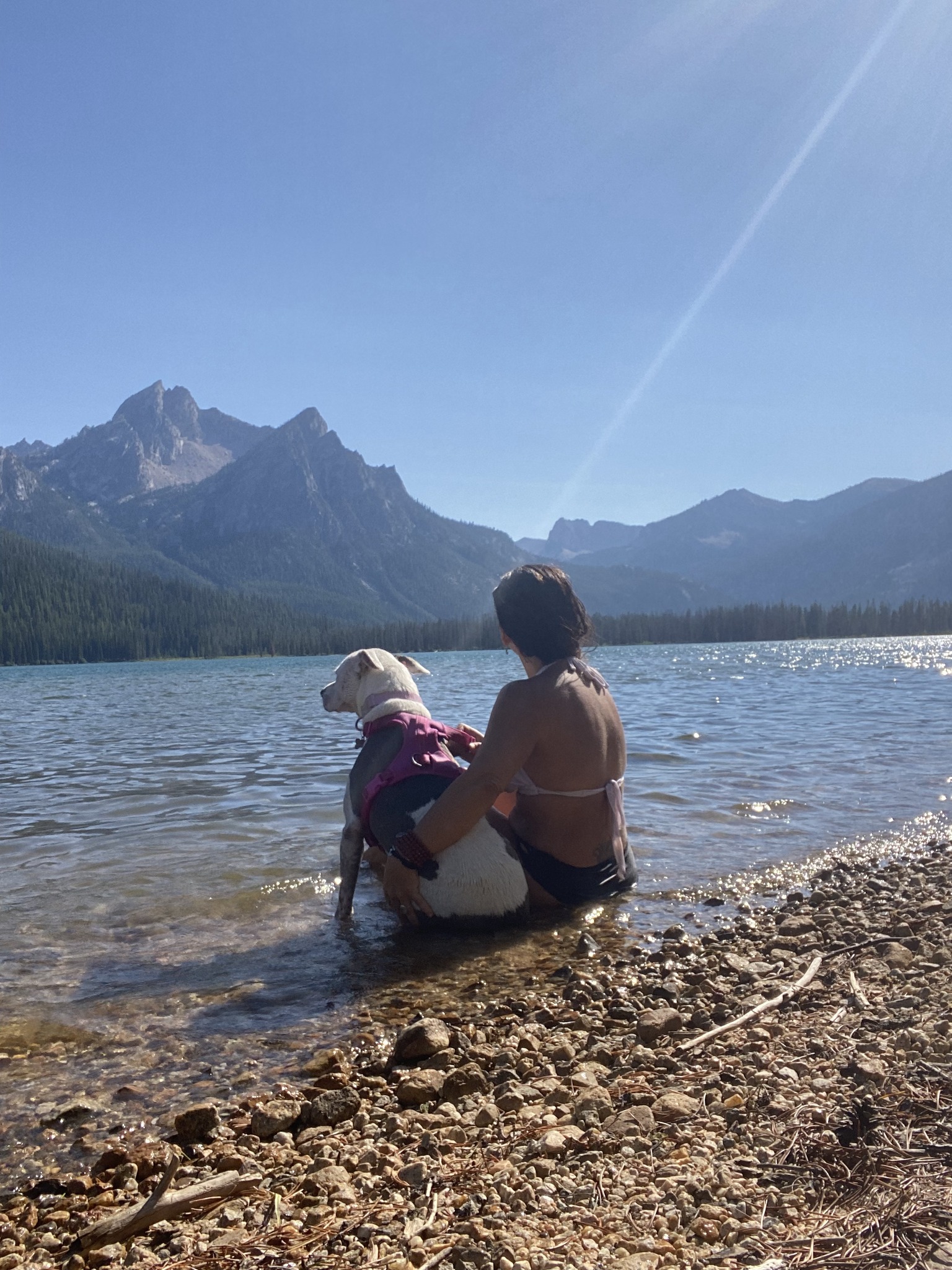
Ursula Akin created The Farsick Travel Co. to help travelers step away from rigid, multi-stop checklists and step into intentional, deeply rooted experiences. Specializing in custom travel design, solo escapes, and curated retreats, Ursula combines local insights with leave-no-trace ethics to turn wanderlust into seamless, unforgettable journeys.
Disclaimer
The information provided on this website and within our articles is for general informational and inspirational purposes only. While we make every effort to ensure accuracy regarding travel logistics, recommendations, and local details, conditions can change rapidly. Readers are encouraged to verify current travel requirements, weather, safety advisories, and local regulations independently. The Farsick Travel Co. is a travel design and curation service and is not responsible for any actions, changes, or incidents occurring during independent travel.


