

What if planning your next getaway gave you more time back before you even left? For busy professionals, the destination is only part of the decision. Lodging, activities, transport, and timing can turn a few days off into another project. And handing over the details can raise a different worry: will the itinerary feel generic or packed from morning to night? A thoughtful travel planning service for busy professionals can ease that tension while keeping the journey personal.
It makes sense to want less screen time spent comparing options and more confidence that your trip will feel like yours. Personalized planning brings practical details together around your interests, energy, and reasons for going. Instead of filling every hour, it gives the trip a shape that leaves space to rest, wander, and connect.
Here, you’ll see how custom travel planning can return time to your week while shaping a clear, well-paced itinerary. From a quiet solo escape to a nature-led retreat, the aim is not to do more. It’s to make your time away count.
Key Takeaways
- A travel planning service for busy professionals can reduce research and coordination while keeping your itinerary personal and thoughtfully paced.
- Start with the purpose of your trip, then shape preferences, route, practical details, and pace around what matters most.
- Compare DIY research, reusable templates, and bespoke planning by effort, personalization, coordination, and flexibility.
- Prepare for a planning conversation by noting schedule limits, preferred pace, budget comfort, interests, and accessibility or dietary needs.
- Custom coordination can support an intentional escape, from a solo journey to a nature-based retreat or skill-focused trip.
Why Busy Professionals Consider a Travel Planning Service
A few days away can take weeks of spare moments to organize. One evening goes to comparing places to stay; another disappears into maps, opening hours, transport connections, and activity reviews. For busy professionals, the challenge isn’t a lack of ideas. It’s finding the time and attention to turn them into a trip that fits real priorities, available days, and the energy they hope to have while away.
A travel planning service for busy professionals brings personalized itinerary design and coordination together around those priorities. It can take research and follow-through off your plate without scheduling every hour. The aim is a considered framework, not a timetable you have to obey.
What does a travel planning service handle?
Planning begins with the shape of the trip: its purpose, your interests, how much time you have, and the pace that feels right. From there, transport, accommodations, and locally grounded activities are coordinated into a connected itinerary. The result is personal rather than a fixed, mass-market package. A nature-led escape might make room for a quiet trail morning, while a skillcation could center on time to learn and practice.
A tour operator is generally associated with combining travel components into a package. Personalized planning also brings trip elements together, but shapes the itinerary around the individual traveler’s preferences rather than a standard sequence of stops. You retain room to pause, adjust, or leave a stretch of the day open.
Why does travel planning feel difficult alongside work?
The work accumulates in small decisions: choosing a destination, comparing stays, estimating transfer time, matching activities to dates, and keeping all the details aligned. Research scattered across tabs and notes can make a getaway feel like another assignment. It also leaves less room for anticipation, one of the pleasures of having a trip ahead.
Picture the difference between racing through a checklist and giving a day its own breathing room. Instead of stacking several attractions back to back, you might start with an early walk, then leave the afternoon open for a long lunch, a local shop, or rest. In a natural setting, a slower pace can also make it easier to stay on marked paths, give wildlife room, and leave the place undisturbed.
Personalized planning reduces decision load while preserving your choice about how to spend each day. That balance means less time coordinating before you leave and enough flexibility to let the journey unfold once you arrive.
How Bespoke Travel Planning Turns Limited Free Time into a Personal Itinerary
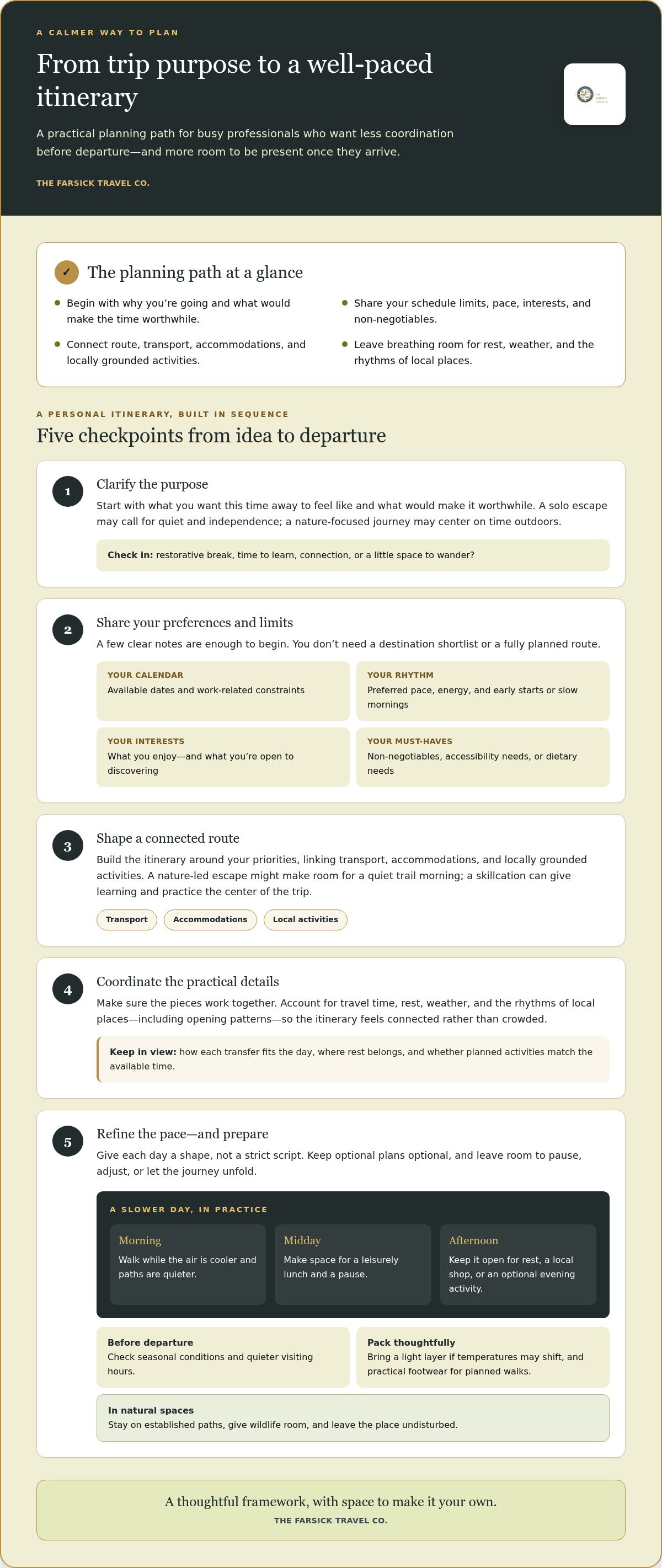
A personal itinerary can take shape through a clear sequence: clarify the trip’s purpose, understand your preferences, shape a route, coordinate the practical details, then refine the pace. That process gives each decision a reason. A solo escape might prioritize quiet and independence; a nature-focused journey might make room for time outdoors without crowding the day with stops.
You don’t need to arrive with a shortlist of destinations or a spreadsheet of options. A focused conversation can surface what matters through a few useful questions: What do you want this time away to feel like? What would make the trip worthwhile? Which parts of travel do you want handled, and where would you like choice? The U.S. Bureau of Labor Statistics’ overview of what travel agents do provides context for the research and coordination involved in travel planning.
A bespoke itinerary is shaped around your priorities and pace, with enough structure to guide the journey and enough space to make it your own. That’s the value of a travel planning service for busy professionals: your limited planning time can go toward describing what you want, rather than researching every possibility.
What should a busy traveler share at the start?
Keep your starting notes simple. Share your available dates, work-related constraints, preferred pace, and interests. Name your non-negotiables, then mention what you’re open to discovering. Be honest about your energy, too: do you want early starts or slow mornings, solitude or company, a restorative break or a trip built around learning? A few clear preferences are more useful than a fully planned route.
How does an itinerary balance structure and breathing room?
A considered day accounts for travel time, rest, weather, and the rhythms of local places, including opening patterns. For example, a morning walk can make the most of cooler air and quieter paths, followed by a leisurely lunch and an open afternoon. An evening activity can remain optional rather than becoming another obligation.
Before departure, check seasonal conditions and quieter visiting hours for the places on your route. Pack for the expected weather, including a light layer if temperatures may shift, and choose practical footwear for planned walks. In natural spaces, stay on established paths and give wildlife room. These steps help ground the itinerary without turning it into a rigid schedule. The Farsick Travel Co. creates custom itineraries around your priorities and coordinates the details that connect each part of the journey.
Custom Travel Planning vs. DIY Research and Ready-Made Itineraries
There isn’t one best way to plan a trip. The right fit depends on how much time you want to spend researching, how personal the itinerary needs to feel, and how many details must work together. Use this comparison to decide whether you’d value independence, a starting framework, or tailored coordination.
| Approach | Effort | Personalization | Coordination and flexibility |
|---|---|---|---|
| DIY research | You research, compare, and organize each detail. | Shaped by your own interests and choices. | You coordinate the pieces and can change plans directly. |
| Ready-made itinerary | A prepared framework can reduce the need to start from scratch. | May offer a useful base, with less room for individual preferences. | How much you can adapt depends on the itinerary. |
| Bespoke planning | A planner handles research and coordination in collaboration with you. | Built around your priorities, interests, and preferred pace. | Connected details provide structure while leaving room for choice. |
When is planning a trip yourself a good fit?
If you have time, enjoy comparing options, and have a straightforward plan, independent research may suit you well. You can choose each element at your own pace and shape a day around a locally owned café, a quiet walking route, or an unhurried afternoon. The trade-off is the research and coordination effort you take on yourself, not a guaranteed financial saving.
A template can help if you want a starting point but prefer to make the final choices. Treat it as inspiration, not an instruction: leave space between activities, check practical details for your dates, and choose respectful ways to experience local places.
When can bespoke planning make the difference?
Tailored help can be especially useful when a trip brings together several preferences or moving parts: nature-based activities, different energy levels, meaningful downtime, or logistics that need to align. Instead of holding every detail in your head, you can work from a coordinated plan and focus your attention on the decisions that matter most to you.
That approach can suit a solo journey with room for independence, a retreat shaped around restoration, or a skill-focused trip where learning is central. A thoughtfully planned itinerary should clarify your options, not dictate each moment. The Farsick Travel Co. designs custom itineraries and coordinates their practical details around your interests and pace.
How to Prepare for a Travel Planner When Your Calendar Is Full
You don’t need to plan the trip before discussing it. A short, honest brief gives a planner a useful starting point and keeps your preparation focused on what only you can know: your schedule, preferences, and what you want time away to feel like. For a travel planning service for busy professionals, those essentials help shape a personal itinerary without asking you to research every option first.
What belongs in a concise travel-planning brief?
Set aside a few minutes to jot down these five essentials. Fragments are fine; you’re sharing direction, not writing the itinerary.
- Purpose: Note what you want from the trip, such as rest, time outdoors, connection, or learning.
- Schedule: Share available dates and any work-related limits that affect departure, arrival, or time away.
- Preferred rhythm: Describe whether you enjoy early starts, leisurely mornings, active days, or open afternoons.
- Interests and boundaries: Name the experiences that matter most, what you’re curious about, and what you’d rather avoid, such as constant transfers or tightly timed days.
- Practical needs: Share your budget comfort, accessibility requirements, and dietary needs.
That’s enough to begin. A planner can use these priorities to develop custom travel planning around your preferences, rather than asking you to arrive with a destination and every detail already decided.
How can seasonal planning prevent avoidable friction?
Once a possible route takes shape, look beyond the calendar dates. Check destination-specific weather, microclimates, daylight, and seasonal closures before setting daily plans. Conditions can vary between nearby areas, so information for the exact places and activities on your route is more useful than a broad forecast.
Use reliable local or destination sources to check visiting hours and crowd patterns. If a well-used trail is quieter early in the day, an early walk followed by a slower afternoon may suit both the setting and your energy. Don’t assume every place has the same quiet hours or seasonal rhythm; verify the details for your itinerary.
Let those findings guide what you bring. Match footwear to the planned terrain, layers to expected conditions, and activity-specific items to what your days involve. For time in nature, stay on established paths, respect wildlife, and leave the place undisturbed. Thoughtful preparation can prevent small practical surprises without filling your schedule from morning to night.
Custom travel planning with The Farsick Travel Co. brings your priorities, logistics, and preferred pace together in one considered itinerary.
A More Intentional Travel Planning Service for Busy Professionals
The Farsick Travel Co. is a boutique travel consultancy for people who want their time away to feel personal, considered, and well paced. Custom planning brings your priorities into the design of the journey, while high-touch coordination connects transport, accommodations, and local activities. The goal isn’t to promise a perfect trip. It’s to build a coherent plan around what matters to you, with room for rest, discovery, and the changing energy of a real day.
That approach makes a travel planning service for busy professionals about more than getting logistics off your plate. It gives the trip a meaningful shape, whether you’re seeking a closer connection with nature, time to yourself, or the chance to learn something new.
What does high-touch planning feel like in practice?
It starts with listening to your priorities, then translating them into coordinated details. A nature-led itinerary, for instance, might pair a morning on the trail with an easy afternoon close to your accommodation, rather than sending you across the area to fit in one more stop. Transport, places to stay, and local activities are considered together so the plan has a natural rhythm.
That structure is a guide, not a command. A slower morning or a change in energy shouldn’t make the whole journey feel out of step. The Farsick Travel Co.’s custom travel planning shapes a personal itinerary around what you value, with practical details brought together and space to adjust the pace.
Which kind of intentional journey fits your next season?
Different journeys make space for different kinds of connection. A nature-based adventure can center on trails and time outdoors, with care for local places, established paths, and wildlife. A solo travel experience can give you greater room to follow your own curiosity. A wellness retreat may put restoration at the heart of the trip, while a skillcation gives you a chance to learn through travel. Curated group journeys, including bachelorette trips, can bring people together around shared interests without making every moment feel programmed.
Ask yourself what you want more of on your next break: quiet, movement, learning, or meaningful time with others. That answer can help guide the journey’s pace and focus. The Farsick Travel Co. plans custom journeys, signature hiking and yoga retreats, solo travel experiences, skillcations, bespoke honeymoons, and intentional group and bachelorette trips, with coordination shaped around each trip’s purpose.
Choose the kind of journey that fits what you need from time away, then build its rhythm around that purpose.
Make Your Next Getaway Feel More Like You
Travel should give you space to step out of your usual rhythm, not add another project to your calendar. A travel planning service for busy professionals can reduce the time spent researching and coordinating while keeping your preferences at the heart of the journey.
The most useful plan isn’t necessarily the fullest one. It’s a personal itinerary shaped around what matters to you, with high-touch coordination of transport, accommodations, and local activities. Whether you choose to plan independently, start from a template, or work with a planner, the goal remains the same: a trip with enough structure to feel clear and enough breathing room to rest, explore, and connect.
Your next escape can begin with a few simple thoughts about what you want more of, and what you’d like less of. The Farsick Travel Co. can shape those priorities into a considered journey, from a solo retreat to a nature-based adventure or skillcation.
Make room for a getaway that moves at your pace and gives your time away a purpose of its own.
Frequently Asked Questions
Is a travel planning service worth it for a busy professional?
It can be worthwhile if researching and coordinating a trip is taking time you’d rather spend elsewhere. A travel planning service for busy professionals can shape a custom itinerary around your interests, available time, and preferred pace, while coordinating transport, accommodations, and activities. It’s not the only way to plan: a simple trip may be easy to organize yourself. Consider how much you value personal research time, tailored options, and practical coordination.
How does a travel planning service work from the first conversation to the itinerary?
The process starts with your purpose, dates, preferences, constraints, and the kind of pace you enjoy. You don’t need to arrive with every destination or activity researched. Those priorities guide itinerary design, followed by coordination of relevant transport, accommodations, and local activities. The resulting plan gives the journey structure while reflecting your interests. Share feedback on what feels right, what doesn’t, and where you’d like more flexibility.
Can a custom travel itinerary leave room for spontaneity?
Yes. A custom itinerary can provide a clear framework without assigning an activity to every hour. It might account for key transport and accommodation details, then leave an afternoon open for rest, wandering, or following a local recommendation. If flexibility matters to you, say so during planning and identify which experiences are priorities and which can remain optional. That way, the plan can guide your trip without dictating every moment.
What should I prepare before working with a travel planner?
Bring a brief, not a finished itinerary. Note your available dates, work-related schedule limits, trip purpose, preferred pace, and the experiences you care about most. Include what you’d like less of, such as frequent transfers or tightly timed days. It’s also useful to share budget comfort, accessibility requirements, dietary needs, and whether you prefer solitude or company. A few honest preferences help the planner understand what would make the trip feel personal.
How much time can a travel planning service save?
There isn’t a single time estimate that applies to every trip. The hours saved depend on how much research and coordination you would otherwise do, and on the trip’s complexity. A planner can take on itinerary research and coordinate transport, accommodations, and activities, reducing the decisions you manage alone. To make the time benefit meaningful, share your priorities clearly and focus your own attention on choices where your preference matters most.
Can a travel planner create a slower-paced trip with fewer stops?
Yes. Tell the planner that you prefer fewer transitions, open time, and a gentler daily rhythm. A nature-focused day, for example, could center on a morning walk and leave the afternoon free for rest or an unhurried local meal, rather than stringing together multiple stops. When visiting natural areas, a thoughtful plan can also encourage established routes and respectful distance from wildlife. Your itinerary can be shaped around depth of experience rather than volume.
What kinds of trips can a custom travel planner help shape?
A custom planner can help shape nature-based adventures, slow-travel escapes, solo journeys, wellness retreats, and skillcations. The Farsick Travel Co. also plans signature hiking and yoga retreats, proposal and honeymoon journeys, bachelorette parties, and curated small-group experiences. Each itinerary is tailored to individual preferences, with coordination of transport, accommodations, and local activities. Start by identifying the trip’s purpose, whether you’re seeking time outdoors, restoration, learning, or a shared experience.
Article by
Ursula Akin
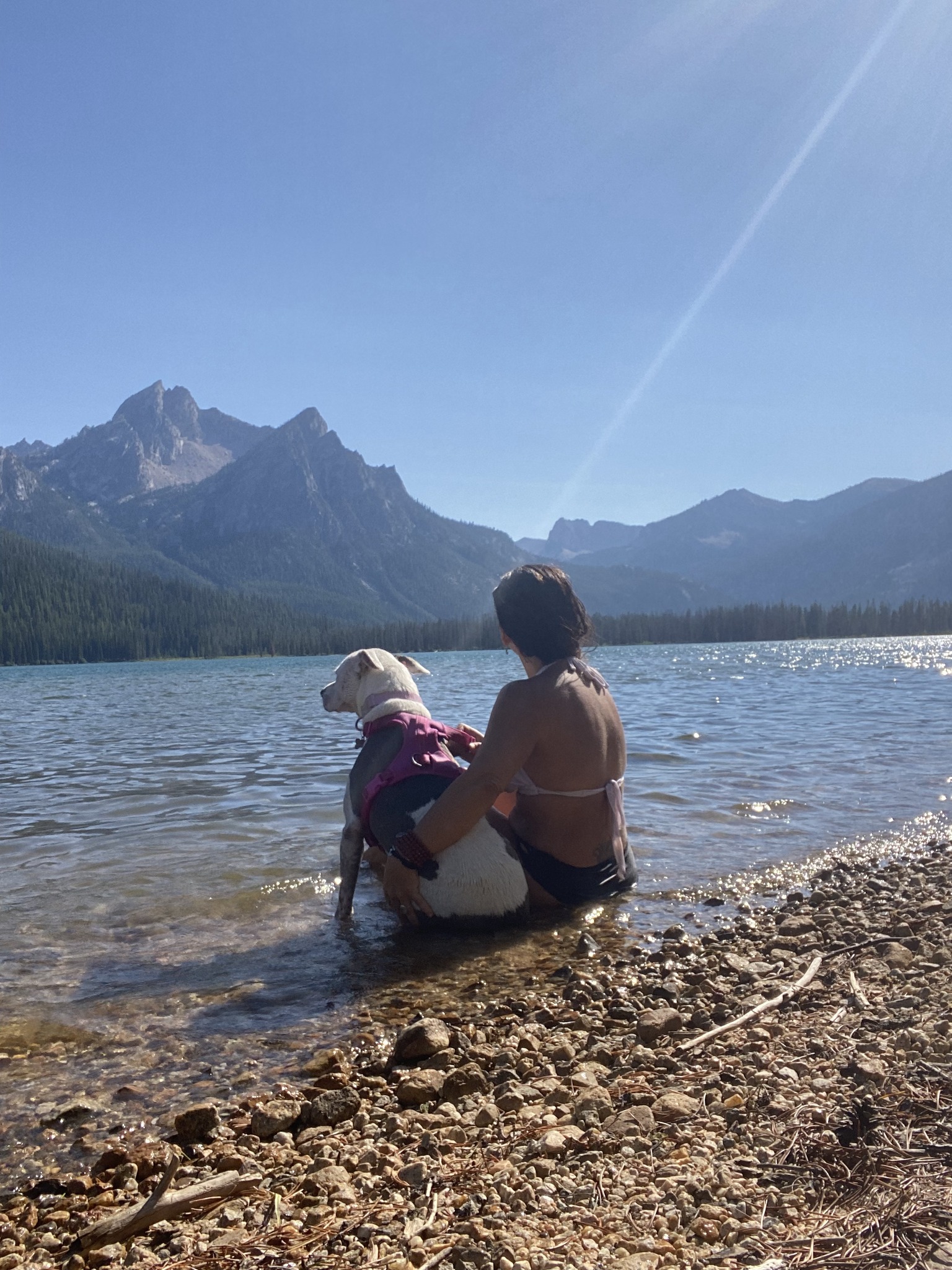
Ursula Akin created The Farsick Travel Co. to help travelers step away from rigid, multi-stop checklists and step into intentional, deeply rooted experiences. Specializing in custom travel design, solo escapes, and curated retreats, Ursula combines local insights with leave-no-trace ethics to turn wanderlust into seamless, unforgettable journeys.
Disclaimer
The information provided on this website and within our articles is for general informational and inspirational purposes only. While we make every effort to ensure accuracy regarding travel logistics, recommendations, and local details, conditions can change rapidly. Readers are encouraged to verify current travel requirements, weather, safety advisories, and local regulations independently. The Farsick Travel Co. is a travel design and curation service and is not responsible for any actions, changes, or incidents occurring during independent travel.


