
What if the best part of trip planning isn’t choosing where to go, but deciding how you want the journey to feel? If you’ve wondered what does a travel consultant do beyond arranging reservations, the answer begins with listening. A thoughtful consultant helps connect your priorities, pace, and practical needs so the trip feels personal rather than pieced together.
It’s easy to feel overwhelmed when each choice affects the next: where to stay, how to get around, and how much to fit into each day. Custom planning can bring those decisions into a coherent rhythm, whether you want a quiet morning on a trail followed by an unhurried afternoon, or a solo escape shaped around rest and discovery.
This guide explains what to expect from the first conversation through trip preparation, what details to share, which questions to ask, and which decisions typically remain yours. You’ll also learn when personalized support may make a journey more considered, connected, and manageable.
Key Takeaways
- Learn what does a travel consultant do for a traveler, and how that differs from the profession’s job-title meaning.
- See how a consultant can move from understanding your priorities to shaping an itinerary and coordinating details.
- Know what to clarify about planning support, your own responsibilities, and which components are included.
- Assess whether your trip’s complexity, available planning time, or preferred pace makes tailored support worth considering.
- Explore how The Farsick Travel Co. brings intention and a personal sense of rhythm to custom travel planning and curated experiences.
What Does a Travel Consultant Do for a Traveler?
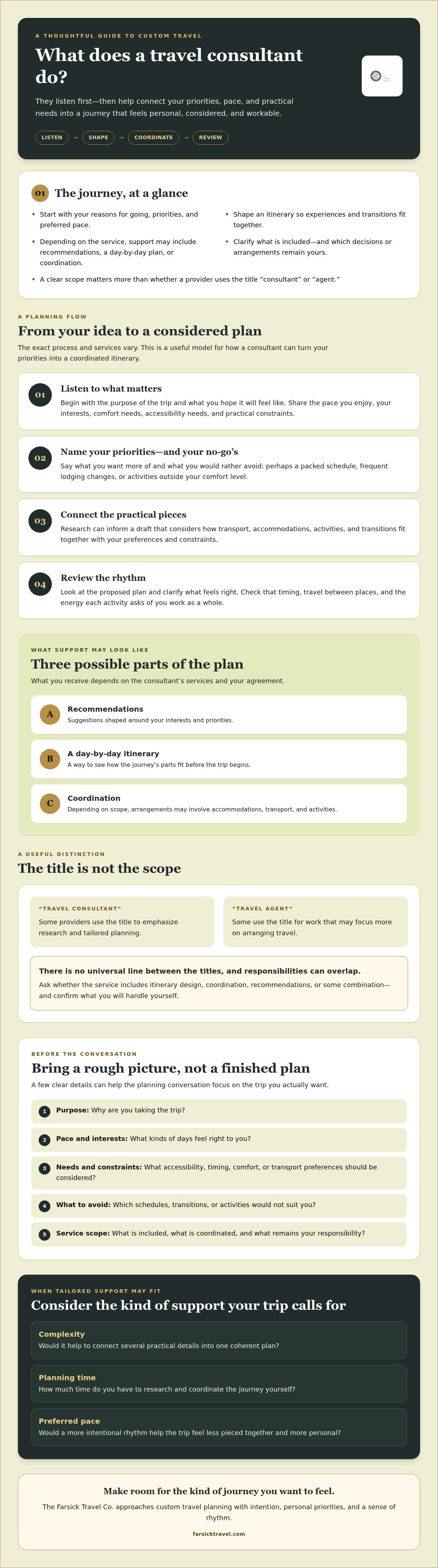
A travel consultant shapes trip decisions and coordinates details around a traveler’s needs, interests, and preferred pace. Rather than starting with a stack of reservations, they consider how each choice fits the wider journey: whether travel time leaves room to settle in, an activity suits your energy, and the days feel connected instead of crammed.
A travel consultant turns a traveler’s priorities into a considered plan, bringing the pieces of a journey into conversation with one another. That’s the traveler-facing meaning of the role. The same phrase can also describe a job title, where responsibilities may include advising clients and coordinating arrangements as part of someone’s work. Context matters.
What is the difference between a travel consultant and a travel agent?
There’s no universal line separating the titles. Some providers use “travel consultant” to emphasize research and tailored planning; others use “travel agent” for work that may focus more on arranging travel. In practice, responsibilities can overlap. A provider’s title alone won’t tell you whether they design an itinerary, coordinate accommodations and activities, or offer recommendations without handling arrangements.
For background on what is a travel agency and how agencies can operate, Wikipedia offers a general overview. For your own trip, ask each provider what their service includes before engaging them. A clear scope matters more than a label.
What does a traveler receive from a consultant?
Depending on the consultant’s services and your agreement, support may include recommendations shaped around your interests, a day-by-day itinerary, or coordination among accommodations, transport, and activities. The aim is not simply to collect reservations. It’s to give the journey a workable rhythm, whether you’re imagining a nature-focused escape or a solo trip with space to explore at your own pace.
For example, a draft itinerary might leave a morning open for a walk and allow time to rest afterward, rather than scheduling an activity after every transfer. That structure helps you see how the parts fit before the trip begins. Deliverables, coordination responsibilities, and the decisions you’ll handle yourself vary by provider, so confirm them in advance.
To explore how a trip can take shape around your priorities, read more about custom itinerary design services. The distinction is simple: a reservation is one piece of travel; a thoughtfully shaped plan considers how those pieces work together.
How Does a Travel Consultant Turn Your Ideas into a Journey?
A useful planning process starts with your reasons for going, then gives practical details a shape. The steps below offer a model, not a promise that every consultant follows the same sequence or includes the same services. The traveler-facing process also differs from a job description; the U.S. Bureau of Labor Statistics outlines duties associated with a career as a travel agent.
A consultant turns your priorities into a coordinated itinerary by aligning the pace, experiences, and practical details of a trip. That alignment begins before anyone settles on activities or accommodations.
What happens in the first travel-planning conversation?
Bring a rough picture, not a finished plan. Share the purpose of the trip, the pace you enjoy, your interests, accessibility needs, and practical constraints such as timing or preferences around getting around. It also helps to say what you want to avoid, such as a packed schedule, frequent lodging changes, or activities outside your comfort level.
Questions help clarify the journey you have in mind. A restful escape may call for fewer transitions and generous open time; an activity-led trip may center on days built around a particular interest. These are starting points for research, not promises about destinations, availability, or final arrangements.
How are itinerary details coordinated?
Once your priorities are clear, research can inform a draft itinerary. The consultant considers how transport, accommodations, activities, and transitions fit together, taking your preferences and constraints into account. You can review the proposed plan and clarify what feels right before it moves forward.
Picture a day with an early trail walk, time to rest afterward, and an unhurried afternoon exploring nearby. The point isn’t to fill every hour. It’s to check that timing, travel between places, and the energy required for each activity work as a whole. For more on the practical side, see this guide to personalized travel logistics.
- Conversation: Share the purpose of the trip and what you hope it feels like.
- Priorities: Clarify pace, interests, comfort, and practical needs.
- Research and itinerary development: Shape options into a draft that reflects those priorities.
- Coordination and preparation: Confirm which arrangements are included, review the details, and note what you need to prepare.
The level of coordination varies by provider and agreement, so ask what they handle and what remains yours. If this considered approach fits the journey you’re imagining, explore custom travel planning with The Farsick Travel Co.
Which Travel Planning Tasks Can a Consultant Handle, and Which Should You Confirm?
Asking “what does a travel consultant do” is only the start. The useful next question is which parts of your trip a provider will plan, coordinate, or leave in your hands. Service scope varies, so treat possible tasks as topics to discuss, not a standard package you can assume.
What parts of trip planning may be included?
Custom planning may include research based on your interests, itinerary design, and coordination of selected details. For a wilderness journey, that could mean considering how activities and transfers fit together while keeping the experience mindful of natural spaces. A solo escape might prioritize a comfortable rhythm, while a skill-based trip could be organized around time devoted to learning. The provider’s stated services determine what they’ll actually handle.
For general information and resources for travelers, you can also visit the American Society of Travel Advisors. An industry resource can offer context, but it doesn’t replace confirming a particular consultant’s scope.
What should you ask a consultant to clarify?
Before engaging a provider, ask who makes reservations, who manages changes, and what communication is available during the trip. Confirm how recommendations are shared, whether itinerary revisions are included, and which arrangements you’ll make independently. Clear answers help prevent a carefully designed plan from leaving practical gaps.
Use this table to guide a direct conversation. The examples are possible planning areas, not a promise that every consultant handles each one.
| Planning support | Traveler input | Details to confirm |
|---|---|---|
| Preference-led research and recommendations | Interests, priorities, comfort needs, and what you’d rather avoid | What research is included and how options are presented |
| Itinerary design and day-to-day structure | Preferred pace, flexibility, and activities that matter most | Whether the plan is a suggested framework or includes confirmed arrangements |
| Coordination among accommodations, transport, and activities | Practical needs and any arrangements you prefer to manage | Which components the consultant coordinates and who makes each reservation |
| Preparation and communication about trip details | Questions, updates, and information needed to prepare | How changes are handled and what support, if any, is available while traveling |
Ask for the boundaries in plain language: “What will you arrange, what will I arrange, and who should I contact if something changes?” The answers should reflect the provider’s actual offering and your agreement, not assumptions based on a title. Clarity up front gives you a better sense of how the planning partnership will work.
If you’re considering tailored support, ask The Farsick Travel Co. about custom travel planning and which parts of your journey may fit its services.
When Is a Travel Consultant Worth Considering, and How Can You Prepare?
Personalized planning may help when a trip has several moving parts, you have limited time to research, or you want specific interests and a considered pace reflected in the plan. It isn’t necessary for every trip. If you enjoy comparing options and coordinating details yourself, independent planning may suit you well.
What should you bring to an initial planning conversation?
You don’t need a finished itinerary. A few notes can make the conversation more useful:
- Purpose and timing: Share what’s bringing you on the trip and any date flexibility. If you’re considering different seasons, compare typical weather and daylight for your activities, then check current local conditions before finalizing plans.
- Travel companions: Note who’s coming and any preferences or practical needs to account for.
- Interests and pace: Describe what you’d like to do and how full or flexible you want each day to feel.
- Non-negotiables and open questions: List priorities, uncertainties, and accessibility needs.
Early ideas can stay flexible. If you’re considering outdoor activities, ask about seasonal conditions, daylight, and whether access or operating schedules change during the year. To avoid busy periods, compare dates around local holidays and peak seasons, then verify expected conditions for the places and activities you’re considering. Before departure, check the forecast and prepare adaptable layers, comfortable walking shoes, and rain protection if conditions call for them.
How can you tell whether personalized planning fits?
If researching, comparing, and coordinating details sounds enjoyable, independent planning may be a good fit. If you’d rather share your priorities and get help shaping them into a coherent plan, consider personalized support. Slow travel, wellness-focused escapes, solo journeys, and outdoor experiences are examples where pace and interests can guide planning. If rest and wellbeing are central, explore this guide to restorative travel planning.
If you’d like to talk through your plans, you can schedule a travel-planning conversation.
How The Farsick Travel Co. Approaches Custom Travel Planning
The Farsick Travel Co. is a boutique travel consultancy offering custom planning and curated experiences. Its approach starts with the traveler, not a preset route: what draws you to the journey, what pace feels right, and which experiences you want to make room for. That offers a practical answer to “what does a travel consultant do?” They help shape trip decisions around your priorities, with the planning scope discussed for each traveler.
What kinds of journeys can custom planning support?
Possible journeys include wilderness adventures, slow-travel escapes, wellness-focused trips, learning experiences, and milestone celebrations. The Farsick Travel Co. offers hiking and yoga retreats, solo travel experiences, skillcations, proposal and honeymoon planning, and bachelorette party planning. These are different ways to travel, not a single formula. The right direction depends on what you hope to experience.
Picture a day paced around a morning walk, time to pause and notice birdsong or changing light, then a relaxed afternoon connecting with local culture. A thoughtful plan can consider how activities, stays, and transitions fit together while leaving room to be present. In natural spaces, that means approaching wildlife respectfully and following leave-no-trace principles. With local communities, it means making space for genuine interaction rather than treating a place as a checklist.
Custom planning can also bring practical considerations into focus: how much time you want outdoors, how much movement between places feels comfortable, and where you’d prefer open space in the itinerary. These are useful starting points for a conversation, not a promise of a particular destination or outcome.
What should you expect from a first step?
Bring your hopes, preferred pace, and questions, even if they’re still taking shape. You might share what you want more of, what you’d rather avoid, and any practical needs that should inform planning. The first step is to explore whether your travel priorities and planning needs fit the consultancy’s services. You don’t need to arrive with every detail decided.
If a more intentional journey sounds right, review the planning options and decide whether you’d like to continue the conversation.
Explore custom travel planning.
Shape a Journey That Feels Like Yours
So, what does a travel consultant do? They help turn your priorities into a considered itinerary, while the specific planning and coordination included depend on the provider and your agreement. Before you begin, share what matters to you and clarify who handles recommendations, reservations, changes, and communication during the trip.
Personalized planning can be especially useful when a journey has several moving parts or you want its pace to reflect more than a checklist of stops. The Farsick Travel Co. creates custom itineraries shaped around individual preferences, with coordination of transport, accommodations, and activities. Its curated experiences include solo journeys, retreats, skillcations, and milestone travel.
If you’re curious whether that approach fits your plans, review the custom planning options. You can bring a few hopes and questions, not a finished itinerary.
Your next journey can begin with a simple question: what do you want to make room for?
Frequently Asked Questions
Can a travel consultant create a personalized itinerary?
Yes, a consultant may create an itinerary tailored to your preferences if itinerary design is part of their service. The plan might reflect your interests, preferred pace, practical needs, and desire for open time or structured activities. The Farsick Travel Co. offers custom itineraries shaped around individual preferences. Confirm what the itinerary includes, how recommendations are shared, and whether revisions or reservations are part of the agreed scope.
How does a travel consultant plan a trip around my interests?
A consultant can begin by asking what you hope to experience, how you like to travel, and what practical needs the plan should account for. Those answers guide research and itinerary choices. For instance, a traveler drawn to nature may prefer time outdoors with room to rest, while someone interested in learning may want the trip’s rhythm built around a skill-based experience. Share both your must-haves and what you’d rather avoid.
Do travel consultants handle every part of trip planning?
No. Services vary by provider, so don’t assume every consultant coordinates every travel component. Some may offer recommendations and itinerary design, while others may also coordinate selected accommodations, transport, and activities. Ask who makes reservations, who handles changes, what you’ll arrange independently, and what communication is available during travel. Clear answers help you understand the service before planning begins and avoid assumptions about what a consultant’s title includes.
When should I consider working with a travel consultant?
Consider personalized planning if your trip has several connected details, your research time is limited, or you want help shaping a journey around specific interests and a considered pace. It may suit a solo escape, retreat, honeymoon, or learning-focused trip. If you enjoy researching and coordinating plans yourself, independent planning can be a good fit too. The right choice depends on how you want to spend your planning time and what support you need.
What should I prepare before speaking with a travel consultant?
Bring a few notes about your trip’s purpose, approximate timing, travel companions, interests, and preferred pace. Include practical or accessibility needs, non-negotiables, and questions you haven’t resolved. You don’t need a finished itinerary or a destination chosen. Even a simple idea, such as wanting outdoor mornings and unhurried afternoons, can help explain the kind of rhythm you’re hoping for. Ask which planning tasks the consultant handles and what you’ll manage yourself.
Article by
Ursula Akin
Ursula Akin created The Farsick Travel Co. to help travelers step away from rigid, multi-stop checklists and step into intentional, deeply rooted experiences. Specializing in custom travel design, solo escapes, and curated retreats, Ursula combines local insights with leave-no-trace ethics to turn wanderlust into seamless, unforgettable journeys.
Disclaimer
The information provided on this website and within our articles is for general informational and inspirational purposes only. While we make every effort to ensure accuracy regarding travel logistics, recommendations, and local details, conditions can change rapidly. Readers are encouraged to verify current travel requirements, weather, safety advisories, and local regulations independently. The Farsick Travel Co. is a travel design and curation service and is not responsible for any actions, changes, or incidents occurring during independent travel.


