

The title on a travel professional’s website may tell you less than the way they’ll shape your trip. In the travel agent vs travel advisor question, the labels can seem interchangeable, and neither one guarantees how much guidance, collaboration, or itinerary design you’ll receive.
That uncertainty makes sense. You want support that feels personal, not a rushed list of bookings or a generic route stitched together from popular stops. A more useful distinction is the depth of the partnership: is someone arranging the pieces you’ve chosen, or working with you to create a journey around your pace, interests, and reasons for going?
Here, you’ll learn what the titles may suggest, what they can’t tell you, and how to compare planning scope, communication, and itinerary style. You’ll also find ways to decide when focused coordination is enough and when a custom plan could bring more ease and intention, from a quiet morning on the trail to an unhurried afternoon with local flavor.
Key Takeaways
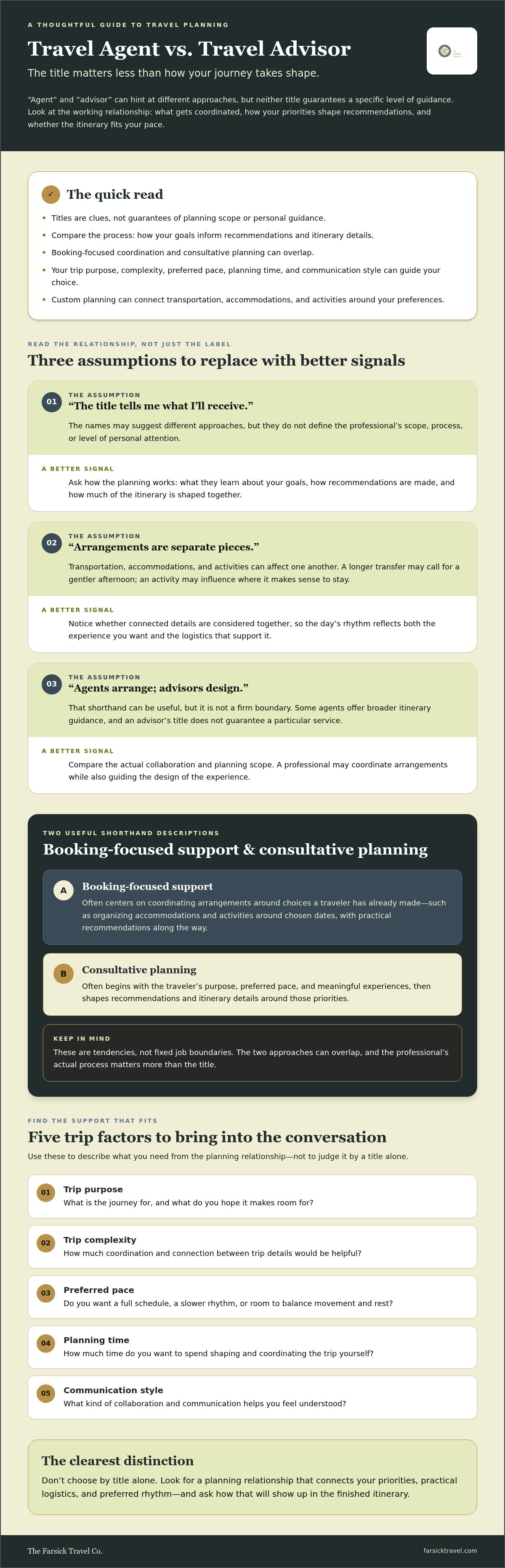
- In the travel agent vs travel advisor comparison, titles are only clues. They don’t guarantee a particular level of planning or personal guidance.
- Look at how the planning relationship works, from sharing your goals to coordinating details and preparing your itinerary.
- Compare service scope, collaboration, and itinerary depth as tendencies, not fixed rules.
- Use your trip purpose, complexity, preferred pace, planning time, and communication style to identify the support that fits.
- Custom planning can bring transportation, accommodations, and activities together in a journey shaped around your preferences.
Travel Agent vs. Travel Advisor: What Do the Terms Actually Mean?
In brief: A travel agent is commonly associated with arranging and coordinating travel, while a travel advisor is commonly associated with consultative planning around a traveler’s goals. These are useful shorthand descriptions, not firm job boundaries. Professionals may use either title for overlapping work, so the label alone won’t tell you how involved the planning will be, how the itinerary will feel, or how communication will work.
A travel agency can help bring travel arrangements together, but the specific service depends on the professional and the working relationship. Some people choose “advisor” to signal a consultative approach; others use “agent” while offering recommendations and thoughtful itinerary support. The meaningful distinction isn’t guaranteed by a title. It’s what happens between your first conversation and the finished plan.
What travelers often mean by travel agent
Travelers often associate an agent with coordinating arrangements around a trip they’ve already begun to shape. That might mean organizing accommodations and activities around chosen dates or offering practical recommendations along the way. Some agents also provide broader itinerary guidance, helping travelers refine their plans rather than simply arrange individual pieces.
There isn’t one standard model behind the title. An agent’s scope, planning process, and compensation structure can vary, so the name alone won’t reveal how recommendations are made or how much collaboration is involved.
What travelers often mean by travel advisor
“Advisor” often suggests a conversation that starts with the traveler: what the trip is for, what pace feels right, and which experiences matter most. Planning can then bring together interests, practical logistics, and the overall shape of the journey. A slow-paced nature trip, for example, might leave room for a morning walk and a restorative afternoon instead of filling every hour.
Still, the title doesn’t guarantee a particular credential, service scope, or level of personal attention. Those depend on the professional’s actual approach.
For a clear working distinction, think of booking-focused support as coordinating arrangements around a traveler’s stated choices, and consultative planning as shaping recommendations and itinerary details around the traveler’s priorities and trip goals. The two can overlap: a professional may coordinate arrangements while also guiding the design of the experience.
So, the practical question behind travel agent vs travel advisor is less about which title sounds more personal and more about how the professional works. Look at the planning scope, how your preferences inform recommendations, and whether the itinerary is designed to suit your rhythm. That’s where the real distinction comes into focus.
How Travel Agents and Advisors Shape the Planning Relationship
The planning relationship often starts with a practical request, then takes shape through the questions, choices, and coordination that follow. You might arrive with dates and a short list of preferred activities, or with a feeling you want the trip to hold: more time outdoors, a slower pace, or space to learn something new. Both starting points can lead to thoughtful support. The difference is how much of the journey is shaped together.
From booking requests to a considered itinerary
A clear request defines the immediate task. A broader conversation can uncover what matters beneath it: quiet mornings, fewer transitions between places, or a balance of movement and rest. In either case, a planner can connect logistics to the day’s rhythm rather than treating each arrangement as a separate item.
For example, someone hoping to spend time on a trail might prefer nearby accommodations and an open afternoon afterward, rather than a tightly packed schedule. That’s one way custom itinerary design services can bring practical choices into line with the experience a traveler wants. The U.S. Bureau of Labor Statistics provides an occupational overview of travel agents, offering context on the profession while leaving room for the range of approaches individual planners may take.
What coordination and communication can look like
With collaborative planning, recommendations for transportation, accommodations, and activities are considered together. A change in one part of the trip can affect the others. A longer transfer, for instance, may call for a gentler afternoon; a chosen activity may influence where it makes sense to stay. Connecting those decisions can help the itinerary feel coherent instead of crowded.
Useful planning conversations bring personal preferences and practical constraints into view. Share your preferred pace, interests, comfort with transitions, and any priorities that affect the shape of the trip. Recommendations can then reflect both the experience you want and the logistics needed to support it.
The travel agent vs travel advisor distinction isn’t a strict division between arranging and designing. Some professionals focus on a defined request; others take a more collaborative approach, and their work can overlap. Pay attention to the process: how your goals inform recommendations, how connected details are handled, and whether the itinerary leaves room for the kind of travel you value.
If you’re ready to turn your priorities into a considered journey, explore custom travel planning with The Farsick Travel Co.
Travel Agent vs. Travel Advisor: A Practical Comparison for Travelers
A side-by-side comparison can help, as long as you treat the labels as tendencies rather than promises. In the travel agent vs travel advisor discussion, what matters is the support you’ll receive: how much collaboration planning involves, how far the itinerary is developed, and how clearly its scope is explained. Services vary by professional. AAA’s Travel Agent vs. Travel Advisor overview offers another perspective on how the terms are commonly used.
| Planning detail | Common agent association | Common advisor association |
|---|---|---|
| Service emphasis | Arranging or coordinating a defined travel request. | Developing recommendations around trip goals and preferences. |
| Planning collaboration | May focus on the details the traveler has already chosen. | May involve more discussion to shape the experience together. |
| Itinerary depth | Can center on specific arrangements, with broader support varying by professional. | May connect activities, logistics, and daily pace in a more developed plan. |
| Potential traveler fit | Someone with a clear request who wants help coordinating it. | Someone seeking input on how the journey should feel and flow. |
| Fees and scope | Ask what the planning fee covers, what coordination is included, and where the service ends. Fees and scope vary, so don’t infer them from a title. | |
Compare scope, personalization, and communication
A defined request might be to coordinate accommodations and a particular activity. A more collaborative process could start with broader priorities, such as spending time outdoors while leaving space to rest, then develop a plan around them. The amount of itinerary detail can differ in either kind of professional relationship.
Before planning begins, get clear on the process: what recommendations and coordination are included, how your preferences inform decisions, and how you’ll communicate during planning. Clear scope helps prevent assumptions from taking the lead.
Compare the journey, not just the transaction
Ask yourself what you want from the trip. If your choices are already made, coordinating arrangements may be the main need. If you’re hoping to weave together nature, learning, restoration, or a slower rhythm, you may value a planning relationship that considers how each day fits with the next. Neither approach is automatically better. It depends on the trip and the support you want.
The best comparison is the actual planning process, not the title alone. For a journey shaped around your preferences, explore custom travel planning with The Farsick Travel Co.
Which Travel Planning Approach Fits Your Trip and Travel Style?
The right level of support depends on what you’re planning and how you want to shape it. An “advisor” title doesn’t automatically mean more personal service; the actual planning scope and collaboration matter more. Use these prompts to clarify what your trip calls for.
- Trip purpose: What do you want this time away to make room for: a milestone, time in nature, learning a skill, or restoration? A clear purpose can guide the choices that follow. For ideas on shaping travel around rest and well-being, explore travel planning for mental wellness.
- Complexity: Are your priorities already set, or are several interests, activities, and logistics still coming together? A defined request may call for focused coordination; a trip with more moving parts may benefit from broader itinerary development.
- Desired pace: Picture an ordinary day on your trip. Do you want early starts and active outings, or a spacious rhythm with time to pause? For a quieter trail experience, consider starting early, before the day’s busiest hours. Check seasonal daylight and weather conditions before choosing your plans, and pack a light layer, water, and footwear suited to the terrain.
- Planning time: How much research and coordination do you want to handle yourself? Note what you’ve already decided and where you’d value recommendations or help connecting details.
- Preferred collaboration: Do you like making each decision independently, or would you rather discuss options and shape a plan together? Consider how often you want to check in and how involved you want to be in refining the itinerary.
When a straightforward planning request may be enough
If you have clear priorities and mainly want selected arrangements coordinated, focused support may fit. Before planning starts, write down what you’ve chosen, what remains open, your preferred communication style, and which decisions you want to make yourself. Even a simple trip benefits from preparation: check seasonal conditions for planned activities and note the practical details that will shape your day.
When personalized itinerary design may serve you better
Collaborative design can help when a trip brings together distinct interests or calls for a particular rhythm. A solo journey, retreat, or skillcation may each need a different balance of activity, learning, and downtime. Nature-based travel also benefits from practical planning: consider how weather shifts across the day, how to avoid peak visitor periods, and what layers or footwear suit your outing. For a related example, see wilderness adventure travel planning.
Use “travel agent vs travel advisor” as a starting point, not a verdict. Match the service to your trip’s purpose, pace, and desired level of collaboration.
Plan a custom itinerary with The Farsick Travel Co.
How The Farsick Travel Co. Turns Planning Into a More Personal Journey
The title matters less than the care behind the planning. At The Farsick Travel Co., a journey begins with you: what draws you to travel, what you hope to experience, and what pace feels right. Those priorities guide decisions about transportation, accommodations, and activities, so the pieces of the trip support a connected experience rather than a checklist of stops.
A planning process built around your priorities
A meaningful itinerary makes room for what matters to you. That might mean shaping a nature-based adventure around time on the trail, planning a solo escape with space to recharge, or bringing a retreat, skillcation, or milestone trip into focus. Your preferences and goals guide the design, balancing activities with breathing room instead of filling every moment.
This is the difference between adding more plans and creating a considered rhythm. A morning outdoors can lead into a slower afternoon; a learning experience can have room to settle in. Explore the thinking behind custom itinerary design for a closer look at shaping travel around the experience you want, not a generic list of popular stops.
Custom planning also brings practical details into the same conversation. Transportation, places to stay, and activities influence one another, and coordinating them can help the journey feel cohesive. For outdoor experiences, thoughtful choices can support a more mindful relationship with natural spaces and local communities. Move with care, follow local guidance, and leave the places you visit as you found them.
So, in the travel agent vs travel advisor comparison, the most useful question is what kind of planning partnership will help your trip reflect your priorities. The Farsick Travel Co. brings that personal lens to nature and adventure itineraries, solo travel, hiking and yoga retreats, skillcations, proposal and honeymoon planning, and intentional group or bachelorette trips.
Choose a thoughtful next step
If you’re ready to turn an idea into a journey with a pace and purpose of its own, start with what you want the experience to hold: more time in nature, a restorative reset, a shared celebration, or the chance to learn something new. Custom planning can bring your priorities and the practical details together.
Schedule a conversation about your custom journey
Choose Support That Gives Your Journey Room to Breathe
The travel agent vs travel advisor distinction can offer a useful starting point, but the title alone won’t tell you how a planning relationship works. Look instead at the scope of support, how your preferences shape the itinerary, and whether the approach fits your trip’s pace and purpose.
For some journeys, coordinating a few defined arrangements is enough. For others, personalized itinerary design can bring transportation, accommodations, and activities into a thoughtful whole. The Farsick Travel Co. creates custom journeys shaped around individual priorities, from nature-based travel and solo escapes to retreats and skillcations. The aim isn’t to fill every hour, but to make room for meaningful experiences and an unhurried rhythm.
If you’re ready to shape a trip around what matters to you, explore custom planning with The Farsick Travel Co.
Your next journey can move at your pace, reflect your interests, and leave space for the moments that stay with you.
Frequently Asked Questions
Is a travel advisor better than a travel agent?
Neither title alone establishes quality or fit. A travel advisor isn’t automatically better than a travel agent, and the reverse isn’t true either. Titles can overlap. Compare the professional’s actual service scope, how recommendations are developed, how communication works, and whether they understand what matters to you. The best match depends on your trip, preferences, and desired level of collaboration, not on a universal ranking.
What is the main difference between a travel agent and a travel advisor?
Travel agents are commonly associated with arranging travel, while travel advisors are often associated with consultative planning around a traveler’s goals. In practice, the travel agent vs travel advisor distinction is a tendency, not a strict definition. One professional may coordinate arrangements and help shape an itinerary. Rather than relying on the title, compare what planning includes, how your priorities inform recommendations, and how involved you’ll be in the process.
Do travel advisors charge planning fees?
Some travel advisors charge planning fees, but fee practices vary by professional and service scope. A fee may cover professional itinerary design and coordination, while other compensation arrangements may also apply. Before proceeding, understand what the engagement includes, such as recommendations, itinerary development, or coordination of accommodations and activities. Make sure the compensation is explained clearly. Don’t assume every advisor charges a fee or every agent earns commission.
Can a travel advisor create a custom itinerary?
Yes, custom itinerary design may be part of a consultative planning service, though the exact scope varies. A tailored plan can bring together your preferences, trip purpose, transportation, accommodations, activities, and desired pace. The Farsick Travel Co. provides custom travel planning shaped around individual preferences, with coordination of key trip details. That can help create a journey with room for meaningful activities and unhurried moments, rather than a generic checklist.
How do I choose between a travel agent and a travel advisor?
Start with the support your trip needs: help coordinating specific arrangements, broader itinerary development, or connected planning across several details. Then compare service scope, communication, collaboration, and fit with your priorities. Consider how much input you want in recommendations and itinerary decisions. A title can offer a clue, but it can’t replace understanding what the planning process actually includes.
Are travel agent and travel advisor interchangeable terms?
People and businesses may use “travel agent” and “travel advisor” differently, and no single distinction applies to every professional. The roles can overlap in recommendations, coordinating arrangements, and itinerary planning. Look beyond the label to understand the professional’s stated process, service scope, and approach to designing the trip. Those details give you a clearer sense of whether the planning relationship suits your needs and preferred way of traveling.
Article by
Ursula Akin
Ursula Akin created The Farsick Travel Co. to help travelers step away from rigid, multi-stop checklists and step into intentional, deeply rooted experiences. Specializing in custom travel design, solo escapes, and curated retreats, Ursula combines local insights with leave-no-trace ethics to turn wanderlust into seamless, unforgettable journeys.
Disclaimer
The information provided on this website and within our articles is for general informational and inspirational purposes only. While we make every effort to ensure accuracy regarding travel logistics, recommendations, and local details, conditions can change rapidly. Readers are encouraged to verify current travel requirements, weather, safety advisories, and local regulations independently. The Farsick Travel Co. is a travel design and curation service and is not responsible for any actions, changes, or incidents occurring during independent travel.


