

The most meaningful forest bathing retreats in the USA aren’t defined by a famous trail or a packed schedule. They can take place in forests, quiet parks, gardens, or other outdoor settings, with experiences ranging from a single day to multi-day stays. The practice centers on slow, sensory attention to nature, often through gentle walking, pauses, breath awareness, and quiet reflection.
Choosing a retreat means looking beyond the greenery. The setting, pace, activities, and time available all shape whether the experience feels like a brief pause or a deeper immersion. A clear listing should help you picture the rhythm of the days, not just name the destination.
Here, you’ll learn what forest bathing retreats include, which natural settings may suit them, and how to compare durations and listings. You’ll also find practical planning tips, from considering the time of day and seasonal conditions to deciding what to pack, so you can choose an experience that leaves room to slow down and notice more.
Key Takeaways
- Look for unhurried practices such as sensory pauses, gentle walking, and quiet reflection when comparing retreat activities.
- Understand the Japanese roots of forest bathing and approach its wellness benefits as part of a restorative experience, not a promised outcome.
- Match the retreat’s length to the depth and pace you want, from a brief introduction to a longer immersion.
- Consider parks, gardens, and other calm outdoor settings too; the atmosphere and timing can matter as much as the trees.
- Read listings for details about the daily rhythm, setting, activities, and dates to find a retreat that fits the way you want to travel.
Retreat activities and nature-based practices
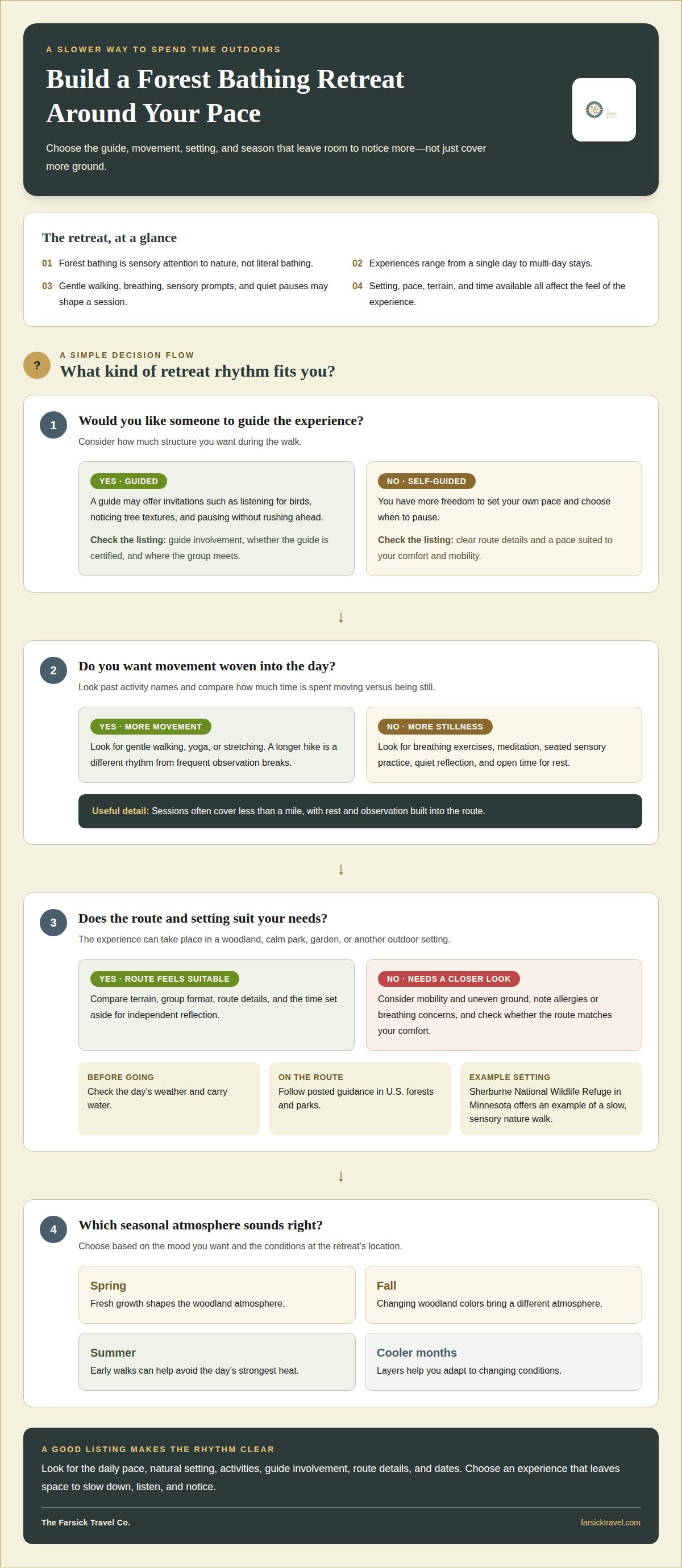
Forest bathing retreats bring slow, sensory attention to outdoor settings, from woodland trails to neighborhood parks. A session may include gentle walking, breathing, sensory prompts, and quiet pauses.
Guided and Self-Guided Experiences
A guided walk gives participants a sequence of invitations, such as listening for birds, noticing tree textures, and pausing without rushing ahead. A self-guided outing offers more freedom, but calls for clear route details and a pace suited to the visitor.
Compare retreat listings by guide involvement, activity sequence, terrain, and time for independent reflection. Look for details such as whether a guide is certified, where the group meets, and whether the route suits the group’s comfort and mobility.
Yoga, Wellness, and Nature Activities
Some retreats combine forest bathing with yoga, stretching, meditation, or breathing exercises. The day might begin with a morning trail walk, pause for a seated sensory practice, then leave the afternoon open for rest.
Compare the balance of movement and stillness, not just the activity names. For example, a retreat with gentle yoga and frequent observation breaks differs from one built around longer hikes. Both can pair wellness activities with time outdoors.
Forest Bathing and Nature Therapy
Forest bathing is a slow practice of immersing yourself in nature and paying attention through the senses. It isn’t literal bathing. Participants may walk gently, listen, breathe, touch natural textures, and pause for quiet reflection. Sessions often cover less than a mile, with rest and observation built into the route.
In Pennsylvania, nature therapy can be shaped around a wooded trail or calm park setting. A planner can compare the retreat’s walking pace, sensory activities, and group format with the traveler’s goals, rather than assuming every forest therapy experience follows the same script.
Spring and fall are useful seasons to consider: spring brings fresh growth, while fall changes the woodland’s colors and atmosphere. The best fit depends on the mood you want and the retreat’s location. In summer, early walks can avoid the day’s strongest heat; in cooler months, layers help you adapt to changing conditions.
For safety, match the route to your mobility, check the day’s weather, carry water, and follow posted guidance in U.S. forests and parks. Note allergies, breathing concerns, or sensitivity to uneven ground when choosing activities. In Minnesota, Sherburne National Wildlife Refuge offers an example of a slow nature walk focused on the senses, rather than athletic distance.
Benefits and origins of forest bathing
Forest bathing has roots in Japan and is associated with physical and emotional wellbeing. Its effects are best understood as reported responses to time in nature, not as a substitute for medical care.
Physiological and Emotional Effects
Forest-walk research has examined changes in measures such as systolic blood pressure. In one study, forest walkers averaged 141 mmHg before their walk and 134 mmHg after four hours in the forest. Those figures describe one study group, not a guaranteed result for every visitor.
The emotional rhythm matters, too. A guided, immersive walk makes room to slow down, notice sounds, and step away from daily stress. When comparing retreats, look for a pace that allows quiet observation rather than treating distance or exercise as the main measure of success.
Psychological Benefits
A three-day forest bathing retreat may support positive affect, optimism, vitality, and gratitude. Some psychological and immune markers have also been reported as elevated for days or weeks afterward. These findings help explain interest in nature-based wellness, but don’t establish a lasting outcome for every participant.
For a practical comparison, consider how the itinerary makes room for reflection. A slow morning walk followed by unhurried time outdoors offers a different experience from a tightly scheduled program. The setting, group pace, and time available all shape how restorative the experience feels.
Phytoncide Benefits
Phytoncides are compounds released into the air by trees. In a small study, inhaling these compounds was associated with reduced stress hormone concentrations and enhanced natural killer cell activity in men and women.
That finding offers one possible explanation for interest in forest therapy, not a promise of a specific physical effect. A retreat’s value also lies in simple, direct experiences: breathing woodland air, listening to leaves move, and noticing how a slower pace feels.
Forest bathing gained mainstream popularity in Japan in the 1980s. Japan’s Ministry of Agriculture, Forestry and Fisheries coined Shinrin-yoku, roughly translated as “forest bathing,” in the early 1990s. The practice centers on attention to nature rather than a strenuous hike or a set fitness goal.
That background can help you interpret retreat descriptions. A listing that emphasizes guided sensory attention, quiet pauses, and an immersive setting is closer to the practice’s central idea than one focused only on mileage. Read benefit claims carefully, and choose an experience for its approach, pace, and setting.
Mandy Mitchell says that centering and slowing during forest bathing can begin to diffuse physiological arousal and calm the nervous system. A three-day forest bathing retreat may increase participants’ positive affect, optimism, vitality, and gratitude, though individual responses vary and aren’t assured.
Retreat duration and immersion
Forest bathing experiences in the United States range from a single day to multi-day retreats. Duration shapes the rhythm: a short visit offers an introduction, while several days allow more time to settle into a place and its practices.
A one-day retreat can be valuable, but the limited time leaves less room for depth. Participants may arrive, join a guided experience, and leave the same day. A multi-day stay can give the forest a larger role in the itinerary, balancing outdoor practice with rest and unhurried transitions.
For people experiencing high stress or burnout, one retreat page recommends two to four days or longer. Treat this as a planning reference, not a fixed formula. The right length depends on the trip’s purpose, the time available, and whether travel days would crowd out the retreat itself.
Compare the schedule, not just the number of nights. A listing may describe daily guided sessions, open time, meals, or other activities. For example, a mountain retreat with a morning walk and a quiet afternoon creates a different pace from a schedule packed with consecutive outings. Check how much time is actually set aside for the retreat’s central practice.
Walk duration matters, too. A forest bathing walk isn’t measured by distance alone; gentle pacing and time for observation shape the experience. When reviewing a listing, look for a clear description of route difficulty, walking pace, terrain, and rest opportunities. A beautiful woodland route may still feel demanding if its footing or elevation doesn’t suit the group.
Retreat prices vary with the experience. Compare what each listing says about lodging, meals, guided activities, and length of stay, rather than relying on the headline figure alone. A day experience and a multi-day retreat cover different amounts of time and components, so their listed prices aren’t directly comparable.
One example of a dated listing is a five-day New Year’s retreat in Florida, scheduled from December 29, 2026, to January 2, 2027. Its timing illustrates why the calendar matters: a holiday retreat may suit travelers seeking a defined seasonal pause, while another date may better fit work or family commitments.
Before choosing, note three details in each listing: the total retreat length, how the days are paced, and what the stated price covers. Then consider the journey to the setting. If travel takes up much of a short stay, adding nights may create a more settled experience; for a nearby day retreat, a single session may be enough to explore the format.
Forest bathing in parks, gardens, and other outdoor settings
A forest isn’t essential for a mindful nature experience. A quiet city park, garden, or desert landscape can offer space for sensory attention, meditation, and gentle pauses. The key planning question is whether the setting supports a slower pace, away from busy paths and competing noise.
In a city park, choose a route with shaded edges, benches, and room to stop without blocking other visitors. Early morning can offer a quieter atmosphere before popular paths fill. A forest therapy guide might invite participants to notice birdsong, shifting light, or the feel of bark, while keeping the group on established paths.
Gardens offer a different kind of immersion. At an arboretum, cultivated plantings, gravel paths, and open lawns create varied sensory details within a defined area. The Reeves-Reed Arboretum forest bathing walk was described as slow and non-athletic. That example can help visitors distinguish reflective activities from a fitness-focused hike.
Desert settings can also support a connection with nature, even without dense tree cover. A mindful walk might focus on wind, open sky, resilient plants, and the contrast between sunlit ground and shade. When reviewing a retreat listing, consider the route’s exposure and planned pause locations, as well as whether the landscape suits the group’s comfort.
Timing shapes each setting. A morning garden visit may feel different from an afternoon walk as light, temperature, and visitor activity change. In warmer seasons, shade and water access matter; in cooler weather, layered clothing helps you adapt to changing temperatures. Participants in an arboretum walk, for example, were advised to dress in layers.
For a quieter experience, choose less-traveled paths and schedule pauses away from entrances or gathering areas. A group can share space thoughtfully: keep voices low, let other visitors pass, and leave plants, stones, and wildlife undisturbed. These choices help preserve the setting for everyone.
Check practical details before selecting a retreat: terrain, shade, seating, restroom access, and the distance between the meeting point and the walk. A garden may offer smoother paths than a woodland trail, while a park may have more background noise. These differences affect comfort and the kind of mental stillness participants can find.
Pack for the specific landscape. A light layer suits a garden with shifting shade; comfortable walking shoes help on gravel or uneven ground. For a desert outing, pay attention to sun protection and drinking water. Matching simple preparations to the setting leaves more attention for the experience itself.
Forest bathing retreat listings
A useful listing helps you picture the experience before choosing a date. Compare the setting, session format, schedule, and included arrangements, not just the retreat title.
Retreat Options
Listings may describe a guided session in a park, a nature-focused day experience, or a multi-day retreat. Look for specifics: where the walk takes place, how the session builds awareness, and whether quiet reflection or other activities are included. A clear description helps you judge whether the focus is sensory connection, gentle movement, or a broader holistic itinerary.
Overnight Stays, Meals, and Spa Amenities
Overnight stays, meals, and spa amenities vary by listing, so consider each a separate planning detail. Read the itinerary for lodging arrangements, meal coverage, and named wellness facilities rather than assuming they’re part of a forest bathing session. If the listing describes only a guided walk, plan around that format rather than expecting a full retreat stay.
To compare options, first identify the experience type. A scheduled walk differs from a retreat built around several days in one place. Then review the location, meeting point, session length, walking pace, and daily schedule. These details show how much time is reserved for nature and how much is left open.
A travel planner can organize those details around your preferred setting, pace, and travel dates. Share whether you want a guided session or independent time, plus any food needs, mobility considerations, or lodging preferences. For packing, prepare for the listed conditions: comfortable walking shoes, layers for temperature changes, and water for an outdoor walk. To shape those details into a considered trip, contact The Farsick Travel Co. about your retreat plans.
- Session: Does the listing describe guided sensory practice, meditation, or walking?
- Setting: Is the experience based in a forest, garden, or park?
- Schedule: Does the itinerary leave time for rest and unhurried exploration?
- Inclusions: Are lodging, meals, or spa amenities clearly described?
Put health claims in context. A listing may mention blood pressure or other wellness outcomes, but those claims shouldn’t replace a clear description of the experience itself. Focus on what participants will do, where they’ll do it, and how the session supports a mindful connection with nature.
Dates matter, too. A listing for a seasonal retreat may suit someone seeking a specific calendar window, while a local guided walk can fit more easily around other plans. Compare the stated date and location with your available travel time before building the rest of the itinerary.
The Farsick Travel: Signature Hiking & Yoga Retreats
The Farsick Travel Co. helps shape a nature-centered itinerary when you want more than a retreat listing and need the pieces to flow together. Its Signature Hiking & Yoga Retreats bring outdoor movement and mindful practice into a considered travel rhythm, while Custom Travel Planning can tailor the wider journey to your preferences.
Share what matters most: a quiet solo reset, gentle hikes, yoga, or time to explore a particular landscape. Planning can also bring together Solo Travel Experiences, a Skillcation that pairs outdoor travel with learning, a bespoke honeymoon, or an intentional group or bachelorette trip. This is a useful next step when dates, setting, pace, and activities need to align rather than compete for attention.
Contact The Farsick Travel to discuss your retreat plans.
Shape Your Next Retreat with Intention
Begin with the feeling you want to carry home. A forest bathing retreat in the USA can be shaped around a personal intention, whether you’re seeking quiet, gentle movement, or a deeper connection with the outdoors. Use that intention to decide what deserves space in your itinerary and what can wait.
The Farsick Travel Co. offers Custom Travel Planning, Signature Hiking & Yoga Retreats, Solo Travel Experiences, skillcations, bespoke honeymoons, and intentional group or bachelorette trips. These options can turn your preferences into a considered journey, with the retreat fitting naturally into the wider trip rather than standing apart from it.
When you’re ready to explore your ideas, contact The Farsick Travel Co. to discuss your retreat plans.
Make room for a slower pace, follow your curiosity, and let the landscape meet you where you are.
Frequently Asked Questions
What are the best forest bathing retreats in the USA?
The best retreat is the one whose setting, pace, and format suit your needs. For a first experience, a clearly described guided session can provide structure; travelers wanting more time away may prefer a multi-day stay. Compare the daily schedule and walking demands, then consider whether the retreat leaves space for quiet, independent time. A clear listing should make those differences easy to understand.
Where are forest bathing retreats located by state or region?
Nature immersion experiences appear in different settings across the country, from Midwestern wildlife refuges to Northeast arboretums and Southern woodland destinations. Examples include Sherburne National Wildlife Refuge in Minnesota, Reeves-Reed Arboretum in New Jersey, and the Hambidge Center in Georgia. These places illustrate the range of landscapes, not a complete directory of current retreats. Search listings by the type of environment you want, then compare travel logistics.
What activities and experiences do forest bathing retreats offer?
Experiences can pair guided nature walks with breathing, meditation, gentle stretching, or yoga. Some schedules leave time for journaling or quiet observation; others add wellness activities around the outdoor session. Before choosing, consider which elements matter to you instead of selecting the longest activity list. For example, someone seeking a calm introduction may prefer a slower program with fewer scheduled transitions than a retreat built around varied daily activities.
How much do forest bathing retreats in the USA cost?
Retreat prices depend on the experience’s length and what the listing includes. A guided outdoor session differs from a stay that bundles accommodation, meals, or wellness amenities. Compare the inclusions and schedule side by side, and note whether lodging or meals are separate. This gives you a clearer picture of the overall commitment without treating unlike retreat formats as direct price comparisons.
Are forest bathing retreats suitable for beginners, families, or people with mobility needs?
Beginners can look for a slow-paced, non-athletic session with clear guidance and room to pause. Families should consider whether the schedule and quiet activities suit their group’s needs. For mobility considerations, focus on route surface, slope, distance from meeting points, and available places to rest. Retreat descriptions vary, so prioritize practical details that affect comfort and participation rather than relying on the retreat label alone.
Article by
Ursula Akin
Ursula Akin created The Farsick Travel Co. to help travelers step away from rigid, multi-stop checklists and step into intentional, deeply rooted experiences. Specializing in custom travel design, solo escapes, and curated retreats, Ursula combines local insights with leave-no-trace ethics to turn wanderlust into seamless, unforgettable journeys.
Disclaimer
The information provided on this website and within our articles is for general informational and inspirational purposes only. While we make every effort to ensure accuracy regarding travel logistics, recommendations, and local details, conditions can change rapidly. Readers are encouraged to verify current travel requirements, weather, safety advisories, and local regulations independently. The Farsick Travel Co. is a travel design and curation service and is not responsible for any actions, changes, or incidents occurring during independent travel.


