

A fuller itinerary can make a wellness retreat feel less restorative, not more valuable. A wellness retreat planning service helps clarify the overall budget by considering the setting, accommodation, access needs, schedule, and activities together, rather than treating each choice separately. The right balance matters as much as the destination.
It makes sense to want a clear budget before committing, especially when accommodation, meals, transportation, and guided experiences all shape the plan. Yet the lowest-cost option may not support the ease, comfort, or quiet you want from your time away. Thoughtful planning connects each choice to the retreat’s purpose.
In this guide, you’ll learn how to assess the factors that shape retreat costs, account for dietary and accessibility needs, choose a natural setting that suits your group, and set a realistic planning timeline. You’ll also see how a gentler itinerary, with room to pause between shared activities, can feel cohesive rather than crowded. The goal is a clearer decision and a retreat designed around how you want to feel while you’re there.
Key Takeaways
- Build a clear budget by weighing lodging, meals, transportation, activities, and the retreat’s purpose together.
- Make accessibility, dietary needs, and scheduling constraints part of the plan from the beginning.
- Choose a natural setting that suits the group’s comfort and pace, while keeping outdoor experiences mindful and low-impact.
- Allow enough planning time for logistics, travel connections, and thoughtful coordination.
- Balance guided sessions with unstructured time so the itinerary feels restorative rather than crowded.
1. Itemised budgeting and cost considerations
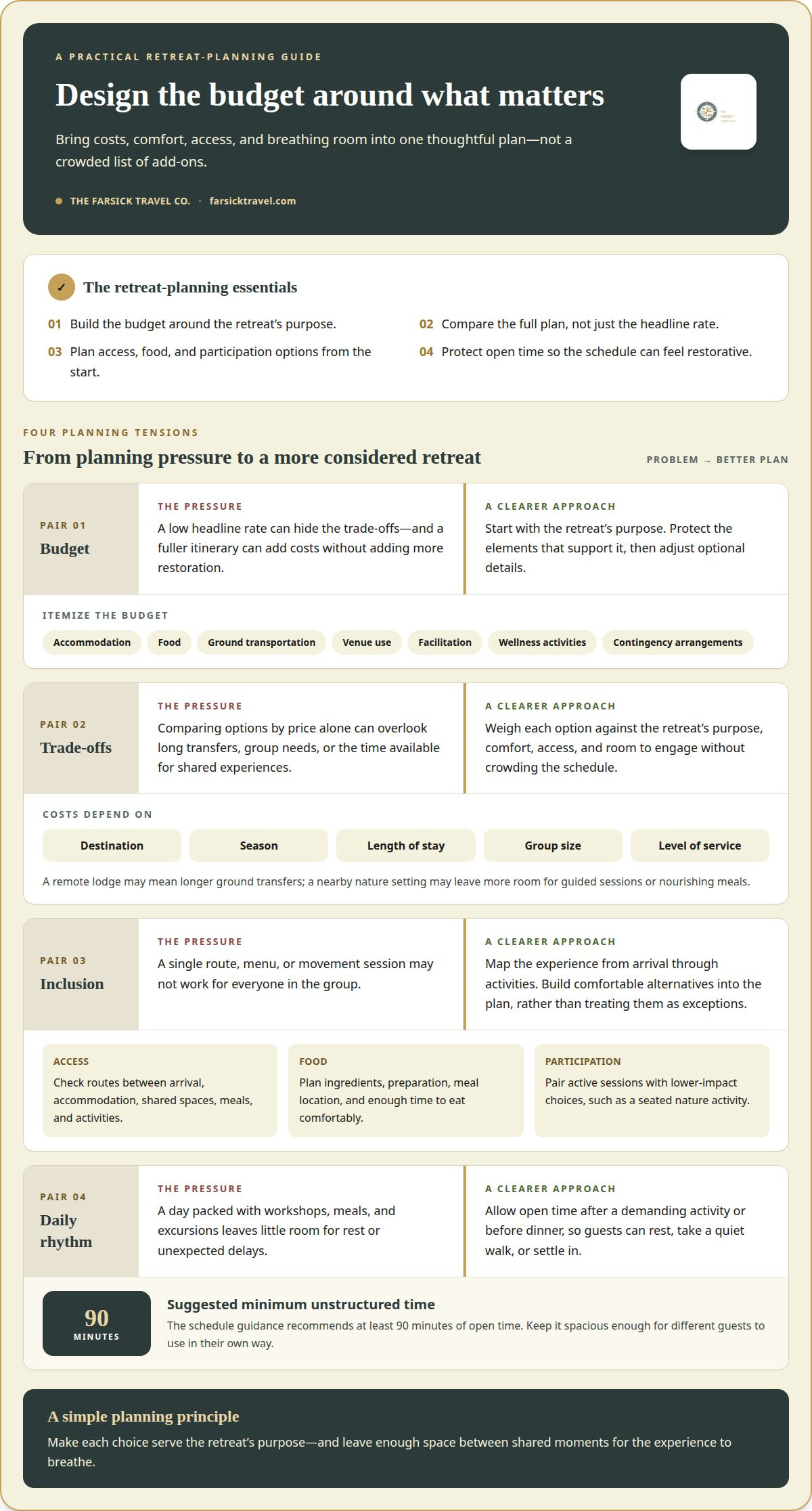
A useful retreat budget starts with a clear purpose, then separates shared essentials from optional experiences. A quiet yoga gathering and a guided hiking retreat, for example, need different spaces, meals, and activity plans. Itemize accommodation, food, ground transportation, venue use, facilitation, wellness activities, and contingency arrangements. This makes trade-offs visible before the itinerary takes shape.
Costs depend on the destination, season, length of stay, group size, and level of service. A remote lodge may involve longer ground transfers, while a nearby nature setting may leave more room for guided sessions or nourishing meals. Compare each option with the retreat’s purpose, not just its headline rate. The best fit supports comfort, access, and time to engage without crowding the schedule.
When choosing a planner, look for a process that connects your goals with clear costs, practical logistics, and a coherent itinerary. Discuss how priorities, shared expenses, and activities will be organized around your group’s needs. A considered planning approach helps you understand what each budget decision supports.
Retreats can center on yoga, hiking, restorative time in nature, or a mix of guided activities and unstructured hours. The experience can also reflect your group’s interests, from gentle movement to skill-building sessions. The format should suit the participants, the setting, and the reason for gathering.
A planner coordinates the moving parts, such as accommodation, local transportation, meals, facilitators, and the daily rhythm. Planning it yourself gives you direct control, but also means managing those details and how they depend on one another. A professional wellness retreat planning service can help bring the pieces together when several needs must align in one itinerary.
For a retreat in the United States, choose a planner whose work fits your destination, not simply your home area. Consider the setting, activities, travel logistics, and the group’s access needs. A location-specific itinerary should account for local terrain and the practical journey between the arrival point and accommodation.
Safety planning should address activity level, terrain, weather exposure, food requirements, accessibility, and transportation between planned locations. For a morning trail walk, for example, match the route to participants’ abilities and include a clear alternative if conditions change. Notice how the trail sounds shift from birdsong to the soft crunch of gravel, and how cool, shaded air gives way to warmer sunlight in open stretches. The facilitator should communicate what to expect and make participation choices comfortable, without pressure.
Use the budget as a design tool: protect the elements that serve the retreat’s purpose, then adjust optional details. A careful plan makes spending easier to understand and gives each shared experience room to feel intentional.
Accessibility, dietary needs, and scheduling constraints
Access and comfort shape whether a retreat’s format works for everyone. Map the route from arrival to accommodation, shared spaces, meals, and activities, then identify where transitions may feel difficult. A nature walk and a group yoga session, for example, involve different surfaces, movement, and participation options. An inclusive plan builds alternatives into the rhythm rather than treating them as an awkward exception.
Dietary needs affect the experience beyond the menu. Meal timing, ingredients, preparation, and where food is served all influence whether guests can participate comfortably. Plan meals around the group’s stated needs and schedule, with enough time to eat before the next session. For a retreat that includes a village visit, a relaxed meal stop may work better than squeezing dining between activities.
For a corporate group, access planning should reflect the organization’s vision and the people attending, not just the event format. A team-building walk might be paired with a seated nature activity, giving participants different ways to connect. This respects varied energy levels and perspectives while keeping the shared purpose intact. It also means one physical activity is not the only way to feel included.
Scheduling needs the same care. A day packed with workshops, meals, and excursions can leave little room for rest or unexpected delays. The suggested retreat schedule includes at least 90 minutes of unstructured time. A planner can place this open period after a demanding activity or before dinner, allowing guests to rest, take a quiet walk, or simply settle into the setting.
- Arrival: Coordinate check-in and settling time before the first group activity.
- Movement: Pair active sessions with lower-impact alternatives and clear participation choices.
- Meals: Arrange food details and enough time to eat at a comfortable pace.
- Transitions: Leave breathing room between lodging, gathering spaces, and outdoor plans.
These details matter across seasons and settings. On a woodland path, damp leaf-scented air and birdsong may accompany dappled light beneath the canopy; an exposed coastal trail can bring salt spray, steady wind, and sharper sun. Rain cools the air, darkens the ground, and patters against leaves or shelter roofs, changing how an outdoor session feels underfoot and on the skin. Plan alternative indoor or sheltered options to suit the location and itinerary, without treating the natural setting as guaranteed. Guests can prepare with practical layers, comfortable walking shoes, and personal items that support their access needs.
Clear planning starts with the group’s needs, then carries them through meals, movement, and rest. When those pieces align, the retreat can make room for connection and personal space without asking everyone to follow the same pace.
3. Natural settings and stress reduction
A natural setting can give a retreat a gentler pace and help participants step away from familiar work patterns. At a woodland lodge, a morning walk might follow a damp, pine-scented trail as birds call through the canopy, before the group gathers indoors. Natural settings for corporate retreats can reduce stress and promote relaxation. The location matters most when its features support the group’s purpose, comfort, and preferred level of activity.
Changing scenery can also help team members approach challenges with a fresh mindset. A strategic gathering in a rural setting feels different from a meeting room filled with familiar screens and interruptions. The shift doesn’t solve organizational problems on its own, but it can make space to listen, reflect, and discuss them. A facilitator might pair a focused conversation with an outdoor pause, then bring the group together to capture useful ideas.
Choose a setting by imagining the retreat’s daily rhythm. An early walk on a shaded trail could begin in cool, blue morning light, with leaves brushing the path and birdsong carrying between the trees. After a long breakfast, the group might gather in a common room where soft daylight falls across wooden tables. Later, participants could explore a nearby village at an unhurried pace. This sequence offers varied ways to engage without turning the surroundings into a checklist of attractions.
Timing can shape how comfortable and calm an outdoor activity feels. Plan a walk for the cooler morning, especially where paths are exposed or shade is limited. In warmer weather, arrange a sheltered gathering place and keep water accessible. If rain is forecast, move activity sessions to a covered space and preserve outdoor time for a suitable break in the weather. These alternatives help the itinerary adapt to the setting.
Nature-based activities can support well-being without demanding intense effort. A group might take a guided walk, try gentle movement outdoors, or sit quietly near a stream, listening to water slip over stones. Corporate retreats may also include outdoor excursions, team games, and fitness activities. Match each activity to the group’s abilities and intentions, and make participation an invitation rather than a test of commitment.
Leave-no-trace choices help protect the places that make a retreat meaningful. Keep to established trails, respect wildlife from a distance, and follow local guidance about sensitive habitats. For a village visit, choose a locally led experience that lets residents share their culture on their own terms. A smaller, slower plan can create more genuine connection than a packed schedule.
Before settling on a destination, consider how the landscape will serve the retreat beyond its first impression. Look at how the accommodation, outdoor spaces, gathering areas, and nearby community life relate to one another. A carefully chosen natural setting can support rest, conversation, and productivity while keeping the experience grounded in place.
4. Planning timelines and logistics
A residential wellness retreat benefits from a planning window that leaves room for considered choices. Three to six months is a useful starting point for planning a residential group wellness retreat, though it is not a fixed rule. This gives the organizer time to coordinate the venue, activities, meals, travel connections, and participant needs without compressing every decision into the final weeks.
Build the timeline around decisions that affect other decisions. First, define the retreat’s purpose, group needs, and preferred setting. Then shape the dates and length of stay around the venue and the sessions. A strategic planning retreat for a company leadership team typically lasts 2-3 days. A residential wellness gathering may need a different rhythm, but both benefit from a clear sequence of decisions.
Give travel logistics early attention. Where possible, keep ground transportation from the nearest major airport under two and a half hours, so arrival doesn’t consume too much of the retreat. For a rural lodge, map the route, transfer timing, and arrival process before setting the first meeting. This helps everyone settle in before sessions begin, rather than stepping straight from travel into a full schedule.
Permits, insurance, and liability waivers depend on the location, venue, and planned activities. A retreat involving guided outdoor movement may need different arrangements from one held entirely at an accommodation venue, so account for local and venue requirements during planning.
Plan for employees as whole people, not only as attendees. Leave room between a morning meeting, lunch, and afternoon sessions, especially when participants are moving between indoor and outdoor spaces. A group walk can offer an informal chance to connect, while a quieter alternative lets each person choose a comfortable pace. Make participation clear without turning every moment into an obligation.
Before departure, send attendees a concise email about a week ahead. Include the itinerary, meeting locations, transportation details, activity expectations, and packing guidance suited to the setting. For a woodland venue, mention trail footwear and layers. For a yoga-focused gathering, explain what participants should bring without assuming everyone owns specialist equipment.
- Confirm the sequence: Align venue, dates, sessions, and transport before sharing a final schedule.
- Prepare for changes: Set a practical indoor alternative for outdoor activities affected by weather.
- Communicate clearly: Give everyone one reliable itinerary with arrival details and contact arrangements.
A well-paced timeline protects the retreat’s purpose. When transport, venue needs, and participant information are coordinated in advance, the schedule can leave more attention for conversation, restoration, and the experience itself.
5. Balanced itinerary planning
A restorative itinerary gives the day a shape without filling every quiet moment. One useful guide is a 70/30 balance: allocate 70% of the wellness retreat itinerary to restorative downtime and 30% to structured group sessions. Treat this as a planning framework, not a rigid timetable. The purpose is to make room for recovery while preserving enough shared activity to encourage connection.
Start with the group’s intention, then choose a few sessions that serve it. For a three-day retreat, a morning movement session might lead into a spacious breakfast and open time. A focused workshop can follow later, with a relaxed evening meal instead of another formal activity. This sequence gives each part a purpose and lets participants engage at an unhurried pace.
Keep demanding conversations contained. A morning retreat working session should last 2 to 3 hours, leaving the afternoon open for rest, a gentle walk, or personal reflection. If peer problem-solving is part of the plan, organize it in 90-minute bursts with meaningful breaks between sessions. The pause isn’t wasted time. It helps participants return with attention to give.
Activities can foster connection without making one style of participation the measure of success. Offer a guided trail walk alongside a quieter option, such as journaling in a sheltered outdoor space. Keep wellness activities optional, without embarrassment or professional disadvantage. That way, someone who prefers stillness can benefit from the retreat without being singled out or pressured.
Give transitions their own space. After a morning walk, allow time to change, refresh, and arrive calmly before a group session. A village afternoon can stay intentionally simple: a locally led visit, time to browse at a respectful pace, then an unhurried return for dinner. Fewer planned stops leave more room for genuine interaction and mindful attention to place.
Close the retreat with a 60 to 90-minute departure-day session. Invite participants to name one useful insight, one moment they want to carry forward, and one next step. A thoughtful closing can bring the shared experience into focus without turning the final hours into another packed workshop. The best itinerary isn’t the fullest one. It’s the one whose rhythm supports its purpose.
Plan a retreat itinerary with a more restorative rhythm
A three-day team wellness retreat is an illustrative, not fixed, planning example. Strategic planning retreats may foster team connections through team-building and wellness; company retreats may include workshops, training sessions, and guest speakers.
The Farsick Travel Co.: Signature Hiking & Yoga Retreats
The Farsick Travel Co. can shape retreat ideas into a considered itinerary, bringing costs, access needs, setting, and daily rhythm together. Its Signature Hiking & Yoga Retreats combine outdoor movement and restorative practice in a curated journey. This is a natural fit when you want more than a packed schedule: think morning trail time, space to reset, and a thoughtful pace throughout the day.
For a different kind of journey, Custom Travel Planning, Solo Travel Experiences, Skillcations, bespoke honeymoons, and intentional group or bachelorette trips offer other ways to build an experience around your interests. Share what matters most, whether that’s a quieter natural setting, movement options, or time for local connection, and the plan can take shape around those priorities.
Shape a retreat around what matters most
The next step is to turn your intention into a journey that feels distinctly yours. A wellness retreat planning service can translate your priorities into a considered experience, whether you’re gathering with others or seeking space for yourself. The Farsick Travel Co. offers Custom Travel Planning, Signature Hiking & Yoga Retreats, Solo Travel Experiences, Bespoke Honeymoons, and Intentional Group or Bachelorette Trips.
Start with the feeling you want to carry home: steadier, more connected, or closer to the natural world. That intention can guide the choices that follow, from the shape of your days to the experiences that deserve room. There’s no need to fit every possibility into one trip. A thoughtful beginning is enough.
Your retreat can begin with a simple idea, then find its own pace.
Frequently Asked Questions
What does a wellness retreat planning service include?
A wellness retreat planning service can coordinate an itinerary, accommodation recommendations, transport logistics, and activity details around the retreat’s purpose. The Farsick Travel Co. offers custom itinerary planning, including coordination of accommodation, transport, and activities. For example, a retreat centered on hiking and yoga can be shaped around those experiences, with a pace that leaves room to rest and connect with the destination.
How much does wellness retreat planning cost in the United States?
There’s no reliable universal total for a U.S. wellness retreat; costs depend on its scope and inclusions. The venue, length of stay, meals, transportation, activities, group needs, and planning work all affect the budget. Separate the planner’s fee from retreat expenses so each is clear. The fee depends on the project’s scope and coordination needs and is provided after a quote request.
What is the step-by-step process a wellness retreat planner follows, and what information should clients provide?
A planner starts by clarifying the retreat’s purpose, then develops the itinerary, coordinates logistics, and refines the plan with the client. To begin, share preferred dates or a date range, destination ideas, expected attendees, accessibility and dietary needs, activity interests, and budget priorities. For example, noting that guests prefer gentle movement helps shape suitable sessions and avoids building the schedule around an unsuitable activity.
How far in advance should I book a wellness retreat planner and venue?
Begin planning once you have a date range and a sense of the group’s needs. The timeline depends on the season, venue options, travel arrangements, and the coordination the itinerary requires. Share your priorities early, then align the venue and schedule before communicating firm plans to attendees. Flexible dates can make it easier to coordinate the setting and group logistics.
What should a wellness retreat budget include?
Include the retreat’s core expenses, then separate shared costs from choices that apply to individual attendees. Lodging and a group meal may be shared, for example, while some participants may choose an optional guided activity. Show planning coordination separately, and note which experiences are essential and which are optional. This structure helps organizers make thoughtful adjustments without losing sight of the retreat’s purpose.
Article by
Ursula Akin
Ursula Akin created The Farsick Travel Co. to help travelers step away from rigid, multi-stop checklists and step into intentional, deeply rooted experiences. Specializing in custom travel design, solo escapes, and curated retreats, Ursula combines local insights with leave-no-trace ethics to turn wanderlust into seamless, unforgettable journeys.
Disclaimer
The information provided on this website and within our articles is for general informational and inspirational purposes only. While we make every effort to ensure accuracy regarding travel logistics, recommendations, and local details, conditions can change rapidly. Readers are encouraged to verify current travel requirements, weather, safety advisories, and local regulations independently. The Farsick Travel Co. is a travel design and curation service and is not responsible for any actions, changes, or incidents occurring during independent travel.


