

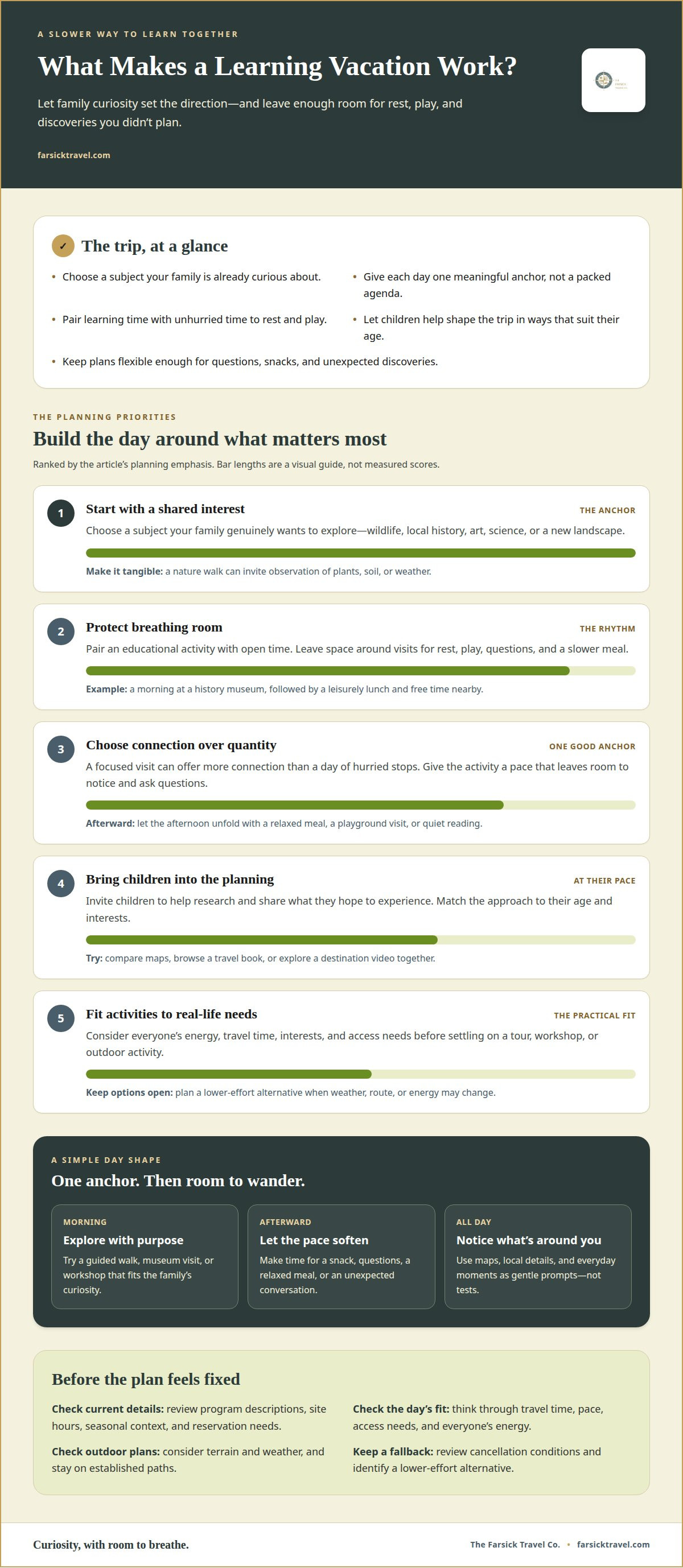
A learning vacation works best when curiosity has room to breathe. Planning a learning vacation means choosing places and experiences that connect with your family’s interests, then leaving time to rest, play, and follow an unexpected discovery. Learning is woven into the day, not arranged like a school schedule.
It makes sense to want a meaningful getaway without turning every outing into a lesson. Start with what your family already loves, whether that’s wildlife, local history, art, or exploring a new landscape, and build in time simply to be together.
Shape an easygoing rhythm of activities and downtime, prepare for the trip as a family, and choose places that bring a subject or shared interest to life. Try a morning walk to notice birdsong and changing terrain, followed by an unhurried afternoon nearby. The best learning often happens when there’s room to notice.
Key Takeaways
- Build the itinerary around a family interest or subject, then leave breathing room for rest and spontaneous discoveries.
- Invite children into destination research in ways that suit their age, from sharing ideas to exploring maps, books, and videos together.
- Turn everyday moments into gentle learning opportunities, and use relaxed conversations or a travel journal to reflect on the day.
- Choose museums and culturally significant places that connect with your family’s curiosity, and explore them at an unhurried pace.
- Shape a more personal journey with custom planning, a hiking and yoga retreat, a skillcation, or a solo travel experience.
1. Balancing educational activities with relaxation
Planning a learning vacation works best when learning is part of the journey, not its entire agenda. Choose a subject your family is curious about, then pair educational activities with unstructured time. A morning at a history museum might lead to a leisurely lunch and free time nearby. Nothing needs to feel like homework.
Connect the destination to something children have studied or want to explore. A family interested in science could take a nature walk and observe plants, soil, or weather. For geography, bring a map and compare the destination’s terrain with home. A simple location-based scavenger hunt can help children notice local details without turning each stop into a test.
Arrange tours and activities around everyone’s energy, travel time, and genuine interests. Before booking a guided museum visit, workshop, or outdoor adventure, consider whether its pace suits the family. Leave time around the activity for questions, a snack, or an unexpected conversation with a local guide. One meaningful visit can offer more connection than a day of hurried stops.
How do guided programs, workshops, language immersion, and self-planned trips compare? Consider the structure, social interaction, and flexibility each offers. A guided program provides a planned experience, while a workshop centers on practice. Language immersion emphasizes using a language in context, and a self-planned trip gives your family more control over pace and activities.
Balance educational activities with recreation that feels like a vacation. After a morning exploring a historic site, let the afternoon unfold over a relaxed meal, a playground visit, or quiet reading. A museum postcard can connect history with writing, while a walk to a local market offers an easy way to notice food, sounds, and daily rhythms.
How can you plan an itinerary that balances lessons, practice, and sightseeing? Give each day a clear anchor, such as a workshop or guided walk, then leave open time before or after it. For example, pair a morning nature walk with an unhurried afternoon nearby, and avoid scheduling another major activity immediately afterward.
Build movement into the day rather than treating it as another lesson. Walking between a museum and a neighborhood café, cycling on a suitable route, or taking a family hike creates active time without adding a formal class. On a trail, pause to observe the environment and stay on established paths to reduce your impact.
What travel rules, visas, insurance, or health requirements may apply? These depend on the destination, each traveler, and planned activities. Review official entry and health guidance and read insurance terms before finalizing arrangements. For a hiking day, consider terrain, weather, mobility needs, and whether the route suits everyone.
When should you book a learning vacation? Start once you know your preferred season and learning activities, since popular dates, limited workshop places, and lodging choices can shape the itinerary. Allow more planning time when several reservations need to align, and read cancellation terms before committing.
What should you consider about cancellations, safety, and accessibility? Review cancellation conditions for each reserved activity, identify a lower-effort alternative, and consider how weather or route conditions may affect outdoor plans. Check whether museums, workshops, and walking routes match your family’s access needs, then keep the day flexible enough to adapt.
2. What is a Learning Vacation?
A learning vacation connects a family’s interests with places where those interests become tangible. If children are studying ecosystems, a coastal reserve or forest can bring classroom reading to life through bird calls, changing habitats, and careful observation. The destination matters less than the connection: choose one clear theme, then let it shape visits, conversations, and the trip’s pace.
Bring children into destination research before plans feel fixed. Older kids can compare maps, read local museum descriptions, and explain which places interest them; younger children can look through a travel book or watch a destination video with an adult. Ask each child to name an activity they hope to experience. Their answers can reveal a shared theme, such as art, engineering, or regional history.
Research educational opportunities alongside practical details. Look for museums, cultural sites, guided walks, workshops, libraries, and local events connected to your family’s subject. Then consider how each fits into the day: a museum may work best as a focused morning visit, while an outdoor stop can invite slower observation. Read current program descriptions and note seasonal context, access needs, and whether advance reservations are required.
In the United States, Harpers Ferry, West Virginia, offers a compact historic district and riverside paths to explore on foot; arrive early for a quieter walk and check trail conditions before setting out. In Lowell, Massachusetts, local mill history can anchor a day of learning; review site hours and programs before you go. Hudson, New York, offers a more unhurried way to explore regional art and history—check local listings, then leave room for a neighborhood walk and everyday sounds.
Destination research can also help teachers plan future field trips. Start with the curriculum, then identify museums or interactive places that support a specific learning goal. For example, a history unit might connect with a local historic site, while a science theme could lead to a nature center. Record what students can observe or do, how the visit supports the lesson, and which details need further planning.
What should you check about instructors, accreditation, class size, and course credentials? Look for relevant teaching experience, a clear description of what participants will practice, and credentials that match the subject. Ask how accreditation applies to that particular course, and review the stated class size alongside opportunities for questions and individual feedback.
For a family drawn to outdoor learning, a thoughtfully paced itinerary can pair a nature-based activity with time to explore a nearby community respectfully. The Farsick Travel Co. plans nature and adventure itineraries around your family’s interests.
Discussing what the family learns
Make reflection part of the travel rhythm, not another assignment. At the end of the day, ask everyone to share one detail they noticed, one surprise, and one question they’re still carrying. After a historical site, a child might describe an old tool, sketch a building, or explain how a guide’s story changed their understanding. Keep the conversation light and specific.
A shared journal gives those conversations a place to land. Younger children can draw a favorite scene, while older students can write a few lines about a museum visit or trail encounter. Add a postcard, ticket, photo, or menu to a scrapbook, then label it with the place and what the family remembers. These small traces can bring the journey back into view long after the trip.
Budgeting can become a family learning experience, too. Start with the trip’s overall budget, then identify what matters most, such as a workshop, local meal, or historic attraction. Invite children to compare prices and decide which experiences feel worthwhile. A simple list of planned spending helps everyone see how choices connect. Leave room for an unplanned treat, but agree together on what might need to shift.
Family and friends can add a personal layer to a destination. Ask a relative to share a story about the neighborhood where they grew up, or invite a local friend to suggest a market or community event. Children can ask questions about food, traditions, or seasonal changes. Listen with curiosity, respect local boundaries, and let conversation unfold naturally rather than treating people as exhibits.
Everyday travel moments can spark learning, too. At a market, compare unfamiliar fruit with foods at home; on a walk, notice how shade, wind, or terrain changes along the route. If family members cook together, talk about ingredients and how a meal supports the day. Keep observations grounded in what everyone can see, smell, hear, or taste.
Choose a gentle way to close each day. Share a favorite memory over dinner, then save a photo or note for later. If the season changes what you can do outdoors, shift the conversation to what the family encountered instead. A rainy afternoon could be a chance to sort postcards, retell a guide’s story, or draw the landscape from memory. The aim is attention, not perfect recall.
After returning home, revisit the journal or scrapbook together. Ask children what they’d tell a friend about the trip and what they’d like to learn next. Their answers can turn a meaningful journey into a starting point for the next family adventure.
4. Preparing with research, books, and videos
Let a book open the door before the destination appears on a map. If your family is curious about national parks, choose a story set in the landscape you’ll visit, then find a related nature center or trail. A Junior Ranger activity book can introduce park features and give children something specific to notice. Keep preparation light: curiosity travels better than a long list of facts to memorize.
Use a simple research sequence together. First, name the family’s shared interest, such as astronomy, regional food, or wildlife. Next, find a book, map, or destination video that brings the subject into focus. Finally, choose a place where you can experience it in person. For a summer trip to a national park, that might mean reading about local habitats before taking a guided walk.
Books can prepare children for both the subject and the feeling of a place. A novel set in the destination offers language arts connections, while a field guide can help identify birds or plants along a trail. Students can build reading skills by setting aside 20 to 30 minutes daily. For a family drive, an audiobook can turn the route into shared listening, especially for children beyond preschool age.
Videos work best as a preview, not a substitute for being present. Choose a short film about a museum, landscape, or local tradition, then ask children what they noticed and what they’d like to learn. Compare the screen’s images with the real place: the wind on a ridge, an echo inside a gallery, or the scent of a local market. Leave room for surprise.
What should you pack and prepare for a learning vacation? Match your supplies to the activities and season: bring a small notebook, pencils, a map, and a book connected to the destination. For outdoor days, prepare layers, comfortable walking shoes, water, and sun protection; add a compact bag for brochures or postcards.
Before leaving, gather practical materials in one easy-to-reach place. Save confirmation details, directions, and activity notes together, and keep a paper map for days when screens might distract from your surroundings. If the itinerary includes a workshop, pack any listed materials and clothing suited to the activity. A small day bag can hold a notebook, snack, and pencil without weighing down a walk.
Preparation can build useful skills without turning into schoolwork. Invite children to trace the route on a map, estimate travel time, or choose a question for a museum visit. Combine reading, a short video, and a hands-on activity around one theme. Then close the books and let the destination teach in its own way.
Visiting museums and culturally significant sites
A museum visit becomes more engaging when the family arrives with a shared point of curiosity. Before entering, invite everyone to choose a question, such as how a historic object was made or whose story a portrait tells. Inside, focus on a few exhibits rather than trying to see everything. Children can look for details that answer their question, then compare what they noticed afterward.
For a quieter cultural visit, look for a local historical society, community-run cultural center, or neighborhood arts space. These places offer room to explore history, art, and local stories at an unhurried pace. Choose a place that fits your interests, then plan nearby time to walk, eat, or rest. A slower rhythm gives children space to connect the visit with the surrounding community.
Read the museum’s current visitor information before setting out. Look for exhibits or programs that suit your family’s interests, note access details, and see whether activities require advance planning. Arriving near opening time can make it easier to begin in a quieter gallery; a later visit may suit families who prefer a slower morning. Leave room between the museum and the next stop.
At a culturally significant site, place the story in context rather than treating it as a backdrop. Read the on-site interpretation, listen to a guide when available, and discuss whose perspectives are represented. If a local cultural center, library, or historical site is part of the itinerary, approach it with respect for the people and community connected to it. Follow posted guidance and ask before photographing people or cultural objects.
Make the experience tactile without taking anything from the site. Children can sketch a pattern they notice, write a question in a small journal, or describe a sound in the gallery. At a historical landmark, the family might compare building materials or notice how light falls across a courtyard. These observations keep attention on the place and create a personal record of what each traveler found meaningful.
For younger children, turn the visit into a gentle search: find an object with a particular shape, a color that appears in several artworks, or a detail connected to the family’s chosen theme. Older children might select a favorite exhibit and explain why it stayed with them. Keep the task open-ended, with no single right answer, so everyone can contribute.
After the visit, pause over a meal or walk and invite everyone to share one discovery. A question about a statue, performance, or historic room can lead to a conversation about the country’s history and living culture. Let children’s questions guide what the family explores next, rather than adding another landmark just to fill the day.
The Farsick Travel
The Farsick Travel Co. helps turn family curiosity into a thoughtfully paced journey, connecting meaningful places and hands-on experiences with room to rest and explore. If you have a subject in mind but need help shaping it into a cohesive itinerary, Custom Travel Planning can bring the pieces together around your family’s interests and preferred rhythm.
Nature-focused learning can take shape through an adventure itinerary or a Signature Hiking & Yoga Retreat. For a more personal path, Solo Travel Experiences and Skillcations offer ways to explore an interest through travel. Start with the experience you want to remember: a trail alive with birdsong, a locally rooted workshop, or an afternoon spent discovering a place together. Bespoke honeymoons and intentional group or bachelorette trips can be shaped around the same thoughtful approach.
Contact The Farsick Travel Co. to discuss a journey shaped around what your family wants to learn.
Let curiosity shape what comes next
Meaningful family journeys often begin with a small spark: a child’s question about a bird, a story that lingers after a museum visit, or a shared wish to learn something new. Let that curiosity guide your next choice. You don’t need to turn every interest into a lesson or every day into a full itinerary. Choose a direction that feels true to your family, then make space for discovery at its own pace.
Planning a learning vacation can be an invitation to see familiar interests differently and return with new questions to explore together. If you’d like support shaping those ideas into a personal, unhurried journey, book a free discovery call with The Farsick Travel Co. and take the next step when it feels right.
May your next adventure leave room for curiosity, connection, and the joy of finding something unexpected together.
Frequently Asked Questions
What is a Learning Vacation?
A learning vacation is a trip shaped around an interest or skill, with experiences that let you explore it beyond a classroom. A family might follow an architecture theme through building walks, a hands-on workshop, and time to sketch favorite details. Learning can be structured or informal. What makes the trip educational is the intention behind its activities, not a packed schedule or a formal certificate.
What is a learning vacation and what types are available?
Learning vacations can center on practicing a skill, exploring a language, engaging with culture, or discovering nature. Some include scheduled instruction, such as a cooking or craft workshop; others use self-guided visits and local experiences to explore a theme. A useful distinction is how much structure you want: choose a program with guided lessons for focused instruction, or a flexible itinerary when discovery and family time matter equally.
How do I choose a learning vacation destination and subject?
Start with a question your family wants to investigate, then choose a destination that offers ways to engage with it. For example, an interest in food might lead to a regional cooking class and visits to local markets. Consider children’s ages, mobility needs, preferred pace, and the season. Before committing, map the learning activity alongside downtime and everyday logistics, so the subject enriches the trip rather than dictating every moment.
What are the best learning vacation programs in the United States?
The best fit depends on the learner and the experience you want, rather than a single national ranking. Compare programs by subject, teaching approach, hands-on practice, schedule, and accessibility. A family seeking active learning might prefer a workshop or guided nature program; a history-focused trip could pair a museum activity with independent exploration. Read the program description closely and choose one that leaves room for reflection and rest.
How much does a learning vacation cost, including tuition, lodging, and travel?
The total depends on destination, season, lodging, transportation, program fees, and how many activities you include. Build a trip budget by separating those categories, then prioritize the experience that matters most to your family. For custom travel planning, the price depends on the trip’s scope and preferences, with details provided after a quote request. Lodging style, activity coordination, and itinerary complexity can shape that quote.
Article by
Ursula Akin
Ursula Akin created The Farsick Travel Co. to help travelers step away from rigid, multi-stop checklists and step into intentional, deeply rooted experiences. Specializing in custom travel design, solo escapes, and curated retreats, Ursula combines local insights with leave-no-trace ethics to turn wanderlust into seamless, unforgettable journeys.
Disclaimer
The information provided on this website and within our articles is for general informational and inspirational purposes only. While we make every effort to ensure accuracy regarding travel logistics, recommendations, and local details, conditions can change rapidly. Readers are encouraged to verify current travel requirements, weather, safety advisories, and local regulations independently. The Farsick Travel Co. is a travel design and curation service and is not responsible for any actions, changes, or incidents occurring during independent travel.


