

One of the most meaningful sustainability choices on a trip may be where you stay. Learning how to travel more sustainably means looking beyond reusable bottles: reduce harm to the environment and local communities, and make choices that support the places you visit.
Start with the small things you can control, such as packing only what you’ll use and carrying reusables. But where you spend your money, how you get around, and a hotel’s approach to energy, water, and waste also shape a trip’s impact.
This guide explains sustainable travel and offers practical ways to put it into practice. Find ideas for packing lighter, spending thoughtfully, and assessing hotel policies, so you can plan a slower, more connected journey without expecting every choice to be perfect.
Key Takeaways
- Understand how travel choices can affect ecosystems and communities, then focus on the parts of your trip you can shape.
- Choose lodging with thoughtful environmental practices and conserve water and energy during your stay.
- Pack only what you need and bring reusables to help cut down on single-use waste.
- Spend locally and engage respectfully with the people, culture, and places you encounter.
- Build a more intentional itinerary with custom travel planning, a hiking and yoga retreat, a solo experience, or a skillcation through The Farsick Travel Co.
1. How does this impact the natural world?
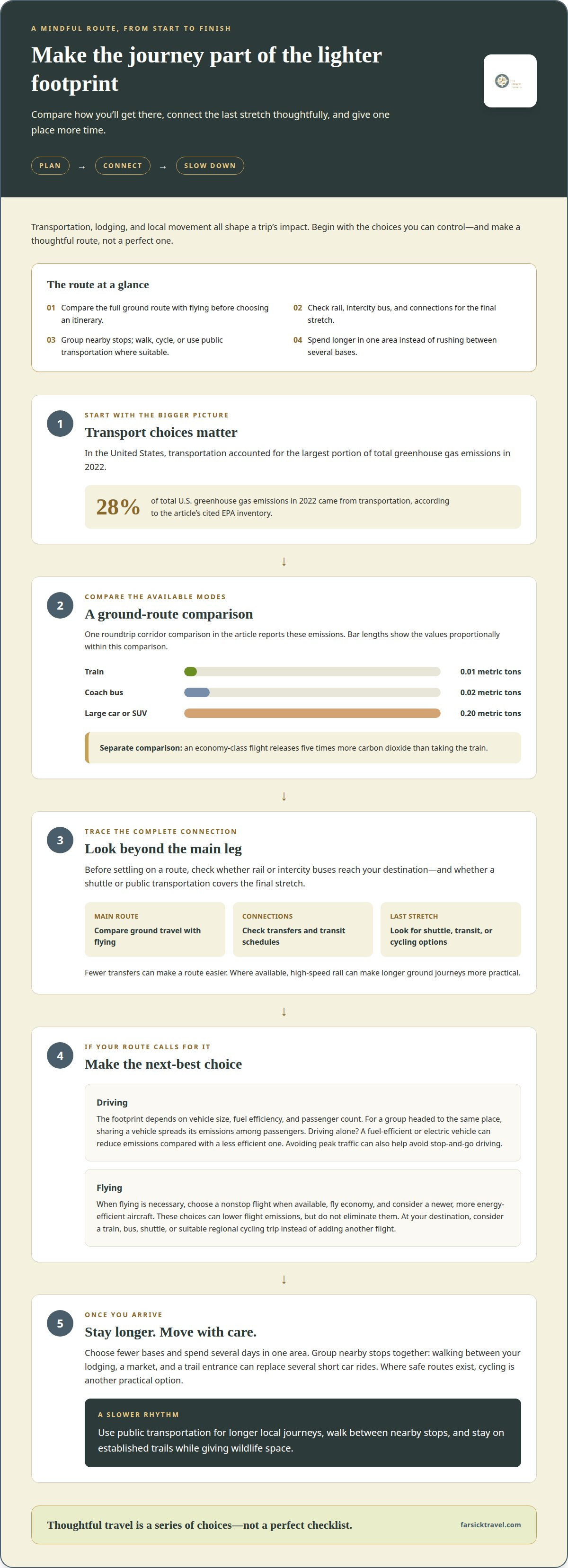
Travel affects the natural world through emissions, land use, noise, and resource demand. According to the U.S. Environmental Protection Agency’s annual Inventory of U.S. Greenhouse Gas Emissions and Sinks 1990-2022, the national inventory prepared under the United Nations Framework Convention on Climate Change, transportation accounted for the largest portion (28%) of total U.S. GHG emissions in 2022. Transport choices are one part of a trip’s environmental footprint.
How does the carbon footprint of flying compare with driving, trains, and buses? In one roundtrip corridor comparison, train emissions are 0.01 metric tons, coach bus emissions are 0.02 metric tons, and driving a large car or SUV produces 0.20 metric tons. Separately, an economy-class flight releases five times more carbon dioxide than taking the train.
For a trip within the United States, compare the full ground route with flying before you settle on an itinerary. Check whether rail or intercity buses reach your destination, and whether a shuttle or public transportation covers the final stretch. Fewer transfers can make a route easier, while high-speed rail can make longer ground journeys more practical where available.
Once there, group nearby stops together. Walking between your lodging, a market, and a trail entrance can replace several short car rides. Where safe routes exist, cycling is another practical option. Check transit schedules before choosing activities, then plan your day around available buses or trains instead of driving back and forth.
Driving’s footprint depends on the vehicle’s size and fuel efficiency, as well as how many people are traveling. If a group is headed to the same place, sharing a vehicle spreads its emissions among passengers. If you’re driving alone, a fuel-efficient or electric vehicle can reduce emissions compared with a less efficient one. Traveling outside peak traffic periods can also help avoid stop-and-go driving.
Flying may be necessary for some destinations. When it is, choose a nonstop flight when available, fly economy, and consider a newer, more energy-efficient aircraft. These choices can lower flight emissions, but they don’t eliminate them. At your destination, take a train, bus, or shuttle, or cycle for suitable regional trips instead of adding another flight.
Plan a slower route with fewer bases. For example, spend several days in one area, use public transportation for longer local journeys, and walk between nearby stops. On trails, stay on established paths and give wildlife space. This can reduce unnecessary travel while helping you experience a place at a more attentive pace.
2. What is sustainable travel?
Sustainable travel means reducing harm to nature and communities while directing more benefits to the places you visit. It involves choices about where you stay, what you do, how long you remain, and where you spend. A practical way to understand how to travel more sustainably is to consider how these choices work together. The goal isn’t a flawless trip, but a thoughtful approach that respects a destination’s resources and daily rhythms.
When choosing an eco-friendly hotel or accommodation, look for clear practices on energy efficiency, water conservation, and waste reduction. Recognized certifications such as Green Seal, LEED, EarthCheck, or Green Globe can help identify lodging assessed against sustainability standards. Look beyond the label, too: specific policies show how a property puts its commitments into practice.
You can also make your stay lighter. Hang towels to dry, request fewer linen changes, and switch off lights, heating, and air conditioning when you leave your room. Refill reusable bottles where suitable instead of reaching for single-use ones. These habits help conserve hotel resources and fit easily into your stay.
Choose a less-visited destination or travel outside its busiest season when your plans allow. A village trail in the shoulder season may offer cooler air, quieter paths, and more time to pause at a local café. Before setting out, find out whether seasonal conditions affect access, and follow marked routes to avoid disturbing nearby habitats.
Trip length matters, too. Instead of rushing through several destinations, spend longer in one area and explore nearby places at an unhurried pace. A few mornings on local trails, followed by afternoons in a village, can mean fewer transfers and more time for meaningful encounters. When deciding how to travel more sustainably, choose a destination for the experiences you value, not a checklist of distant stops.
Eco-labels can be difficult to compare: the travel industry has over 350 eco-travel labels. Look for independently assessed credentials and practical policies, rather than broad claims alone. The Global Sustainable Tourism Council Criteria provide an internationally recognized framework; Green Destinations, EarthCheck, and Vireo are GSTC Accredited Certification Bodies. A label is most useful when you understand what it assesses.
Carbon offsets let travelers pay for projects intended to eliminate greenhouse gases to balance emissions from a trip. They can support initiatives such as tree planting or renewable energy, but are best used to supplement emission reductions during planning, not replace lower-impact choices.
For activities, favor tour operators with clear environmental and community practices. Choose experiences that respect local guidance, wildlife, and cultural spaces. A nature walk on established paths, for example, lets you learn about a place without treating it as scenery alone.
3. Packing light and reducing single-use plastics
Start packing with a clear plan. Choose clothes that work in several settings, such as a walking layer that also suits a cool evening, and leave “just in case” extras at home. Less luggage can make train, bus, and walking connections easier. Traveling lighter can also improve fuel efficiency, particularly when driving an electric car.
Prepare a small reusable kit before departure. Pack a refillable water bottle, compact utensils, and a washable shopping bag, then keep them accessible in your daypack. These simple swaps help you avoid disposable cups, cutlery, and bags at cafés, markets, and trail stops. Eight million metric tons of plastic end up in the oceans every year, and plastic waste can remain in the environment for hundreds of years.
For a day outdoors, carry only what you need and pack out wrappers, food scraps, and other waste. Use established refill points when available, and don’t assume a natural water source is safe to drink without appropriate treatment. In a national park or remote landscape, leave plants, rocks, and wildlife undisturbed. Conservation starts with small choices along the trail.
- Choose a versatile layer and footwear suited to your planned activities.
- Bring reusable bottles, utensils, and a shopping bag.
- Keep a small pouch for waste until you reach a proper disposal point.
Conserve water beyond your hotel room, too. On a hike or at a campsite, use water thoughtfully for washing, avoid leaving taps running, and follow local guidance for handling wastewater. At a café, ask for a drink without a disposable straw if you don’t need one. These practical habits help avoid unnecessary waste.
Rethink business travel before packing. If a meeting or conference can happen virtually, a video call avoids the journey altogether. When meeting in person matters, combine meetings in one destination rather than making separate trips. A more deliberate schedule can save time and reduce avoidable travel.
Prepare digital travel materials deliberately. Save only the maps, tickets, and essential notes you’ll need offline, then remove duplicate downloads and unused files before departure. Keep directions in one accessible place instead of searching across apps repeatedly. You’ll spend less time scrolling and more time noticing the path, weather, and local details.
Finally, limit energy use on the move. Switch off devices you aren’t using, carry one suitable charger, and avoid charging several items unnecessarily. For a slower itinerary, plan a morning walk and an unhurried afternoon nearby instead of driving between scattered stops. Packing thoughtfully, conserving resources, and reducing waste can make your journey gentler on the places that welcome you.
4. Supporting local businesses
In U.S. national parks and protected areas, stay on marked trails, keep a respectful distance from wildlife, and never touch or feed animals. Pack out what you bring in, and follow guidance from park staff and local stewards. These practices help protect habitats and leave room for communities near protected lands to benefit from visitors.
Where you eat and shop matters. Choose a locally owned café, market, or craft shop rather than defaulting to familiar chains. Locally grown food travels fewer miles to your plate, while shopping at neighborhood businesses supports local economies and reduces the impact of transporting goods. A market lunch can turn a simple break into a way to connect with a place.
Look for community-led tourism that gives local people a meaningful role in shaping experiences. A locally guided walk, a family-run guesthouse, or an artisan-led workshop can connect your visit with local knowledge and livelihoods. Choose activities that respect residents’ time, culture, and shared spaces, and value the chance to learn at a human pace.
Buy crafts directly from makers when possible. At a local market, learn how an object is made and whether its materials are responsibly sourced. Choose something useful or lasting rather than several quick souvenirs. Thoughtful purchases can support an artisan’s work without adding unnecessary items to your bag.
Before visiting a new destination, learn about its history, customs, and etiquette. At religious or cultural sites, find out what clothing and behavior are considered respectful. Dress modestly where appropriate, speak considerately, and ask permission before photographing people. These steps help make an encounter mutual, rather than treating people and traditions as scenery.
Conservation and local livelihoods can go hand in hand when tourism supports responsible local services. In U.S. protected areas, consider a local guide who shares knowledge of the landscape and explains how to visit sensitive habitats with care. Follow advice about wildlife and fragile environments, and avoid leaving trails or collecting natural objects. Respectful visits can support people whose work is connected to caring for these places.
Spend intentionally throughout your trip. Book a locally led experience, buy lunch from a neighborhood business, or choose a maker’s work over a mass-produced keepsake. If you fly to a region, consider how your time and spending can support the communities and landscapes that make the visit meaningful. An unhurried day leaves more room for genuine connection.
5. Hotel certifications and sustainability policies
A hotel certification can help distinguish a documented commitment from a vague green claim. But a badge alone doesn’t tell you what the property does or which parts of its operation were assessed. Read the hotel’s sustainability information alongside its certification, and look for clear descriptions of the practices behind its claims.
Start by identifying the certification and what it covers. Green Seal, LEED, EarthCheck, and Green Globe are among the labels used in lodging. The Global Sustainable Tourism Council Criteria provide an internationally recognized framework for sustainable tourism. These names offer context, but the key question is what the credential assesses and how that relates to your stay.
Look next for policies that describe decisions, not just aspirations. Does the hotel explain how it manages energy, water, and waste? Does it describe where food or other supplies come from, or how its operations relate to nearby communities and nature? Specific examples are easier to assess than a broad statement about caring for the planet.
Consider whether the policy addresses the wider experience of staying there. A property might explain how it works with local businesses, protects surrounding habitats, or helps guests understand local culture. These details can show whether sustainability is part of the hotel’s approach to its destination, rather than just a marketing label.
Use a simple comparison when reviewing lodging: note the certification, read the stated policy, and identify the concrete practices described. If two hotels display similar credentials, their published commitments can help you decide which better aligns with your priorities. Look for consistency across environmental and community claims, not just one striking phrase.
Some properties make particularly ambitious environmental claims. Populus opened in 2024 as the world’s first carbon-positive hotel. Treat such descriptions as a starting point for understanding a property’s approach, then consider the specific policies and practices it shares. A memorable claim matters most when the hotel explains what it means in day-to-day operations.
Choose lodging whose stated practices fit the kind of visit you want. A stay can be part of a slower itinerary, with time for nearby trails, locally led experiences, and rest. Researching a hotel before booking helps connect your accommodation to the wider character of the destination.
The Farsick Travel
The Farsick Travel Co. helps turn sustainable intentions into a thoughtfully paced journey. Its custom travel planning can shape an itinerary around your interests, priorities, and preferred rhythm, with room for meaningful experiences and time to connect with a destination.
Whether you’re considering a solo escape, a skillcation, a Signature Hiking & Yoga Retreat, a bespoke honeymoon, or an intentional group or bachelorette trip, the planning can be tailored to the journey you have in mind.
Let your next journey reflect what matters
An intentional trip begins with a choice, not a perfect plan. Before setting dates, decide what you want your time away to make room for: quiet on a forest path, a deeper understanding of a place, or unhurried hours in a town you might otherwise pass through. That intention can guide your decisions without turning travel into a test you have to pass.
To put how to travel more sustainably into practice, choose one realistic change for your next journey. You might travel at a gentler pace, carry fewer things, or make room for experiences led by people who know the region. Let that first choice guide the rest, rather than trying to address every impact at once.
When you’re ready to shape those ideas into a personal, considered trip, The Farsick Travel Co. can help bring your priorities into the planning.
Travel can leave you more connected to a place and more mindful of how you move through it. Start with one thoughtful decision, then let the journey unfold.
Frequently Asked Questions
What is sustainable travel?
Sustainable travel means making choices that reduce harm and respect the people and places involved. It’s broader than choosing transport: consider how your itinerary affects residents, wildlife, resources, and local livelihoods. For example, choose an experience led by local people, follow guidance around sensitive areas, and avoid activities that disturb animals. The goal is a more considered journey, not a claim that travel can have no impact.
And how to get around?
Choose transport that fits the route, then reduce unnecessary movement once you arrive. In a walkable destination, group nearby stops together and explore on foot. For longer local journeys, consider public transportation, shuttles, or cycling where practical. If several people are traveling together, sharing a vehicle spreads its emissions among passengers. A well-paced itinerary also avoids repeated backtracking between distant stops.
And what if I do need to fly?
If flying is necessary, choose a nonstop flight when available, travel in economy, and consider a newer, more energy-efficient aircraft. These choices can reduce flight emissions compared with some alternatives, but they don’t make flying impact-free. Once you arrive, avoid extra flights between nearby stops when ground transport is practical. Plan around fewer bases and longer stays instead.
How do I even get started?
Before choosing activities, decide what matters most and make one practical change to your plans. You might select a destination reachable by ground transport, stay longer in one area, or carry a reusable bottle and shopping bag. Next, review lodging policies and plan how to get around locally. A short list of priorities keeps decisions focused without making the trip feel like a test.
How does this impact the natural world?
Travel can add emissions and waste, consume water and energy, and put pressure on sensitive habitats. The effects depend on choices throughout the journey, including transport, lodging, and activities. On trails and in wildlife areas, stay on established routes and observe animals without approaching, touching, or feeding them. Following local guidance helps reduce disturbance and leaves more room for nature to thrive.
What about long haul?
Long-haul travel can be difficult to replace with ground transport, so focus on making the journey purposeful. Consider whether you can stay longer rather than make several separate visits, and choose a direct flight when available. Economy seating and newer, more efficient aircraft can reduce per-passenger emissions. At your destination, use ground transport and avoid unnecessary short flights between stops.
What can you do about it?
As a traveler, make a few deliberate choices: reduce avoidable journeys, choose lower-impact transport where practical, support local businesses, and follow leave-no-trace practices. Research hotel resource policies and choose activities that respect wildlife and local culture. Focus first on decisions that most influence your itinerary, then carry simple habits, such as reusing a bottle, through the trip.
What does my carbon impact look like once I get to a destination?
It depends on how you travel, where you stay, and what you do. Repeated car journeys, energy-intensive lodging, and resource-heavy activities can add to a trip’s footprint; walking, public transportation, and longer stays in one base can help limit avoidable impacts. Meals, shopping, and water use matter, too. Think of your destination as a connected place, not just a series of attractions.

Article by
Ursula Akin
Ursula Akin created The Farsick Travel Co. to help travelers step away from rigid, multi-stop checklists and step into intentional, deeply rooted experiences. Specializing in custom travel design, solo escapes, and curated retreats, Ursula combines local insights with leave-no-trace ethics to turn wanderlust into seamless, unforgettable journeys.
Disclaimer
The information provided on this website and within our articles is for general informational and inspirational purposes only. While we make every effort to ensure accuracy regarding travel logistics, recommendations, and local details, conditions can change rapidly. Readers are encouraged to verify current travel requirements, weather, safety advisories, and local regulations independently. The Farsick Travel Co. is a travel design and curation service and is not responsible for any actions, changes, or incidents occurring during independent travel.


