

A travel-planning fee should reflect the work your trip requires, not a universal price tag. If you’re wondering how much do travel planners charge, the answer depends on the agreed scope: designing a focused itinerary and coordinating a carefully paced journey with several moving parts call for different levels of research and support.
It’s reasonable to want a clear fee you can compare and to know whether it’s separate from your travel expenses. Before agreeing to a service, ask what the fee covers, how it’s calculated, and whether changes or added planning could involve extra costs. A tailored itinerary should feel considered, not mysterious.
This guide explains common fee structures, what to clarify before you commit, and how to decide whether custom planning suits your needs. You’ll learn how to compare practical coordination with the value of a trip shaped around your pace, priorities, and the kind of connection you hope to find along the way.
Key Takeaways
- There’s no single answer to how much do travel planners charge. Fees depend on the agreed scope and complexity of the trip.
- Flat-fee, hourly, and commission-based arrangements work differently. Clarify how payment is calculated before you agree.
- Compare the planner’s confirmed tasks with your needs, including whether coordination of transport, accommodations, or activities is included.
- Weigh custom planning against your available time, the complexity of your trip, and how much research you enjoy doing yourself.
- Define your priorities and preferred pace first, then use them to assess whether a planner’s approach fits your journey.
How much do travel planners charge, and why is there no single rate?
Before asking a professional to help with your plans, you need a practical way to budget. The question “how much do travel planners charge?” has no universal answer. A quote reflects the work you agree on, not simply the number of days you’ll be away or the trip’s overall cost.
A planning fee pays for professional planning work. It may cover shaping an itinerary around your priorities, researching experiences, or coordinating specific travel details. The Travel agency overview offers background on travel businesses and their roles. Since planners don’t necessarily include the same tasks, compare the written scope rather than relying on a label such as “full service.”
A planner’s fee pays for the agreed planning work. Your trip expenses and charges from travel suppliers are separate unless your written terms clearly state otherwise. Keep these costs distinct as you budget. Ask which expenses you’ll pay directly and which details, if any, the planner will coordinate.
What does a travel planner’s fee usually refer to?
Think of the fee as payment for a defined contribution, not an automatic bundle of every travel arrangement. Depending on the engagement, the scope may include itinerary design or coordination of transport, accommodations, and activities. Ask the planner to list each inclusion and explain what falls outside the scope. For example, a proposal might cover research and itinerary design while leaving reservations for you to make. Clear terms show what you’re paying for and what remains your responsibility.
Why can two custom travel-planning quotes differ?
The work depends on the trip’s moving parts and on what matters to you. A focused itinerary built around one base and a few priorities may call for different research than a journey connecting nature-based activities, places to stay, and transport. Neither approach is automatically better. They simply involve different planning tasks.
Your preferences also shape the work. You might want quiet mornings on a trail, time for an unhurried local encounter, and fewer transitions between places. Turning those preferences into a workable rhythm can call for different research and coordination than arranging a straightforward sequence of stops. The amount of support you request matters, too, so confirm it rather than assuming it is included.
To assess a quote, describe your priorities, preferred pace, and the practical details you want help coordinating. Then ask the planner to outline the work, exclusions, and any terms that could affect the fee. A clear scope makes it easier to compare proposals and decide whether the approach fits the journey you have in mind.
How do travel-planning fee structures compare?
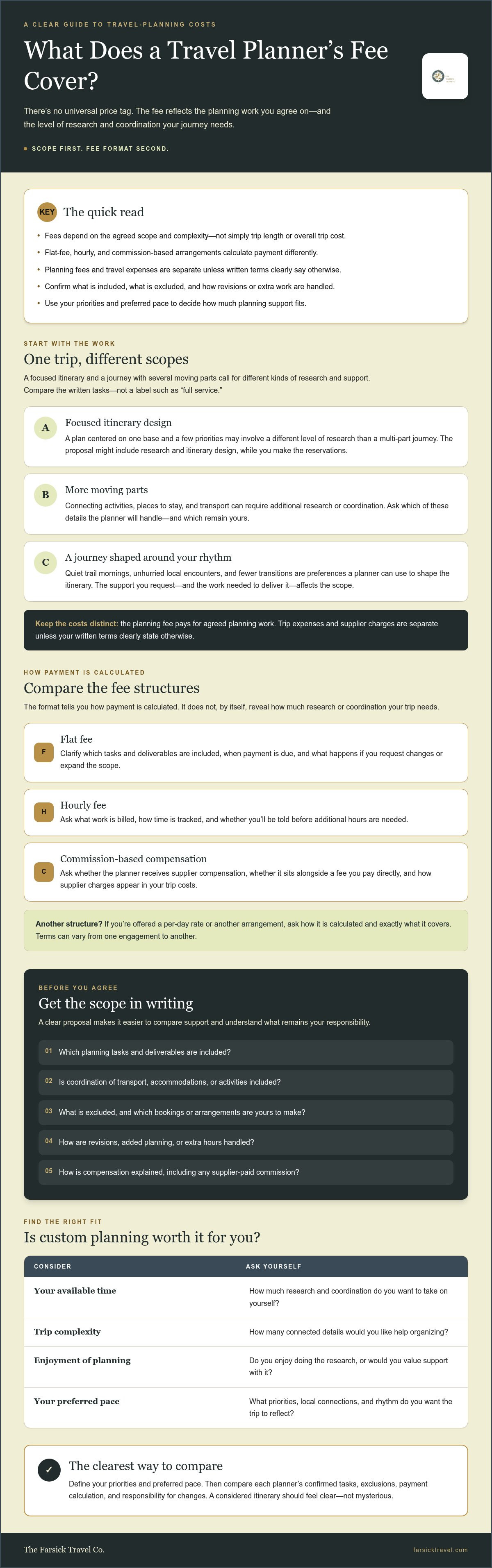
Once you understand what a quote covers, check how the planner charges for that work. Fee arrangements may include a flat fee, an hourly fee, or supplier-paid commissions. If you’re offered a per-day rate or another structure, ask how it is calculated and what it covers rather than assuming the terms are standard.
The format explains how payment is calculated, but it doesn’t show how much research or coordination your journey needs. The U.S. Bureau of Labor Statistics’ Occupational Outlook Handbook describes travel-agent work, including planning itineraries and arranging travel. Use that as general context, then confirm what your own planner has agreed to do.
| Fee format | What to clarify |
|---|---|
| Flat fee | Which planning tasks and deliverables are included? When is the fee due, and what happens if you request changes or add to the scope? |
| Hourly fee | What work is billed, how will time be tracked, and will you be told before additional hours are needed? |
| Commission-based compensation | Does the planner receive compensation from suppliers, and does that sit alongside any fee you pay directly? Ask how supplier charges appear in your trip costs. |
These arrangements can vary from one engagement to another. A professional planning fee is distinct from supplier charges, but payment terms and compensation arrangements aren’t universal. Ask the planner to explain both plainly and show how the costs will be presented.
What should travelers compare beyond the fee format?
Compare the written scope, not just the fee label. Check the promised deliverables, how revisions are handled, how you’ll communicate, and who is responsible for each agreed task. One proposal might cover itinerary design only, while another may include specified coordination of transport, accommodations, or activities. Don’t assume those tasks are included unless the planner confirms them.
Which fee questions should you ask before agreeing?
Get the practical terms clear before work begins. Ask:
- What work is included, and what’s excluded or available only by separate agreement?
- When is payment due, and are any fees refundable or credited toward other costs?
- How are plan changes, added requests, or extra planning time handled?
- What supplier charges will I pay separately?
Request the answers in writing so you can compare the full arrangement, not just the fee format. The fee format alone can’t show the service’s full value. The agreed scope explains what planning and coordination you’ll receive. If you’re considering a journey shaped around a particular pace and set of priorities, review The Farsick Travel Co.’s custom travel-planning service and confirm what the engagement would include.
What does a custom travel-planning fee buy beyond an itinerary?
A custom itinerary is more than a sequence of places. Its value can come from selecting and arranging the pieces around your interests, energy, and preferred pace. That’s one useful way to think about “how much do travel planners charge?” Look beyond the finished document and ask what planning work the fee actually covers.
Online research can help you find trails, places to stay, and activities. Personalized planning brings those possibilities together around your priorities. If you want quiet time outdoors and fewer transitions, for example, the itinerary might leave room for a morning walk and a slower afternoon instead of filling every hour. A plan can suggest a rhythm, but it can’t promise a particular experience or replace mindful choices on the ground, such as respecting local guidance and leaving natural spaces as you found them.
How does tailored planning change the shape of a trip?
Start with how you want the journey to feel. A traveler who prefers active mornings and restorative afternoons may need a different sequence from someone who wants a full day of activities. A planner can use your interests, energy, and preferred pace to shape a more coherent itinerary, with breathing room between experiences. The specific recommendations and revisions depend on the agreed scope.
That design work goes beyond collecting popular recommendations. It considers how each experience fits with the next and whether the overall pace reflects what you asked for. A nature-focused day, for example, could center on an early walk followed by an unhurried afternoon instead of a packed list of stops. The aim is thoughtful sequencing, not a guarantee about conditions or outcomes.
What coordination may be included in a custom service?
Some custom-planning engagements include coordination of transport, accommodations, and activities. These are possible elements, not automatic inclusions. Before comparing a fee, ask which tasks the planner will handle, which you’ll arrange yourself, and whether added requests fall outside the agreed work. For a closer look at the thinking behind bespoke planning, explore custom itinerary design services.
Travel Weekly, drawing on industry reporting, describes the shift toward fee-based work in its report from the World Travel Agents Associations Alliance. This offers context on why travelers may pay for planning expertise, but it doesn’t establish what any individual service includes.
To assess the value, match the fee to specific work: itinerary design, agreed coordination, and any stated revision or communication terms. Custom planning may suit you if you want help shaping a trip around clear priorities. If you enjoy researching and arranging each element yourself, online tools may be enough. The difference lies in the service you choose and the scope you confirm, not in a promise that one approach will always save time or money.
Is hiring a travel planner worth the fee compared with planning yourself?
The right fit depends on more than “how much do travel planners charge?” Consider how much time you can give trip research, how many parts need to work together, and whether you enjoy making each decision yourself. A planner’s fee doesn’t automatically mean money saved or a better trip. It pays for the agreed work, so its value depends on whether that work matters to you.
When might planning a trip yourself be the better fit?
If you enjoy comparing places to stay, checking activity details, and shaping each day at your own pace, planning independently can be satisfying. It may suit a straightforward trip with few moving parts, especially if you’re comfortable managing the arrangements and have time to research carefully.
Be realistic about the time you can set aside and how you feel about making decisions. If research is part of the pleasure, there may be no need to outsource it. If it’s becoming a strain, that’s useful information when choosing how much support you want.
When can custom travel planning offer meaningful support?
Professional planning may appeal when a journey has several connected elements or when your priorities call for a more deliberate rhythm. You might want a nature-focused trip that balances time outdoors with unhurried afternoons, or a solo escape shaped around your interests. Custom planning can bring those preferences into one itinerary, with coordination of transport, accommodations, or activities only when those tasks are included in the agreed scope.
The Farsick Travel Co. offers custom travel planning for nature and adventure itineraries, solo travel, skillcations, signature hiking and yoga retreats, proposals and honeymoons, and bachelorette trips. For a wellness-centered journey, restorative travel planning offers ideas for considering the pace and feel of an itinerary.
To decide, compare the planner’s written scope with the parts of the trip you want help shaping. Ask yourself:
- Do I have the time and energy to research and coordinate the details myself?
- Is the journey simple, or do several experiences and logistics need to fit together?
- Do I want guidance shaping the trip around my interests and preferred pace?
- Are the planner’s confirmed responsibilities worth the fee to me?
Choose the approach that fits your time, confidence, and travel style. Independent planning can be a rewarding way to build a trip; custom planning can provide tailored design and agreed coordination. Neither guarantees a particular outcome. A clear understanding of the work helps you make an informed choice.
For details about the planning support available, review The Farsick Travel Co.’s custom travel-planning options.
How to evaluate a travel planner’s fees before you commit
Make a planning quote easier to judge by starting with your trip, then checking whether the proposed work matches what you want help with. Since “how much do travel planners charge” has no universal answer, broad estimates won’t predict your quote. Ask for the current fee and inclusions based on your specific needs.
- Define the trip. Note your interests, preferred pace, key priorities, and the parts you’d like help coordinating.
- Request the scope. Ask what work and deliverables the quote covers, and what remains your responsibility.
- Clarify the terms. Confirm payment timing, how changes are handled, and any exclusions.
- Assess the fit. Compare the written scope with the level of guidance and coordination you want.
- Decide. Move forward only when the fee, responsibilities, and approach are clear to you.
What should a transparent planning proposal explain?
Look for a written description of the service, deliverables, communication expectations, payment terms, and exclusions. Ask how a change in your needs could affect the agreed work. Don’t assume standard terms: arrangements vary, and the planner should explain the ones that apply to your engagement. Clear answers help you compare proposals beyond the headline fee.
For example, if you want help coordinating accommodations and activities, check that those tasks are explicitly included rather than inferred from a broad service description. Compare each planner’s written scope with the support you want, and ask about anything unclear before work begins.
How can you take the next step with The Farsick Travel Co.?
Begin with what you want the journey to make room for: time outdoors, a slower rhythm, a new skill, or a meaningful milestone. The Farsick Travel Co. offers custom travel planning for experiences including solo travel, skillcations, hiking and yoga retreats, and proposal and honeymoon planning. Confirm the exact fee and inclusions directly for your trip.
If you’re preparing to share your travel priorities, preferred pace, and desired level of coordination, the custom trip inquiry form is one way to provide those details.
To discuss your planning needs, you can also schedule a travel-planning conversation.
Choose the planning support that fits your journey
So, how much do travel planners charge? There’s no universal rate. The fee depends on the agreed scope, the trip’s complexity, and the level of customization and coordination you want. Compare written proposals, not just fee formats, and confirm what’s included, what’s separate, and how changes are handled.
Custom planning is a personal choice, not a requirement. If you enjoy researching and arranging a straightforward trip, planning it yourself may feel rewarding. If you want a journey shaped around your priorities and pace, a planner can develop a custom itinerary and, where agreed, coordinate transport, accommodations, and activities. The right fit is the one that makes sense for your needs and budget.
Share your interests, preferred rhythm, and the support you’re looking for to explore a custom journey with The Farsick Travel Co.
Your next trip can be thoughtfully planned at a pace that feels like your own.
Frequently Asked Questions
How much do travel planners charge?
Travel planners’ fees depend on the agreed scope, trip complexity, and level of support, so there’s no single rate for every itinerary. Ask for a written quote based on your plans rather than relying on a broad estimate. It should distinguish the planner’s professional work from trip expenses and explain what’s included, what’s excluded, when payment is due, and how requested changes may affect the arrangement.
Do travel planners charge a flat fee or an hourly rate?
Travel planners may use flat or time-based fees, and other arrangements may also be available. Don’t assume one structure is standard across planners or services. Ask how the fee is calculated, which planning tasks it covers, and whether additional work could change the amount. Before agreeing, confirm payment timing and make sure the fee structure and its terms are documented in writing.
Are travel-planning fees separate from the cost of the trip?
They may be separate, depending on the planner’s terms. Ask whether the quote covers professional planning only and how trip expenses for accommodations, transport, or activities are handled. Request a written breakdown that distinguishes the planner’s fee from amounts paid for the journey itself. This makes it easier to budget and understand which costs you’ll pay to the planner and which may be paid separately.
What does a travel planner’s fee include?
Inclusions depend on the specific engagement. Custom planning may involve designing an itinerary around your interests and, where agreed, coordinating transport, accommodations, and activities. Ask for the deliverables, communication expectations, revision terms, and exclusions in writing. The Farsick Travel Co. offers custom itineraries and high-touch coordination; confirm which tasks apply to your engagement rather than assuming every planner provides the same work or level of support.
Is hiring a travel planner worth the fee?
It may be worthwhile if you value a tailored itinerary or want help coordinating connected parts of a journey. Independent planning may suit you if you enjoy researching and arranging travel, especially when your needs are straightforward. Compare the planner’s written scope with your priorities, available time, and desired support. Neither approach guarantees savings or a particular travel outcome; the right choice depends on what feels useful to you.
Can I ask a travel planner for a quote before committing?
Yes, you can ask what details a planner needs to understand your trip and prepare a proposal. Share your priorities, preferred pace, and the coordination you’re looking for, then review the proposed scope, payment terms, and exclusions before deciding. Ask whether an initial conversation or consultation carries a fee. Confirm the answer directly, since the process and terms can differ between planners.
Why do custom travel-planning fees vary?
Custom-planning fees vary because the work can change with the itinerary’s complexity, your preferences, and the coordination you request. A focused plan may involve different tasks from a journey with several connected experiences and logistics. Those factors alone don’t establish a specific price. Ask the planner to explain how the proposed fee relates to the agreed work, deliverables, and any additional support you want.

Article by
Ursula Akin
Ursula Akin created The Farsick Travel Co. to help travelers step away from rigid, multi-stop checklists and step into intentional, deeply rooted experiences. Specializing in custom travel design, solo escapes, and curated retreats, Ursula combines local insights with leave-no-trace ethics to turn wanderlust into seamless, unforgettable journeys.
Disclaimer
The information provided on this website and within our articles is for general informational and inspirational purposes only. While we make every effort to ensure accuracy regarding travel logistics, recommendations, and local details, conditions can change rapidly. Readers are encouraged to verify current travel requirements, weather, safety advisories, and local regulations independently. The Farsick Travel Co. is a travel design and curation service and is not responsible for any actions, changes, or incidents occurring during independent travel.


