

If you’ve watched a hopeful itinerary turn into evenings spent comparing trails, stays, transport, and activities, you may be asking: is a travel planner worth it? The answer depends on how much coordination your trip involves, how much time you want to spend planning, and how much of the journey you want to shape yourself.
Planning a trip yourself can be satisfying, especially when the itinerary is simple and you enjoy the research. But balancing different needs, finding a slower rhythm, or combining wilderness time with local experiences can add layers of decisions. This article compares DIY planning with professional support, explains what tailored planning can and can’t do, and shows how to weigh a fee against the time and coordination involved. You’ll also find questions to ask before choosing a planner. The goal isn’t to persuade you to outsource every detail. It’s to help you decide what suits this particular trip.
Key Takeaways
- Decide whether a travel planner fits by considering your trip’s complexity, the coordination you want, and the time you’re willing to spend.
- Ask what the planning fee covers. Confirm the deliverables, revision process, and who handles each arrangement.
- DIY planning gives you direct control. Professional support can bring structure. The right choice depends on fit, not travel skill.
- Use clear questions to understand a planner’s scope and whether their approach matches your priorities and preferred pace.
- Consider whether The Farsick Travel Co.’s custom planning, solo experiences, retreats, skillcations, honeymoons, or curated groups fit your journey, then decide whether is a travel planner worth it for your needs.
Is a travel planner worth it? Start with what you want from the trip
A travel planner can be worth it when you value tailored coordination more than managing every detail yourself. For a familiar, flexible trip with few arrangements, planning independently may be simpler. The best choice depends on the journey, your appetite for research, and the specific support you need.
A travel planner shapes an itinerary around your preferences and may coordinate trip details within an agreed scope. Since services vary, confirm what a particular planner includes. For a neutral overview of what a travel agency is, keep in mind that agencies differ in how they work and what they arrange. Custom planning goes beyond collecting destination ideas: it connects the pieces of a trip to your priorities and to one another.
Start with the experience you want, not only the places you hope to visit. You might want a quiet solo escape, a trip centered on learning, or mornings on a wilderness trail followed by an unhurried afternoon. That intention can guide decisions about pace, activities, and practical arrangements. If your plans include natural spaces, consider how to follow local guidance and leave the place as you found it.
What does a travel planner actually help with?
A planner can use your interests, preferred pace, practical constraints, and priorities to shape an itinerary. Depending on the service, coordination may include transport, accommodations, and activities. Before you proceed, identify which pieces the planner will arrange and which remain yours to handle. This is one difference between tailored planning and general destination inspiration, search results, or self-service tools. Those resources can help you research, but they may not bring your choices together into one coherent plan.
When is DIY trip planning likely to be enough?
DIY may suit you if the destination feels familiar, your schedule is flexible, and the itinerary has only a few moving parts. If you enjoy comparing places to stay, choosing daily activities, and leaving room for spontaneous discoveries, doing the research can be part of the pleasure.
There’s no universal trip length or destination that calls for professional help. Ask yourself: are you enjoying the decisions, or spending more energy coordinating them than imagining the journey? If the planning feels manageable, keep the reins. If you’d rather use that time to shape a more meaningful rhythm, additional support may be a better fit.
What makes a travel planner worth the fee? Weigh time, fit, and coordination
A planning fee pays for professional work, not a guaranteed lower trip cost or a promise that every detail will go perfectly. Its value depends on the service you receive: itinerary design, coordination within the agreed scope, and less planning for you to manage. To judge whether a travel planner is worth it, compare the confirmed support with the tasks you would otherwise take on yourself.
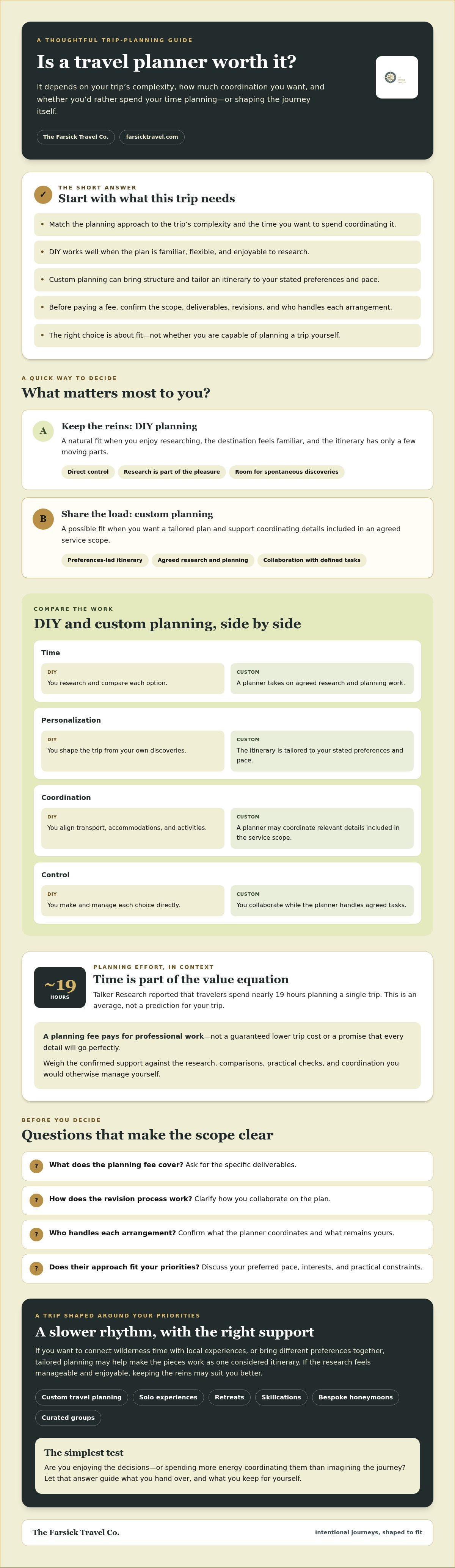
| Consideration | DIY planning | Custom planning |
|---|---|---|
| Time | You research and compare each option. | A planner takes on agreed research and planning work. |
| Personalization | You shape the trip from your own discoveries. | The itinerary is tailored to your stated preferences and pace. |
| Coordination | You align transport, accommodations, and activities. | A planner may coordinate relevant details included in the service scope. |
| Control | You make and manage each choice directly. | You collaborate on the plan while the planner handles agreed tasks. |
Which parts of the planning process take the most effort?
Often, the hard part is making separate decisions work together. A place to stay may suit one traveler but not another’s activity plans. A packed day of outings may leave little room for a slower pace. Add travelers with different preferences, a focus such as hiking or learning a skill, or several transport and accommodation arrangements, and coordination can become more involved.
Comparing options, checking practical details, and adjusting plans when arrangements don’t align all take time. Talker Research reported that travelers spend nearly 19 hours planning a single trip in a July 2026 study. That is an average, not a prediction for your trip, and professional support won’t remove every decision or challenge.
Professional planning may be valuable if the time and coordination it takes off your hands matter more than managing every detail yourself.
How can you judge whether the fee matches the service?
Before agreeing, ask for a clear scope. What will you receive? Which transport, accommodation, and activity details will be coordinated? How are revisions handled, and what remains your responsibility? Compare the answers with the specific tasks you want help managing. For another perspective on how tailored itinerary work takes shape, explore custom itinerary design services.
If you’re comparing planners, the American Society of Travel Advisors offers consumer resources that may help you research your options. If you’re considering a personal, coordinated journey, ask about custom travel planning and confirm the service scope before deciding.
Travel planner versus DIY: which approach fits your trip?
Choosing between a planner and DIY isn’t a test of travel skill. Not every trip needs professional help, and planning your own can be part of the fun. The useful question is where you want to put your effort: researching and arranging each detail, or deciding what matters most while someone helps shape the structure.
Consider four factors: how many pieces need to fit together, how much time and energy you have for planning, how confident you feel making unfamiliar choices, and how important a particular experience is to the trip. A straightforward escape with flexible plans may need little more than your own research. A group journey with different preferences, or a trip built around a specific interest, may require more coordination. AAA’s overview of When to Use a Travel Agent also explores situations where professional support may be helpful.
When might a custom travel planner be a better fit?
Consider professional support if your trip has a distinct purpose or you want its pace to feel carefully considered. A nature-based adventure, solo journey, skillcation, or retreat can involve priorities beyond choosing places to visit. You might want an active morning outdoors, time to rest without rushing, and a relaxed afternoon that leaves room for a local interaction.
Creating that rhythm takes intention, particularly when several arrangements need to support it. If restoration is central to your plans, explore ideas for travel planning for mental wellness. For nature-based travel, thoughtful planning can also help you consider how to follow local guidance and leave natural spaces as you found them.
When might you prefer to plan the trip yourself?
If you enjoy researching, want direct control over every decision, and have a manageable set of arrangements, DIY may feel rewarding rather than burdensome. You can follow your curiosity, compare stays at your own pace, and make room for discoveries that weren’t on the original plan. For some travelers, that hands-on process is part of the journey.
Choose professional help when its structure and coordination fit your needs. Choose DIY when the research and control are part of what you enjoy. The answer to “is a travel planner worth it” can change from one trip to the next. If tailored support seems useful, compare the planning scope with the tasks you want to delegate.
How to choose a travel planner and know what to ask
A good fit begins with clarity, not a long wish list. Before speaking with a planner, define what you want the trip to make room for: quiet, movement, time together, learning, or a closer connection with nature. Then list the support you’d value, such as itinerary design, accommodation coordination, or help bringing activities into a comfortable daily rhythm.
Confirm the service scope before agreeing. Ask about the fee, what deliverables you’ll receive, how communication works, whether revisions are included, and who is responsible for each arrangement. Also consider the conversation itself. Does the planner listen for your priorities and practical constraints, or steer you toward a preset idea of what the trip should be? Personal fit matters as much as logistics.
Questions to ask before hiring a travel planner
Ask direct questions to understand the planning process and your role in it:
- How will you learn about my priorities, interests, and preferred pace?
- What itinerary details and coordination are included, and what will I handle myself?
- How do you account for practical constraints or changing preferences as the plan develops?
- How are the fee, deliverables, communication, and revisions set out before work begins?
The answers help you compare the service with the tasks you actually want help managing. They also make expectations clearer for both sides.
What should a thoughtful itinerary feel like?
Imagine an early trail walk while the air is cool, followed by a slow afternoon in a village. That pace leaves room to rest, enjoy a meal, and engage respectfully with local life instead of rushing from one activity to another. A well-considered plan should reflect your energy and interests, not simply fill the day.
Ask how the season, time of day, likely crowds, and local microclimates might shape activities. Conditions can vary along a route or change with the weather, so verify destination-specific details before you go. For an outdoor day, check the expected terrain and conditions, then pack accordingly, including comfortable footwear, weather-appropriate layers, and essentials suited to your planned activities.
For time outdoors, ask how the itinerary supports local guidance and leave-no-trace practices. Respect wildlife by observing from a distance, and approach cultural experiences with curiosity and care. These choices can help make a journey feel connected rather than extractive.
When comparing options, look for an itinerary that makes room for the experiences you value without treating every hour as something to fill.
Is The Farsick Travel Co. the right travel planner for you?
The Farsick Travel Co. may suit you if you want a journey shaped around your priorities, not simply a string of stops. Its custom travel planning is tailored to individual preferences and includes coordination across transport, accommodations, and activities. To see whether that approach fits, compare it with the trip you have in mind and confirm exactly what the service includes.
Which kinds of journeys align with The Farsick Travel Co.?
The company offers custom planning for nature and adventure travel, solo travel experiences, signature hiking and yoga retreats, skillcations, proposal and honeymoon planning, and bachelorette parties. These are different ways to travel, with room to build the itinerary around what matters to you: time outdoors, space to reset, learning a skill, celebrating together, or moving at a more considered pace.
For example, a wilderness-focused itinerary might balance time on the trail with room to rest and engage respectfully with local communities. A learning-led trip may be organized around the skill you want to explore, rather than treating activities as add-ons. If that kind of journey interests you, read more about skillcation travel experiences.
These examples aren’t promises of a particular itinerary or outcome. They’re ways to think about fit. If tailored choices and coordinated details matter to you, this approach may be worth exploring. If you prefer to make every arrangement yourself, another planning style may suit you better.
What is a simple next step if you are still deciding?
You don’t need a finished itinerary before starting a conversation. Note what you hope the trip will feel like, what’s uncertain, your preferred pace, and which planning tasks you’d like help with. For a nature-based journey, you could also share your interests in outdoor activities and how you want to approach local culture and natural spaces thoughtfully.
Ask The Farsick Travel Co. to clarify the proposed scope, fee, deliverables, and who handles each arrangement. Those details can help you decide whether the support matches your needs, without committing before you understand the service.
Choose the kind of support that lets you travel well
So, is a travel planner worth it? It depends on the journey you want and the work you’re willing to take on. A familiar trip with a flexible schedule may be satisfying to plan yourself. If your plans involve several arrangements, different traveler preferences, or an experience you want to shape with care, professional support may feel worthwhile.
Before deciding, compare the fee with the confirmed scope: what the planner will deliver, which arrangements they’ll coordinate, and what remains yours to manage. The right choice isn’t about being a more or less capable traveler. It’s about how you want to spend your time and what kind of rhythm you want the trip to hold.
The Farsick Travel Co. creates custom itineraries around individual preferences and goals, with coordination across transport, accommodations, and activities. Its offerings include nature-based and solo travel, hiking and yoga retreats, skillcations, honeymoons, and curated group experiences. Choose the planning approach that matches the support you want.
Frequently Asked Questions
Is a travel planner worth it for a simple trip?
For a simple trip, a planner may not be worth it if your plans are familiar, flexible, and easy to coordinate. Whether a travel planner is worth it depends on the support you need, not a rule that applies to every traveler. If choosing your own stay and activities sounds enjoyable, DIY planning may be practical. Consider professional help if coordinating details or shaping a specific experience feels harder to manage alone.
What does a travel planner do?
A travel planner can shape a personalized itinerary around your interests, practical needs, and preferred pace. Depending on the service, this may include coordinating accommodations, activities, and transportation. Responsibilities vary, so ask what the planner will arrange, what you’ll handle, and how revisions work. Don’t assume every planner manages every reservation or provides assistance during travel. Confirm the scope before deciding whether the service suits your plans.
How much does a travel planner cost?
Travel planning fees vary by provider and service, and there isn’t a confirmed fee amount to share here. Ask for the current fee and a clear explanation of what it covers before committing. Then compare the deliverables with the research, coordination, and itinerary design you want help with. Consider whether the scope matches your trip and the tasks you’d prefer to delegate, rather than judging value by the fee alone.
Can a travel planner save you money?
A travel planner may help you make considered choices, but savings aren’t guaranteed. The fee pays for professional planning work, and the value may instead come from less research, thoughtful coordination, or recommendations that reflect your priorities. Ask how suggestions are developed and which costs are separate. Compare the confirmed service scope with planning independently rather than assuming professional help will always make the trip less expensive.
When should I hire a travel planner?
Consider speaking with a planner when you know what you want from a trip but feel unsure how to shape its pace or coordinate the details. Professional support may also help when personal priorities call for more tailored research than general travel resources provide. Start early enough to understand the process, but don’t assume a standard lead time. Ask the planner directly about any timing requirements for your trip.
Is it better to use a travel planner or plan a trip yourself?
Neither approach is always better. Planning independently can suit a straightforward trip if you enjoy researching options and want direct control over each choice. A planner may be a better fit if tailored design, a considered pace, or coordination across several elements matters to you. Compare the trip’s complexity, the time you can give planning, and the specific support offered. Choose the approach that feels proportionate to your needs.
What should I ask a travel planner before hiring one?
Ask how the planner learns about your preferences, what the fee includes, and which arrangements they coordinate. Clarify what remains your responsibility, how communication works, whether revisions are included, and any limits on the service. Share your preferred pace, interests, practical constraints, and seasonal considerations. Clear answers help you assess fit and set expectations before proceeding, without relying on broad promises or assumptions about what every planner provides.

Article by
Ursula Akin
Ursula Akin created The Farsick Travel Co. to help travelers step away from rigid, multi-stop checklists and step into intentional, deeply rooted experiences. Specializing in custom travel design, solo escapes, and curated retreats, Ursula combines local insights with leave-no-trace ethics to turn wanderlust into seamless, unforgettable journeys.
Disclaimer
The information provided on this website and within our articles is for general informational and inspirational purposes only. While we make every effort to ensure accuracy regarding travel logistics, recommendations, and local details, conditions can change rapidly. Readers are encouraged to verify current travel requirements, weather, safety advisories, and local regulations independently. The Farsick Travel Co. is a travel design and curation service and is not responsible for any actions, changes, or incidents occurring during independent travel.


