

What if the real benefits of using a travel advisor have less to do with booking and more to do with how a journey feels? When options multiply and every transfer, stay, and activity needs a decision, planning can become a series of disconnected tasks. A packed itinerary may leave little room for the trail walk you imagined, with cool air underfoot and birdsong along the path, or for a lingering meal as afternoon light softens.
A thoughtful advisor helps shape those pieces around your purpose and pace. They can coordinate accommodations, transport, and activities, then align the plan with your interests, whether you’re seeking time in nature, a solo escape, or a trip built around learning and restoration. They can’t make every decision for you or guarantee plans won’t change. The value is having a considered plan and a knowledgeable partner in its design.
This guide explores what an advisor can take off your plate, when personalized planning may be more useful than planning alone, and what to clarify before choosing that approach. You’ll also find a practical way to weigh the investment against the time, complexity, and meaning of your next journey, so your itinerary supports the experience you actually want.
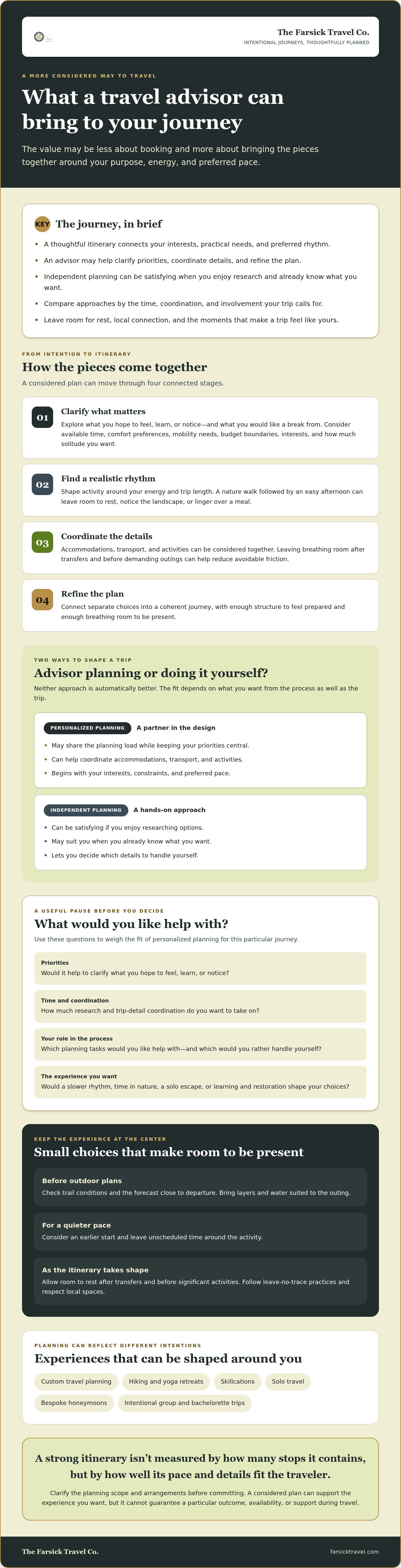
Key Takeaways
- The benefits of using a travel advisor can include a more coherent itinerary shaped around your purpose, interests, energy, and preferred pace.
- Learn how an advisor can help clarify priorities, create a realistic rhythm, coordinate trip details, and refine the plan.
- Compare personalized planning with independent research across time, coordination, and how involved you want to be.
- Use a short self-assessment to decide which planning tasks you’d like help with and which you’d rather handle yourself.
- Explore how custom travel planning, retreats, solo experiences, skillcations, honeymoons, or group trips may fit different travel intentions.
Benefits of using a travel advisor: what changes when planning feels personal?
You want a trip that feels like yours, but comparing places to stay, transport options, and activities can start to feel like another job. The benefits of using a travel advisor begin with sharing that planning load while keeping your priorities at the center. A travel advisor is a professional who helps shape and coordinate travel around a client’s needs. For a broader overview of the travel industry, see what a travel agency does.
A tailored itinerary isn’t automatically better than one you plan yourself. If you enjoy researching and already know what you want, planning independently can be satisfying. The difference is that personalized planning starts with your interests and constraints, rather than treating a standard checklist as the default.
A travel advisor’s value is in aligning trip logistics with your priorities, so the plan supports the experience you want to have.
What does a travel advisor do beyond researching options?
The process can begin with a conversation about what you hope to get from the trip, how much activity feels right, which practical constraints matter, and how much solitude or shared experience you prefer. Those answers give the itinerary a clear starting point.
From there, planning may include designing the itinerary and coordinating accommodations, transport, and activities. That work can connect separate choices into a more coherent journey. It doesn’t guarantee a particular outcome, availability, or support during travel, so clarify the planning scope and arrangements before committing.
Why can a personal itinerary feel different?
A trip has a rhythm, not just a route. A morning nature walk followed by an easy afternoon leaves room to rest, notice the landscape, or spend time in a local café without watching the clock. A packed schedule might offer more stops, but it can leave less space for those quieter moments.
For outdoor plans, check trail conditions and the forecast close to departure, then bring layers and water suited to the outing. If you hope to experience a place at a quieter pace, consider starting earlier and leaving unscheduled time around the activity. That flexibility can make it easier to move mindfully, respect local spaces, and follow leave-no-trace practices.
For a closer look at how priorities can shape a trip’s flow, explore custom itinerary design. The aim isn’t to fill every hour. It’s to make choices work together, with enough structure to feel prepared and enough breathing room to be present.
How a travel advisor turns your priorities into a coherent journey
A considered itinerary takes shape in stages: clarify the purpose, set a realistic rhythm, coordinate the details, then refine the plan. This sequence connects each choice to what you want from the trip, rather than letting every activity and transfer compete for space.
How does an advisor learn what kind of trip you need?
Start with questions beyond the destination: What do you hope to feel, learn, or notice? What would you like a break from? Then consider the practical picture: available time, comfort preferences, mobility needs, budget boundaries, interests, and how much solitude you want. These details help shape a plan around both your intention and your everyday needs.
Trip length and energy matter, too. A brief escape may call for one central experience and room to unwind; a longer journey can allow for active days balanced with quieter ones. The benefits of using a travel advisor are most tangible when that personal context informs decisions throughout the itinerary.
How do logistics support a better travel rhythm?
Coordinating accommodations, transport, and activities can help reduce avoidable friction, such as arriving after a long travel day and immediately heading into a demanding outing. Leave breathing room after transfers and before significant activities. A slower schedule can make space for a restful morning, an unhurried meal, or a genuine conversation with a local guide.
A strong itinerary isn’t measured by how many stops it contains, but by how well its pace and details fit the traveler.
Timing and packing depend on the destination and season. Daylight hours and weather can shift through the year, so check local conditions for your travel dates before planning outdoor activities. If you prefer a quieter trail and cooler air, an early start may suit you. Bring water and a light layer, and leave time to pause without rushing. Follow local guidance, stay on appropriate paths, and leave natural spaces undisturbed.
For ideas on shaping a restorative pace, read about travel planning for mental wellness. The U.S. Bureau of Labor Statistics also provides background on the travel agent profession.
If you’re considering a journey shaped around your priorities, you can ask about custom travel planning with The Farsick Travel Co.
Travel advisor vs. planning independently: which approach fits your trip?
There’s no single right way to plan a trip. The best approach depends on how much time and coordination you want to take on, how settled your preferences are, and whether you’d enjoy shaping the details yourself. An advisor isn’t necessary for every traveler or every journey.
| Consideration | Planning independently | Working with an advisor |
|---|---|---|
| Time | You set the research pace and handle each decision. | You collaborate on priorities and can delegate agreed planning tasks. |
| Coordination | You connect the details and track how they fit together. | An advisor can coordinate accommodations, transport, and activities within the planning scope. |
| Personalization | You tailor the plan using your own research and preferences. | The itinerary is shaped through collaboration around your interests and pace. |
| Your involvement | You lead the process from research through refinement. | You decide how involved you want to be and what you’d like help shaping. |
When might independent travel planning be enough?
If you enjoy researching, have clear preferences, and have time to manage the details, planning independently can be a satisfying part of the trip. A straightforward itinerary with few moving parts may not need extensive coordination. You can still travel thoughtfully, build in quiet time, and choose experiences that feel personal. Self-planning isn’t a lesser option; it’s simply a better fit for some people and trips.
When might a travel advisor add more value?
Tailored coordination may appeal when a journey combines several interests, layered logistics, or a meaningful milestone, and you’d rather collaborate than manage each detail alone. The benefits of using a travel advisor can be especially relevant when a wilderness journey calls for careful thought about activity choices, timing, and the flow between travel days. Explore wilderness adventure travel planning for more on shaping a nature-focused trip.
Before choosing, consider which tasks you enjoy and which feel like friction. Ask a prospective advisor to clarify the planning scope, fees, and what coordination includes. The American Society of Travel Advisors offers industry resources for travelers researching advisors and the profession.
If collaboration feels like the right fit, ask about custom travel planning with The Farsick Travel Co. and explore whether a personalized approach suits your next journey.
How to decide whether using a travel advisor is right for you
The choice comes down to fit: how much planning you want to do, how many details need to work together, and what you want the trip to make room for. The benefits of using a travel advisor may matter most when you’d value thoughtful collaboration, but there’s no need to hand over decisions you enjoy making yourself.
- Planning time: Do you have the time and energy to research and coordinate the trip?
- Trip complexity: Are there multiple activities, stays, or travel legs to bring together?
- Priorities: Is there a particular purpose, pace, or milestone you want the itinerary to honor?
- Involvement: Which details would you like help shaping, and which would you rather handle on your own?
Your answers don’t have to point entirely in one direction. You might want support with the overall itinerary while choosing your own activities, or prefer to manage the basics and ask for guidance on a more complex nature-focused journey.
What should you ask before working with an advisor?
Get a clear picture of the working arrangement before you commit. Ask what the planning service includes, which details the advisor will coordinate, and how fees are explained. Clarify what happens if your preferences change as the plan takes shape. It’s also helpful to ask how you’ll communicate during planning and what support, if any, is included during travel. Don’t assume availability is continuous; confirm expectations directly.
How can you prepare for a useful planning conversation?
A little preparation can make it easier to distinguish must-haves from nice-to-haves. Note your approximate travel dates, how flexible they are, and whether seasonal conditions or crowds affect your preferences. For an outdoor-focused trip, write down questions about the best time of day for planned activities, likely conditions, and what layers or other essentials to pack. Check current local guidance as your dates approach.
Bring a rough sense of your interests, energy, comfort needs, and the experience you hope to have. You don’t need a finished itinerary. List non-negotiables alongside open questions, such as whether you’d prefer an active morning followed by a quiet afternoon or more time for local connection. That gives an advisor room to offer ideas without losing sight of what matters to you.
Contact the travel planning team
How Farsick Travel Co. makes custom travel planning personal
The Farsick Travel Co. is a boutique independent travel consultancy for journeys shaped around what matters to you: meaning, rhythm, and connection. Custom planning brings your interests and preferences into the decisions that shape a trip. For travelers weighing the benefits of using a travel advisor, that collaborative approach can help logistics serve the experience, rather than overwhelm it.
Which kinds of journeys can custom planning support?
Different intentions call for different kinds of travel. A wilderness adventure may center on time outdoors, while a slow-travel escape can leave room to settle into a place and connect respectfully with local culture. Solo trips, wellness retreats, and skillcations can reflect a traveler’s interests and preferred pace. Bespoke proposal and honeymoon planning, along with intentional group and bachelorette experiences, offer other ways to mark a meaningful occasion.
The Farsick Travel Co. also offers signature hiking and yoga retreats. These options aren’t a one-size-fits-all menu; the right fit depends on what you want from the journey. Your focus might be learning a skill, moving through nature, sharing an experience, or making space for restoration.
What does mindful travel look like in practice?
It can be as simple as walking quietly on a marked trail, carrying out everything you bring in, and pausing to listen to birds without approaching or disturbing wildlife. In a local café or market, choosing a seasonal dish and asking the person serving it about its ingredients can open a small, genuine exchange. Let the conversation happen at their pace, and ask before taking photographs of people.
That care also shapes the day’s rhythm. A hike followed by an unhurried afternoon leaves time to rest and notice the place, rather than rushing between activities. The itinerary can balance structure and flexibility, guided by your interests and the character of the journey.
What is a thoughtful next step?
Start by naming what you hope to experience, whether that’s a restorative retreat, a solo escape, a shared celebration, or time immersed in the outdoors. Then consider whether custom travel planning or a curated experience fits your intention. You don’t need every detail decided before exploring the possibilities.
Explore a custom travel conversation
Shape a journey that feels like yours
The benefits of using a travel advisor come into focus when planning reflects more than a destination. It can align practical details with your purpose, preferred pace, and interests, while giving you room to decide which parts you want to shape yourself.
For some travelers, independent planning is the right fit. For others, custom guidance can help bring an intricate itinerary into focus, from coordinating transport, accommodations, and activities to making space for a slower, more personal rhythm. The Farsick Travel Co. creates custom itineraries around individual preferences, with curated options that include solo travel, retreats, skillcations, and honeymoons.
Your next journey doesn’t need to follow a checklist. It can begin with a simple question: what would you like this time away to make possible?
Whether you’re imagining quiet mornings outdoors, a new skill to learn, or meaningful time together, let your own intention guide the way.
Frequently Asked Questions
What are the main benefits of using a travel advisor?
The main benefits of using a travel advisor are personalized planning, coordinated details, and an itinerary shaped around your priorities. An advisor can help connect accommodations, transport, and activities with your interests and preferred pace, rather than leaving you to manage each element separately. This can be especially useful when your trip has several moving parts or a distinct purpose. It isn’t necessary for every traveler, but it can make planning feel more coherent.
Is it worth using a travel advisor if I enjoy planning trips?
It can be, if you enjoy choosing experiences but would rather have help coordinating some of the logistics. You might research activities yourself and ask an advisor to help bring accommodations, transport, and timing into a workable plan. If the research is part of the fun and your trip is straightforward, planning independently may suit you better. Consider which tasks energize you and which feel like work before deciding.
Can a travel advisor plan a trip around my interests and travel pace?
Yes. Custom travel planning can shape an itinerary around your individual preferences, interests, goals, and desired rhythm. You can share whether you’d like active days, time for rest, solo exploration, or opportunities to learn and connect. These priorities can guide the itinerary’s activities and overall pace. Be specific about what matters most, and clarify the planning scope with the advisor so you understand how your preferences will inform the plan.
How does a travel advisor differ from booking a trip myself?
When you plan independently, you lead the research, make the choices, and coordinate the details yourself. Working with an advisor is more collaborative: you share your preferences, then the advisor helps shape a custom itinerary and coordinate agreed elements. Neither approach is automatically better. Independent planning may fit a simple trip and someone who enjoys research; an advisor may appeal when you want help connecting several interests or logistics.
What should I ask a travel advisor before working with one?
Ask what the planning service includes, which details the advisor coordinates, and how fees are explained. Clarify how changes to your preferences affect the planning process, and what communication arrangements to expect. If you’re wondering about support during travel, ask what is and isn’t included rather than assuming. Clear answers help you compare the service with your needs and decide whether the scope, expectations, and working style feel like a good fit.
Does a travel advisor coordinate accommodations, transport, and activities?
A travel advisor may coordinate accommodations, transport, and activities as part of a custom planning service. The exact scope can vary, so ask which arrangements are included and what you’ll be responsible for handling. The Farsick Travel Co. describes its service as providing high-touch, end-to-end coordination across these trip elements. Confirm the details for your own planning needs before moving forward, so you know what coordination to expect.
Can a travel advisor help plan a solo trip, retreat, or honeymoon?
Yes. The Farsick Travel Co. offers Solo Travel Experiences, Signature Hiking and Yoga Retreats, and Proposal and Honeymoon Planning. It also offers wellness retreats and skillcations. Each option suits a different travel intention, so consider whether you’re seeking time alone, a nature-focused retreat, a shared milestone, or a chance to learn. Custom Travel Planning can also tailor an itinerary to individual preferences. Ask about the scope of the offering that interests you.
Article by
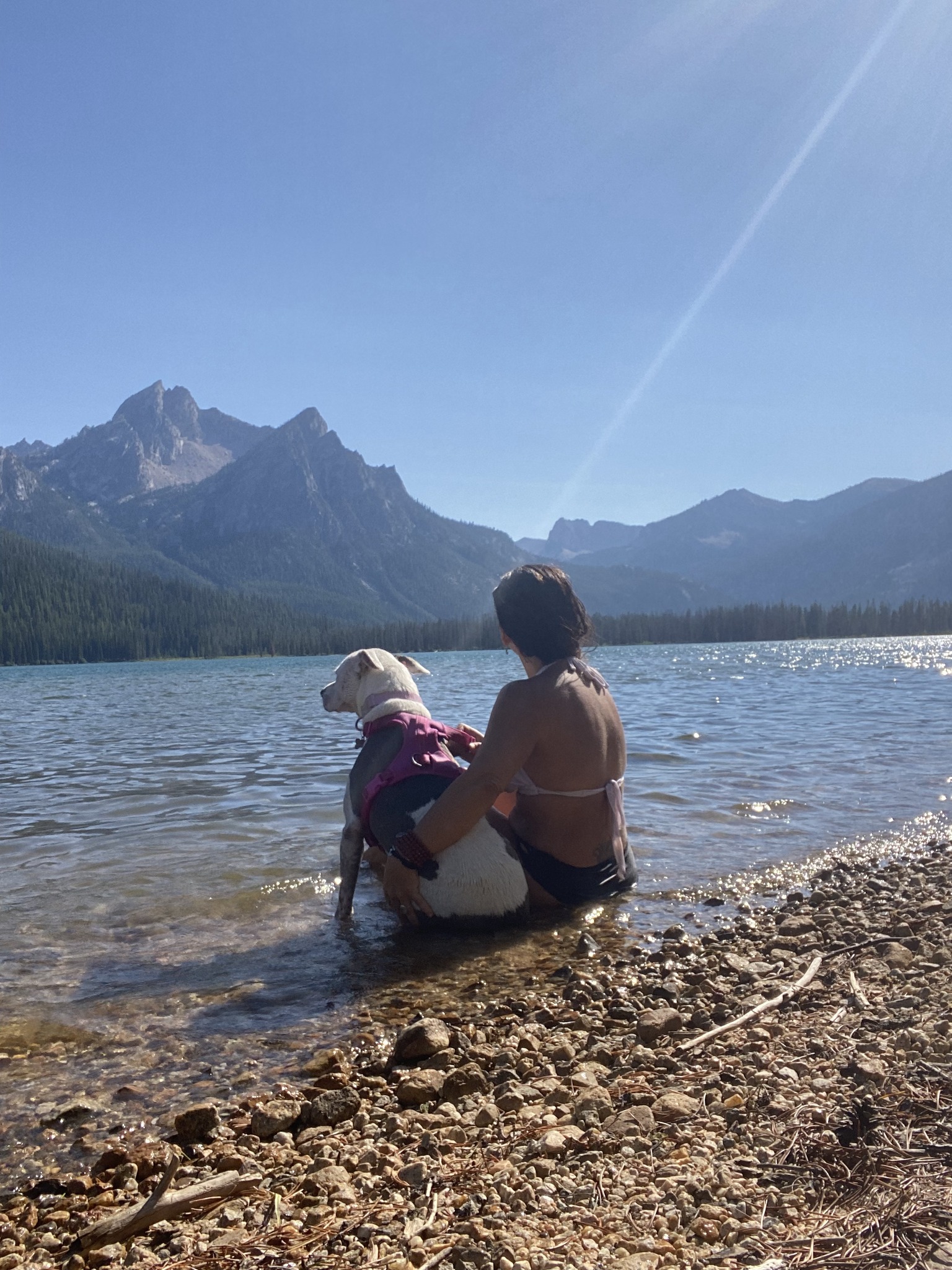
Ursula Akin
Ursula Akin created The Farsick Travel Co. to help travelers step away from rigid, multi-stop checklists and step into intentional, deeply rooted experiences. Specializing in custom travel design, solo escapes, and curated retreats, Ursula combines local insights with leave-no-trace ethics to turn wanderlust into seamless, unforgettable journeys.
Disclaimer
The information provided on this website and within our articles is for general informational and inspirational purposes only. While we make every effort to ensure accuracy regarding travel logistics, recommendations, and local details, conditions can change rapidly. Readers are encouraged to verify current travel requirements, weather, safety advisories, and local regulations independently. The Farsick Travel Co. is a travel design and curation service and is not responsible for any actions, changes, or incidents occurring during independent travel.


