

What if traveling alone didn’t mean choosing between total freedom and meaningful connection? You may want room to follow your own rhythm, along with a shared meal, a local story, or a trail companion along the way. Curated solo travel experiences bring those possibilities together, with thoughtful planning that helps a journey feel supported without filling every hour.
When you’re responsible for every detail, an inspiring trip can start to feel like another task. When the itinerary is packed, there’s little space to rest, linger, or discover something unexpected. The aim is not to plan less carefully, but to make space with intention.
This article explores how to shape a solo journey around your interests and energy, with enough structure to feel prepared and enough openness to wander. You’ll find ways to balance quiet time with genuine connection, and to build nature, local culture, or learning into a trip at an unhurried pace. Solo travel can be independent without feeling isolating, and considered without feeling scheduled.
Key Takeaways
- Shape curated solo travel experiences around your purpose, interests, and energy, rather than a checklist of sights.
- Use a simple daily rhythm, such as a morning walk and an open afternoon, to balance plans with space to explore.
- Compare independent, small-group, and custom itineraries to find the right balance of personal space and shared moments.
- Plan with season, daylight, and likely crowd patterns in mind, then leave room to adjust as you go.
- Build your journey around what matters to you, from nature and wellness to learning a new skill.
What Makes Curated Solo Travel Experiences Different?
You can want the freedom to change your plans on a whim and still wish someone had helped shape the journey. Traveling independently doesn’t have to mean making every decision alone, from choosing where to stay to finding experiences that feel worthwhile. Solo describes who you’re traveling with, not whether every part of the trip happens in solitude.
Curated solo travel experiences are journeys shaped around your interests, preferred pace, and reason for going. The choices are deliberate: a walk through a quieter landscape might matter more than a crowded attraction; a shared meal or hands-on local experience might offer the connection you’re seeking. The result is neither a rigid schedule nor a blank page.
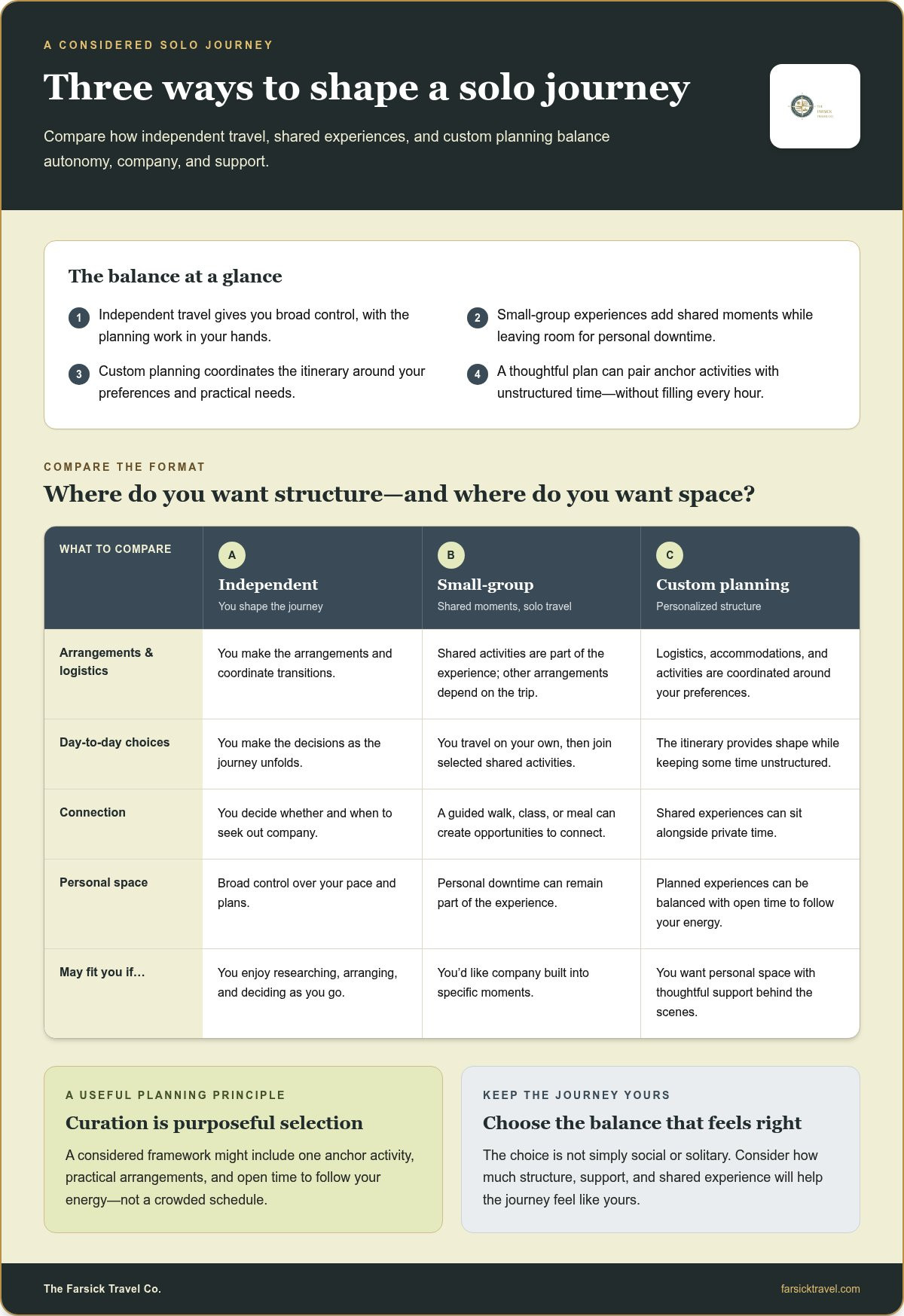
Solo travel, small-group travel, and custom planning
These formats offer different balances of autonomy, companionship, and planning support. Consider where you want to make the decisions and where you’d welcome structure or company.
- Independent travel: You make the arrangements and day-to-day decisions. This offers broad control, but also means carrying the planning work, coordinating transitions, and adapting when plans change.
- Curated small-group experiences: You travel on your own, then join shared activities with other travelers. A guided walk, class, or meal can create natural opportunities to connect, while some personal downtime can remain part of the experience.
- Custom solo planning: The itinerary is designed around your preferences, with logistics, accommodations, and activities coordinated to give the trip shape. You can have planned experiences alongside unstructured time, without joining a group throughout.
There isn’t one right format. If you enjoy researching and deciding as you go, independent planning may suit you. If you’d like company built into specific moments, shared experiences may feel grounding. If you want personal space with thoughtful support behind the scenes, an individualized itinerary can provide that middle ground.
What curation changes about the journey
Curation connects the pieces of a trip to a larger intention. Someone hoping to learn might build a journey around a hands-on class; someone seeking restoration could make room for movement, quiet, and time outdoors. These choices help the days feel coherent without making them identical or overfilled.
Curation is purposeful selection, not a crowded schedule. A considered framework might include one anchor activity, practical arrangements, and open time to follow your energy. You could set out for a morning walk, then linger over lunch or pause when a shaded path, a small market, or the slower rhythm of a community invites you to stop.
That openness works best when the essentials have been considered. With transport, accommodations, and activities coordinated around your preferences, you can give less attention to logistics and more to noticing what’s around you. Move gently through natural spaces, respect local rhythms, and leave places as you found them. The central choice isn’t whether to be social or solitary. It’s how much structure, support, and shared experience will help the journey feel like yours.
How Rhythm and Personal Intent Shape a Solo Journey
A trip feels more personal when its shape grows from what you need, not from a list of places you feel obliged to see. Before choosing activities, ask yourself: am I looking for restoration, a physical challenge, a chance to learn, or time to reconnect with myself? You might want more than one thing, but naming your main intention gives each planning decision a useful measure.
Begin with the reason for traveling
Let your intention guide the balance of each day. A restorative escape may call for gentle movement, quiet meals, and unclaimed time. A challenge could center on a hike or another active experience, followed by a slower afternoon to recover. If learning is the draw, build around a class or hands-on activity, then leave room to absorb what you’ve discovered. If you’re seeking reconnection, a thoughtful shared experience can sit alongside private time.
Personal interests matter just as much as purpose. Think about what holds your attention at home: nature, movement, food, craft, or conversation. Then choose a few experiences that bring those interests into the journey rather than trying to fit in every appealing option. Solo travel statistics and benefits offers broader context on the motivations behind traveling alone, including personal growth and self-care.
A clear intention doesn’t have to become a strict theme. It helps you recognize what belongs in the itinerary, what can wait, and what deserves breathing room. That’s the difference between a plan that supports you and one that starts making demands.
Build a day with space to notice
Try a flexible sequence: one anchor activity, an open interval, and a gentle close. For example, begin with a morning walk while the air is cool and the light is soft. Keep the late morning unassigned, so you can pause for coffee, follow a side street, or return to your accommodation if your energy dips. In the afternoon, choose something low-key, such as reading or an unhurried meal. Let evening arrive without racing to another appointment.
Adjust the timing to the activity, season, and your own energy. Check local daylight before planning an outdoor outing, and consider how heat, rain, or cooler conditions may change the most comfortable time to be outside. If a popular place is on your list, an earlier visit or a quieter time of day may help you experience it with less bustle. Keep a light layer and water handy for changing conditions, follow local guidance, and stay on established paths to care for the places you visit.
A spacious itinerary gives meaningful encounters room to happen, because attention can’t be hurried from one appointment to the next. It also makes adaptation easier: if the weather shifts or you feel ready for a rest, the day can change without feeling spoiled.
That kind of rhythm is central to curated solo travel experiences: considered enough to feel grounded, flexible enough to remain yours. The Farsick Travel Co. offers custom solo travel planning to shape a journey around your interests and pace.
Independent, Shared, or Custom: Which Solo Travel Format Fits?
Traveling solo doesn’t dictate how much company or structure you want. You might relish making each choice yourself, look forward to sharing a particular activity, or prefer a plan shaped around your interests with plenty of time on your own. The useful question isn’t which format is best in general. It’s where you want to hold the decisions, and where you’d welcome support or connection.
When independent travel may suit you
Independent planning gives you the widest scope to follow your curiosity. You can linger over breakfast, take a quieter route, or change direction because the weather has shifted. That freedom can feel especially rewarding if you like learning a place through your own observations and conversations.
There’s a trade-off: you’re also responsible for coordinating the details. You’ll need to decide how activities fit together, account for travel time between them, and adapt if a plan doesn’t work as expected. Before setting out, consider which logistics you’re comfortable managing and which you’d rather simplify. Independent travel may fit best if the process of planning is part of the pleasure, not just a task to get through.
When shared or custom-curated travel may suit you
A small-group experience can make connection part of the day without requiring you to travel with companions from home. Joining a shared walk, class, or meal gives conversation a natural starting point. It can be a good fit if you want some company but are comfortable following a set activity or schedule for those moments.
Custom planning offers a different balance. It can align experiences and practical arrangements with your interests, while leaving room to explore on your own. You might choose a shared activity for connection, then keep the rest of the day personal. A well-shaped itinerary can make that blend feel intentional rather than improvised.
Use the comparison as a starting point, not a rulebook. Ask yourself how much planning you want to carry, how often you’d enjoy shared company, and how much freedom you want from one day to the next. Curated solo travel experiences can take different forms; the right fit gives you enough support to feel at ease and enough space to feel fully yourself.
How to Plan a Solo Itinerary with Practicality and Care
A thoughtful solo itinerary starts with a clear purpose, then makes practical choices that help the journey feel steady rather than over-managed. Use this sequence to build a plan you can trust and still adapt along the way.
- Name your intention. Decide what you want the trip to make room for: restoration, a physical challenge, learning, or time in nature. Use that purpose to choose a few meaningful experiences instead of collecting stops.
- Choose a setting and season. Look into seasonal conditions that could affect your plans, such as temperature, rainfall, or changing daylight. Check that the activities you’re considering suit the conditions and your experience level. If a route or outdoor activity depends on the weather, identify a gentler alternative before you go.
- Shape your days around energy and light. Note sunrise and sunset for your travel dates, especially if you plan to spend time outdoors. Schedule activities for a time that feels comfortable and appropriate, and consider visiting popular spots early or later in the day if you’d prefer a quieter atmosphere. Leave gaps between plans so a slow meal or a change in weather doesn’t send the whole day off course.
- Coordinate the practical details. Map how you’ll move between accommodations and activities, allowing realistic time for transitions and rest. Keep key details accessible, including addresses, arrival information, and activity arrangements. A custom itinerary can bring these elements together while leaving open time for unplanned discoveries.
- Pack for the actual itinerary. Start with the terrain and activities, then check the expected conditions for your dates. Choose comfortable walking footwear if you’ll be on foot, and bring layers that can adapt to shifts in temperature. Add personal essentials for planned activities, along with a refillable water bottle and a small day bag. Avoid packing for every imagined scenario; focus on what your plans genuinely call for.
- Build care and courtesy into the plan. In natural spaces, stay on established paths, give wildlife room, and carry out what you bring in. Before visiting a community or joining a local experience, learn relevant courtesies, such as greetings, expectations around photography, or appropriate dress. Follow local guidance, listen more than you assume, and choose interactions that respect people’s time and traditions.
Choose experiences around season, setting, and energy
Conditions can shape not just what’s possible, but how a place feels. A warm, exposed route may suit an earlier start, while a cooler day could make a longer walk more comfortable. Check forecasts and local guidance close to departure, then balance active outings with slower plans. Leave some time flexible, so changing conditions can invite a different pace rather than force a scramble.
Prepare thoughtfully and travel responsibly
Keep your plan useful, not rigid. Save the details you’ll need, but let your energy and the place itself influence the day. Curated solo travel experiences work best when practical preparation supports presence: enough foresight to feel at ease, enough openness to meet the journey as it unfolds.
Design a Curated Solo Travel Experience Around Your Story
A meaningful solo journey doesn’t need to follow a template. It can begin with a question: what would you like this time away to make possible? Perhaps you want to move through a landscape on foot, return to a regular yoga practice, learn a skill, or spend more time in places where local life unfolds at its own pace. Your answer gives the itinerary a center of gravity.
Custom travel planning connects that intention to practical choices. The Farsick Travel Co. coordinates transport, accommodations, and activities around your preferences, so the journey can feel coherent without turning into a checklist. A nature-based adventure might combine time on the trail with slower intervals to rest and notice the surroundings. A wellness retreat can make space for movement and restoration, while a skillcation can center learning through hands-on experiences.
Turn personal interests into a coherent itinerary
Start with the experiences you’re drawn to, then consider how they might complement one another. If hiking is the anchor, you may want a gentler afternoon afterward rather than another demanding outing. If yoga matters to you, think about how movement fits alongside exploration and downtime. For a learning-focused trip, allow room to practice, reflect, and engage with the subject beyond a single scheduled activity.
That’s how a collection of activities becomes a journey with rhythm. Thoughtful coordination can account for the transitions between them, while the pace reflects your energy and leaves space to pause. In natural settings, a considered plan can also support low-impact choices, such as staying on established routes and making time to experience a place without disturbing its wildlife. The Farsick Travel Co. provides tailored itinerary planning to help bring those priorities together.
Choose a next step that feels manageable
You don’t need a fully formed itinerary to begin. A few clear preferences are enough to start shaping possibilities: the kind of journey you want, the pace that feels comfortable, and whether you’re seeking solitude, shared moments, or a balance of both. It can also help to name what you’d rather avoid, such as tightly packed days or frequent changes of setting.
From there, custom planning can bring the elements into alignment. A solo experience might feel fully independent, with practical details thoughtfully coordinated behind it. Or it could include a shared hike, a wellness experience, or a learning opportunity, while preserving time to explore at your own pace. The aim is not to script every moment. It’s to make the important choices feel considered, so you can be present for the journey itself.
Curated solo travel experiences can hold both intention and openness. The Farsick Travel Co. also plans signature hiking and yoga retreats, solo travel experiences, skillcations, bespoke honeymoons, and intentional group and bachelorette trips, each shaped around the experience you want to have.
Make Space for the Journey Ahead
You don’t need to know every detail before you begin. Start with a quieter question: what would you like to feel more connected to when you return? It might be your own confidence, a creative interest you’ve set aside, or the simple pleasure of being fully present somewhere new. Let that answer be a compass, not another expectation to meet.
The most personal curated solo travel experiences leave room for who you are now, and for the unexpected moments that may change what you want along the way. Share the kind of journey you’re imagining with The Farsick Travel Co. and begin turning that first feeling into a custom plan.
Frequently Asked Questions
Is curated solo travel the same as joining a group trip?
No. Independent travel means you arrange the trip and make day-to-day choices yourself. A group trip centers on shared activities and a schedule experienced with other travelers. With custom planning, you can travel on your own while having an itinerary shaped around your preferences. It may include selected shared experiences, but it doesn’t require group participation throughout the journey.
Can I have alone time on a curated solo trip?
Yes. You can build personal time into the itinerary, such as a quiet morning, a solo dinner, or an afternoon without scheduled activities. Before planning, think about which moments you’d enjoy sharing and which you’d rather keep to yourself. Naming those preferences helps create a rhythm with intentional experiences and genuine breathing room, rather than expecting you to be social all day.
How do I choose a solo travel experience that fits my interests?
Start with your reason for traveling, the pace that feels comfortable, and the activities you’re drawn to. Then identify one or two priorities you’d be disappointed to miss. For instance, if you love being outdoors but also want to learn, you might look for a journey that makes room for nature alongside a hands-on experience. Consider how much active time and quiet time you want, too.
What should I pack for a solo adventure trip?
Pack for the activities you’ve planned and the conditions expected during your trip. For walking, consider comfortable footwear, weather-appropriate layers, and a small day bag for water and personal essentials. Check the forecast close to departure and adjust for rain, sun, or temperature changes. Choose versatile items you’ll actually use, and carry out your waste to help care for the places you visit.
Is a custom solo itinerary suitable if I have never traveled alone?
Yes, it can help you prepare for a first solo journey by bringing practical details into a clear plan. Custom travel planning can coordinate accommodations, transport, and activities around your preferences, so you have a framework to refer to as you go. To build confidence, share what feels unfamiliar and choose a pace that leaves time to settle in between experiences. Preparation can help you feel more at ease, though every traveler’s experience is personal.
How can I meet people while traveling solo without joining a large group?
Choose a shared experience with a natural focus, such as a small-group walk, a class, or a meal with a local host. These settings give conversation an easy starting point without making socializing the purpose of the whole trip. Be curious, respect people’s time and customs, and ask before taking photographs. You can also choose quieter local experiences where interaction happens naturally, then return to your own plans afterward.
Can a solo itinerary include hiking, wellness, or learning experiences?
Yes. A solo itinerary can be shaped around hiking, yoga, time in nature, or a learning goal. The Farsick Travel Co. offers nature and adventure itinerary planning, signature hiking and yoga retreats, and skillcations. You might make one interest the journey’s central thread or combine complementary activities, with time to rest between them. Consider your experience, energy, and preferred pace when deciding what feels right for your trip.
Article by
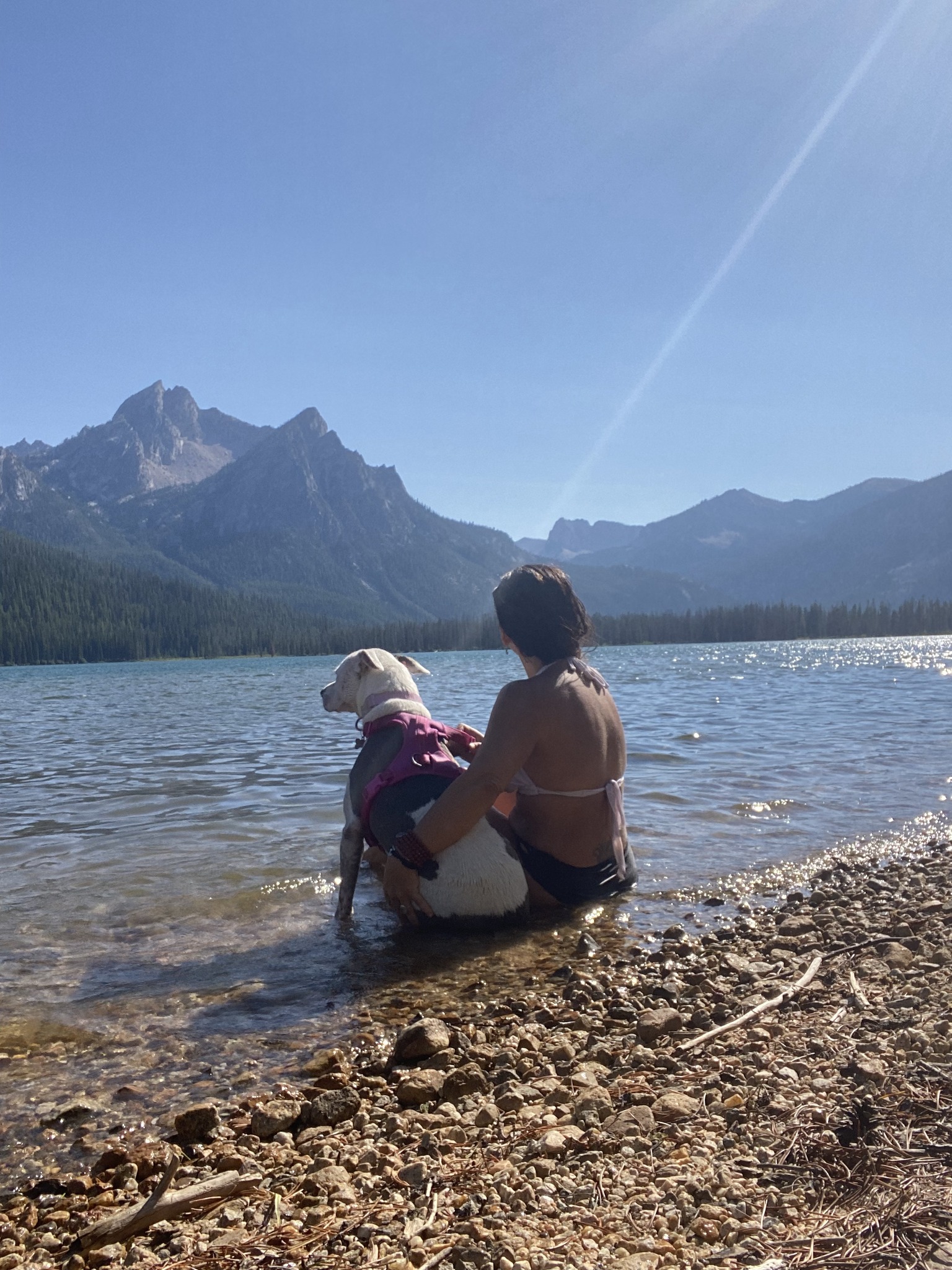
Ursula Akin
Ursula Akin created The Farsick Travel Co. to help travelers step away from rigid, multi-stop checklists and step into intentional, deeply rooted experiences. Specializing in custom travel design, solo escapes, and curated retreats, Ursula combines local insights with leave-no-trace ethics to turn wanderlust into seamless, unforgettable journeys.
Disclaimer
The information provided on this website and within our articles is for general informational and inspirational purposes only. While we make every effort to ensure accuracy regarding travel logistics, recommendations, and local details, conditions can change rapidly. Readers are encouraged to verify current travel requirements, weather, safety advisories, and local regulations independently. The Farsick Travel Co. is a travel design and curation service and is not responsible for any actions, changes, or incidents occurring during independent travel.


