
The most polished luxury itinerary isn’t always the right one. If you’re weighing Scott Dunn competitors, start with a more useful question: do you want a specialist-led tour, a private custom journey, or a trip shaped around a slower, more personal rhythm?
Options can blur together because “tailor-made” may describe anything from adapting a familiar itinerary to building a trip around your interests from the ground up. This guide compares approaches from Audley Travel, Abercrombie & Kent, Black Tomato, Kensington Tours, and others. You’ll also get practical ways to weigh pace, interests, and planning support, then decide whether custom planning, a retreat, or a solo escape fits best. The aim isn’t to see more. It’s to travel in a way that feels like yours.
- Compare tour operators, independent planners, and curated experiences.
- Match each planning model to your preferred pace and interests.
- Look beyond the luxury label to how a trip is shaped and coordinated.
- Choose a next step based on the kind of journey you want.
Key Takeaways
- Compare Scott Dunn competitors by how they shape a trip, not by the luxury label alone.
- Tour operators, independent planners, and curated experiences differ in structure and traveler involvement.
- Use purpose, pace, and desired support to separate essential priorities from appealing extras.
- Custom planning can coordinate transport, accommodation, and activities around the kind of journey you want.
Scott Dunn competitors: what kind of travel alternative are you looking for?
A luxury label can signal a certain level of comfort, but it doesn’t tell you whether a planner will build a trip around your interests, leave room for unplanned discoveries, or coordinate the details that matter to you. The main alternatives fall into three broad types: tailor-made tour operators, independent custom planners, and curated experiences such as hosted retreats. Each offers a different planning relationship and a different way to travel.
A company comparison and a trip-format decision are related, but they aren’t the same. You might want another operator with specialist destination knowledge, or you might be deciding whether a private itinerary, a small-group retreat, or a more self-directed escape suits you. Scott Dunn (tour operator) offers useful company background. To choose an alternative, focus on what you want the journey to feel like and how much structure you want along the way.
What travelers usually mean by a Scott Dunn alternative
Some travelers want a similar tailor-made holiday, with a planner helping shape the itinerary and coordinate key arrangements. Others want a different kind of support: an independent consultant to bring the moving parts together, a specialist focused on a particular interest, or a hosted retreat with shared structure. These options overlap, but they aren’t the same service.
Be clear about what you’re comparing. Are you looking at companies with similar planning models, or deciding between a private trip and a ready-made retreat? That answer changes what matters most. There’s no universal best choice. The useful choice is the one that reflects your priorities.
Which details matter more than a luxury label?
Start with the experience you want, not the number of stops you can fit in. A trip centered on wilderness walks and quiet evenings needs a different rhythm from one built around several cultural visits each day. Think about whether you want time to linger, whether local encounters matter to you, and how much of the itinerary should focus on nature, wellness, or learning.
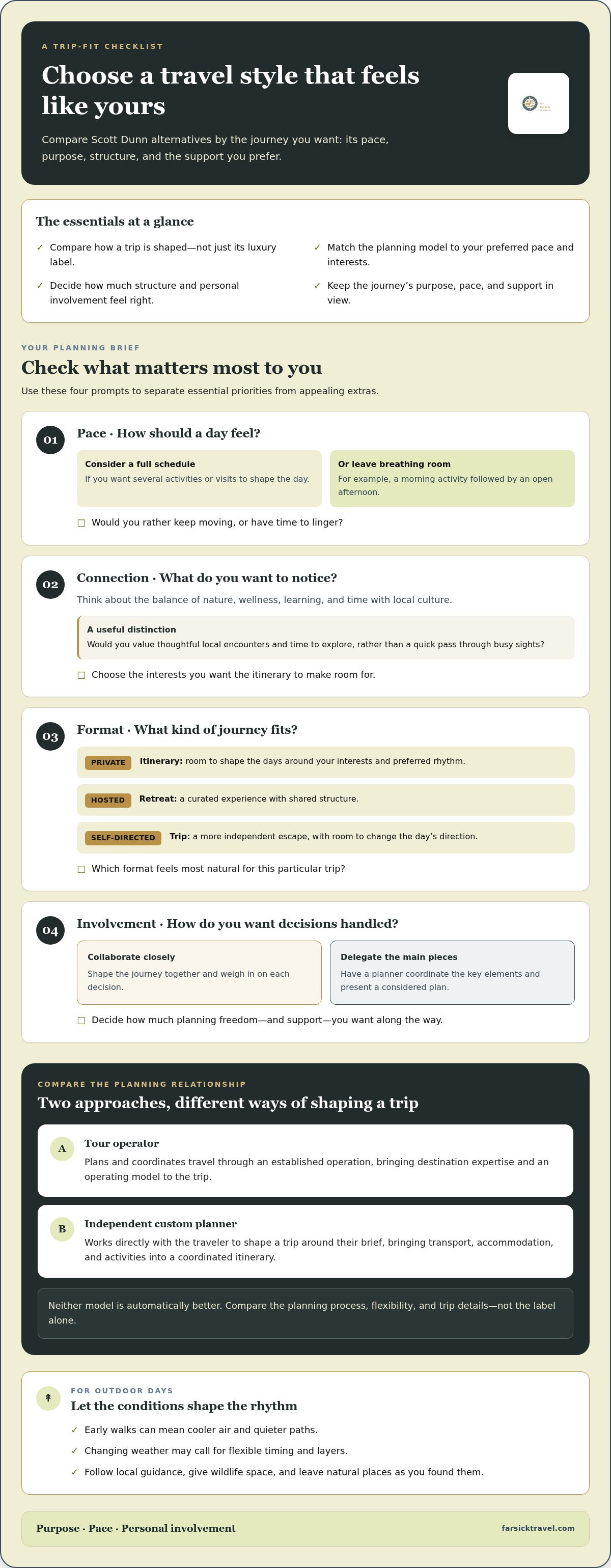
- Pace: Would you enjoy a full schedule, or a morning activity followed by an open afternoon?
- Connection: Do you want time for thoughtful local encounters instead of a quick pass through busy sights?
- Format: Would a private itinerary, hosted retreat, or independent trip feel most natural?
- Involvement: Do you want to make many decisions yourself, or have someone coordinate the main pieces?
Consider the trade-offs. More structure can make logistics feel simpler, while more independence leaves room to change the day’s direction. For outdoor travel, think about how the season, daylight, and trail conditions could shape your plans. Early walks can offer cooler air and quieter paths; changing weather may call for flexible timing and layers. Follow local guidance, give wildlife space, and leave natural places as you found them.
Trip fit is more useful than a broad luxury category: the right planner supports the pace, purpose, and personal involvement you want. Keep those three anchors in view as you compare Scott Dunn competitors and the different ways they design a journey.
How luxury tour operators and bespoke travel planners differ
The difference isn’t simply how much is customized. It’s who shapes the journey, how much structure is built in, and how involved you want to be as decisions take shape. A tour operator may combine destination expertise with established ways of planning and delivering trips. An independent custom planner works directly with the traveler to shape a trip around individual priorities. Neither model is automatically better; the right fit depends on the support and freedom you want.
Service model
A tour operator plans and coordinates travel through its own established operation. An independent planner works directly with the traveler to shape a trip around their brief.
Personalization
Both models may tailor a journey. The degree and process can vary, so look at how the company describes its planning and which choices are shaped around you.
Trip structure
A trip may follow a more established itinerary or be designed from the ground up. Look at how much flexibility the plan allows and whether the daily pace feels right.
Traveler involvement
Some travelers prefer to collaborate on each decision; others want a planner to coordinate the main elements and present a considered plan.
Tailor-made operators versus independent custom planners
Company scale can influence how planning is organized, but it doesn’t, on its own, tell you how personal the experience will feel. The planning relationship matters: who listens to your priorities, how those preferences shape the itinerary, and how transport, accommodation, and activities fit together. Compare the planning process and trip details described by each company, rather than assuming that a label tells the whole story.
At The Farsick Travel Co., custom planning starts with individual preferences and goals, then brings the trip’s key elements into one coordinated itinerary. That could mean designing a nature-focused journey with time to walk at a comfortable pace, or balancing active days with quieter moments for thoughtful connection with local culture. The practical distinction is simple: a tour operator organizes travel through its operating model; a custom planner builds the plan around the traveler’s brief.
Private itineraries versus curated group experiences
A private itinerary offers room to shape the days around your interests and preferred rhythm. You might take a slower morning before a walk, then leave the afternoon open rather than filling every hour. A curated experience, such as a hiking and yoga retreat or a skillcation, gives the trip a shared focus and more built-in structure. The group format can bring a sense of occasion and common purpose, while a private plan leaves more decisions in your hands.
To compare Scott Dunn competitors fairly, look beyond labels and compare the trip formats and itinerary details each company presents. Notice whether a day leaves breathing room, how activities are framed, and whether the experience is private or hosted. Those clues make broad promises easier to assess against the way you actually like to travel.
If a personally shaped itinerary feels like the right balance of guidance and freedom, explore custom travel planning with The Farsick Travel Co.
Scott Dunn alternatives to compare, including specialist travel planners
Company names are useful only when you compare what they plan. Scott Dunn is associated with tailored trips, particularly for families and couples, combining structure with customization. Other operators have different stated emphases: Black Tomato is known for creative, experience-led itineraries; Audley Travel focuses on country-specialist knowledge and tailor-made trips built from structured templates; Abercrombie & Kent is associated with luxury escorted tours, safaris, and expedition travel. Treat these as starting points for comparison, not rankings.
Build a fair comparison of named travel companies
Use the same fields for every planner, including Scott Dunn. This compact comparison reflects the companies’ described positioning. Use their published trip and planning details to compare destinations, formats, and support.
Scott Dunn
Stated focus: Tailored trips, especially for families and couples. Compare: How much structure and customization the itinerary offers.
Black Tomato
Stated focus: Creative, experiential itineraries. Compare: Whether its trip concepts match the kind of story or experience you want your journey to center on.
Audley Travel
Stated focus: Country-specialist expertise and tailor-made trips shaped from structured templates. Compare: The balance between a starting framework and personal changes.
Abercrombie & Kent
Stated focus: Luxury escorted tours, safaris, and expedition travel. Compare: Whether an escorted or expedition format suits your preferred level of independence.
Keep stated details separate from your interpretation. A company’s specialty describes its positioning; whether it suits your family, walking pace, or appetite for guidance is a matter of personal fit. For each planner, note the same things: trip focus, how itineraries are shaped, whether experiences are private or hosted, and what planning support is described. This makes it easier to compare like with like instead of being swayed by a single striking feature.
Compare the journey each planner is built to shape, not the luxury label attached to it.
When a nature-led or personal itinerary may fit better
If your priority is time outdoors, restorative space, solo exploration, or learning a new skill, begin with that purpose. Picture the day you want: a trail walk in the cooler, quieter hours, followed by an unhurried afternoon. Consider the season’s daylight and conditions when setting the pace, and leave room to adjust if the weather shifts. Choose respectful local encounters, follow guidance, and keep wildlife and natural spaces undisturbed.
The Farsick Travel Co. offers custom planning alongside nature and adventure itineraries, solo travel experiences, hiking and yoga retreats, and skillcations. These options can give a trip either a personal itinerary or a shared focus. If you want a journey designed around your own interests and pace, explore custom travel planning with The Farsick Travel Co.
How to choose the right Scott Dunn alternative for your trip
A useful comparison begins with your priorities, not a long list of attractive inclusions. Before comparing itineraries, decide what the trip should make room for: restoration, time outdoors, cultural connection, a shared celebration, or the freedom to follow your curiosity. Use that purpose to separate essentials from extras.
- Clarify the purpose. Write one sentence about why you want to travel. “I want quiet time outdoors” is a more useful starting point than a broad wish to visit somewhere memorable.
- Set the pace. Decide how much planned activity feels right. You might want a guided morning walk and an open afternoon, or a fuller schedule with someone else organizing the flow.
- Define your support needs. Consider whether you want help shaping the whole itinerary, a hosted experience with shared activities, or enough guidance to explore independently.
- Compare fit, not extras. Match each planner’s stated approach against your must-haves. Treat a special meal or extra excursion as a bonus if it doesn’t serve the trip’s central purpose.
- Choose a next step. Narrow your options to the planning model that fits best, then prepare a short brief describing your priorities, flexibility, and comfort needs.
Match the planning model to your travel priorities
For independent exploration, look for flexibility and decide on the day’s rhythm before adding activities. A hosted retreat may suit you if shared practices, such as hiking and yoga, support the reason you’re traveling. For wilderness plans, be realistic about time outdoors and your comfort with terrain, weather, and changing conditions. Build in pauses, follow local guidance, and use leave-no-trace practices that respect wildlife and the places you visit.
Turn preferences into a practical trip brief
Keep your brief specific enough to guide decisions, but open enough to leave room for thoughtful suggestions. Note your preferred pace, interests, comfort needs, and how much of each day you want planned. Add practical details that can change the experience:
- Season: Describe the weather or seasonal conditions you’re comfortable with, and whether your dates are flexible.
- Time of day: Say whether you prefer early starts for cooler outdoor hours or slower mornings and later activities.
- Crowds: Identify busy sites or peak times you’d rather avoid, and whether quieter alternatives appeal.
- Packing: Mention activities that may shape what you bring, such as walking, yoga, or time in changeable conditions. Use your planned activities and seasonal conditions to guide what you pack.
This kind of brief makes comparing Scott Dunn competitors more grounded: you can see whether a proposed itinerary supports your priorities instead of simply counting inclusions. If your notes point toward a journey shaped around personal interests, The Farsick Travel Co. can create a custom itinerary and coordinate its key elements around your priorities.
A more personal alternative: custom travel planning with The Farsick Travel Co.
If your ideal trip should feel less like a polished itinerary and more like your own story, custom planning offers another way to travel. The Farsick Travel Co. shapes journeys around what matters to you: time in nature, space to reset, a new skill to explore, or a meaningful celebration. It’s a personal alternative to consider among Scott Dunn competitors when the pace and purpose matter as much as the destination.
Planning also means bringing practical pieces into alignment. The Farsick Travel Co. coordinates transport, accommodation, and activities so the moving parts support the experience you want rather than crowding it. A day might hold one outdoor activity and room to rest instead of a string of stops. In nature, the plan can respect local guidance, wildlife, and leave-no-trace practices.
What a The Farsick Travel Co. custom-planned journey can center on
Your interests can shape the journey’s focus and rhythm. A wilderness itinerary might prioritize time outdoors and quieter routes. A slow-travel escape could leave breathing room between activities. A solo experience can reflect your preferred balance of independence and planned support, while a wellness-oriented journey can make space for movement, rest, and reflection.
For travelers who enjoy shared structure, The Farsick Travel Co. also plans hiking and yoga retreats, skillcations, bespoke honeymoons, proposals, and intentional group or bachelorette trips. Let your reason for going guide the format: a retreat can make sense when shared activities are part of the appeal, while a private itinerary may suit a personal milestone or independent adventure. There’s no need to fill every day. A considered plan leaves room for the unexpected without leaving important details adrift.
Take the next step toward a more intentional trip
Start with a few honest notes. What do you hope to feel, learn, or experience? What would a good day look like, from its first quiet hour to the way you want to end it? Include essential comfort needs, the interests you want to make room for, and what you’d rather leave out. Those details give the planning process a meaningful starting point.
If you’re drawn to a shared retreat or group journey, describe the kind of structure that appeals to you. If you’re planning a solo escape, honeymoon, or nature-led trip, explain the balance you want between guidance and open time. The Farsick Travel Co. can use those preferences to shape a custom itinerary and coordinate its key elements around your priorities.
You don’t need every detail decided before you begin. Start with the feeling you want the journey to hold, then plan a custom trip with The Farsick Travel Co.
Let your next journey begin with what matters most
The right travel plan doesn’t have to prove its worth through a packed schedule or a familiar luxury label. It should make room for how you want to feel, the interests you want to follow, and the pace that lets the experience settle in. That’s a more useful starting point than choosing among Scott Dunn competitors by reputation alone.
Before you take the next step, write down one thing you hope to carry home from the journey. It might be renewed energy, a new skill, time to reconnect, or the quiet satisfaction of moving through a landscape with care. Let that intention guide the choices that follow, from the shape of each day to the kind of support that feels right.
When you’re ready to turn that intention into a considered plan, explore custom travel planning with The Farsick Travel Co.
Your journey can begin with a simple idea, then grow into something that feels unmistakably yours.
Frequently Asked Questions
Who are Scott Dunn’s main competitors?
Frequently cited Scott Dunn competitors include Audley Travel, Wexas Travel, and Family Traveller, alongside luxury and tailor-made operators such as Abercrombie & Kent, Black Tomato, and Kensington Tours. They don’t all offer the same kind of journey. Some are associated with specialist destination planning, others with escorted or experiential travel. Treat the names as a starting shortlist, then compare each company’s trip formats and planning support with your own priorities.
What companies are similar to Scott Dunn for tailor-made holidays?
Audley Travel, Black Tomato, and Kensington Tours are useful names to compare for tailor-made trips, though their approaches differ. Audley is associated with country-specialist expertise, Black Tomato with creative experiential itineraries, and Kensington with private, customizable journeys. To narrow your options, consider whether you want destination-specific guidance, a distinctive trip concept, or greater flexibility in a private itinerary. Compare each planning model with the kind of trip you want to take.
Is a bespoke travel planner different from a luxury tour operator?
Yes, though the terms can overlap. A tour operator organizes trips through its own operating model, which may include established itineraries and specialist support. A bespoke planner focuses on creating a trip around an individual traveler’s aims and preferences. The distinction doesn’t guarantee more or less personalization: companies use these labels differently. Look at how the itinerary is created, what elements are coordinated, and how much input you have during planning.
How do I choose between Scott Dunn and another travel planner?
Compare the proposed experience against a short list of non-negotiables: the trip’s purpose, daily pace, type of accommodation, and how much planning support you want. Then note what you’re willing to compromise on, such as adding an activity or changing the order of stops. Use the same criteria for each option. The best fit is the one that supports your priorities in practice, not just in its headline description.
Can a custom travel planner arrange a nature-focused or solo trip?
Yes. The Farsick Travel Co. plans nature and adventure itineraries as well as solo travel experiences, tailoring the trip to your interests and goals. For a nature-led journey, share your preferred activity level, comfort outdoors, and interest in quieter places or local experiences. A considerate plan can account for rest, changing conditions, and respectful behavior around wildlife and natural spaces. Solo travelers can also describe where they want independence and where coordination would feel helpful.
What should I include in a travel-planning brief?
Include your reason for traveling, preferred pace, interests, travel-party details, comfort needs, and any fixed dates or flexibility around timing. It also helps to describe what a satisfying day looks like, such as an early start followed by an open afternoon, and name activities you’d rather avoid. Note seasonal preferences, crowd sensitivities, and practical packing considerations tied to your plans. You don’t need a finished itinerary; clear priorities give a planner a useful first picture.
Article by
Ursula Akin
Ursula Akin created The Farsick Travel Co. to help travelers step away from rigid, multi-stop checklists and step into intentional, deeply rooted experiences. Specializing in custom travel design, solo escapes, and curated retreats, Ursula combines local insights with leave-no-trace ethics to turn wanderlust into seamless, unforgettable journeys.
Disclaimer
The information provided on this website and within our articles is for general informational and inspirational purposes only. While we make every effort to ensure accuracy regarding travel logistics, recommendations, and local details, conditions can change rapidly. Readers are encouraged to verify current travel requirements, weather, safety advisories, and local regulations independently. The Farsick Travel Co. is a travel design and curation service and is not responsible for any actions, changes, or incidents occurring during independent travel.


