

Could your first hiking trip feel less like a test and more like finding your own pace? Guided hiking tours for beginners can offer a supported way onto the trail, and solo travelers can join: roughly half of travelers on each USA tour departure travel solo.
It’s natural to wonder whether you’ll keep up, what you’ll need to carry, and how the day will unfold. A guide can make unfamiliar trails feel more approachable, while a thoughtfully planned itinerary leaves room to walk steadily, pause, and take in the landscape.
This guide explains how guided hikes work, which trip styles may suit newcomers, and what to look for in meal and gear inclusions, since these vary by itinerary. You’ll also learn how to assess trail difficulty, seasons, and packing, so you can choose an experience that fits your comfort and the journey you want: a gentle introduction to hiking, a shared adventure, or a quieter solo escape.
Key Takeaways
- Choose a trip around your preferred pace, terrain, season, and comfort level, not just the destination.
- Solo travelers can join guided departures; roughly half of travelers on each USA tour departure travel solo.
- Meals and gear vary by itinerary, so understand what the trip provides and what you’ll carry yourself.
- Compare centre-based and point-to-point formats to find the right balance of daily exploration and time to rest.
- Beginner-friendly routes are about more than distance: consider elevation, trail conditions, and how each day is paced.
Planning a Hiking Vacation?
Choose a hiking trip around the kind of walking you enjoy, the climate you prefer, and the daily effort you can sustain. A route should leave time to experience the outdoors, not turn every day into a test.
Start by comparing terrain, elevation, distance, and hours on foot. A gradual valley path feels different from a sustained climb, even when both listings call the route “beginner.” If you’re new to backpacking, look for manageable daily effort and clear details about overnight arrangements. The right challenge can build confidence without making every pause feel like a race.
Dates shape the experience as much as the destination. Spring, fall, and winter are recommended seasons for desert hikes such as Joshua Tree and Death Valley. In popular parks, start early, when trails are quieter and temperatures are often cooler. Less-trafficked routes can also leave more room for unhurried observation and a mindful connection with the landscape.
Provider and Trip Selection
Compare itineraries by their daily route descriptions, not by labels alone. Look for stated distance, elevation, surface, expected hiking time, and how the plan accommodates pauses or changing conditions. Then consider the trip’s overall rhythm: a day walk from one base differs from several nights outdoors. Choose the format that fits how you want to spend your mornings and evenings.
For a lower-impact adventure, favor designated trails and plans that respect local communities and natural spaces. Before choosing, make sure the listing clearly describes the route and activity level.
Safety Measures and Guide Certifications
Look for clear details about guide qualifications relevant to the terrain, route planning, group communication, and responses to changing conditions. The itinerary should explain the route’s demands and the guide’s role, so you can judge whether the experience fits your ability.
Before choosing, compare how each trip handles briefings, rest stops, and route changes. These practical details show how safety is built into the hiking experience, beyond a broad “beginner-friendly” label.
Weather and Altitude Risks
Changing weather can affect visibility, footing, and comfort; at higher elevations, a familiar pace may feel more strenuous. Consider both the destination’s climate and the route’s elevation when choosing dates and daily effort. A flexible itinerary allows the guide to adjust the plan as conditions change.
Desert sun, mountain exposure, and wet forest trails each call for different preparation. Check the trip’s stated conditions and pack layers suited to the landscape. Stay on marked routes, carry food and water, and don’t judge difficulty by distance alone.
Why Join a Guided Hiking or backpacking Tour?
A guided trip brings route planning and group coordination into the hiking experience. For beginners, that can leave more attention for the trail, the landscape, and the day’s pace. Consider what kind of support and company you want, while accounting for the higher cost of guided travel.
Group Size and Relative Cost
Guided hiking trips usually set a group-size limit, though the exact number varies by company and destination. A smaller group can make it easier to talk with the guide and help the day feel less hurried. Consider the group format alongside the routes and schedule; group size matters most when it shapes the trail experience you want.
Guided trips cost 50 to 200%+ more than self-guided options, depending on the company and destination. That comparison reflects different arrangements, not a universal price. Consider what the trip organizes, such as guiding and group logistics, then weigh those elements against the planning and navigation you’d handle independently.
Compare trip descriptions for more than the number of hikers. A clear itinerary explains how the group moves through the day, where it pauses, and what happens between trail time and overnight stays. Those details help you decide whether a shared pace will feel supportive or restrictive.
Small-Group and Solo Options
A shared departure can suit solo travelers who enjoy meeting people along the way, without needing to arrive with a companion. The group offers a social setting for trail conversations and meals, while quiet moments can still be your own. Look for an itinerary whose daily rhythm makes room for both connection and personal reflection.
Small-group guided hiking tours can create a more conversational atmosphere, but “small group” alone doesn’t tell you how the trip feels. Read the schedule for regrouping, breaks, and route flexibility. A thoughtful plan gives participants time to absorb the landscape instead of turning every stretch into a race to keep up.
Private hiking groups suit friends or family members who want to share the trail on their own terms. A group with mixed experience, for example, can prioritize a common walking rhythm and shared pauses. The route still needs to suit everyone taking part; a private setting doesn’t change the physical demands of the terrain.
Choose a shared departure for the ease of traveling with new companions, or a private arrangement for a familiar group dynamic. Either way, thoughtful coordination can make room for unhurried trail time and meaningful connection. Plan a hiking itinerary around your group’s pace.
Meals and gear provided on guided trips
Meals and equipment depend on the trip format, so use the itinerary’s inclusions as a practical packing guide. Beginners should look for clear descriptions of meals, provided gear, daily hiking expectations, and what to bring themselves.
Before packing, sort items into three categories: provided, available to use, and bring yourself. For meals, note which parts of each day are covered and whether the itinerary describes trail food or meals at the overnight stop. Plan personal snacks and water around the hiking schedule. Don’t assume “meals included” means food is supplied on every trail day.
Gear needs change with the route. A rail-and-hike itinerary may let you return to your lodging between walks, while a backpacking trip means carrying what the route requires. Look for explicit guidance on footwear, layers, weather protection, and pack needs. Waterproof, high-traction hiking boots help on wet, slippery surfaces; a non-cotton base layer and stormproof outer layer support changing conditions.
- Meals: Identify the meals and trail food included, then plan snacks and water for walking hours.
- Personal gear: Note footwear, layers, and rain protection required for the season and terrain.
- Shared or provided equipment: Distinguish items supplied for the trip from personal essentials.
On a self-guided hiking trip, plan your route and make sure food, water, and navigation are suited to the day. A guided itinerary gives you a structure to follow, but it still matters whether food or equipment is included. Compare the actual inclusions, not just the guided label.
Beginner-friendly guided hiking trips should describe daily effort in useful terms. Check trail distance, elevation, surface, and time on foot, then consider how those details fit your comfort. A beginner camping itinerary in the USA may describe accommodations with warm showers and flush toilets, a different overnight rhythm from sleeping at wilderness campsites.
Rail-and-hike travel combines walking with train journeys between trail areas, offering a distinct way to experience mountains and national parks. Backpacking, by contrast, focuses on moving through the landscape with overnight gear. The meal plan and equipment list should reflect the difference, from what travels with you to what awaits at day’s end.
For a more considered hiking vacation, choose a route whose meals and gear support the experience you want: lighter day walks, a rail-linked journey, or a deeper wilderness trek. Leave no trace by packing out waste and keeping food and equipment organized on the trail.
Tour styles, including centre-based and point-to-point
A centre-based hiking tour returns to one lodging, while a point-to-point trip moves between overnight stops. That choice shapes how you experience a place: settle into one base and notice its daily rhythms, or follow a changing route through valleys, towns, and trail landscapes.
From a centre-based stay, mornings can begin with cool air and birdsong on a nearby trail, followed by an unhurried afternoon in the surrounding community. A point-to-point tour has a different cadence, with each day leading onward. Look for itineraries that leave room to pause in smaller towns and engage respectfully with local life, rather than treating every stop as a photo break.
Rail-and-hike itineraries connect walking areas by train. The journey between stops can become part of the experience, with changing light across the window and time to rest between trail days. Check how transfers fit around the walking schedule and whether the route allows time to explore quieter places. Choosing less-visited trails can ease pressure on popular paths and create a more attentive connection with the landscape.
Compare activity levels using stated hiking hours, not labels alone. The Zion, Bryce and Grand Canyon walking tour includes 3-5 hours of hiking most days; the Yellowstone and Utah National Parks active walking tour also includes 3-5 hours most days. Use those details to picture the day’s rhythm, from time on the trail to the pauses between walks.
Trip length shapes how gradually you move through a destination. The Zion, Bryce and Grand Canyon walking tour lasts 7 days, while the Yellowstone and Utah National Parks active walking tour lasts 12 days. Compare the number of walking days with travel and rest days, then choose a pace that leaves attention for the places between trailheads.
Departure locations matter for regional walking sessions. When booking with The Farsick Travel Co., guided hiking trips feature diverse regional starting points tailored to each specific itinerary. Use the starting point to understand how an outing fits into your wider plans and how much time the day leaves for walking.
Read each guided hiking tour listing as a day-by-day route, including its departure point, duration, hiking hours, and overnight pattern. In America’s national parks, marked trails offer a clear way to explore while protecting fragile surroundings. For a quieter experience, prioritize routes away from the busiest trailheads and choose itineraries that make room for thoughtful encounters with local communities. Travel slowly, listen closely, and leave each place as you found it.
Beginner-friendly difficulty options
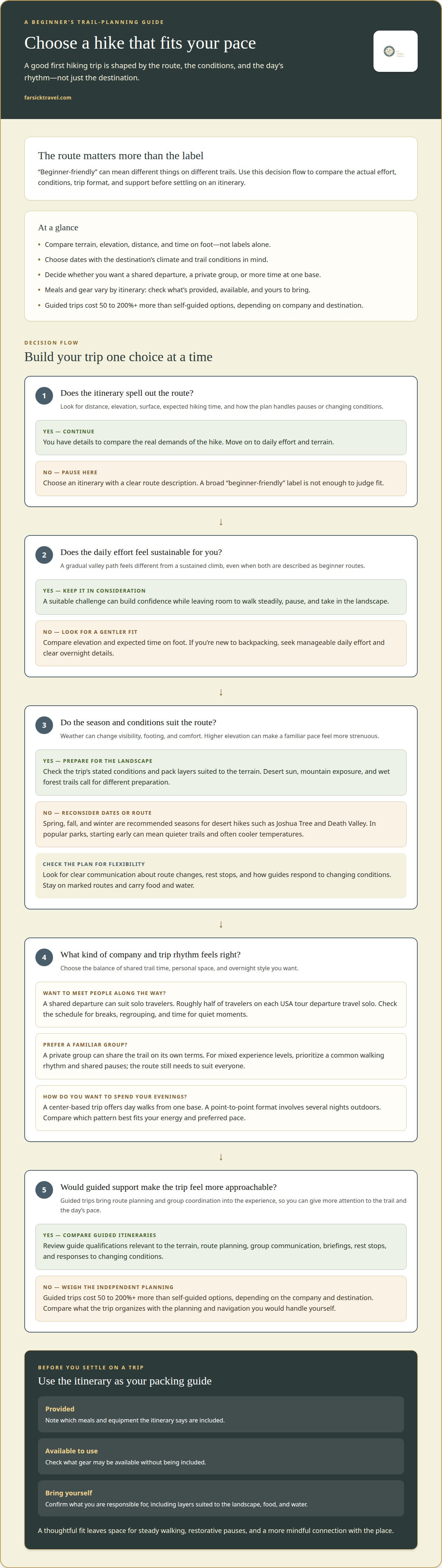
A beginner-friendly hiking adventure isn’t defined by a trail label alone. Wherever you travel, compare distance, elevation, terrain, daily hours, and how much gear you’ll carry. A route that looks manageable on a map may feel very different across loose rock, steep climbs, or exposed ground.
Start with the itinerary’s daily effort, then picture yourself walking the route in the expected conditions. A gradual valley path offers a different challenge from a steep ascent near a glacier. Look for clear route descriptions and a pace that leaves room for breaks, observation, and steady movement. Those details matter more than an “easy” or “moderate” tag.
Trip listings can also explain how difficulty is adjusted. Hiking combo sessions can be adapted to different difficulty levels, including a beginner-friendly level. That flexibility may suit travelers who want to build confidence outdoors before choosing a more demanding route. Ask what the level means in practice: terrain, elevation, and time on foot make the answer clearer.
For a multi-day walk, consider how effort accumulates. The Relaxed Camino Final Stage itinerary covers less than 9-10 miles per day. A measured daily distance can help make a longer hiking trip feel more approachable, especially when the itinerary includes time to rest between walking days. Compare that rhythm with your own experience, not only with the total trip length.
National park destinations vary widely. An open desert route has different footing and exposure from a shaded forest trail, and mountain weather can change how a hike feels. Choose the season and landscape that match your comfort, and favor itineraries that explain how route conditions shape each day. Planning for the destination’s climate helps you prepare suitable layers and footwear.
Don’t use “exclusive” or iconic labels to judge difficulty. A celebrated trail can still involve steep grades, uneven surfaces, or long hours. Look instead for a practical breakdown: daily distance, elevation gain, terrain, rest opportunities, and overnight arrangements. That gives you a clearer basis for deciding whether the experience suits your current ability.
Choose the gentler option if your priority is finding a comfortable walking rhythm; choose a more active itinerary if you already enjoy sustained days outdoors. A well-matched route lets you notice birdsong, changing light, and local landscapes without treating every destination as a challenge to conquer. Stay on marked trails and leave natural features undisturbed.
Plan a hiking itinerary around your comfort and pace
The Farsick Travel Co.: Signature Hiking & Yoga Retreats
The Farsick Travel Co. can shape a hiking journey around your pace, interests, and sense of place. Its Signature Hiking & Yoga Retreats bring walking and mindful movement together, while Custom Travel Planning can create a broader itinerary with room for quiet trail mornings and unhurried afternoons.
Choose a tailored approach if a standard route doesn’t reflect how you want to travel or you’re planning a solo escape. Solo Travel Experiences and Skillcations offer other ways to build a journey around your interests and learning. The aim is a thoughtful rhythm, not a packed checklist.
Let the Trail Set the Pace
Your first hiking journey doesn’t need to prove anything. Let it begin with the experience you want to carry home: a deeper connection with a place, a shared day outdoors, or the quiet satisfaction of finding your steady stride. Guided hiking tours for beginners can be a way to start with intention, rather than rushing toward distance or difficulty.
Before deciding, consider what would make the trip meaningful to you. Perhaps it’s unhurried mornings, learning as you walk, or time to listen to the landscape without watching the clock. Keep that feeling at the center of your plans. A thoughtful itinerary can make room for discovery and stillness while respecting the trails and communities you encounter.
The next step is a simple conversation about the journey you’re imagining and what matters most along the way.
You don’t need to have every detail figured out. Start with the feeling you hope to find, and let the path take shape from there.
Frequently Asked Questions
Can Solo Travelers Book These Tours?
Yes, solo travelers can book guided hiking tours and join a shared departure without bringing a companion. The group setting can add conversation and shared trail time, while the itinerary still leaves moments to walk quietly and take in your surroundings. If you prefer a more personal trip, consider whether a solo-focused experience or private itinerary better fits how you like to travel.
Where Can You Go?
Guided hiking trips span many US landscapes, from Alaska’s wilderness to desert parks such as Joshua Tree and Death Valley. Glacier National Park offers a mountain setting, while the Southwest brings dry terrain and strong seasonal contrasts. Choose a destination for the walking and atmosphere you want, then match your dates to its hiking season. A quieter trail can make room for a slower, more attentive day outdoors.
How much do guided hiking tours for beginners cost in the United States?
There’s no single cost for a guided beginner hiking trip; the total depends on its route, length, lodging, meals, gear, transportation, and group format. Compare itineraries by what they include, not just the headline amount. A day hike and a multi-day wilderness trip have different logistical needs. Distinguish trip inclusions from personal expenses, such as items you choose to bring or activities outside the planned itinerary.
What fitness level is required for beginner guided hikes?
You don’t need to be an experienced trekker, but you should be comfortable with the walking demands stated for your chosen route. Consider elevation, surfaces, and daily time on foot together: a short, steep climb can feel harder than a longer, level path. If sustained climbs are unfamiliar, choose a low-elevation walking itinerary and build confidence before selecting a more demanding hiking adventure.
What gear and clothing should beginners bring on a guided hike?
Begin with the trip’s packing list, then organize your kit around trail use: footwear, weather layers, water, food, and personal essentials. Wear hiking boots before departure so they feel familiar on uneven ground. Pack rain protection where conditions may shift, and keep frequently used items easy to reach. If the itinerary supplies shared equipment, separate it from your personal gear to avoid carrying duplicates.
How long are beginner guided hikes and how far do they typically go?
There isn’t one standard duration or distance; routes are shaped by terrain, elevation, and the overall itinerary. As a reference point, a guided Yosemite Falls backpacking trip lasts 3 days, while the Yosemite Falls trail itself is 7.2 miles and climbs over 2,700 feet. That trail example shows why distance alone doesn’t determine difficulty. Read daily route details rather than assuming every day matches the trip’s total length.
Are permits, park fees, or age requirements common for guided hiking tours?
Permit needs, park fees, and age requirements depend on the specific route and park, so there isn’t one rule for every US hiking tour. Read the itinerary and trip terms for any stated eligibility conditions, required permits, and fees. Pay particular attention to whether a park charge is included in the trip arrangements or remains a separate expense. These details can differ between a local walk and a multi-day national park visit.
How do guided group hikes compare with private beginner hiking tours?
A group departure follows a shared itinerary, bringing companionship and a set daily rhythm. A private beginner tour centers the route around your own travel party, making it easier to shape breaks and the social feel of the day. Friends with different walking preferences, for example, may value a private plan, while a solo traveler may enjoy meeting fellow hikers on a shared departure.
Article by
Ursula Akin
Ursula Akin created The Farsick Travel Co. to help travelers step away from rigid, multi-stop checklists and step into intentional, deeply rooted experiences. Specializing in custom travel design, solo escapes, and curated retreats, Ursula combines local insights with leave-no-trace ethics to turn wanderlust into seamless, unforgettable journeys.
Disclaimer
The information provided on this website and within our articles is for general informational and inspirational purposes only. While we make every effort to ensure accuracy regarding travel logistics, recommendations, and local details, conditions can change rapidly. Readers are encouraged to verify current travel requirements, weather, safety advisories, and local regulations independently. The Farsick Travel Co. is a travel design and curation service and is not responsible for any actions, changes, or incidents occurring during independent travel.


