

Why does the very thing meant to heal us often leave us feeling more depleted? For many, the answer lies in the "vacation burnout" cycle, where the pressure of endless options turns a sanctuary into a source of stress. If you've found that travel planning for mental wellness often feels like just another chore on your to-do list, you're not alone. You've likely felt that familiar exhaustion; the sense that you need a vacation from your vacation just to function again.
It's time to abandon the frantic checklist. By approaching your next journey as a design challenge rather than a logistical hurdle, you can transform travel into a purposeful recalibration of your internal rhythm. In a world where the wellness tourism market is valued at approximately $1.06 trillion in 2026, the true luxury isn't a high-volume itinerary, but the mental clarity found in a frictionless, unhurried experience. We'll explore how to move away from the noise of mainstream tourism and toward a restorative architecture of slow movement, sensory depth, and genuine connection.
At a Glance: Designing Your Rhythm
- Shifting from logistical management to a focus on internal transformation and mental clarity.
- Eliminating decision fatigue to create a frictionless, restorative travel experience.
- Prioritizing slow-travel rhythms over exhaustive, multi-stop bucket lists.
- Returning to daily life feeling truly recalibrated and ready to engage with the world.
Key Takeaways
- Learn to identify the "vacation burnout" cycle and replace high-intensity checklists with a deliberate recalibration of your internal rhythm.
- Discover how travel planning for mental wellness removes cognitive load by prioritizing frictionless logistics and end-to-end coordination.
- Master the art of the slow travel rhythm, where unhurried village afternoons and morning trail walks replace the pressure of exhaustive bucket lists.
- Explore sensory-first destination selection, focusing on how microclimates, local scents, and natural lighting impact your emotional restoration.
- Understand how to cultivate a deeper connection to the earth through mindful leave-no-trace ethics and authentic, off-the-beaten-path cultural interactions.
Beyond the Escape: Why Traditional Travel Fails Mental Wellness
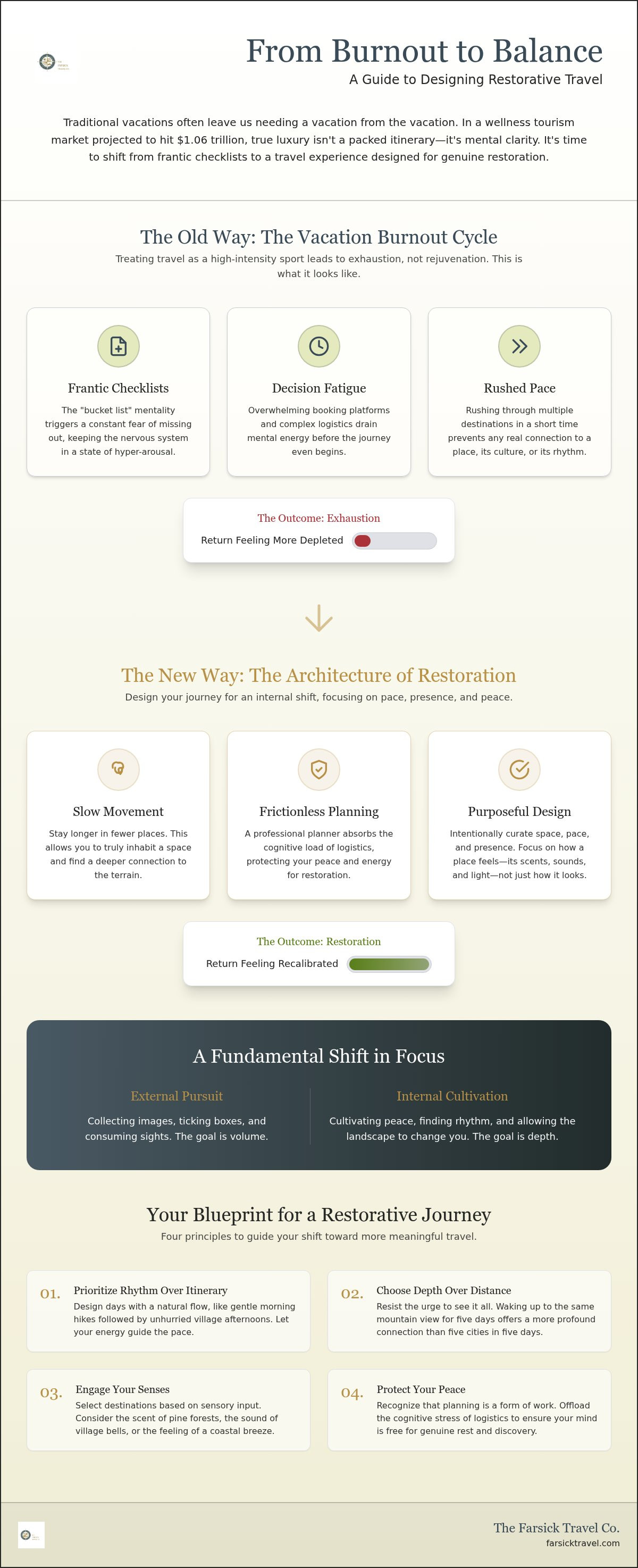
Traditional travel is often a frantic attempt to outrun exhaustion. We pack bags, cross borders, and tick boxes, yet we return to our desks feeling more brittle than when we left. This is the "Vacation Burnout" cycle. It happens when we treat travel as a high-intensity sport rather than a sanctuary. True restoration isn't a mere geographical shift; it's a deliberate recalibration of your personal rhythm. Effective travel planning for mental wellness requires a shift in perspective, moving away from the loud demands of the world and toward the quiet needs of the self.
Restorative travel is the intentional curation of space, pace, and presence.
While sightseeing demands a camera lens, soul-searching requires a soft gaze. One is about the collection of images; the other is about the cultivation of peace. Sightseeing is an external pursuit, a hunger for consumption that can leave the soul starving. Within the growing sector of wellness tourism, the most profound shifts happen when we prioritize depth over volume. By focusing on an internal shift, we allow the landscape to change us, rather than just passing through it.
The Myth of the "Bucket List" Itinerary
The modern obsession with "seeing it all" triggers a persistent FOMO response in the brain. When we rush through six cities in ten days, we lose the ability to actually inhabit any of them. The psychological cost of this speed is high; it keeps the nervous system in a state of hyper-arousal. Shifting the goal from checking boxes to finding a groove allows for a deeper connection to the terrain. Instead of a frantic multi-stop race, consider the luxury of staying put. There is a profound stillness in waking up to the same mountain ridge for five days, watching the microclimates shift and the scents of the wild change with the morning dew. This unhurried pace is where clarity begins.
Recognizing Travel-Induced Decision Fatigue
Modern travel planning for mental wellness is often derailed before the first bag is packed. Booking platforms present an overwhelming sea of "over-choice," draining mental energy and triggering decision fatigue. Managing logistics, navigating transport, and coordinating reservations create a hidden layer of stress that lingers long after you arrive. A professional planner acts as a mindful architect, absorbing this cognitive load so you don't have to. By removing the friction of the "how," you gain the freedom to focus entirely on the "why." This bespoke approach protects your peace, ensuring your energy is spent on restoration rather than coordination.
The Architecture of Restorative Travel: Designing for an Internal Shift
Restorative travel isn't a passive event; it's a structural design. While traditional trips focus on the destination, travel planning for mental wellness focuses on the rhythm. This rhythm is the intentional balance between movement, stillness, and growth. It acknowledges that the nervous system needs time to settle into a new landscape before it can truly observe it. By prioritizing fewer transitions, we protect the cognitive energy often wasted on constant reorientation. We replace the frantic pace of the "tourist" with the steady gait of the "traveler."
Solitude plays a vital role in this architectural approach. Intentional travel planning for mental wellness recognizes that solo travel experiences are a design for self-regulation. Without the social performance required in groups, you can listen to your own internal cadence. This is especially powerful when paired with wilderness immersion. The CDC highlights the need for mental health support and strategies to manage the psychological stressors of travel. A well-designed itinerary acts as that support, providing a predictable structure that allows for deep, unpredictable personal discovery.
Embracing the Slow Movement
The slow movement is the antithesis of the transit-heavy morning. It favors staying longer in fewer places, allowing you to learn the scent of the local pines or the specific chime of a village bell. Staying in one location for several days allows the nervous system to down-regulate. You move from being a spectator to a participant in the local atmosphere. This unhurried pace transforms a trip from a series of events into a singular, cohesive experience of presence. It's the difference between seeing a place and knowing it.
Designing for Circadian Harmony
True recalibration starts with the body's clock. We design itineraries that use natural lighting and morning trail walks to reset sleep cycles disrupted by modern life. Morning light on a damp trail, the crispness of a high-altitude microclimate, and the scent of crushed juniper all serve as biological anchors. We treat unstructured time as a core component, not a gap to be filled. It's in these open spaces that mental clarity finally takes root. If you're ready to move beyond the checklist, consider how custom travel planning can help you build a journey that actually feels like you.
Managing Cognitive Load: Why Custom Planning is Self-Care
The weight of a trip often begins long before you reach the trail. It starts with the heavy lifting of logistics; the hundreds of micro-decisions regarding arrival times, local transport, and accommodation quality. This mental labor is known as cognitive load. When you engage in travel planning for mental wellness, you're essentially choosing to outsource this burden to a mindful architect. By removing the friction of the unknown, you protect your internal peace and ensure that your energy is reserved for restoration rather than management.
End-to-end coordination isn't just a convenience; it's a form of emotional security. It reduces the "anxiety of the unknown" that often plagues travelers who feel the need to control every variable. When every detail is vetted for both quality and ethics, you can step into a landscape with a clear conscience and a quiet mind. You stop being the manager of a project and finally become the traveler of a journey. When you delegate the "how" to an expert, you reclaim the "why." If you're feeling the weight of over-choice, our custom travel planning services are designed to absorb that cognitive load for you.
The Psychology of a Frictionless Journey
A seamless transition is the silent backbone of a restorative trip. We've all experienced "traveler’s temper," that sudden flash of irritability triggered by a missed connection or a confusing check-in process. These moments are more than just nuisances; they're stressors that reset your nervous system to a state of high alert. Professional delegation ensures that transport and accommodation transitions are handled with precision. Knowing that your path is cleared allows you to remain in a state of flow. You can focus on the scent of damp earth or the way the morning light hits the valley floor, rather than staring at a GPS screen.
Bespoke vs. Mass-Market: A Mental Health Comparison
Mass-market travel is built for the many, which often results in high-stimulus, crowded environments that are the antithesis of wellness. Generic packages tend to funnel travelers into the same high-traffic zones, increasing cortisol levels through noise and social friction. In contrast, bespoke travel planning for mental wellness prioritizes off-the-beaten-path locations where the only sounds are the wind in the pines or the distant call of wildlife. These quiet spaces provide the "radical simplicity" required for deep recalibration. Authentic local interactions replace the transactional nature of tourist traps, offering a sense of meaningful connection that grounds the soul.
Sensory-First Planning: Choosing Your Restorative Setting
Most travel planning for mental wellness stops at broad categories like "beach" or "mountains." However, your nervous system doesn't care about labels; it responds to specific sensory inputs. Designing a journey around these needs means asking what your soul requires to feel safe and grounded. Do you need the rhythmic, predictable pulse of the tide against basalt rocks to settle your thoughts? Or perhaps the absolute, ringing silence of a high-altitude desert is the only thing that can cut through the noise of your daily life.
Matching a destination's atmosphere to your current emotional state is an act of deep self-care. If you're feeling overstimulated, you should avoid the sharp, bright light of open plains and seek the dappled, emerald shadows of an old-growth forest. This intentionality extends to how we interact with the land. Mindful connection through leave-no-trace ethics isn't just about environmental rules. It's about acknowledging your place within a larger, living system, which grounds you firmly in the present moment.
Use this 4-step framework for sensory-first itinerary building:
- Soundscape: Identify the dominant sound you crave, whether it's rhythmic (ocean), soft and complex (forest), or absolute (wilderness silence).
- Microclimate: Determine if your body needs the bracing chill of mountain air to feel alert or the humid, floral embrace of a valley to soften.
- Light Profile: Choose between environments that offer long, golden shadows for reflection or open meadows for expansive sunlight.
- Scent Layers: Layer in grounding aromas such as damp cedar, wild sage, or the sharp tang of sea salt.
The Power of Microclimates and Soundscapes
The whistle of wind through bristlecone pines offers a different frequency for your brain than the crashing energy of a coastal reef. Lighting plays a massive role in mental alertness; golden-hour walks in open terrain can trigger a sense of expansive possibility. Local scents like damp earth after a rain or the scent of crushed juniper act as immediate anchors. These details pull you out of your head and back into your body, where true recalibration happens.
Actionable Planning Tips for Mental Wellness
To avoid crowds, visit natural spaces during the shoulder hours of dawn or late afternoon when the light is softest and the wildlife is most active. Pack items that signal safety to your brain, such as a familiar texture or a specific herbal tea. Seasonal nuances are also vital for travel planning for mental wellness. A winter wilderness escape offers the radical simplicity of a quiet, white landscape, while summer provides a vibrant, sensory-rich explosion of life that can help pull you out of a period of stagnation.
Plan your sensory-first retreat with us.
The Farsick Approach: Cultivating Your Custom Wellness Journey
The Farsick Travel Co. operates on the belief that a journey should be as unique as the traveler’s own narrative. We don't just book rooms; we curate experiences that prioritize meaning, connection, and rhythm. This philosophy is the foundation of our travel planning for mental wellness. We act as your mindful architect, handling the cognitive load so you can focus on the internal shift. Whether you’re seeking the silence of a wilderness trail or the vibrant pulse of a local village, our goal is to align your external environment with your internal needs. We prioritize depth over volume, ensuring every decision serves your personal restoration.
Our Signature Hiking & Yoga Retreats represent a pre-designed path to this integrated wellness. These aren't generic fitness trips. They're rhythmic explorations where the physical challenge of a morning climb meets the unhurried stillness of an evening yoga practice. You’ll find yourself grounded by the scent of damp earth, the warmth of the afternoon sun, and the steady cadence of your own breath. For those seeking a different kind of mental motivation, our Skillcations offer a sense of mastery. Learning a traditional craft or a wilderness skill provides a restorative focus that stays with you long after you return home. It's a way to engage the mind in a way that feels productive yet profoundly unhurried.
From Solo Escapes to Curated Small Groups
Solo travel experiences are often the most direct route to self-regulation. We design these escapes for travelers who seek safety without sacrificing depth. It’s about intentional solitude; the freedom to move at your own pace and listen to your own thoughts. Conversely, our small-group retreats are built on the idea of shared growth. We limit group sizes to ensure that the experience remains intimate and unhurried, avoiding the high-stimulus noise of mainstream tours. This allows for authentic local interactions and a sense of connection that feels earned rather than forced. Explore our custom solo travel consulting to see how we can tailor a journey to your specific state of mind.
Your Mindful Architect: Starting Your Journey
The Farsick process begins not with a destination, but with your emotional goals. We ask what you need to feel, not just what you want to see. This shift in perspective is what makes our travel planning for mental wellness so effective. Once your restorative rhythm is designed, we handle every logistical detail. From end-to-end transport coordination to vetting the ethical standards of your accommodations, we ensure a frictionless transition from your daily life into your journey. You simply arrive and inhabit the space we’ve curated for you. The mental weight of planning is lifted, leaving only the experience itself. Schedule a consultation to design your restorative rhythm and begin your recalibration today.
Reclaiming Your Internal Cadence
Travel shouldn't be a frantic escape from a life you don't recognize. Instead, it should serve as a bridge to clarity and a sanctuary for the soul. By shifting from high-speed sightseeing to a sensory-first rhythm, you allow your nervous system to down-regulate and truly inhabit the landscape. You move from being a spectator to a participant in the quiet wisdom of the wild. Effective travel planning for mental wellness is about more than just a change of scenery; it's about the architectural design of space, pace, and presence.
When you choose to delegate the logistical friction to a professional architect, you protect your peace and ensure that your energy is reserved for restoration. You replace decision fatigue with unhurried village afternoons and morning trail walks. This intentionality creates a frictionless experience that leads to a genuine internal shift. You return to your world not just rested, but deeply recalibrated and ready to engage with life again.
Begin your journey to restoration with a custom itinerary design
You deserve a journey that honors your need for stillness and deep connection. Let the scent of wild sage and the soft golden light of the trail be your guides back to yourself. It's time to design a rhythm that finally feels like home.
Frequently Asked Questions
How does travel planning actually improve mental wellness?
Proper travel planning for mental wellness reduces decision fatigue by outsourcing the logistical burden to an expert. This "Mindful Architect" approach protects your peace from the very beginning. By removing the stress of coordination, you can focus entirely on your internal transformation. It ensures every transition is frictionless, allowing you to remain in a state of flow rather than a state of constant management.
What is the best type of trip for someone experiencing burnout?
A slow-travel journey with a focus on wilderness immersion is ideal for recovery. High-intensity itineraries often exacerbate burnout; instead, you should choose a single, off-the-beaten-path location. This allows your nervous system to down-regulate through unhurried afternoons and predictable rhythms. Our Signature Hiking & Yoga Retreats offer a pre-designed path to integrated wellness that balances physical movement with deep, restorative stillness and reflection.
Can solo travel help with anxiety or is it too stressful?
Solo travel experiences can significantly aid self-regulation by removing the pressure of social performance. When you travel alone, you listen to your own internal cadence without external noise. We design these trips with safety and depth in mind, ensuring all logistics are handled so you don't face the stress of the unknown. It's about intentional solitude, not isolation, providing the mental clarity you need.
How do I avoid the "vacation from my vacation" exhaustion?
You avoid exhaustion by abandoning the bucket list mentality and embracing a restorative rhythm. This means staying longer in fewer places and scheduling unstructured time as a core component of your stay. Avoid transit-heavy mornings and prioritize village-paced afternoons. By focusing on a frictionless experience through end-to-end coordination, you return home feeling truly recalibrated rather than depleted by the logistical labor of the journey.
What is restorative travel vs. a standard wellness retreat?
Restorative travel is a bespoke architectural design tailored to your specific emotional goals and internal rhythm. Unlike standard wellness retreats that often follow a fixed, generic schedule for a group, restorative travel is curated around your personal narrative. It prioritizes slow movement and sensory depth over high-volume activities. While a retreat might focus on a specific practice, restorative travel focuses on the "why" behind every transition.
How far in advance should I plan a mental wellness trip?
Planning should begin as soon as you recognize the need for a recalibration. Starting several months in advance allows for a more intentional curation of off-the-beaten-path locations and authentic local interactions. This lead time ensures every detail is vetted for quality and ethics without the stress of a last-minute rush. Early travel planning for mental wellness allows the restorative benefits to begin during the anticipation phase of your journey.
What are the best natural settings for mental restoration?
The best setting depends on your current emotional state and sensory needs. Bracing mountain air and the scent of crushed juniper can sharpen mental alertness; however, the rhythmic pulse of a tide against basalt rocks may better settle a racing mind. We look for off-the-beaten-path locations with specific light profiles and complex soundscapes. Whether it’s a damp forest or a high-altitude desert, the setting should ground you firmly.
Article by
Ursula Akin
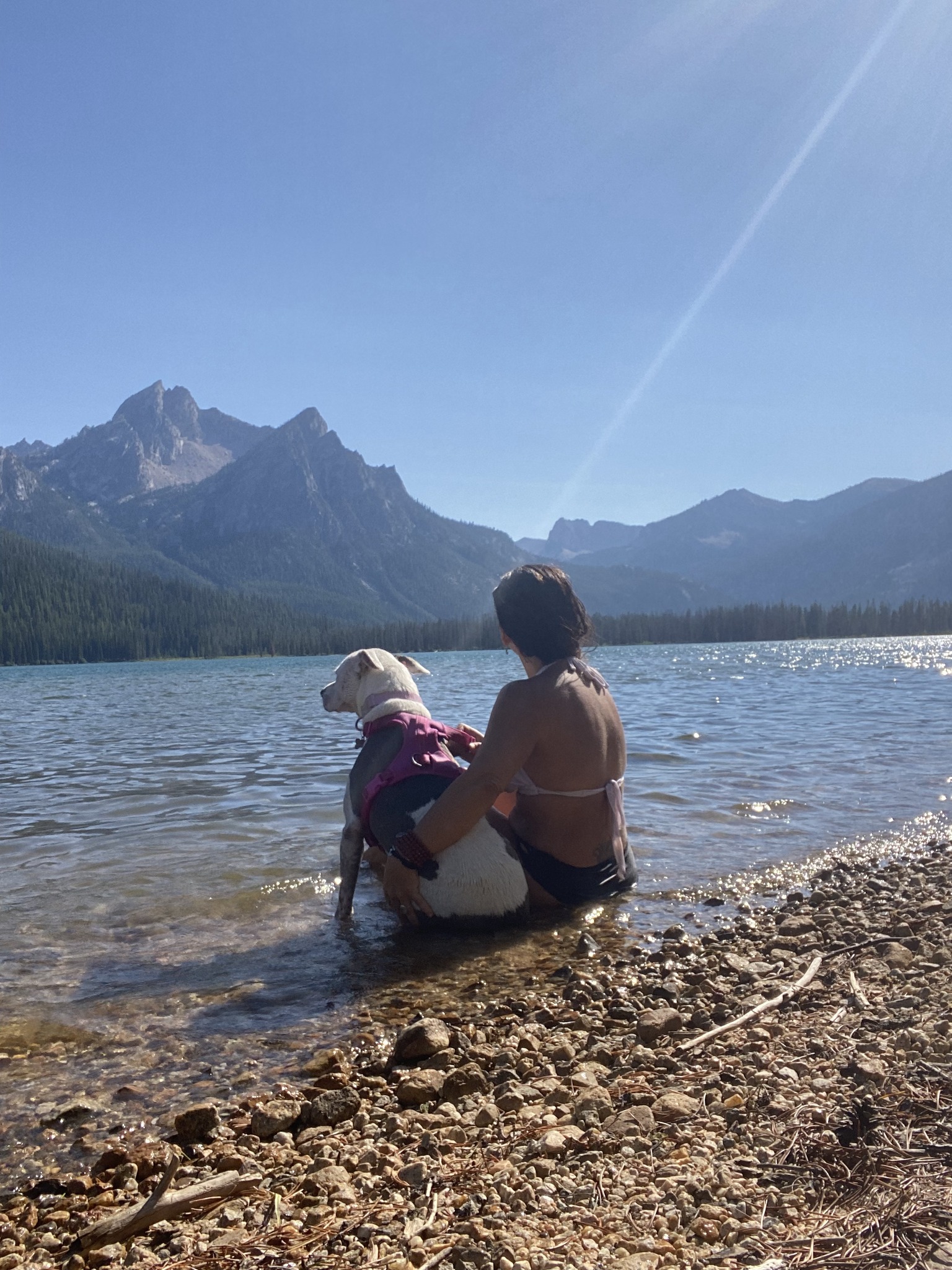
Ursula Akin created The Farsick Travel Co. to help travelers step away from rigid, multi-stop checklists and step into intentional, deeply rooted experiences. Specializing in custom travel design, solo escapes, and curated retreats, Ursula combines local insights with leave-no-trace ethics to turn wanderlust into seamless, unforgettable journeys.
Disclaimer
The information provided on this website and within our articles is for general informational and inspirational purposes only. While we make every effort to ensure accuracy regarding travel logistics, recommendations, and local details, conditions can change rapidly. Readers are encouraged to verify current travel requirements, weather, safety advisories, and local regulations independently. The Farsick Travel Co. is a travel design and curation service and is not responsible for any actions, changes, or incidents occurring during independent travel.


