

What if the year-end escape that asks less of you gives more back? A conventional vacation can be a welcome change of scene, yet packed plans, reservations, and constant decisions may leave little room to rest. That’s the idea behind Unplug & Recharge: Why an End-of-Year Wellness Retreat Beats a Conventional Vacation: restoration often begins when the itinerary has space to breathe.
If you’re tired of being always on, but retreat language makes you picture a rigid schedule, you’re not alone. A restorative trip doesn’t have to follow someone else’s formula. In this guide, you’ll compare retreats and conventional vacations, then plan a year-end pace and setting around your energy, interests, and appetite for connection. A quiet morning walk, an unhurried afternoon, or a yoga session you can choose to join can make room to reconnect without turning rest into another task. The aim is to return with more than memories: a steadier rhythm and a gentler beginning to the new year.
Key Takeaways
- Compare a retreat and a conventional vacation by intention, daily structure, free time, and social rhythm.
- Build a restorative trip around movement and rest without locking yourself into a rigid schedule.
- Use a practical planning sequence to match your year-end escape to your energy, preferred pace, and seasonal conditions.
- Choose a retreat or vacation based on the rhythm you want, not just the label.
- Explore custom planning for hiking, yoga, solo travel, skill-building, honeymoons, or shared experiences.
Why an End-of-Year Wellness Retreat Can Feel Different from a Conventional Vacation
Year-end travel brings the promise of a change of scene, time with people you love, and a pause before a new calendar begins. But it can also arrive when your schedule is already crowded with celebrations, errands, and plans. Choosing where to go and what to do can feel like one more decision to manage.
The difference between a retreat and a conventional vacation isn’t simply yoga versus sightseeing. A retreat often starts with an intention, such as moving gently, spending time outdoors, or making room to reflect. A conventional vacation may center on experiences and places to visit. Either can be restorative. The better fit depends on whether you’re craving variety, spaciousness, or a blend of both. A broad overview of wellness tourism offers context for the range of travel experiences under that umbrella.
A vacation often asks, “What would you like to do?” A retreat also asks, “What kind of rhythm would feel good to return to?” That’s the heart of Unplug & Recharge: Why an End-of-Year Wellness Retreat Beats a Conventional Vacation: not a claim that one trip style works for everyone, but an invitation to choose with intention.
When a conventional vacation stops feeling like a break
A full itinerary can be exciting when you’re energized by discovery. But frequent transfers, timed reservations, and a string of sightseeing choices can leave little unclaimed time. At year’s end, even enjoyable plans may compete with the rest you hoped the trip would provide.
Before committing, count how many days involve changing accommodation or travelling between activities. Then ask whether those transitions sound energizing or tiring. If variety is what you want, keep it. If you’d rather settle in, stay longer in one setting and leave some afternoons open. Neither choice is a measure of how well you’re using your time.
What a year-end reset can mean in practice
A reset doesn’t need to promise dramatic transformation. It can mean choosing a setting and pace that make room for what you need now: quieter mornings, a walk outdoors, an unhurried meal, or fewer transitions. In natural spaces, follow local guidance, stay on established paths, and leave plants and wildlife undisturbed.
Give your trip one simple intention, then use it to shape the itinerary. “I want more time outside” could mean a morning trail walk and a free afternoon, rather than several scheduled excursions. “I want to reconnect” might mean shared meals and fewer planned activities. For a broader look at shaping travel around personal well-being, see Travel Planning for Mental Wellness: Designing Your Restorative Rhythm. A gentler year-end can begin with one thoughtful choice.
What Makes a Wellness Retreat Restorative Without Making It Rigid?
A restorative retreat has enough structure to give the days purpose and enough freedom to make them your own. Movement, rest, reflection, and connection can all have a place without becoming a checklist. Wellness doesn’t require a strict wake-up time, a prescribed practice, or enthusiasm for every activity.
Supportive structure gives your day a gentle shape; a rigid itinerary leaves little room to choose how you want to move through it. That distinction matters if “retreat” brings to mind a packed timetable or a single formula for feeling well. A good rhythm invites participation without making rest another obligation.
Balance guided activities with unscheduled time
Plan one purposeful activity, then make space around it. A morning trail walk, for example, might be followed by a long lunch and an open afternoon. Read, nap, explore at an unhurried pace, or decide later. The goal isn’t to leave every hour blank; it’s to avoid filling every hour in advance.
Separate what you genuinely want from what you feel you’re supposed to do. A yoga session may feel grounding for one traveler; another might prefer a gentle stretch alone or no class at all. Leave breathing room between commitments so you can notice your energy and adjust, rather than rushing from one experience to the next.
Try this planning test: if skipping an activity would make the whole day feel like a failure, the schedule may be carrying too much weight. Keep the anchor that matters most, and make the rest optional.
Make connection and nature part of the experience
Restorative time can be social, solitary, or a thoughtful mix. Shared meals and low-pressure group activities create openings for conversation, while quiet time lets you follow your own pace. There’s no need to turn every moment together into a bonding exercise. Let connection develop naturally, with room to step away when you need stillness.
When you’re outdoors, pay attention to the place rather than treating it as a backdrop. Choose established paths, carry out what you bring in, and observe wildlife from a respectful distance. When meeting local people, approach with curiosity and care, and let their preferences guide the interaction. These choices help a journey feel connected while respecting the places and communities you visit.
If unplugging is part of your intention, decide what that means before you arrive. You might silence nonessential notifications or check messages only at a chosen time. MIT’s practical discussion of the benefits of unplugging offers ideas for making that boundary manageable. For more on shaping a journey around restoration, explore The Art of Mindful Escape Planning: How to Design a Journey That Restores. The Farsick Travel Co. can shape a custom retreat around your preferred pace and activities.
Wellness Retreat vs. Conventional Vacation: Compare the Rhythm, Not the Label
A retreat isn’t automatically quiet, and a conventional vacation doesn’t have to be packed. Compare how each trip is shaped: what it makes room for, how much structure it provides, and whether that rhythm suits you. The question behind Unplug & Recharge: Why an End-of-Year Wellness Retreat Beats a Conventional Vacation isn’t which label is better. It’s which experience fits the break you want.
Consideration
Wellness retreat, often
Conventional vacation, often
Intention
A shared theme, such as movement, reflection, or restoration.
Exploration, leisure, or a mix of personal interests.
Daily structure
May include guided sessions or a gentle framework.
May be planned independently, activity by activity.
Free time
Can be built around sessions, with open periods between them.
Depends on how much the traveler schedules in advance.
Social rhythm
May offer shared activities and informal group connection.
May center on companions, solo time, or spontaneous encounters.
Activity choices
Often gathered around a theme, with room for personal preference.
Can range widely, from sightseeing to time with no set plan.
These are tendencies, not rules. A retreat can include choice and downtime rather than compulsory programming; a vacation can include yoga, nature, or quiet mornings. Ask what you want more of: restoration, exploration, connection, or a deliberate blend. If you want a coherent theme and support setting the pace, a retreat may fit. If you prefer broad variety and self-directed plans, a conventional vacation may suit you better.
Which trip style fits the kind of break you want?
Picture the day you’d be glad to wake up to. Do you want a guided activity and the ease of shared plans, or the freedom to decide as you go? You don’t have to choose one style for the whole trip. A custom itinerary can pair a personally meaningful activity with generous open time, combining restorative elements with the interests that make travel feel like yours.
How much structure is enough?
Think of structure as a spectrum: lightly guided days with one planned anchor, a balanced rhythm of activities and open time, or a more activity-led schedule. Before choosing a format, decide how much of each day you’d like to leave unplanned. If a retreat sounds restrictive, separate the theme from the timetable. A focus on hiking, yoga, or reflection doesn’t have to dictate every hour. Transformative Travel Planning: 5 Myths That Are Holding Your Journey Back offers another angle on questioning assumptions about purposeful travel.
The right format leaves you feeling present in your trip, not managed by it. Start with the rhythm you want; let the label come second.
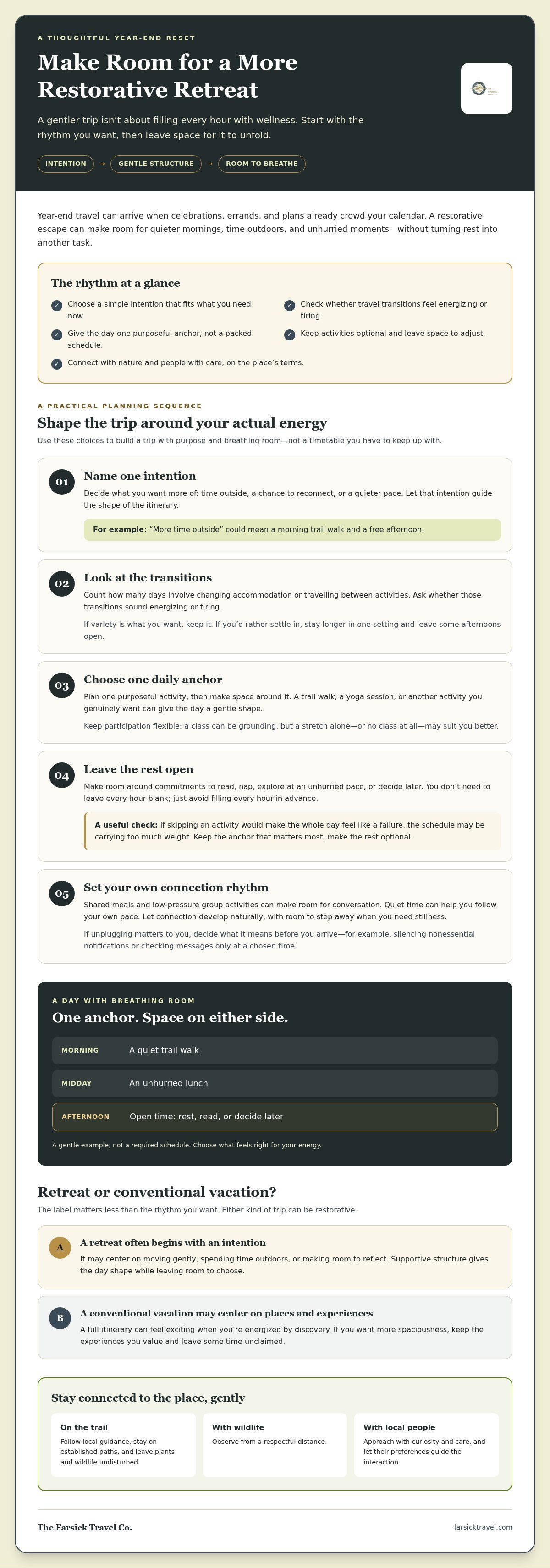
How to Plan an End-of-Year Retreat Around Your Actual Energy
A restorative year-end escape starts with an honest read of your energy, not a list of places you feel you ought to visit. Plan in sequence: name what you need, choose a setting and pace, select a few activities, protect open time, then prepare for the conditions you’ll meet. This keeps the trip grounded in your preferences rather than an idealized version of a holiday.
- Name the need. Are you drawn to solitude, gentle movement, learning something new, time in nature, or connection with others? Choose the feeling you want more room for, rather than trying to make one trip meet every need.
- Choose the setting and pace. Look for a place whose seasonal character suits you, whether that means quiet trails, a walkable local setting, or time indoors between outdoor activities. Favor a base that lets you settle in instead of moving accommodation often.
- Shape the activities. Pick a few anchors that reflect your intention, such as a guided walk, a yoga session, or a local creative experience. Leave flexibility around them so you can adapt to your mood and conditions.
- Protect downtime. Keep some stretches of the day free from reservations and transfers. Open time isn’t a gap to fill; it’s room for a slow meal, an unplanned pause, or a change of mind.
- Prepare thoughtfully. Check the forecast, daylight hours, and conditions for your setting close to departure, then pack accordingly. Year-end weather and light vary widely across the United States, and even nearby areas can feel different.
Choose the intention, setting, and pace
Let the season shape the atmosphere without dictating a rigid plan. If days are short where you’re going, schedule outdoor time during the brighter part of the day and leave room for an indoor pause afterward. In a milder setting, you may prefer a later walk or more time outside. To avoid crowds, consider visiting popular natural areas early or later in the day, or choose less-visited paths when they suit your plans. Follow local guidance, stay on established routes, and leave the landscape as you found it.
Picture a shaded trail where damp earth scents the air, birds call from the canopy, and late-afternoon light slips between the branches. A low-transition itinerary gives you time to notice details like these rather than hurrying to the next stop. It also leaves room for genuine local interactions, instead of treating community life as another attraction to consume.
Build a flexible day and pack for its conditions
Sketch a day with one main activity, a pause, and room to decide what comes next. If weather or daylight shifts, move the walk, choose a gentler option, or enjoy a slower day indoors. Adaptable layers, comfortable walking footwear, and a small day bag are useful starting points. Check local conditions before packing, and add any weather-specific items your activities and destination call for.
The idea behind Unplug & Recharge: Why an End-of-Year Wellness Retreat Beats a Conventional Vacation is to make the trip fit your energy, not ask your energy to keep up with the trip. A custom plan can bring that rhythm into focus.
Plan a custom retreat conversation
Shape Your Year-End Retreat with The Farsick Travel Co.
A year-end retreat can be thoughtfully planned without being overplanned. The Farsick Travel Co. creates custom travel around what matters to you, whether that means time outdoors, a new skill, solo space, or a shared experience. Start with a simple question: what would you like this journey to make room for?
Choose an experience that reflects your reason for going
If you want movement balanced with mindful pauses, a signature hiking and yoga retreat can bring those interests into one considered experience. If you’re drawn to solitude, a solo travel experience gives you space to set your own rhythm. Curated group experiences offer shared activities and time for connection. Skillcations can center a trip around learning, giving an interest or creative pursuit a place in the itinerary.
A celebration can have a personal rhythm, too. Bespoke honeymoon planning shapes a journey around the couple’s interests and preferred pace, while bachelorette party planning brings a group together for an experience designed around how they want to celebrate. Each trip has its own purpose, and its itinerary can reflect that.
That’s the practical meaning behind Unplug & Recharge: Why an End-of-Year Wellness Retreat Beats a Conventional Vacation: the value lies in designing a journey around your needs, not assuming every traveler wants the same schedule or setting. A purposeful plan can hold both intention and ease.
Turn the idea into a considered itinerary
Custom travel planning begins with what you want the trip to feel like, the activities that genuinely interest you, and the seasonal conditions that matter. The Farsick Travel Co. coordinates transport, accommodations, and activities as parts of one coherent journey, with transitions and pacing considered alongside the experiences themselves.
If time in nature is central, the itinerary can make room for outdoor activity while respecting local conditions and the places you visit. Choose established routes, follow local guidance, and leave natural spaces as you found them. If connection is a priority, shared experiences can sit alongside unstructured time rather than filling every moment. The details shift with your goals; the rhythm stays personal.
The Farsick Travel Co. offers custom travel planning, signature hiking and yoga retreats, solo travel experiences, skillcations, bespoke honeymoons, and curated group experiences, including bachelorette trips. Start with the pace you want, the activities that draw you in, and the kind of space you hope to return with.
Carry a Gentler Rhythm into the New Year
The most meaningful part of a year-end retreat may be the intention you bring home. Before you leave, choose one small way to protect that feeling in everyday life: keep a little unscheduled space in your first week back, make time for an activity you enjoyed, or pause before filling the next open space on your calendar. A retreat doesn’t need to change everything to help you notice what you want more of.
That’s the invitation behind Unplug & Recharge: Why an End-of-Year Wellness Retreat Beats a Conventional Vacation. Let your next journey reflect the person you are now, not the version of yourself who can somehow fit one more plan into the day. A considered escape can mark the space between one year and the next, with room to return at your own pace.
Make space for what matters, and let the new year begin with a little more ease.
Frequently Asked Questions
Is a wellness retreat suitable if I do not practice yoga?
Yes. Yoga isn’t a prerequisite for a wellness retreat. Focus on experiences that feel natural to you, such as a guided nature walk, a creative class, quiet reading time, or simply a change of pace. Before choosing a retreat, consider which activities you’d genuinely enjoy and which you’d rather skip. A restorative trip should make room for your interests, not ask you to adopt someone else’s routine.
Can an end-of-year wellness retreat include adventure as well as rest?
Absolutely. Adventure and rest can complement each other when you plan for the energy each activity takes. Pair a more active outing with an easier day afterward, or choose an excursion that leaves time to return, eat, and unwind without rushing. If you’re exploring natural areas, match your plans to local conditions and follow guidance on trails and wildlife. The goal is a trip that feels engaging without becoming an endurance test.
How do I choose between a solo wellness retreat and a group experience?
Choose based on how you want to spend your social energy. Solo travel may suit you if you value independent decisions, quiet meals, or time to explore at your own pace. A group experience may appeal if shared activities and conversation help you feel connected. Consider whether you’d enjoy meeting others throughout the day or prefer company at selected moments. Your answer can guide the balance of shared and independent time.
What should I pack for a wellness retreat in changing seasonal weather?
Pack for the activities and conditions you expect, not just the season’s name. Check the forecast close to departure, then consider a rain layer, warm mid-layer, and clothing you can adjust as temperatures shift. For outdoor plans, bring footwear suited to the terrain and socks you’ve already worn comfortably. A small personal-care kit and a refillable water bottle can also be useful. Adapt the list to your destination and itinerary.
When should I begin planning an end-of-year wellness retreat?
Start once you have a sense of your available dates and what you want the trip to feel like. That gives you time to compare possible settings, identify the experiences that matter most, and shape a realistic pace before your calendar fills. If your dates are still uncertain, begin with a short list of priorities, such as quiet, outdoor activity, or time with friends. Refine the details as your plans take shape.
How can I unplug on vacation without switching off my phone completely?
Set a boundary that keeps useful tools available while reducing unnecessary interruptions. You might silence social notifications, choose a set time to check messages, and let key contacts know how to reach you for something important. Save essential booking details or directions where you can access them without searching through apps. Try the approach at home before leaving, so it feels familiar rather than like another rule to manage.
Are wellness retreats only for people who feel burned out?
No. A retreat can be a purposeful choice even when you feel well. You might want to mark the end of a year, spend time learning, explore a personal interest, or create more space for nature and connection. Unplug & Recharge: Why an End-of-Year Wellness Retreat Beats a Conventional Vacation is about choosing an escape that fits your intentions, not waiting until you’re depleted. You’re allowed to travel for curiosity, celebration, or a change of rhythm.
Article by
Ursula Akin
Ursula Akin created The Farsick Travel Co. to help travelers step away from rigid, multi-stop checklists and step into intentional, deeply rooted experiences. Specializing in custom travel design, solo escapes, and curated retreats, Ursula combines local insights with leave-no-trace ethics to turn wanderlust into seamless, unforgettable journeys.
Disclaimer
The information provided on this website and within our articles is for general informational and inspirational purposes only. While we make every effort to ensure accuracy regarding travel logistics, recommendations, and local details, conditions can change rapidly. Readers are encouraged to verify current travel requirements, weather, safety advisories, and local regulations independently. The Farsick Travel Co. is a travel design and curation service and is not responsible for any actions, changes, or incidents occurring during independent travel.


