

The best adventure trip is shaped by fit, not distance. Choose a destination and season that suit your goals, build your itinerary around a few meaningful activities, and research local conditions and safety before you go. An adventure travel planning company can bring those decisions together into a coherent journey, but it helps to start by clarifying what you want from the experience. A slower pace leaves more room to connect with the place.
You may already know whether you’re drawn to a quiet trail, time on the water, learning a new skill, or a deeper encounter with local culture. The challenge is fitting those interests around your available time, comfort level, seasonal conditions, and the practicalities of getting around.
This guide covers how to clarify your reason for going, match a destination to the season, choose activities, shape a restorative itinerary, and research safety and cultural norms. The goal isn’t to fit everything in. It’s to create a journey that feels grounded, considered, and genuinely yours.
Key Takeaways
- Match your destination and travel season to your budget, available time, and the weather patterns that shape the experience.
- Build an itinerary around a few meaningful activities, leaving room for rest and unhurried local encounters.
- Start with what you hope to learn or feel, then choose outdoor and cultural experiences that support that intention.
- Research local safety considerations and cultural norms, and make thoughtful preparations for communication, money, and insurance.
- Custom planning can help bring these choices together in a journey with a more considered pace and sense of purpose.
Choosing a destination and travel season
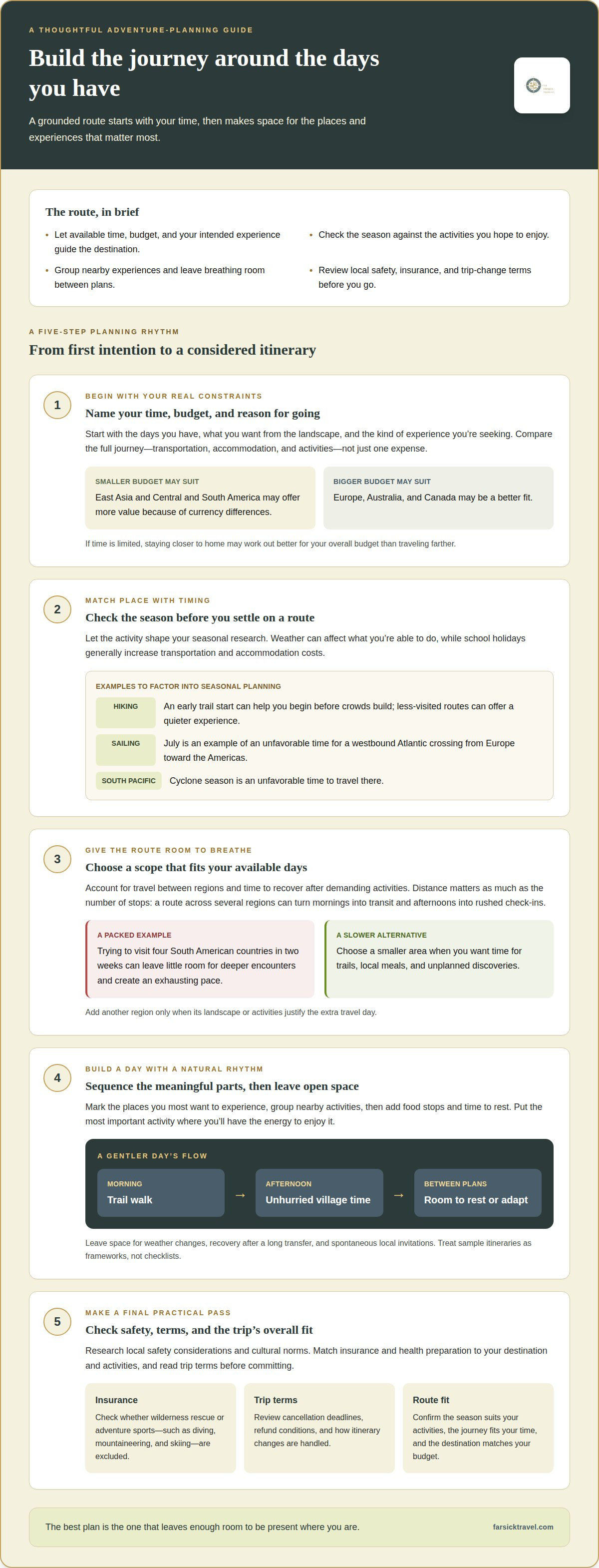
Start with your available time, budget, and the experience you want from the landscape. Then compare seasonal conditions with the activities you hope to enjoy.
Budget-Based Destination Selection
East Asia and Central and South America may offer more value for travelers with smaller budgets because of currency differences. Europe, Australia, and Canada may suit travelers with bigger budgets. Compare the full itinerary, including transportation, accommodation, and activities, rather than judging a destination by one expense. School holidays generally increase transportation and accommodation costs, so flexible dates can widen your options.
Regional Destination Options
Choose a region for its landscapes and experiences, not just its famous stops. East Asia and Central and South America may suit travelers considering a smaller budget, while Europe, Australia, and Canada may better match a bigger one. If time is limited, staying closer to home can work out better for your overall budget than traveling farther. Compare travel time with the days you’ll have to explore.
Season matters as much as location. Before choosing a destination, consider whether its weather could interfere with your planned activities. For popular hiking trails, an early start can help you begin before crowds build. For a quieter experience, look for less-visited routes and consider traveling outside school holidays, when transportation and accommodation costs generally rise.
Sailing requires attention to ocean seasons and trade winds. July is an example of an unfavorable time to sail westbound across the Atlantic from Europe toward the Americas. The South Pacific during cyclone season is also an unfavorable time to travel. Let your route and planned activity guide your seasonal research.
Which adventure travel companies specialize in family, solo, or accessible trips? Look for companies that tailor itineraries to travelers’ needs and preferences. Review whether the proposed activities, pace, and accommodation arrangements suit the people taking the trip.
What travel insurance and medical requirements apply to adventure trips? Match your insurance and health preparation to your destination and activities. According to the Centers for Disease Control and Prevention, travel insurance may exclude wilderness rescue and adventure sports such as diving, mountaineering, and skiing.
What are the cancellation, refund, and change policies for adventure travel companies? Read the trip terms before committing, focusing on cancellation deadlines, refund conditions, and how itinerary changes are handled. Compare those terms with your plans so you understand the consequences of changing dates or withdrawing.
Use a final three-part check: confirm the season suits your activities, the journey fits your available time, and the destination matches your budget. This simple sequence can bring your choices into focus.
Balancing trip duration and itinerary
Let the time you have shape the route, not the other way around. A well-paced itinerary makes room for the challenge you seek and the quieter moments that give a place meaning.
Trip Duration Planning
Start with your available days, then account for travel between regions and time to recover after demanding activities. Trying to visit four South American countries in two weeks can leave little room for deeper encounters and create an exhausting pace. By contrast, two weeks in a major city may feel too slow if you’re eager to keep moving. Match the route to your appetite for variety.
Distance between stops matters as much as the number of days. A route across several regions can turn mornings into transit and afternoons into rushed check-ins. Choose a smaller area when you want time for trails, local meals, and unplanned discoveries. On a longer trip, add a second region only if its landscape or activities justify the extra travel day.
Creating a Travel Itinerary
Build the itinerary in sequence: mark the places you most want to experience, group nearby activities, then add food stops and time to rest. A morning trail walk followed by an unhurried village afternoon creates a more settled rhythm than stacking several strenuous activities. Leave open space between major plans, especially after a long transfer or physically demanding day.
Featured adventure itineraries can provide useful starting points, such as a trekking-focused journey or a route balancing outdoor activity with cultural exploration. Treat each as a framework, not a checklist. Adapt the daily pace to your energy, interests, and available time. One meaningful encounter can matter more than another stop.
Use a simple planning pass before finalizing the route:
- Place the most important activity where you have the energy to enjoy it.
- Group nearby sights, meals, and experiences to reduce backtracking.
- Keep room for weather changes, rest, and spontaneous local invitations.
Then read the schedule as a traveler would experience it. If every day depends on a tight transfer, remove a stop. If a city stay feels too long, add a walk, workshop, or nearby nature experience rather than another distant destination. A month away for an Atlantic sailing journey, for example, offers a very different planning canvas from a short city break.
For a route shaped around your own pace, custom itinerary planning can bring the moving parts together into one coherent journey.
Defining goals and motivations for an adventure trip
Before comparing providers, name what you want the journey to change, teach, or make possible. A clear purpose helps align activities, comfort, pace, and spending.
Adventure can mean learning local history, immersing yourself in nature, or engaging deeply with a community. Choose what matters most. For example, a traveler hoping to understand regional food traditions might prioritize a cooking session and market visit over another strenuous hike. That intention can guide each planning decision.
Turn your motivation into a short planning brief. Include your preferred activities, physical comfort, travel dates, and the kind of daily rhythm you enjoy. “Walk in the morning, share a locally prepared meal, and keep the afternoon open” gives a provider more direction than “see everything.” Add any skills you want to develop, such as navigation or outdoor photography.
Budgeting works best when you rank priorities before reviewing options. Decide which elements matter most, such as a knowledgeable guide, a particular activity, or more time in one place. Then compare proposed itineraries for lodging, meals, transportation, equipment, and guided experiences. Ask which items are included and which are separate expenses, since details vary by trip.
How do I choose a reputable adventure travel company? Look for a clear itinerary, qualified guides, thoughtful risk planning, and transparent information about permissions and insurance. A strong operator explains how the trip fits your experience and goals, rather than relying on an activity list alone.
A well-coordinated itinerary lets travelers focus more fully on the experience and helps avoid planning gaps. For example, a guided hiking journey may need the daily route, transport between trail areas, meal arrangements, and backup plans to work together. Ask how the itinerary supports your priorities and whether local guides can add context about geology, history, or community life.
What is included in an adventure travel package, and what costs extra? Read the written itinerary and terms for specific inclusions, exclusions, and additional expenses. Check each activity, meal, transfer, lodging arrangement, and equipment item individually instead of assuming it comes with the package.
How do I book a trip with an adventure travel planning company? Start by sharing your goals, dates, activity preferences, and budget priorities, then review the proposed itinerary and its terms. Follow the provider’s booking steps once the route and inclusions match your needs.
Before committing, compare the proposed experience with your original brief. If a plan prioritizes crowded highlights but you want quiet trails and genuine local encounters, ask for an itinerary that reflects those values. Matching purpose with practical details and pace helps make the journey feel like yours.
Selecting outdoor and cultural activities
Choose activities for the experience they create, not the number you can fit into a day. A thoughtful mix can bring physical challenge, quiet observation, and meaningful cultural exchange into one journey.
Start with the kinds of movement and settings that appeal to you. Hiking, trekking, cycling, rock climbing, and ziplining take you through landscapes in different ways. Snorkeling, sailing, kayaking, and paddleboarding shift the day toward water, weather, and changing light. Consider your comfort and energy, then choose activities that leave time to notice the place around you.
Adventure vacations can also include birdwatching, surfing, culinary exploration, or language learning. Picture an early walk as birds call through cool air, followed by an afternoon learning a regional recipe or practicing greetings with a local host. These moments make cultural connection part of the journey, not another box to check. Seek experiences led by local people and approach each encounter with curiosity and respect.
Camping appeared in 85% of respondents’ adventure vacations, hiking in 74%, and skiing in 51%. Those figures show how varied adventure travel can be, not what every traveler should choose. A slower day might pair a guided nature walk with a locally led meal. A more active itinerary could center on trekking or mountain biking, balanced with time to recover and explore at an unhurried pace.
- Match the effort to your day. Follow a demanding hike with a quiet afternoon instead of stacking strenuous plans.
- Choose a setting with intention. Kayaking offers time on the water; birdwatching invites a slower, attentive morning.
- Make cultural time personal. Look for locally led food, craft, or language experiences that allow genuine exchange.
Tunisia illustrates how landscapes and cultural encounters can share an itinerary. Small, eco-friendly companies offer cave and mountain exploration, visits to desert oases, and encounters with local artisans. In a cave, footsteps echo against stone; at an oasis, palms shade a pause in the day. Make time for conversation with artisans, follow local guidance, and treat community spaces with care.
Before settling on an activity, consider its duration, physical demands, equipment, and place in the day. For cycling, decide how much riding will leave energy to explore on foot. For snorkeling, consider whether you want a full day on the water or a shorter outing followed by a relaxed coastal afternoon. Pack for the conditions, carry out your waste, and avoid disturbing wildlife.
A few well-chosen activities can connect your journey more deeply to its landscape and people. Give each experience room to unfold.
Researching local safety and cultural norms
Before finalizing an adventure route, research the country, the communities you’ll visit, and conditions related to your planned activities. A practical review includes current local issues, cultural expectations, access permissions, communication plans, and insurance coverage.
Start with the itinerary itself. For each remote trail, mountain area, or water activity, note where you’ll be, how you’ll travel between places, and who knows your schedule. Tell family or friends where you’ll stay and how they can reach you. For a multi-day hike, share the route and overnight locations before setting out, and keep your plans consistent if the route changes.
Research whether civil or political issues could affect everyday movement at your destination. Consider how disruptions might affect transport, lodging, or access to places on your itinerary. Then learn local cultural norms before arriving. Expectations around dress, greetings, photography, and behavior at religious or community sites can differ. In a village, for example, ask before photographing people and follow local guidance about entering shared or sacred spaces.
What should I know about permits, visas, and local regulations for adventure travel? Requirements depend on the country, activity, and places you plan to visit. Check entry conditions and any access permissions relevant to your route, especially if your itinerary enters public land or protected areas.
Match insurance research to the activities you plan, not just the destination. According to the Centers for Disease Control and Prevention, travel insurance may exclude wilderness rescue and adventure sports such as diving, mountaineering, and skiing. Read policy exclusions for every planned activity, and consider travel insurance and international health insurance as part of your preparation.
Before departure, work through this practical checklist:
- Share lodging details and contact plans with someone at home.
- Save key itinerary details for offline access, including route and accommodation information.
- Tell your bank your travel dates, review its international card-use fees, and carry more than one bank card.
- Download the apps you plan to use before leaving, and prepare a small amount of local cash for arrival expenses.
- Pack activity-specific essentials, such as layered clothing for changing trail conditions or sun protection for exposed water routes.
For remote hiking, consider how weather, terrain, and distance from services shape each day’s plan. For a cultural visit, make time to observe, listen, and follow local customs instead of rushing through a community. In natural areas, follow leave-no-trace practices: stay on established paths where appropriate, carry out your waste, and avoid disturbing wildlife.
Build these local details into your itinerary so safety preparation and cultural respect shape the journey from the start.
Plan a thoughtful custom adventure itinerary
The Farsick Travel: Custom Travel Planning
The Farsick Travel Co. designs custom itineraries around your interests, preferred pace, and the experiences you want to carry home. As an experienced adventure travel planning company, its Custom Travel Planning brings nature, local connection, and unhurried moments together in a considered journey.
Choose a format that fits your trip: Signature Hiking & Yoga Retreats, Solo Travel Experiences, or Skillcations built around learning. The Farsick Travel Co. also offers Proposal & Honeymoon Planning and Bachelorette Party Planning for celebrations shaped with intention.
Share your starting idea and what matters most. Contact The Farsick Travel Co. to begin planning your custom journey.
Begin with the feeling you want to carry home
Before opening another map, write one sentence about how you want to feel at the end of the journey. Let that intention guide your choices, from the pace of your days to the encounters you make room for. An adventure travel planning company can translate that starting point into a personal itinerary, while keeping logistics in service of why you wanted to go.
Keep the first step simple: note your available dates, the experience you’re drawn to, and what you’d rather avoid. You don’t need a finished route to begin. A clear starting point gives the planning conversation direction while leaving room for discoveries you couldn’t have scripted.
You might also keep a short travel journal as ideas take shape. Jot down places, landscapes, and moments that stay with you, then look for common threads. Those details can reveal what you’re seeking, whether it’s solitude, a sense of challenge, or time close to nature.
Your next journey can be more than a collection of activities. Let it reflect how you want to move through the world, with curiosity, care, and enough unhurried time to feel present.
Take the first step when you’re ready. The path can unfold from there.
Frequently Asked Questions
What does an adventure travel planning company do?
An adventure travel planning company coordinates the practical details of a nature-focused journey around a traveler’s preferences. This can include designing an itinerary, recommending accommodations, coordinating activities, and organizing transport logistics. For example, a traveler planning a wilderness escape can use a custom plan to connect trail days, local experiences, and stays into a coherent route. The scope depends on the planning service and trip.
What are the best adventure travel planning companies in the United States?
There isn’t one best choice for every traveler; the right fit depends on the journey you want. Look for a clear planning approach, relevant experience with your preferred activities, and trip details that match your priorities. The Farsick Travel Co. offers Custom Travel Planning for tailored journeys, including nature-based adventures and slow-travel escapes. It suits travelers who want an itinerary designed around their personal preferences.
How do adventure travel companies compare by destinations, activities, and group size?
Compare the journeys providers design, not just their destination lists. Check whether their focus is wilderness, cultural experiences, wellness, or a blend, and whether the format suits you, such as a solo trip or retreat. Then review the planned activities and how the group experience is described. The Farsick Travel Co. offers Solo Travel Experiences and Signature Hiking & Yoga Retreats for different travel styles.
What safety standards and emergency support should adventure travel companies provide?
Look for activity-specific risk assessment, trained guides, and a clear response plan for emergencies. Adventure travel companies should assess each activity’s risks, including likelihood and severity, train guides and staff in safety and service, and practice emergency responses at least once a year. Also review whether the company’s insurance covers its activities and what exclusions apply. For trips on public land, ask how required access permissions are handled.
Article by
Ursula Akin
Ursula Akin created The Farsick Travel Co. to help travelers step away from rigid, multi-stop checklists and step into intentional, deeply rooted experiences. Specializing in custom travel design, solo escapes, and curated retreats, Ursula combines local insights with leave-no-trace ethics to turn wanderlust into seamless, unforgettable journeys.
Disclaimer
The information provided on this website and within our articles is for general informational and inspirational purposes only. While we make every effort to ensure accuracy regarding travel logistics, recommendations, and local details, conditions can change rapidly. Readers are encouraged to verify current travel requirements, weather, safety advisories, and local regulations independently. The Farsick Travel Co. is a travel design and curation service and is not responsible for any actions, changes, or incidents occurring during independent travel.


