

Safety doesn’t have to mean giving up the freedom of traveling solo. Guided solo travel for females ranges from focused outings to multi-day group journeys; one listed Todos Santos itinerary lasts 7-9 days. Tour prices are shaped by destination, duration, lodging, group size and included experiences. For a custom trip, pricing depends on the itinerary and is provided after a quote request.
It makes sense to want room to explore independently and the reassurance of thoughtful support. A female-only guided trip can also create space to connect before departure, share the journey with a small community, and build friendships along the way.
Here, you’ll learn how pre-trip connections and group experiences work, what to consider when weighing safety, and how trip length and itinerary choices shape the experience. The aim is a journey with a steadier rhythm: clear plans where they help, and room for meaningful discoveries along the way.
Key Takeaways
- Look for a tour that creates ways to connect before departure, so the first hello doesn’t have to wait until arrival.
- Choose an experience around the kind of companionship you want, from shared meals and cultural activities to time on the trail.
- Assess safety through the tour’s practical planning and support, not polished presentation alone.
- Compare trip duration and what the itinerary includes to understand what shapes the overall cost.
- Use your preferred pace, interests and comfort level to decide whether a guided group journey or a custom-planned solo trip fits best.
Pre-trip connections among travelers
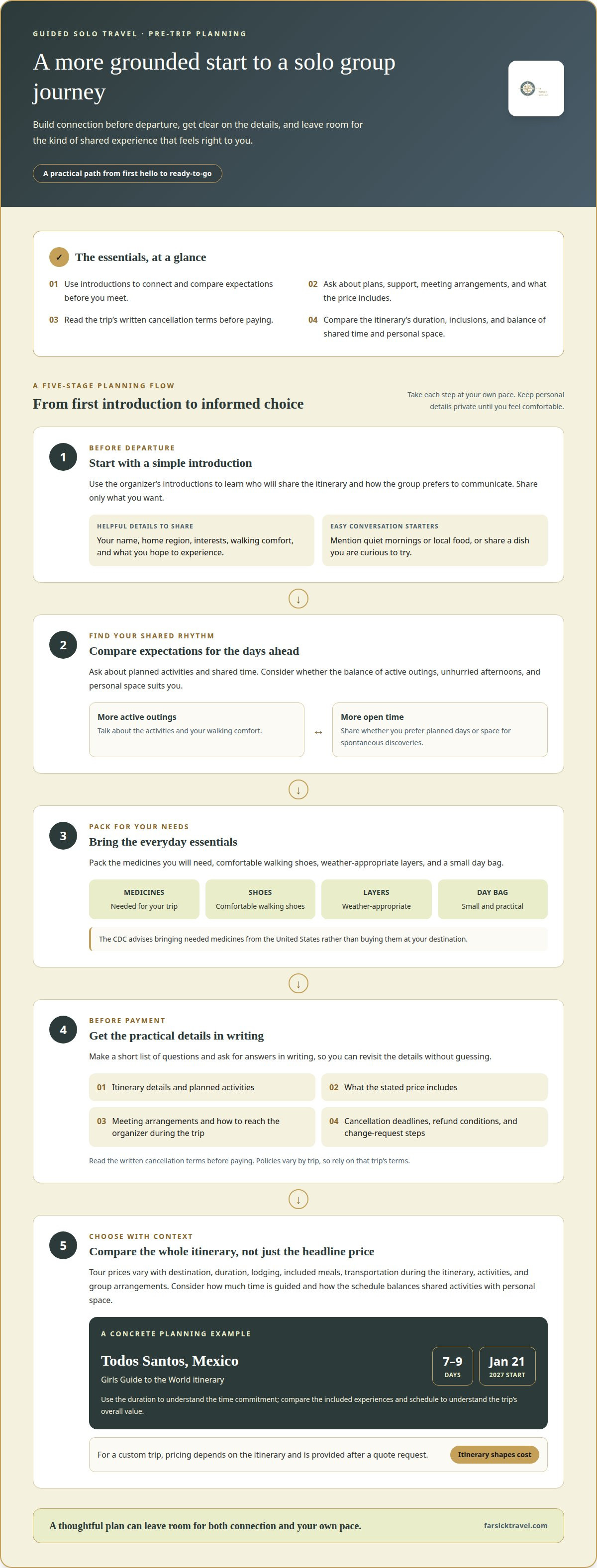
Pack the medicines you’ll need, comfortable walking shoes, weather-appropriate layers, and a small day bag. The Centers for Disease Control and Prevention (CDC) advises bringing needed medicines from the United States rather than buying them at your destination.
Before a guided trip, use the organizer’s introductions to learn who’ll share the itinerary and how the group prefers to communicate. A short introduction can include your name, home region, interests, walking comfort, and what you hope to experience. Mentioning that you enjoy quiet mornings or local food gives others an easy way to start a genuine conversation.
Take the listed Girls Guide to the World Todos Santos, Mexico trip as a planning example: its duration is 7-9 days, and it’s scheduled to begin Jan 21, 2027. Before departure, travelers can use introductions to compare expectations for the trip’s rhythm, from active outings to unhurried afternoons. Ask about the planned activities and shared time, then consider whether that balance suits you.
Pre-trip connection works best when it leaves room for different personalities. Share practical preferences, such as whether you like to plan each day or leave space for spontaneous discoveries. You might also suggest an easy first exchange, such as sharing a local dish you’re curious to try. Keep personal details private until you feel comfortable; a group introduction doesn’t require you to share more than you want.
Before paying, make a short list of planning and support questions: itinerary details, what the stated price includes, meeting arrangements, and how to reach the organizer during the trip. Ask for answers in writing so the details are easy to revisit. If an answer could change your decision, resolve it before committing. Clear information helps you understand the experience and prepare without guessing.
Give trip changes and cancellations the same attention. Read the written cancellation terms before payment, noting any deadlines, refund conditions, and steps for requesting a change. Keep the confirmation and relevant messages together. If your plans shift, contact the organizer using the stated process and explain which dates or arrangements need attention. Terms vary by trip, so rely on that trip’s policy rather than assumptions.
Tour prices vary with duration, lodging, included meals, transportation during the itinerary, activities, and group arrangements. Compare those elements, not just the headline amount. A 7-9-day itinerary, for example, offers a different time commitment from a shorter outing, but duration alone doesn’t explain its full value. Check how much time is guided, what experiences are included, and how the schedule balances shared activities with personal space.
Traveler community and friendships
In the SoFe community, most solo travelers are between 30 and 55 years old. That age range can help you picture the community, but shared interests often shape conversations more than age does. A traveler drawn to quiet village meals may connect quickly with someone who prefers a full day outdoors. Look for common ground in pace, curiosity, and the kind of adventure you want.
Shared activities give new friends an easy way to begin. Walking tours create time to talk side by side, while food or cooking experiences offer natural conversation around local ingredients. Wine, bike, and photography tours can also bring together travelers with a particular interest. Choose an activity that genuinely appeals to you, rather than treating every group moment as a test of instant chemistry.
A Sisterhood Travels Iceland Ring Road trip had 12 women in its group. That example shows how a defined group size can shape the feel of a journey: there are several people to meet, while shared moments can still feel personal. On a road trip, conversation might begin during a scenic stop, continue over dinner, and deepen through the days as travelers learn one another’s rhythms.
Returning travelers can help a group settle into its shared routine. Someone familiar with a tour community may already understand how group meals, free time, or optional outings work. Still, each departure brings together a different mix of people. Ask a returning traveler what kind of connection they enjoyed, then make space for new perspectives instead of expecting the next group to feel identical.
Try these small steps to build friendships without forcing them:
- Share one interest during introductions, such as trail walking, local food, or photography.
- Invite someone to join a low-pressure moment, like a morning coffee or an afternoon market visit.
- Leave room for solo time; friendships often feel more natural when everyone can choose their pace.
A thoughtful itinerary can support both connection and breathing room. For example, a morning walk followed by an unhurried afternoon in a village gives travelers a shared experience, then time to explore in pairs or alone. Respectful visits matter, too: follow local guidance, ask before photographing people, and leave natural places as you found them. These choices show care for the places and communities that make the journey meaningful.
Friendship doesn’t need to be the trip’s only measure of success. A good group experience might mean a few lasting connections, a comfortable shared meal, or simply feeling at ease among fellow travelers. Before choosing a trip, consider whether its activities, pace, and group setting suit how you like to connect. That clarity helps you arrive open to new friends without putting pressure on every conversation.
Safety considerations for solo female travelers
Safety planning starts with the details of a specific itinerary, not a polished website. Before joining a tour, look for clear information about the guide, daily schedule, transport, lodging, and how the group handles changes. A professional-looking page alone doesn’t establish that a tour company is legitimate. Read the itinerary closely and look for practical arrangements, such as where each day begins and how travelers move between activities.
Ask how the group manages transitions. Does the guide explain the meeting point before a village walk, for example, and does everyone know what to do if they’re delayed? Find out which activities are guided and which allow independent time. A day combining train travel with a local walking tour calls for clear meeting instructions and a plan for rejoining the group. These details help you understand the shape of the day.
Use a simple pre-departure safety routine:
- Save the itinerary, lodging details, and organizer contact information somewhere accessible offline.
- Share your day’s plan with someone you trust, especially when you have independent time.
- Keep your phone charged and carry a portable charger for long outings.
- Choose a meeting point with the guide before separating from the group.
- Pack an alcohol-based hand sanitizer containing at least 60% alcohol for situations when soap and water aren’t readily available, as advised by the Centers for Disease Control and Prevention (CDC).
On guided outings, follow the group’s agreed meeting times and route instructions. If a trail walk involves changing weather or uneven ground, wear shoes suited to the terrain and bring a layer you can add or remove. In a busy market, secure your valuables and agree on a visible meeting place before browsing. Small habits make it easier to stay present without losing track of practical details.
Accommodation deserves a close look, too. Confirm the property name and address in your itinerary, and note how arrival works if you reach the destination after dark. If a transfer is part of the trip, understand who will meet you and where. Keep essentials, such as identification, payment cards, and medication, in a secure place you can reach without unpacking your whole bag.
Trust your own comfort level during shared experiences. You can decline an activity that feels unsuitable, stay with the group in unfamiliar areas, or take quiet time instead of joining an outing. On a remote nature walk, follow the guide’s instructions, respect local guidance, and leave plants and wildlife undisturbed. Thoughtful planning supports independence while keeping attention on the landscape, the people, and the experience.
Women-only tour prices and durations
Tour operators offer female-only guided trips, from activity-focused outings to multi-day journeys. Female-only groups share the experience with other women, while mixed-group tours bring together travelers of different genders.
Women-only tour pricing
Tour prices depend on what the itinerary includes, not just its destination. Compare accommodations, meals, local transportation, guided activities, and time for independent exploration. For a custom itinerary, the cost depends on its details. The destination, duration, lodging, and planned experiences all shape the trip.
Before comparing options, look for a clear breakdown of what’s included and what’s optional. One tour, for example, may include guided walks and shared meals, while another leaves more time and expenses to arrange independently. The headline price alone won’t tell you which itinerary is the better fit.
Tour duration options
Women-only trips can be designed around different time commitments, from a single activity to a multi-day itinerary. A listed trip to Todos Santos, Mexico lasts 7-9 days. Use that example to consider whether you want a focused escape or enough time to settle into a slower daily rhythm.
Duration affects more than the number of nights away. A longer itinerary can allow room for guided experiences, unhurried meals, and quieter time between destinations. Compare the daily schedule and travel pace with the days you have available, rather than choosing by trip length alone.
To find companies offering female-only guided solo trips, look for tour operators that organize female-only departures and publish itinerary details. Some focus on culture or food; others center on hiking, wellness, or regional exploration. Compare the trip’s activities and structure with the experience you want, rather than relying on its label.
Female-only and mixed-group guided tours both offer a planned itinerary and shared activities. The main difference is the group composition: female-only tours bring women together, while mixed-group departures include travelers of different genders. Consider which setting feels more comfortable, then compare the guide’s role, group activities, accommodations, and opportunities for independent time.
A practical comparison starts with the daily rhythm. A tour that pairs a morning walk with an open afternoon, for example, may suit someone who values both company and solitude. Another itinerary might schedule shared experiences throughout the day. Review the activity descriptions and transport arrangements to understand how much time you’ll spend together.
Use a short checklist before choosing:
- Match the trip duration to your available time and preferred pace.
- Compare accommodations, included meals, activities, and transport.
- Look for a clear schedule and understand where independent time fits.
- Choose women-only or mixed-group travel based on the group dynamic you prefer.
For instance, a 7-9-day trip may suit a traveler seeking a week-long shared journey, while a shorter guided activity can fit into a more independent itinerary. The right choice depends on how you want to spend your days, what the listed price covers, and whether the group format supports the kind of experience you’re seeking.
What are the best guided solo tours for women in 2026?
The best tour is the one that fits your pace, interests, and preferred group dynamic. For a 2026 decision, compare the experience itself: cultural immersion, time outdoors, practical support, and space to explore independently. The examples below include scheduled 2027 departures, useful for understanding how women-only itineraries can be shaped.
For a slower cultural escape: Girls Guide to the World lists a 7-9-day trip to Todos Santos, Mexico, scheduled to begin Jan 21, 2027. Consider this kind of itinerary if you want several days in one destination rather than a rushed sequence of stops. Before choosing, read the daily plan for a balance of guided experiences, local encounters, and unstructured time.
For a city-and-coast combination: Girls Guide to the World’s Barcelona and Costa Brava trip is scheduled to begin Apr 8, 2027. A two-part itinerary can suit travelers drawn to both urban culture and coastal landscapes. Compare the time spent moving between places with the time reserved for walking, meals, and rest. That rhythm can matter as much as the destination names.
For a nature-led journey: Sisterhood Travels’ Iceland Ring Road trip had 12 women in its group. A road journey through Iceland may appeal if you want to experience changing terrain with a shared group. Look closely at the route, daily driving, and planned stops. For outdoor days, pack layers and footwear suited to the listed activities, and follow local guidance around fragile landscapes.
Not every meaningful guided trip needs to span several days. Walking, food, cooking, wine, bike, and photography tours each offer a different way to share an experience. A cooking outing may create conversation around local ingredients; a photography walk may suit someone who prefers observing before joining a group conversation. Choose the activity you’d enjoy even without instant friendships.
Use this shortlist to compare options:
- Match the pace: Check activity descriptions, travel between stops, and free time.
- Read the practical details: Review group arrangements, accommodations, included experiences, and meeting plans.
- Choose your setting: Decide whether you’re drawn to cultural discovery, outdoor adventure, or a blend.
- Check departure timing: Note whether a listed date fits your calendar and season preferences.
A trip that feels right on paper should also work in practice. Compare the itinerary’s rhythm with how you like to travel: early starts, lingering meals, active days, or quiet intervals. For a more personal route through nature and local culture, start planning a thoughtfully paced journey.
The Farsick Travel Co.: Custom Travel Planning
The Farsick Travel Co. shapes solo journeys around your interests, preferred pace, and comfort with guided experiences. Choose Custom Travel Planning for an itinerary arranged around meaningful connections, nature, and room to explore at your own rhythm. Solo Travel Experiences, Signature Hiking & Yoga Retreats, and Skillcations offer different ways to make the journey your own.
Share the places and activities that draw you in, along with the kind of days you enjoy. A morning hike followed by a slow afternoon in a local village can set the journey’s natural rhythm. Thoughtful planning brings those details into focus, so the experience feels personal rather than one-size-fits-all.
Choose a journey that feels like yours
The next step is deciding what you want your days to feel like. Perhaps you picture a quiet trail before breakfast, a shared meal with new companions, or an afternoon left open for wandering. Guided solo travel for females can offer structure without taking away the independence that makes a trip personal.
Before committing to an itinerary, name the details that matter most: your preferred pace, the kind of group experience you enjoy, and how much time you want for yourself. Those choices can turn a destination into a journey grounded in your interests, rather than shaped by a checklist.
If you’re ready to explore a trip shaped around your own rhythm, talk with The Farsick Travel Co. about planning your journey.
Your next journey can begin with a clear intention, a thoughtful plan, and the confidence to travel in a way that feels true to you.
Frequently Asked Questions
How can women assess safety when choosing a solo travel destination?
Assess a destination by examining the specific places and activities on your itinerary, not just its overall reputation. Consider arrival times, transport between overnight stays, and whether you’ll be alone in unfamiliar areas. A late arrival followed by a long transfer, for example, may feel less comfortable than arriving during daylight. Look at how the itinerary handles those transitions, and choose a pace and setting that suit your comfort level.
How much do guided solo trips for women typically cost?
There isn’t one typical price that applies to every guided trip. Cost depends on the destination, length, accommodations, included transport, meals, guide services, and activities. Compare itineraries by what the price covers, including any optional experiences or expenses you’ll arrange separately. For a custom trip, pricing depends on the individual itinerary and is provided after a quote request; its scope and chosen inclusions shape the cost.
What should women look for when booking a guided solo trip?
Look for a detailed itinerary, clear inclusions, and practical arrangements for arrivals, transfers, and free time. Check whether the pace fits your interests, such as a nature-focused schedule or a culture-led journey. Read the cancellation terms before committing, and understand how changes are handled. If you’re considering guided solo travel for females, also check how the tour describes its group format and what support is available during planned activities.
What are common safety risks for women on guided solo trips, and how can they be reduced?
Common concerns include losing contact with the group, getting separated during an outing, or arriving without clear lodging or transfer details. Reduce confusion by saving the day’s schedule offline, agreeing on a meeting point, and keeping the accommodation address accessible. In crowded places, decide how to regroup before browsing separately. For outdoor activities, follow the guide’s route and conditions advice, and carry clothing suited to the day’s weather and terrain.
What visa, health, and travel insurance requirements should solo women travelers check?
Check entry and transit requirements for every country on your route against your passport and itinerary. For health preparation, consider your medical needs, planned activities, and any medicines you rely on. Review insurance wording for medical care, evacuation, trip disruption, belongings, and activities such as hiking. Coverage terms vary, so match the policy details to your journey rather than assuming every activity or circumstance is covered.
Are there extra charges for single rooms on guided solo tours?
Some tours price single accommodation differently from shared lodging, while others arrange rooms another way. Read the accommodation details and price inclusions to see whether a private room is included, optional, or subject to an additional charge. Also check whether the listed room arrangement applies throughout the itinerary. The total depends on the tour’s lodging choices and terms, so compare those details alongside the schedule.
Article by
Ursula Akin
Ursula Akin created The Farsick Travel Co. to help travelers step away from rigid, multi-stop checklists and step into intentional, deeply rooted experiences. Specializing in custom travel design, solo escapes, and curated retreats, Ursula combines local insights with leave-no-trace ethics to turn wanderlust into seamless, unforgettable journeys.
Disclaimer
The information provided on this website and within our articles is for general informational and inspirational purposes only. While we make every effort to ensure accuracy regarding travel logistics, recommendations, and local details, conditions can change rapidly. Readers are encouraged to verify current travel requirements, weather, safety advisories, and local regulations independently. The Farsick Travel Co. is a travel design and curation service and is not responsible for any actions, changes, or incidents occurring during independent travel.


