

A slower trip doesn’t have to last for weeks. The best slow travel itinerary examples make room to settle into one place, whether you have four days or 14, and trade a packed checklist for a more thoughtful rhythm. The difference is how deeply you experience a destination, not how far you go.
If you’ve ever returned from a trip needing another vacation, slow travel’s appeal is easy to understand: fewer transitions leave more room for quiet mornings, local encounters, and unplanned discoveries. It isn’t about doing nothing. It’s about choosing what matters and giving it time.
Here, you’ll find slow travel itinerary examples, learn how this style differs from a fast-paced getaway, and see how to shape a more relaxed trip. From a small-town base to a walking or cycling escape, each example balances a gentle daily rhythm with practical planning and a closer connection to the places you visit.
Key Takeaways
- Choose a home base that fits your interests, budget, and practical travel requirements, then explore it at a more considered pace.
- Trade a packed checklist for time to notice local rhythms, make meaningful connections, and leave space for unplanned discoveries.
- Shape your days around walking, cycling, trains, or boats to experience the journey as well as the destination.
- Set your stay length by how much time you want for settling in, exploring nearby, and resting between outings.
- Use a custom itinerary or retreat to bring your preferred pace, interests, and style of travel together.
1. What Is Slow Travel - and How Do You Actually Do It?
Slow travel means giving a place enough time to become familiar, rather than measuring a trip by how many landmarks you see. A stay might last four days, 14 days, a week or more, or even a month. The pace changes with your available time, interests, and appetite for settling in.
Choose a destination for more than its famous sights. Consider your budget, the entry requirements for your passport and intended stay, and the experiences you value most. An interest in food, walking, art, or wilderness can guide your choice. Then select one base and treat nearby places as optional excursions.
For a budget-conscious slow trip, consider an apartment or homestay with a kitchen, and use walking, buses, bicycles, trains, or ferries where practical. Lodging and transport costs depend on the destination, season, length of stay, and distances involved, so consider them together when planning.
For a car-free U.S. example, stay in Washington, D.C., explore nearby neighborhoods on foot, and use public transit to reach another part of the city. Keep the plan spacious: choose one local market or museum, then leave an afternoon open for wandering and a leisurely meal.
Living locally starts with small, repeatable choices. On your first day, greet shopkeepers or street-food sellers, learn a few useful local phrases, and find a nearby market. Returning to the same café each morning for ten days can turn ordering coffee into a familiar exchange, rather than just another stop.
A short stay can help you decide whether a destination suits you before committing to a longer visit. For example, spend four days in a U.S. mountain town: walk a nearby trail in the morning, browse local galleries, and leave an afternoon unscheduled. Notice whether the landscape, daily rhythm, and practicalities feel right before extending your stay.
Different destinations invite different rhythms. Autumn in Asheville brings fall foliage; spring in Savannah brings blooming azaleas, while fall offers fewer crowds. In Dunedin, Florida, winter and spring suit cycling the Pinellas Trail and exploring local shops. Choose a season for the experiences you value, not simply for the number of nearby attractions.
Shape the itinerary around one anchor experience and a few flexible days. A food-focused stay might include a market visit and a cooking course; a nature-based trip could pair morning walks with quiet village afternoons. Book essential lodging early in popular destinations, but leave room to follow a local recommendation or linger somewhere that resonates.
2. Slow travel compared with fast-paced travel
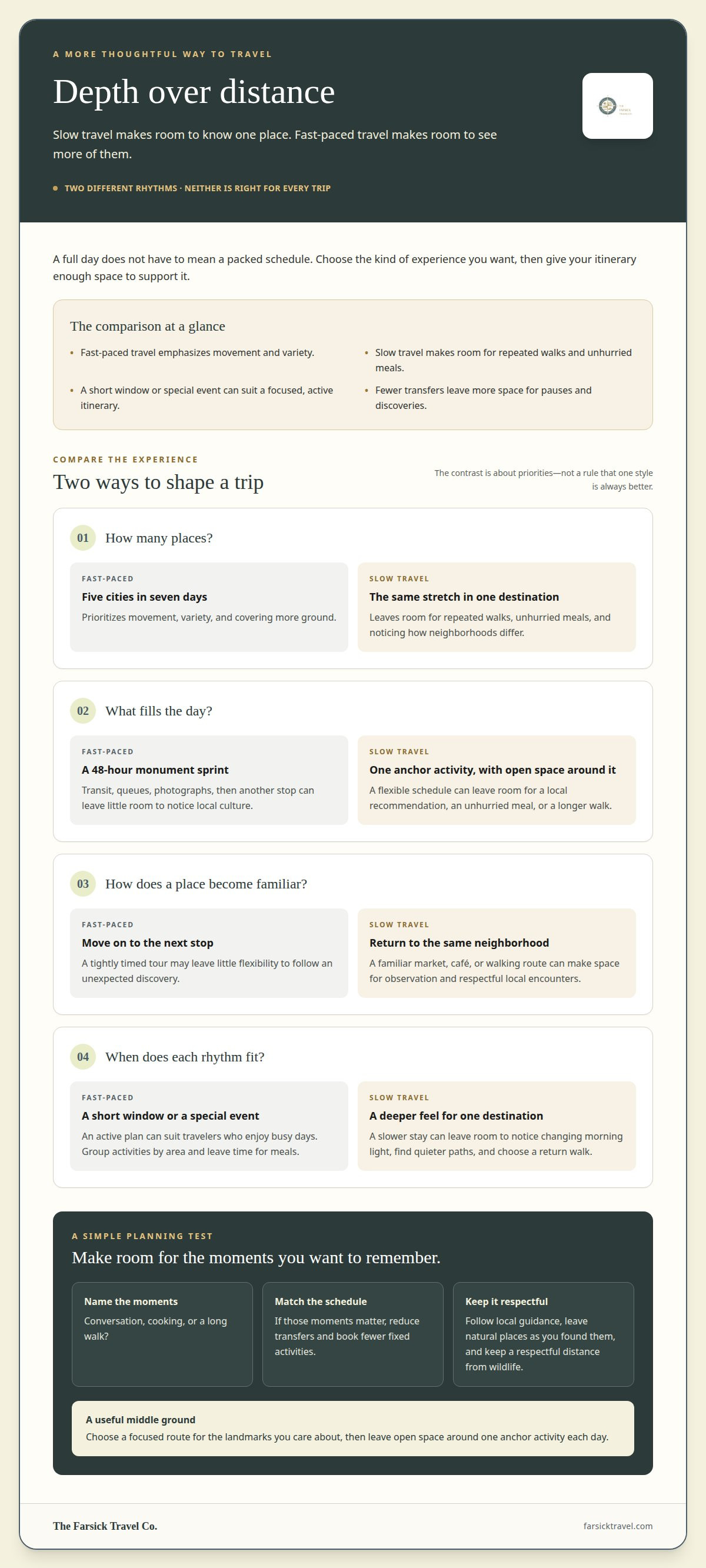
A fast-paced trip often treats time as something to fill. Imagine a 48-hour sprint between famous monuments: transit, queues, photographs, then another stop. That rhythm can turn a city into a checklist, leaving little room to notice its culture or decide what deserves your attention. Slow travel changes the measure of a full day.
Compare visiting five cities in seven days with spending the same stretch in one destination. The first plan emphasizes movement and variety; the second makes room for repeated walks, unhurried meals, and noticing how neighborhoods differ. Neither style is wrong. Ask yourself whether you want breadth or depth from this particular trip.
A slower stay can make ordinary routines part of the experience. In Savannah, for example, you might choose one neighborhood, return to the same market, and make time for a cooking class instead of changing hotels repeatedly. The point is to observe and participate respectfully, not to treat residents or their traditions as attractions.
Fast travel can suit a short window, a special event, or anyone who enjoys active days. A packed New York City itinerary might combine a museum, a landmark, and an evening performance. To keep the pace manageable, group activities by area, allow time for meals, and don’t treat every open hour as an opportunity to book something.
Slow travel offers a different kind of freedom. On an island, staying put can mean noticing the changing morning light, finding quieter paths, and choosing a return walk after breakfast. Leave natural places as you found them, follow local guidance, and keep a respectful distance from wildlife. Presence matters more than collecting stops.
A flexible schedule can also respond to discoveries. If a local recommends a small gallery or a quieter walking route, you can make room for it. A tightly timed tour may leave little flexibility. Plan one anchor activity for the day, then leave open space around it to protect both your energy and curiosity.
Use a simple test to compare travel styles: list the moments you want to remember, then see whether your schedule gives them enough time. If conversation, cooking, or a long walk matters, reduce transfers and book fewer fixed activities. If your first visit calls for several landmarks, choose a focused route rather than trying to see everything.
The best slow travel itinerary examples aren’t defined by distance or duration alone. They balance movement with pauses, and planned experiences with time to wander. Start with one destination, one reason for going, and one day left partly unscheduled. This structure encourages a tourist to notice a place without trying to imitate local life.
3. Slow-travel planning tips
Start with a simple framework: choose a region, select a comfortable base, and identify one meaningful activity for each day. A road trip through a wine region, for example, might pair a vineyard visit with an easy walk, leaving the rest of the afternoon open. The trip has shape without turning every hour into a commitment.
Let the season guide your daily rhythm. In hot weather, plan outdoor walks for early morning and reserve the warmest hours for a shaded café or quiet indoor visit. In cooler or rainy conditions, keep a flexible indoor alternative, such as a local gallery or cooking class. Seasonal weather can affect comfort and timing, while local holidays and opening hours may affect access, dining, and transport. Check the calendar and current hours as you plan, and keep a backup for essential stops.
Choose lodging to suit how you’ll spend your days. A hotel near a village center can simplify evening meals and morning walks; a rental with a kitchen can make relaxed breakfasts and occasional market cooking easier. For a longer stay, consider practical comforts such as laundry and a place to work. Book early in popular destinations, especially when festivals or holidays draw visitors.
Keep the itinerary loose, but give essential logistics a clear place. Mark your arrival, departure, lodging, and any timed activity first, then leave the spaces between them open. If a guided visit matters, book a guide for a specific site for a day or less, and let the following afternoon unfold without another appointment. This balance leaves room for spontaneous discoveries.
Avoid a common planning mistake: treating every day as an excursion day. Make room for groceries, laundry, rest, and ordinary wandering. If your base is outside town, map the return journey before setting out and keep a backup transport option in mind. For outdoor adventures, check local conditions before a hike, carry water and weather-appropriate layers, and follow marked paths. Leave No Trace habits help protect the places you came to experience.
Use one base to explore nearby places instead of changing hotels repeatedly. A rental in a small town, for instance, can support day trips across a region while keeping mornings and evenings familiar. Choose destinations within a manageable journey, group activities by location, and avoid planning a late return before an early departure. You’ll feel more settled and spend less time packing.
Make a brief planning note for each day: the anchor activity, the simplest way to reach it, and one alternative. If changing weather makes a coastal walk uncomfortable, switch to a nearby village visit. A thoughtful plan has enough structure to reduce friction, but enough breathing room to feel personal.
4. Walking, cycling, train, and boat journeys
Choose how to get around based on the character of the place, not just travel time. Walking suits compact neighborhoods and marked trails; cycling connects nearby villages and quieter roads. Trains make longer distances part of the journey, while boats reveal coastlines and riverbanks at their own pace. Each mode gives a trip a different rhythm.
For a walking-focused stay, use a small town as your base and explore on foot each morning. A walk before midday can leave the afternoon free for a long lunch or a visit to a local shop. In a mountain landscape, choose a route suited to your experience, stay on marked paths, and carry water and layers for changing conditions.
A multi-day trek has a different rhythm from short walks. Carry what you need between stops, or stay in a cabin or park lodge and take shorter hikes from there. The second approach gives you a familiar place to return to, with time to rest, notice the weather, and leave natural spaces undisturbed.
Cycling works well when the route itself is part of the experience. On Florida’s Pinellas Trail, for example, a relaxed ride can combine time outdoors with stops in nearby communities. Plan a route with places to pause, bring water, and leave enough daylight for the return. A bicycle helps you cover more ground than walking without rushing past every detail.
Trains can connect two bases without repeated packing and unpacking. Choose a departure that gives you time to reach the station calmly, and keep essentials close at hand. During the ride, watch the landscape shift from built-up edges to open country. The train becomes part of the journey, rather than a gap between destinations.
Boats offer another way to experience a region’s geography. A ferry crossing can connect a mainland base with an island, while a local boat trip may reveal sheltered coves or working waterfronts. Follow crew guidance, respect wildlife and shoreline habitats, and bring a light layer for wind. Keep the rest of the day open around the crossing.
Match your transport to the experience you want. Walking brings you close to street sounds and changing light; cycling offers a wider radius; trains link communities; boats reveal the water’s edge. If your trip uses several modes, choose one primary way to explore each area, then add another only when it deepens your connection to the place.
Pack for how you’ll move, not for an imagined itinerary. Comfortable walking shoes, a reusable water bottle, weather-ready layers, and a small day bag work for many journeys. Before setting out, check route conditions and local transport schedules, then leave room for an unplanned pause. A slower route is most rewarding when you can notice where you are, not only where you’re going.
5. How many days should you spend in each destination on a slow travel trip?
Choose how long to stay based on what you want to understand, not a fixed formula. A week in one destination can give you time to settle, explore nearby, and return to favorite places. A month leaves more room for routines and longer excursions. The right pace depends on how much variety you want and how far you’re willing to travel from your base.
In a small town, a week or longer can make a meaningful difference. Use the first days to learn the layout, find a market, and notice when streets grow lively or quiet. Later, revisit a path or café and explore nearby places. Staying put makes ordinary details part of the trip, rather than time lost between destinations.
Let your main interest guide the length of your stay. A culinary itinerary might spend two weeks in a food-focused region instead of compressing tastings into a weekend. That leaves room for a market morning, an unhurried meal, and a cooking course, with time between experiences to notice local ingredients and dining rhythms.
Count travel and settling-in time as part of your stay. Changing accommodation takes time for packing, transit, and finding your bearings again. If you have a week in a region, one home base with day trips may leave more restorative hours than splitting the visit among several towns. Let distance and transport guide your choice.
A visit to Savannah offers a useful model for a shorter, settled stay. Give yourself time to explore one neighborhood, return to a favorite café, and take an unhurried walk through Forsyth Park. Keep nearby outings optional instead of filling each day. You’ll have room to experience the city’s daily rhythm rather than rush between planned stops.
Before extending your stay, ask what remains unexplored and what you genuinely want more of. If you’ve found a favorite walking route, local café, or nearby village, extra time can deepen the experience. If your interest centers on one museum or event, a shorter visit may suit you better. Match the length to your purpose.
Build your plan around a simple rhythm: arrive and get oriented, explore at a measured pace, then leave room to follow a local recommendation. For a week-long stay in one base, that might mean a neighborhood walk, a day trip, and a quieter day between them. For a month, add regular routines and longer excursions while keeping some days open.
Treat slow travel itinerary examples as flexible frameworks, not schedules to copy. A week can suit a small town; two weeks can give a food-focused region more texture; a month can support a deeper daily routine. Choose a length that lets you be present without asking too much of each day.
Plan a slower custom itinerary
The Farsick Travel: Custom Travel Planning
The Farsick Travel Co. can shape a personal itinerary around your preferred pace, interests, and reasons for traveling. Custom Travel Planning can bring together nature, local experiences, and time to pause. For a more focused journey, choose from Signature Hiking & Yoga Retreats, Solo Travel Experiences, or Skillcations. Proposal & Honeymoon Planning and Bachelorette Party Planning can give a celebration its own thoughtful rhythm, with experiences shaped around the people and moments that matter to you.
Share the kind of journey you have in mind, the places you’re drawn to, and how you want your days to feel. Contact The Farsick Travel Co. to discuss your travel plans.
Let your next trip begin with a clear intention
Before choosing another destination, name what you want to make room for. Perhaps it’s a quieter relationship with the outdoors, a new skill, or the freedom to follow your curiosity without rushing. Let that intention guide your choice: the right place supports the kind of attention you want to bring.
Use slow travel itinerary examples as inspiration, not a template. Your journey can take shape around the people you’re traveling with, the energy you want to bring, and what feels worth lingering over. A well-made itinerary doesn’t decide every moment for you. It creates a steady frame, then leaves room for moments you couldn’t have planned.
When you’re ready to turn that intention into a personal journey, reach out to explore what might fit. The first step is simply sharing what you hope to experience.
Give yourself permission to travel with more presence. The most meaningful journeys leave room for the places you visit to change you.
Frequently Asked Questions
What Is Slow Travel - and How Do You Actually Do It?
Slow travel means arranging a trip around time spent experiencing places, rather than maximizing the number of stops. Choose a destination that suits your interests, settle into a comfortable base, and make space for repeat visits and everyday routines. For example, spend a morning at a neighborhood market, then return another day to try a dish you noticed. Keep some plans flexible so local recommendations can shape your days.
What is slow travel, and how is it different from a typical vacation itinerary?
Slow travel gives a destination more attention; a typical vacation itinerary may prioritize reaching several attractions or places in limited time. The difference shows in the day’s structure: instead of scheduling back-to-back visits, choose one activity and leave time for a long meal or an unplanned walk. Neither approach is automatically better. Choose based on whether you value variety, depth, or a balance of both.
What are examples of 7-day slow travel itineraries in Europe?
A seven-day Europe itinerary could use one base in a walkable old town, with nearby outings instead of daily hotel changes. Spend the first day getting oriented, set aside a day for a local food experience, and use another to visit a nearby town by public transport. Keep a quieter day between longer outings. In many European old-town areas, compact streets make wandering on foot a practical part of the experience.
What are examples of 2-week slow travel itineraries in the United States?
For two weeks in the United States, choose one region and divide your stay between a main base and a smaller nearby community. A food-focused trip could center on local markets, cooking experiences, and relaxed meals, with open days between outings. A nature-centered itinerary might alternate shorter trail walks with time in town. Plan travel between bases deliberately, and avoid scheduling an ambitious excursion immediately after a transfer.
How can travelers plan a slow travel itinerary around public transit and train routes?
Start with the rail or bus connection that makes your chosen base practical, then group activities near stations or along local transit routes. Leave room for the walk between your lodging, stops, and places to eat. Check schedules when planning timed activities, especially for return journeys, and keep a nearby alternative for days when a connection doesn’t suit your pace. Trains, buses, bicycles, and ferries can all help create a more relaxed itinerary.
What are the best activities to include in a slow travel itinerary besides sightseeing?
Choose activities that give you a reason to return or participate, such as a cooking course, market visit, guided walk, or skill-building workshop. A local class can reveal how ingredients or crafts fit into daily life, while a nature walk invites you to notice changing light and sounds. Build in simple rituals, too: revisit a café, browse a neighborhood shop, or spend an afternoon reading outdoors.
What are budget-friendly slow travel itinerary examples, including lodging and transportation costs?
For a budget-conscious slow trip, consider an apartment or homestay with a kitchen, and use walking, buses, bicycles, trains, or ferries where practical. Lodging and transport costs vary by destination, season, length of stay, and distance between places.
Article by
Ursula Akin
Ursula Akin created The Farsick Travel Co. to help travelers step away from rigid, multi-stop checklists and step into intentional, deeply rooted experiences. Specializing in custom travel design, solo escapes, and curated retreats, Ursula combines local insights with leave-no-trace ethics to turn wanderlust into seamless, unforgettable journeys.
Disclaimer
The information provided on this website and within our articles is for general informational and inspirational purposes only. While we make every effort to ensure accuracy regarding travel logistics, recommendations, and local details, conditions can change rapidly. Readers are encouraged to verify current travel requirements, weather, safety advisories, and local regulations independently. The Farsick Travel Co. is a travel design and curation service and is not responsible for any actions, changes, or incidents occurring during independent travel.


