

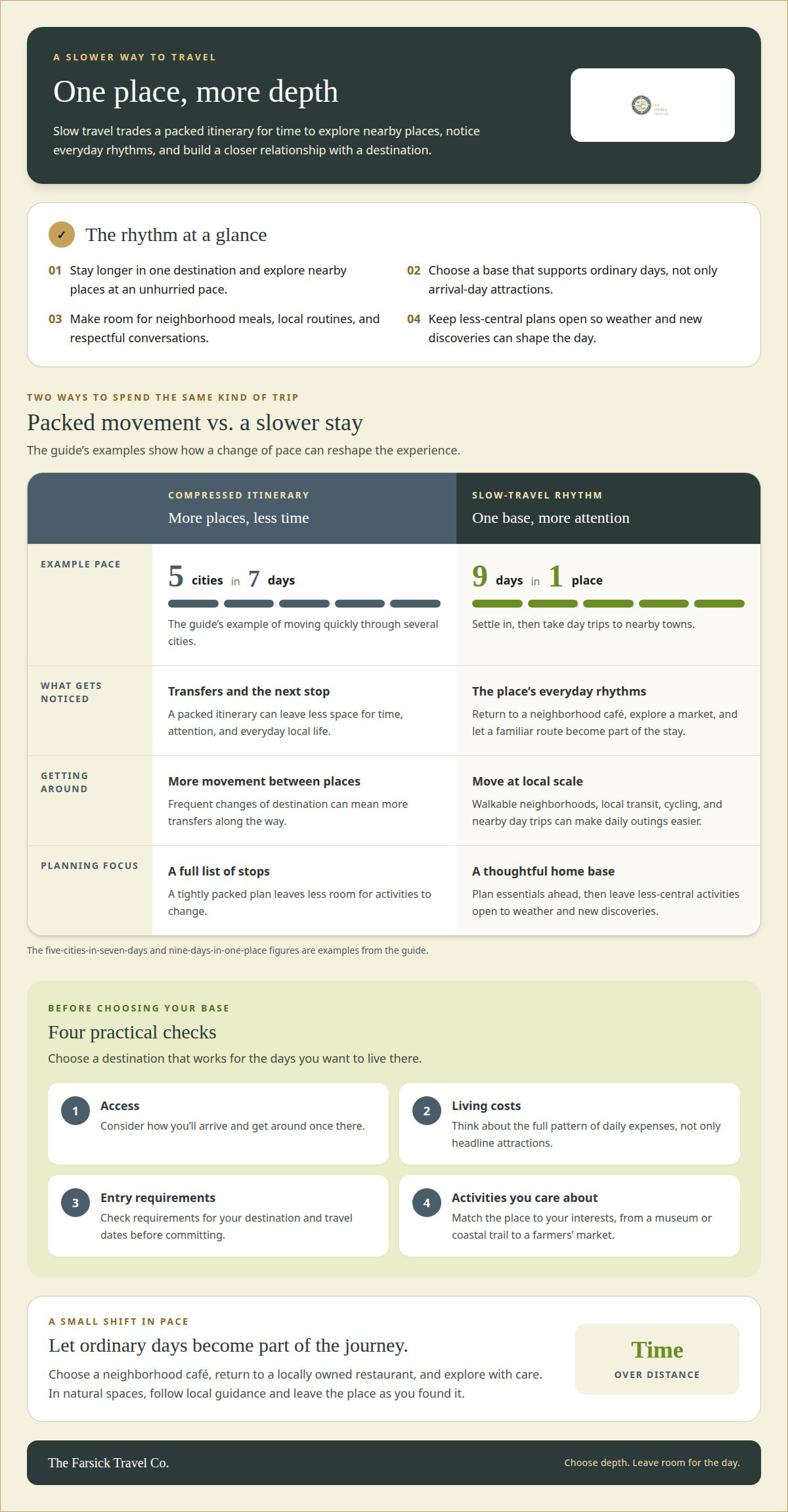
A slower trip can take you further by asking you to go less far. Slow travel means staying longer in one destination, exploring nearby places at an unhurried pace, and making room for everyday local life. A nine-day trip, for example, can be spent in one place rather than divided among several cities. Learning how to plan a slow travel trip starts with choosing depth over distance.
If you’ve ever come home remembering the transfers more clearly than the places themselves, a gentler rhythm may feel like a welcome change. You don’t need to fill every day or follow someone else’s must-see list to make a journey meaningful.
This guide will help you shape a budget for a longer stay, connect with local food and routines, and leave room for plans to change. You’ll also find ways to start small and discover what slow travel feels like before committing to a longer escape.
Key Takeaways
- Choose a destination by weighing how you’ll get around, living costs, visa requirements, and the experiences you want most.
- Build a trip budget around the length of your stay and your priorities, leaving room for everyday expenses and meaningful local experiences.
- Make local life part of the itinerary through neighborhood meals, small businesses, and activities that connect you with the place.
- Keep plans flexible so weather, new discoveries, and conversations can shape your days.
- Try a shorter stay first and let what you learn guide your next, more unhurried journey.
1. What is slow travel?
Slow travel means choosing one destination and staying long enough to learn its everyday rhythms. Instead of rushing through five cities in seven days, spend a nine-day trip in one place and explore nearby towns on day trips. The movement traces its origins to the Slow Food movement of the 1980s. Its central idea is simple: trade a packed itinerary for time, attention, and a closer relationship with place.
Start by weighing four practical factors: access, living costs, entry requirements, and activities. With only a few days, you might choose somewhere closer to home; with more time, you can consider a longer journey. Compare transportation options after arrival: walkable neighborhoods, local transit, and cycling routes can make daily outings easier. Check entry requirements for your destination and travel dates before committing. Then match the place to your interests, whether that means a museum, coastal trail, or farmers’ market. The right destination supports how you want to spend ordinary days, not just arrival day.
Your budget also shapes where a longer stay makes sense. Consider the full pattern of daily expenses, including meals, transportation, and accommodation, rather than choosing a place based on headline attractions. A smaller town near a busy destination may offer a quieter base, with local restaurants and shops within walking distance. Staying longer can reduce transfers between places. When practical, choose trains over flights, or walking and biking over short car trips. These choices can make the journey more sustainable while bringing you closer to the landscape and local routines.
For an extended stay, choose accommodation that supports daily life, not just sleep. A room in a home, a small guesthouse, or a rental with a kitchen can make it easier to shop locally and prepare some meals. If you work remotely, look for reliable Wi-Fi, plan a backup connection, and schedule focused work around exploring. A quiet morning work session can leave the afternoon open for a village walk or museum visit.
Pack for repeat use over several weeks: comfortable walking shoes, adaptable layers, a compact laundry kit, and any medications you regularly need. Arrange accommodation, local transportation, and essential documents before departure, while leaving less central activities open to change.
For safety, plan how you’ll get back after evening outings and keep important documents accessible. Review health insurance coverage for your destination and planned activities, then understand cancellation and interruption terms before paying for reservations. These details matter especially when a long stay includes several nonrefundable commitments.
Local life is the heart of the stay. Choose a neighborhood café for breakfast, return to a locally owned restaurant, and make time to speak with shopkeepers respectfully. In a coastal town, a morning market followed by an unhurried afternoon walk may tell you more than another rushed attraction. Leave natural spaces as you found them, follow local guidance, and let a familiar route become part of the experience.
2. Budgeting and saving for travel
A useful travel budget starts with your own monthly spending, not a generic daily target. List the money available after regular commitments, then divide it among getting there, lodging, meals, local transportation, activities, and a reserve. Keep these categories visible as you plan, so it’s easier to adjust the trip without losing sight of what matters most.
To decide how to plan a slow travel trip, begin with a savings target that suits your finances. Those figures describe one household and year, not a template to copy. Set aside savings regularly, and use a separate account to distinguish trip funds from everyday spending.
How much does slow travel cost per day compared with a typical vacation? There’s no single daily figure that fits every trip: destination, lodging, transportation, and activities shape the total. A longer stay can spread fixed arrival costs across more days, while extra nights add lodging and meal expenses. Compare the full trip total and daily rhythm rather than assuming slow travel always costs less.
Build a longer-trip budget around recurring expenses. Estimate accommodation for the full stay, then account for groceries, meals out, transit, laundry, and paid activities. In some U.S. cities, long-term rentals require careful comparison against shorter stays. These examples can frame your choices, but local prices and your habits determine your actual plan.
Accommodation can change the arithmetic. Renting a room in a home rather than an entire place may reduce lodging costs, and Airbnb listings may offer weekly or monthly discounts. Compare the total cost of the stay, not just the nightly rate. A kitchen makes market ingredients useful for some meals, while a neighborhood location can reduce daily transportation needs. Leave room for a locally owned restaurant or café you’ll want to revisit.
Budget-conscious travel is about choosing where to spend, not stripping away every pleasure. Pick one paid experience that matters, then balance it with walks, public spaces, and everyday neighborhood routines. The comparison shows how accommodation choices can shift a trip’s overall budget.
Learning how to plan a slow travel trip also means making saving part of your routine. Set a monthly transfer toward travel, direct occasional extra income to the same goal, and revisit the budget when dates or priorities change. If cost planning feels tangled, The Farsick Travel Co.’s Custom Travel Planning can shape an itinerary around your spending priorities and preferred pace.
3. Experiencing local culture, cuisine, music, and daily life
An extended stay lets a place become more than a backdrop. Choose a neighborhood café, return to its market, and notice how the morning changes through the week. In Savannah, spring or fall offers a seasonal setting for unhurried walks between neighborhood streets and local businesses. Instead of briefly visiting several cities, stay long enough to recognize familiar sounds, learn a few greetings, and find a daily rhythm rooted in place.
Let meals lead you toward local culture. Visit a farmers’ market early, ask vendors how they prepare an ingredient, then try it at a locally owned restaurant. A conversation with a shop owner may point you toward a community event or family-run bakery. Choose smaller bed-and-breakfasts and independent businesses where possible, and spend thoughtfully rather than treating a neighborhood as a collection of attractions. Returning to the same places can make everyday interactions feel more natural.
Give local history a little space in your itinerary. Before visiting a museum or historic district, read its exhibit descriptions and learn whose stories are represented. Then walk the surrounding streets with attention to architecture, public art, and memorials. The International Slow Food movement was founded in 1989, linking food with culture and place. That idea offers a useful lens: ask where ingredients come from, which traditions shape a dish, and how local people describe their own customs.
Seasonal timing changes what you can experience. Asheville in autumn is known for foliage, while Savannah is recommended in spring or fall. In New Orleans, fall is a prime visiting season, and winter can also be lovely. Check local event calendars before choosing dates, then plan popular activities for quieter parts of the day. A morning market visit can leave the afternoon open for music, a neighborhood stroll, or a long meal.
Choose activities that connect you with people and the landscape, not just a camera stop. Depending on the place, that might mean fishing with a local crew, tasting farm cheese, or cycling between nearby towns. Stay for the full restaurant experience when the setting invites it; some meals unfold beyond a two-hour sitting. In natural spaces, follow local guidance, keep wildlife at a respectful distance, and leave trails and shorelines as you found them.
Staying longer can reduce a trip’s climate impact by limiting repeated transfers, while walking or cycling helps you notice smaller details. Keep plans close to your base: a morning trail, lunch from a local shop, and an afternoon music event make a full day without rushing. Returning to a favorite café or market also directs attention and spending toward the people who sustain daily life there. That’s where a destination begins to feel less like a stop and more like a place you’ve come to know.
4. Planning flexibly and leaving room for spontaneous discoveries
Build an itinerary around anchors, not a chain of fixed appointments. Choose one or two experiences that matter, then leave open stretches between them. In the United States, a packed vacation with a new stop each day can leave little room for a local market, changing weather, or an inviting conversation. A slower itinerary makes those discoveries part of the plan, rather than obstacles to it.
How do you compare trains, buses, car rentals, and flights for slow travel? Compare the whole journey: departure points, transfers, time getting to stations or airports, and how easily you can explore after arrival. Trains and buses can connect nearby places without changing your base, while a rental car can help you reach rural areas. Consider flights for longer distances, then compare ground transportation options for shorter legs.
For a domestic route, weigh direct connections against any extra transfers. A train or bus can make sense when its departure point and arrival location fit your itinerary. A rental car may suit a rural stay with activities spread across the surrounding area. Compare door-to-door travel time, not just the time shown for one leg, and leave breathing room before any time-sensitive activity.
Airfare can shape the route, but it shouldn’t dictate every stop. Start with the destination that matters most, then look for nearby places that fit naturally into the same journey. If the most practical arrival point is outside your preferred area, compare onward ground transportation before adding another destination. Visiting fewer places can mean fewer transfers and more time to settle into one neighborhood.
Timing also changes an itinerary’s feel. In Dunedin, Florida, winter or spring can bring sunshine without summer crowds. Choose dates with the season and your preferred activities in mind, then plan popular outings for quieter parts of the day. Check local calendars before setting fixed plans; community events can make a familiar destination feel different from one visit to the next.
Leave unscheduled space every day. Rain may turn a planned walk into a museum visit; clear skies may make you want to stay outdoors longer. Keep indoor and outdoor alternatives near your accommodation, and be willing to skip an activity when conditions change. In natural areas, follow marked paths, respect closures, and pack out what you bring.
Use a simple planning frame: secure essential transportation and lodging, reserve only experiences that need advance planning, and keep the rest adjustable. A neighborhood festival, a quiet side street, or an unexpected invitation can become the day’s most memorable part. The best itinerary leaves room for those moments.
5. Slow travel mindset and experimentation
Slow travel is a practice, not a test of how long you can stay away. To learn how to plan a slow travel trip that suits you, try a short stay in one city before committing to a month there. Use those first days to notice ordinary details: where people buy breakfast, when streets grow quiet, and how long a walk really takes. The point is to learn what kind of pace feels right.
Start with one personal reason for going. Perhaps you want to sketch in a park, learn a regional cooking technique, or walk a particular trail. Build the day around that experience instead of someone else’s must-see list. If a museum matters to you, visit with time to linger; if it doesn’t, let the afternoon take another shape. Your own curiosity is a better compass.
Experiment with a simple rhythm. Spend a morning outside, leave the middle of the day open, and choose one evening activity. During a village stay, that could mean a quiet trail walk, a long lunch, and a local music performance. Notice which moments you remember afterward. Those details reveal whether you want more nature, more conversation, or more unplanned time next time.
Let spending reflect what you discover. Choose one activity worth paying for, then make room for free experiences such as walking, browsing a public market, or sitting in a town square. Try public transportation for an everyday route, then compare it with walking where practical. The cheaper option isn’t always the more meaningful one; weigh convenience against the chance to notice the neighborhood along the way.
Keep a brief trip journal with one prompt each evening: “What felt unhurried today?” A few lines can reveal patterns by the end of a stay. Maybe you enjoyed returning to a morning café, or perhaps you felt restless without a planned outing. When considering how to plan a slow travel trip again, these notes can help separate genuine preferences from pressure to see everything.
When plans disappoint, treat the change as useful information. If rain closes a trail, choose an indoor activity or rest instead of forcing the original schedule. If a popular market feels crowded, return at a quieter time or explore a nearby street. Respect local guidance and natural spaces, leave no trace outdoors, and let a changed plan teach you something about your travel style.
After returning home, review the trip before planning another. Note which routines you repeated, what you happily skipped, and where travel time felt tiring. Keep one element that worked and change one that didn’t. A short city stay can become a longer visit later, once you know which neighborhood, daily rhythm, and activities genuinely fit.
Shape a custom slow-travel itinerary
The Farsick Travel
The Farsick Travel Co. helps turn slow-travel priorities into a considered itinerary shaped around your pace, interests, and budget. Custom Travel Planning brings together thoughtful routes, meaningful local experiences, and room for unhurried days. If you’d rather explore independently, Solo Travel Experiences can help shape a journey around the places and routines you want to discover.
For travelers drawn to movement and learning, Signature Hiking & Yoga Retreats and Skillcations offer distinct ways to build a trip around a particular interest. These experiences suit travelers who want more intention in the planning, whether that means time outdoors or space to develop a skill along the way.
Let your next journey take shape
The best way to plan a slow travel trip is to begin with how you want to feel when you return: restored, curious, more connected, or ready for a new challenge. Let that intention guide your choices. An itinerary should fit your energy and interests, with room for the moments that make a place feel personal.
The Farsick Travel Co. can shape your ideas into a thoughtful journey that reflects your pace and priorities.
Start with one place, one reason to go, and enough room to be surprised. Your next meaningful journey can begin there.
Frequently Asked Questions
What is slow travel?
Think of slow travel as an approach measured by attention, not a tally of attractions. A practical sign is that you recognize your surroundings: you know which street gets morning sun, where locals gather after work, or how the weather shifts near the coast. Try keeping one unscheduled block in your day, then notice whether that space makes the experience feel more connected.
What is slow travel and how is it different from regular tourism?
The difference is mainly how you use your time. A sightseeing-focused trip may organize each day around scheduled attractions, while a slower approach leaves room to revisit a place or follow a local recommendation. You can combine both styles: reserve a timed entry for a museum, then keep the following hours open. The choice depends on whether structure or discovery matters more that day.
How long should you stay in each destination for a slow travel trip?
Stay long enough to experience routines that matter to you, such as a market morning, a weekday evening, or a nearby nature outing. Your schedule and the destination’s activities will shape that decision. If an experience depends on a particular day, check its calendar before setting departure plans. A stay that includes planned highlights and ordinary days gives you a clearer sense of the place.
How do you choose a slow travel destination based on season, budget, and interests?
Make a short comparison for each candidate destination: note your preferred season, the activities you hope to pursue, and the costs that will recur during your stay. Then look for tradeoffs. A place with lower lodging costs may require more transportation, while a convenient base may cost more but simplify daily outings. Choose the option whose overall pattern best supports your priorities.
How do you plan a slow travel itinerary with fewer destinations and flexible days?
Group activities by practical starting point, then avoid scheduling every open hour. Keep time-sensitive reservations separate from ideas you can move or skip. For example, book a workshop one day and leave the next morning free in case you want to return to a favorite neighborhood. This creates flexibility without losing the experiences you most want to protect.
What are the best ways to find long-stay accommodation and monthly discounts?
Compare listings for the same dates and read the full terms before choosing. Check what utilities, laundry access, kitchen use, and workspace are available, then consider cancellation conditions and payment timing. A monthly rate is useful only if the accommodation supports your daily routine. For a remote-work stay, review the internet arrangements in the listing details and have a backup connection plan.
What visa, entry, and length-of-stay rules should U.S. travelers check?
Before committing to an international itinerary, check the destination government’s current guidance for U.S. travelers. Review permitted stay length, entry conditions, passport requirements, and whether your intended activities affect your entry status. Also confirm how the allowed period is counted and whether transit stops have separate requirements. Keep official guidance and relevant travel documents accessible while planning and during your journey.
How can you support local businesses and reduce environmental impact while traveling slowly?
Choose locally owned businesses for meals, lessons, and activities, and ask before photographing people or private spaces. Reduce waste by carrying reusable items and taking litter with you from trails or shorelines. Use established paths and follow posted wildlife guidance. These small choices help make your presence considerate, protect the places you came to experience, and direct more of your spending toward local livelihoods.
Article by
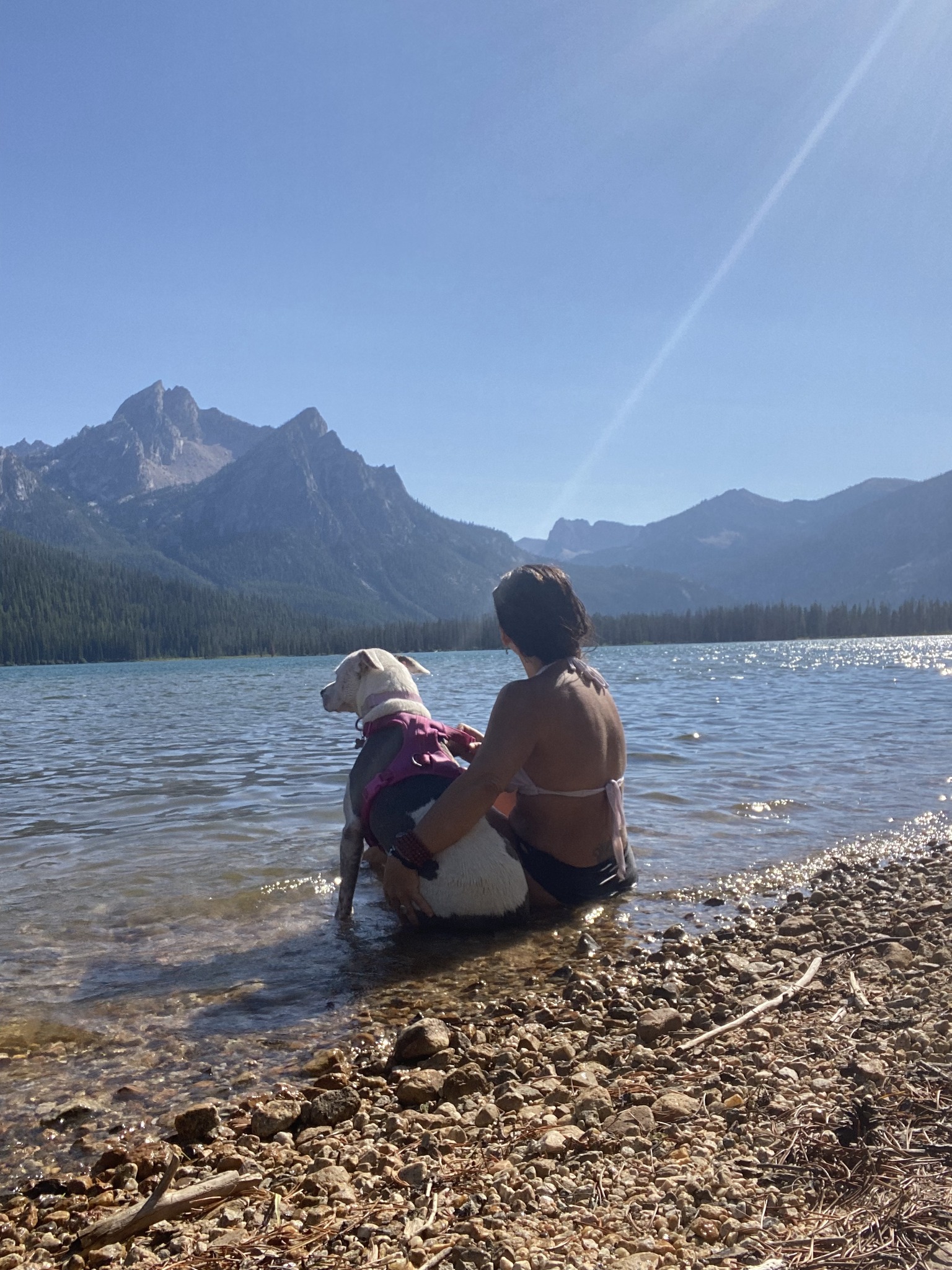
Ursula Akin
Ursula Akin created The Farsick Travel Co. to help travelers step away from rigid, multi-stop checklists and step into intentional, deeply rooted experiences. Specializing in custom travel design, solo escapes, and curated retreats, Ursula combines local insights with leave-no-trace ethics to turn wanderlust into seamless, unforgettable journeys.
Disclaimer
The information provided on this website and within our articles is for general informational and inspirational purposes only. While we make every effort to ensure accuracy regarding travel logistics, recommendations, and local details, conditions can change rapidly. Readers are encouraged to verify current travel requirements, weather, safety advisories, and local regulations independently. The Farsick Travel Co. is a travel design and curation service and is not responsible for any actions, changes, or incidents occurring during independent travel.


