

What if the calmest trip isn’t the one with the fullest itinerary, but the one with room to breathe? If choosing a destination, comparing places to stay, and gathering plans across apps already feels like a second job, you’re not alone. Learning how to plan a trip without stress doesn’t mean planning every hour. It means making a few clear decisions in the right order, then leaving space for moments you can’t schedule.
A thoughtful plan covers the practical details without taking over the experience: where you’ll stay, how you’ll get around, and what matters most to you. The rest can stay flexible. A morning trail walk might lead to an unhurried afternoon, or a quiet stretch of time to rest and reconnect. A trip doesn’t need a packed checklist to feel worthwhile.
This guide will help you narrow your choices, organize essential logistics in one place, and shape an itinerary with a natural rhythm. You’ll have a plan that feels prepared, not prescribed, so you can focus on the place, the people, and the experience unfolding around you.
Key Takeaways
- Start with how you want the trip to feel, then use those priorities to guide destination and activity choices.
- Learn how to plan a trip without stress with five clear steps, from setting intentions to preparing to adapt.
- Protect time for rest and unplanned discoveries instead of treating a full schedule as the measure of a worthwhile trip.
- Use a practical checklist to organize reservations, transport connections, activity details, documents, and packing needs.
- Find out when custom travel planning can bring your preferences and trip logistics together in one coherent itinerary.
Plan a Stress-Free Trip: Start With Your Feelings
Planning fatigue can set in before you’ve chosen a destination. Every place to stay and activity seems to demand another decision, and the trip starts to feel like a project with no obvious first step. A calmer approach isn’t about finding a perfect formula. It’s about making choices in a useful order and allowing some details to remain open.
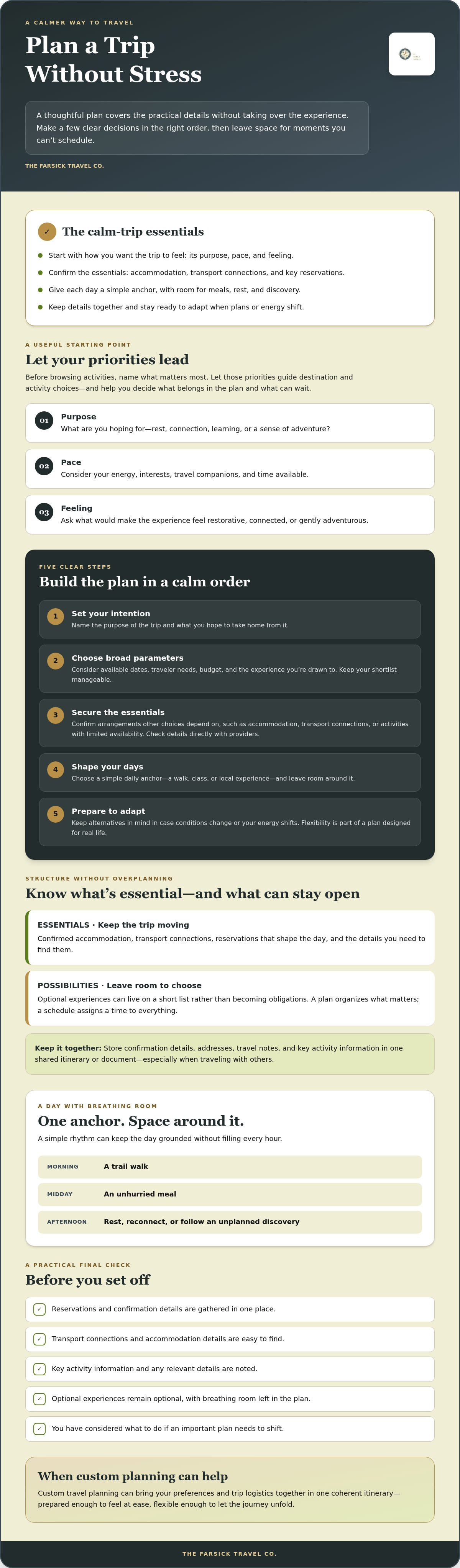
Before browsing activities, pause and name what you want from the trip. Is the purpose to restore your energy, spend meaningful time together, learn a skill, or explore a landscape at a gentler pace? Then consider three guideposts: purpose, pace, and feeling. They can help you decide what belongs in the plan and what can wait.
A travel plan organizes what matters; a schedule assigns a time to everything. For a grounding definition of a travel itinerary and its usual components, see Wikipedia. Your own plan can be simpler: enough structure to feel prepared, with room for discovery and change.
What does a low-stress trip plan actually include?
Sort decisions into essentials and possibilities. Essentials are details that keep the trip moving, such as confirmed accommodation, transport connections, and reservations that shape the day. Put optional experiences on a short list instead of treating them as obligations.
Keep the essentials in one shared itinerary or document, especially if you’re traveling with others. Add confirmation details, addresses, travel notes, and key activity information so you don’t have to search through old messages on the move. Useful preparation means knowing where to find the information you need. It doesn’t mean predicting every delay, weather change, or unexpected turn. Leave breathing room, and consider what you’ll do if an important plan needs to shift.
How do you choose a trip rhythm that fits you?
Your ideal pace depends on your energy, interests, travel companions, and time available. A day built around an early trail walk may call for a slow lunch and an open afternoon. A learning-focused trip might feel best with one planned session, followed by time to absorb what you’ve learned. Ask each traveler what they most want to experience and what helps them feel rested.
Alternate active stretches with unhurried meals, restorative pauses, or time without a fixed plan. This rhythm can make room for local encounters and quieter discoveries, while helping you travel thoughtfully through natural spaces and communities. If you’re exploring personalized planning, this custom itinerary design guide offers another way to think about shaping a trip around your priorities.
That’s the heart of how to plan a trip without stress: decide what deserves structure, then let the rest of the journey breathe.
How to Plan a Trip Without Stress in Five Clear Steps
Once you know how you want the trip to feel, planning becomes a sequence rather than a pile of competing decisions. Make choices in an order that lets one inform the next: dates affect where you can stay, and where you stay can shape which activities are practical.
Set your intention, choose your parameters, secure the essentials, shape your days, and leave room to adapt. This sequence works whether you’re planning a solo escape, a nature-focused adventure, or time away with people you love.
- 1. Set your intention. Name the purpose of the trip and what you hope to take home from it: rest, connection, learning, or a sense of adventure.
- 2. Choose broad parameters. Consider available dates, the needs of everyone traveling, your budget, and the kind of experience you’re drawn to. Keep your destination or activity shortlist manageable.
- 3. Secure the essentials. Once the dates and broad plan align, confirm arrangements that other choices depend on, such as accommodation, transport connections, or activities with limited availability. Check relevant terms and details directly with providers.
- 4. Shape your days. Give each day a simple anchor, such as a walk, class, or local experience. Leave room around it for meals, rest, and unplanned discoveries.
- 5. Prepare to adapt. Keep alternatives in mind in case conditions change or your energy shifts. Flexibility isn’t a planning failure; it’s part of a plan designed for real life.
Which trip decisions should you make first?
Begin with the purpose, dates, traveler needs, and broad experience preferences. Compare these practical constraints before building detailed daily plans. For example, if a particular activity is central to the trip, check its schedule and location before choosing accommodation far away. Record confirmed reservations and open decisions in one accessible place, so you can see what’s settled and what still needs attention.
How can you organize travel details without creating more work?
Use a simple shared itinerary to group confirmations, transport notes, accommodation details, and activity information. Keep essential documents accessible, and check current provider guidance before departure in case details have changed. You don’t need a new app or an elaborate system; one clear document can be enough. For practical ways to manage travel anxiety, see the Pacific Neuroscience Institute’s tips to conquer travel anxiety.
If rest and wellbeing are central to your plans, explore this restorative travel planning guide. If you’d like help bringing personal priorities and practical details together, The Farsick Travel Co. offers custom travel planning.
Does a Stress-Free Trip Need a Packed Itinerary?
No. Preparation doesn’t mean filling every hour or trying to see every highlight. A tightly packed schedule can look reassuring on paper, but leave little room for travel time, meals, changing energy, or the unexpected moments that make a place feel real. The aim isn’t to do less for its own sake. It’s to make space for what matters most.
Choose one anchor experience for the day, then let the rest take shape around it. A morning walk might be the day’s main event, followed by a long lunch and an open afternoon. If you feel curious, wander a quieter side street or spend more time in a local shop. If you’re ready to pause, you don’t have to disrupt a chain of timed plans to do so.
Flexibility isn’t a planning failure; it’s preparation for the way a real trip unfolds.
How many activities should you plan for each day?
There’s no universal number. Consider how much energy an activity takes, how long it takes to reach, and whether it depends on a particular opening time or reservation. A strenuous outdoor outing may be enough to shape the day, while a relaxed cultural activity may leave room for another simple plan. Account for transitions, too. Getting ready, finding your way, and settling in all take time.
Try planning in broad strokes rather than assigning every hour:
- Morning: Choose one activity that benefits from cooler air or a quieter start, such as a walk on a permitted trail.
- Afternoon: Leave space for an unhurried meal, a rest, or a low-key local discovery.
- Evening: Decide whether you want a reservation or prefer to keep the time open.
This gives the day a gentle shape without making every delay feel like a disruption.
How can you avoid turning travel into a checklist?
Before adding an attraction, ask why it matters to you. Does it connect to an interest, someone you’re traveling with, or the feeling you want from the trip? If it’s only on the list because it’s famous, consider whether you’d rather spend that time lingering somewhere that draws you in.
Seek local interactions with care: listen, ask before taking photographs, and respect people’s privacy and preferences. In natural spaces, stay on marked routes where provided, observe wildlife from a respectful distance, and carry out what you bring in. Traveling thoughtfully can mean choosing a quieter place, moving at a considerate pace, and leaving the setting as you found it. A practical way to plan without stress is to protect your priorities without turning each day into a test of how much you can fit in.
A Practical Trip-Planning Checklist for Logistics, Seasons, and Packing
A little organization can make room for spontaneity. Before departure, gather the details that keep your plans moving, then check conditions that could affect the days ahead. The goal isn’t to control every variable. It’s to know what’s confirmed, what may shift, and where to find the information you need.
What should you check before you leave?
Compare each booking with its original confirmation rather than relying on memory or an old message. Check dates, traveler names, reservation details, meeting points, and connections between transport arrangements. For activities, note start times, locations, any stated preparation guidance, and the provider’s current instructions.
- Reservations: Confirm accommodation and activity dates, names, addresses, and reference details.
- Transport: Check departure times, connection points, and how you’ll get between key parts of the journey, whether arranging rental cars or chauffeured transportation like Sedanz for smooth airport transfers.
- Documents: Gather the essential documents for your trip and check relevant provider guidance for requirements that apply to your plans.
- Access: Save confirmations, addresses, maps, and important notes somewhere you can reach if mobile service or connectivity is limited.
Check conditions again close to departure. Look up destination-specific seasonality, local weather, trail or site conditions, opening information, and current provider updates. For outdoor plans, check once more before setting out. Time of day can shape the experience: an early start may offer cooler air and a quieter trail, while later conditions may bring heat, wind, or more visitors. Use reliable local sources for current details, and follow posted guidance when you arrive.
Pack for the forecast, terrain, and activities you actually have planned. A walk on exposed ground may call for different layers and footwear than an afternoon in a village. Bring a small contingency layer for changing temperatures or conditions, and keep essentials easy to reach. For nature outings, pack thoughtfully and plan to carry out what you bring in.
How can you make plans resilient when details change?
Mark which plans depend on a reservation or specific conditions, and which can move to another day. Keep a short list of alternatives that fit the trip’s purpose and your energy: a sheltered walk instead of an exposed route, or a quiet local experience instead of a demanding outing. That way, a change doesn’t mean starting from scratch.
Knowing how to plan a trip without stress includes making essential information easy to find and leaving options open. If coordinating the details feels like too much, The Farsick Travel Co. can help shape a personalized itinerary around your priorities.
Discuss a custom travel-planning itinerary
When Custom Travel Planning Can Make a Trip Feel Easier
Planning a trip yourself can be rewarding, especially when you have time to compare options and enjoy the process. But when transport, accommodation, activity details, and different traveler preferences start to feel like separate puzzles, planning support can bring the pieces into one coherent journey.
Custom travel planning starts with your priorities: why you’re traveling, what you’re drawn to, and what pace feels right. From there, an itinerary can be shaped around your preferences, with coordination of accommodations, transport, and local activities. The goal isn’t to take the trip out of your hands. It’s to make the practical details support the experience you want.
What can a custom travel planner help coordinate?
A planner can help turn a collection of ideas into a considered sequence, so the places you stay, the ways you move between them, and the experiences you choose work together. That might mean shaping a nature adventure around time outdoors and considerate visits to local communities, or designing a slower day after a more active one. The details depend on your goals and preferences.
The Farsick Travel Co. offers custom planning for nature and adventure travel, solo travel experiences, signature hiking and yoga retreats, skillcations, proposal and honeymoon planning, and bachelorette parties. These are different expressions of the same idea: let the purpose of the journey guide its details.
How do you know when to ask for planning support?
Consider support if you’re juggling many moving parts, coordinating preferences across a group, or unsure how to connect your chosen experiences into a practical route and rhythm. You might also value another perspective if you know how you want the trip to feel but aren’t sure which decisions should come first.
You can keep your priorities at the center. Before seeking help, write down what matters most, what you’re flexible about, and which details feel difficult to coordinate. That gives a planner a useful starting point and helps keep the journey personal rather than generic.
There’s no single right way to learn how to plan a trip without stress. Plan independently or invite an expert to help organize the moving parts. Either way, prepare what matters, then leave room to experience the journey as it unfolds.
Explore custom travel planning with The Farsick Travel Co.
Shape a Trip With Room to Breathe
Knowing how to plan a trip without stress starts with choosing what matters, then organizing the essentials around it. Set your intention, make decisions in a useful order, and build days around a few meaningful experiences rather than a crowded checklist. Keep confirmations and practical notes together, check changing conditions, and leave space for the unexpected.
A well-designed journey should feel like yours. The Farsick Travel Co. offers personalized itinerary design shaped around your preferences and goals, with coordination of logistics, accommodations, and local activities. Whether you’re drawn to a nature adventure, solo travel, a hiking and yoga retreat, a skillcation, or a milestone trip, custom planning can bring the moving parts into one considered plan.
You don’t need to plan every moment to feel prepared. Choose your anchors, make room for rest and discovery, and let the journey unfold at its own pace.
Your next trip can feel thoughtful before it begins, and spacious once you’re there.
Frequently Asked Questions
How do I plan a trip without feeling overwhelmed?
Break planning into a few decisions at a time, starting with what you want from the trip. Learning how to plan a trip without stress means setting your purpose, choosing dates and broad preferences, then arranging essential details before adding activities. Keep confirmations and open decisions in one simple document. You don’t need to solve every possibility in advance; focus on what affects the trip and leave room for plans to shift.
What should I plan first when organizing a trip?
Start with the trip’s purpose, available dates, traveler needs, and the general experience you’re looking for. These choices guide later decisions. For example, dates shape accommodation options, while a planned activity may influence where it makes sense to stay. Compare practical constraints before building a day-by-day itinerary. Once the broad outline feels workable, confirm the essentials that other arrangements depend on.
How far in advance should I plan a trip?
There isn’t one ideal planning window for every trip. The right timing depends on factors such as your dates, destination, travel style, and whether important stays or activities have limited availability. Start once you know the trip’s broad parameters, then check booking guidance directly with accommodation and activity providers. If your plans involve several travelers or coordinated experiences, allowing more time to compare options may make decisions feel less rushed.
How do I make a travel itinerary flexible?
Build your itinerary around a few priorities instead of assigning an activity to every hour. Choose an anchor experience for each day, then leave open space around it for meals, transitions, rest, or an unexpected discovery. Mark which plans depend on reservations or conditions and which can move. A short list of alternatives that suit your trip’s purpose can help you adjust without redesigning the whole day.
How can I avoid overplanning a vacation?
Choose experiences for their personal meaning, not because you feel obliged to see every popular attraction. Before adding an activity, consider the travel time, energy it takes, and what you’d need to give up to fit it in. Protect time for meals, pauses, and unstructured exploration. For outdoor plans, check local conditions and follow posted guidance, stay on designated routes where provided, and give wildlife and local communities respectful space.
What should I check before leaving for a trip?
Review original confirmations for dates, traveler names, addresses, meeting points, and reservation details. Check transport connections and activity information, then look up current weather, seasonal conditions, opening details, and provider guidance. For outdoor activities, confirm local conditions again before setting out. Save essential documents, maps, and confirmations where you can access them if connectivity is limited. Pack for the forecast, terrain, and activities, with a layer for changing conditions.
Can a travel planner help make a trip less stressful?
Yes, a travel planner can help bring preferences, logistics, accommodation, transport, and local activities into a cohesive itinerary. The Farsick Travel Co. offers personalized custom travel planning, alongside curated options such as nature adventures, solo travel experiences, hiking and yoga retreats, skillcations, and milestone trips. This can be useful when coordinating the moving parts feels complex. You can keep your priorities central while receiving support with the plan’s design and details.
Article by
Ursula Akin
Ursula Akin created The Farsick Travel Co. to help travelers step away from rigid, multi-stop checklists and step into intentional, deeply rooted experiences. Specializing in custom travel design, solo escapes, and curated retreats, Ursula combines local insights with leave-no-trace ethics to turn wanderlust into seamless, unforgettable journeys.
Disclaimer
The information provided on this website and within our articles is for general informational and inspirational purposes only. While we make every effort to ensure accuracy regarding travel logistics, recommendations, and local details, conditions can change rapidly. Readers are encouraged to verify current travel requirements, weather, safety advisories, and local regulations independently. The Farsick Travel Co. is a travel design and curation service and is not responsible for any actions, changes, or incidents occurring during independent travel.


