

The Amalfi Coast’s geography is part of its magic: it traces the southern edge of the Sorrentine Peninsula in Campania, south of Rome, with Naples as its nearest major gateway city. To experience Italy and the magic of the Amalfi Coast, understand how cliffs, villages, and winding routes shape the journey. The area rewards a thoughtful pace.
The bright villages above the sea may be what first comes to mind, but practical details matter too: where the coast lies, how far its communities stretch, and which transport options suit your plans. Knowing the layout helps you avoid backtracking and spend more time taking in the rhythm of each place.
This guide covers the coast’s location and nearby city, villages and local crafts worth lingering over, and ways to travel between them by road, bus, or ferry. You’ll also find seasonal timing and practical tips for planning a more grounded, unhurried stay.
Key Takeaways
- Find the coast south of Rome in Campania, with Naples as its nearest major gateway city.
- Plan time for Ravello’s garden villas, perched high above Amalfi along steep mountain roads.
- Explore local character through a coastal walk, a boat journey, and time with traditional crafts.
- Choose between ferries, buses, and road travel with seasonal service and traffic in mind.
- Use the coast’s geography to shape a slower itinerary, rather than trying to rush between villages.
1. Ravello’s villas, gardens, and panoramic views
Ravello sits high above Amalfi, reached by steep mountain roads that lift the village away from the waterfront. Its historic villas and gardens invite a slower experience of the coast: stone paths, green terraces, and open views across the Tyrrhenian Sea. Allow time to explore on foot rather than treating Ravello as a quick stop between seaside towns.
Villa Cimbrone dates back to the 11th century, giving its grounds a long history alongside their coastal outlook. In the gardens, pause where the paths open toward the water and the land drops toward Amalfi. An early visit can leave more room for unhurried walking before the day’s movement builds. Keep to marked paths and leave plants and stonework undisturbed.
Ravello is one of the Amalfi Coast’s 16 municipalities in Salerno province, but its hillside position gives it a different rhythm from waterfront villages such as Positano and Amalfi. The coast road links Salerno and Sorrento over 31 miles, while steep local roads connect the elevated settlements to the shore. That contrast matters when shaping a day: pair garden walks in Ravello with a separate stretch of seaside time, rather than expecting every stop to sit at the water’s edge.
For beaches and waterfront atmosphere, look toward Amalfi and the small coastal villages below Ravello. Il Duoglio Spiaggia is listed as 9 minutes from The Magic of Amalfi in Conca dei Marini. The figure helps orient a stay, but the terrain is still part of the experience: plan for the route between hillside accommodation and the beach, and carry water, sun protection, and footwear suited to walking.
The Magic of Amalfi villa in Conca dei Marini accommodates 10 guests and is spread over three floors. For a group, treat capacity and sleeping arrangements as separate planning questions: consider who needs privacy, how guests will share common areas, and whether multiple floors suit the group’s daily rhythm. A floor count doesn’t describe a bedroom configuration, so build the stay around the needs of the people travelling together.
Conca dei Marini offers a quieter base for combining coastal time with visits to hill villages. Spend a morning in Ravello’s gardens, then leave the afternoon open for the shoreline or a village meal. This balance makes the coast feel less like a checklist and more like a landscape you have time to notice.
2. What crafts is the Amalfi Coast known for?
Walking and boating reveal the Amalfi Coast as a lived landscape, not just a line of seaside streets. The Path of the Gods, also called the Walk of the Gods, follows an old mule path between Agerola and Positano. The route covers nine kilometres across high ground above the coast. Set out in the morning, carry water, and stay on established paths to protect the trail and surrounding vegetation.
For a different view of the coastline, take a boat trip from Furore toward Capri, then explore the island on foot. A coastal walk toward Capri’s cliffs brings sea air, exposed rock, and changing light into the day. Treat the boat crossing and hike as separate parts of your itinerary, allowing time for conditions and your group’s pace. Wear shoes suited to uneven ground, and bring sun protection and a layer for the breeze.
Praiano and nearby villages offer quieter starting points for walks than the busiest waterfront streets. Choose a trail and give it room: pause to take in the landscape, respect local paths, and leave no litter. In Salerno province, Vietri sul Mare is known for a ceramics tradition dating to Roman times. Browse locally made pieces in village workshops, taking time to appreciate the craft rather than treating it as a quick purchase.
Hotel, restaurant, and transport prices vary by season, village, accommodation location, menu, route, and travel mode. July and August are the coast’s hottest, busiest, and most expensive months. Ferry and road journeys also involve different costs.
For milder weather and lighter crowds, April to May and September to early October are especially favorable times to visit. July and August bring peak heat and visitor numbers, while many coastal businesses wind down or close from late October through November.
Allow three to five nights on the Amalfi Coast if you’re combining it with Rome, Florence, or Venice. That gives you time for a trail, a boat outing, and an unhurried village visit, rather than squeezing everything into one day.
The coast became a UNESCO World Heritage Site in 1997. Let that landscape set the pace: choose a single walking route, carry out everything you bring in, and leave time to meet local makers in places such as Vietri sul Mare.
3. Ferries, buses, transfers, and local travel
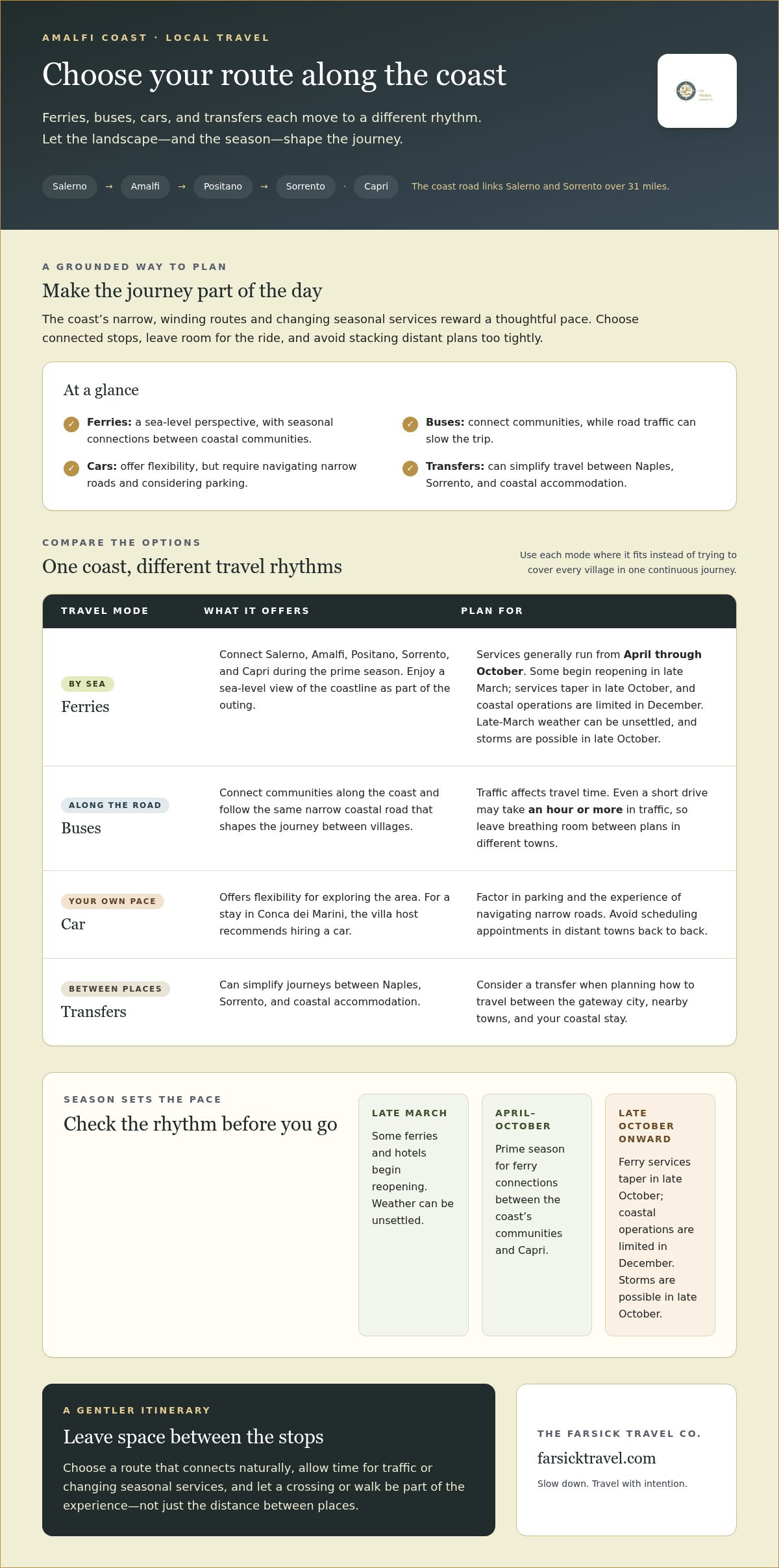
Build your route around the coast’s changing transport rhythms. During the prime season, from April through October, ferries connect Salerno, Amalfi, Positano, Sorrento, and Capri. They offer a sea-level perspective, while buses and cars follow the narrow coastal road. Choose the mode that suits each day instead of trying to cover every village in one continuous journey.
Ferries and some hotels begin reopening in late March, though the weather can be unsettled. Services start tapering off in late October, when storms are possible, and coastal operations are limited in December. Match the season to your intended route. A ferry-based day works best when your chosen stops are connected and you leave time for the journey itself.
Buses can connect communities along the coast, but road traffic affects how quickly you can travel. A short drive may take an hour or more in traffic, so avoid scheduling appointments in distant towns back to back. For a stay at The Magic of Amalfi in Conca dei Marini, the host recommends hiring a car to explore the area. A car offers flexibility, but factor in parking and navigating narrow roads.
Transfers can simplify journeys between Naples, Sorrento, and coastal accommodation, especially when arrival bags make switching between transport modes awkward. The listed journey from The Magic of Amalfi to Naples International Airport takes 2 hours and 24 minutes; the route to Salerno Costa d'Amalfi Airport takes 1 hour and 43 minutes. Treat these as route estimates, not a promise of travel time in changing traffic.
Let food be a reason to pause. In Amalfi or Positano, settle in for seafood and a glass of local wine instead of rushing straight back onto a bus. Ask about the day’s catch and regional wines, then enjoy your meal without hurrying. In Vietri sul Mare, browse ceramics between stops and leave room to carry a carefully chosen piece securely.
For an easier day, choose your main destination first, then plan transport around it. Take a ferry between connected ports when services are running; use a bus or car when your plans reach inland. Bring water, sun protection, and a light layer, especially when sea breezes or changing weather alter how the coast feels. A flexible plan leaves room for a village lunch, a slower return, and unexpected beauty along the way.
4. Where Is the Amalfi Coast and What Major City Is It Near?
The Amalfi Coast lies in Campania, along the southern edge of the Sorrentine Peninsula, south of Rome. Naples is its nearest major gateway city. Steep slopes and sea-facing terraces shape local food and daily life, from hillside lemon cultivation to meals shared in coastal villages. Let those details guide your stops: a market morning, a relaxed lunch, and time to notice how each community meets the water.
Amalfi lemons are closely associated with the coast’s terraced landscape. Groves cling to slopes where the terrain allows cultivation, and the fruit features in local food and drink. Look for limoncello on a restaurant menu or in a small shop, then ask about its ingredients and local production. A village shop visit offers a slower way to learn how lemons move from grove to table.
See lemon groves as part of the region’s culture, not just as a backdrop for photographs. Their terraces reflect work shaped by steep terrain and a coastal climate. Walk respectfully, stay on paths, and don’t enter cultivated land without permission. In Amalfi or Minori, pair a meal with a conversation about local dishes and ingredients. A few thoughtful questions can make lunch feel rooted in place.
Regional wine offers another way to explore the coast through its food. At dinner in Positano, Amalfi, or Minori, ask which local wines suit the seafood or other dishes on the menu. Pairings depend on the meal and the restaurant’s selection, so let the menu guide you. Choose a table where you can linger rather than squeezing dinner between distant stops.
Ceramics offer a tangible expression of local culture. In Vietri sul Mare, browse workshops and shops at an unhurried pace, noticing the colors, patterns, and forms. Choose a piece that connects with your journey, and handle it carefully as you continue through the village. It makes a more personal souvenir than a rushed purchase between transport connections.
Minori offers a quieter historical thread alongside its food culture: the village has ruins of a Roman villa dating to the first century A.D. Combine a visit with a meal, then leave time to walk its streets without turning the stop into a checklist. The coast’s communities reward attention to small details, from lemon terraces to the craft on a shop shelf.
To bring these experiences together, choose one village for lunch and another for browsing instead of crossing the coast repeatedly. Naples is the gateway, while Campania’s coastal settlements offer distinct ways to experience food, craft, and history. Move gently through groves and streets, respect working spaces, and let local conversations shape what you taste and remember.
5. Location and geography of the Amalfi Coast
Find the Amalfi Coast in Campania, along the southern edge of the Sorrentine Peninsula and south of Rome. Naples is the nearest major gateway city; Salerno marks the coast’s southeastern end, while Sorrento lies toward its western end. This location helps explain the region’s changing character. The route threads between inland heights and the Tyrrhenian shoreline rather than crossing an open, level plain. The peninsula’s contours are central to Italy and the magic of the Amalfi Coast.
The coastal road stretches 31 miles from Salerno to Sorrento. It bends around headlands and drops toward settlements pressed between cliffs and sea, so the map’s short distances can feel longer on the ground. Use the route’s shape to plan: group villages in the same stretch together, and allow time for the road itself instead of treating every stop as a quick detour.
The Amalfi Coast includes 16 municipalities in the province of Salerno. Each occupies a different relationship with the steep terrain: some settlements sit close to the water, while others rise above it on slopes and ridgelines. Ravello, for example, stands high above Amalfi. That vertical geography affects how a day feels, from the climb between levels to the shift in air and outlook as you gain elevation.
Take in the coast from land and sea to understand its shape. From the road, switchbacks reveal how villages fit onto narrow ledges; from a boat, the cliffs appear as a continuous edge above the water. Each perspective tells a different story. Choose one stretch to explore slowly instead of trying to cross the whole peninsula between morning and evening.
Pompeii offers a useful contrast to the coast’s dramatic terrain. The ancient city lies inland from the shoreline, near the wider Naples area. Mount Vesuvius destroyed Pompeii in 79 AD, and ash from the eruption preserved the city as it was at that time. Pairing the inland archaeological site with coastal villages means moving between distinct landscapes, not simply adding another seaside stop.
If Italy and the magic of the Amalfi Coast appeal to you, plan around three distinct settings: hillside paths, waterfront villages, and inland sites such as Pompeii. Decide which landscape matters most, then select a base that makes those places practical to reach. The cliffs, road bends, and elevation changes reward a measured pace. Leave room for pauses, carry water on walks, and follow marked routes through natural and historic spaces.
Plan a geography-led nature itinerary
The Farsick Travel Co.: Custom Travel Planning
The Farsick Travel Co. can turn the coast’s cliffs, hill villages, and winding routes into a custom itinerary shaped around your pace and interests. Custom planning is a natural fit if you want to balance outdoor time with unhurried village visits or coordinate travel between places with different terrain and transport rhythms.
Choose Custom Travel Planning for a journey built around your priorities, or consider Signature Hiking & Yoga Retreats for time focused on movement and restoration. Solo Travel Experiences and Skillcations offer other ways to shape a trip around your interests and goals. The aim is a considered rhythm, not a rushed list of stops.
To explore a custom Amalfi Coast itinerary, contact The Farsick Travel Co.
Let the coast set your own pace
A meaningful journey through Italy and the magic of the Amalfi Coast can begin with a simple question: what do you want to carry home from it? Let that intention shape the experiences you make room for, while leaving space for moments you can’t plan.
If you’re marking a milestone, Proposal & Honeymoon Planning can shape a journey around the two of you. Bachelorette Party Planning and intentional group trips offer ways to share the coast with people who matter, while a Skillcation can bring a learning focus to your travels.
Give your plans room to reflect your priorities, whether you’re celebrating together, learning something new, or moving at a quieter pace.
May your next journey make space for curiosity, connection, and memories that feel unmistakably yours.
Frequently Asked Questions
Where Is the Amalfi Coast and What Major City Is It Near?
The Amalfi Coast is in Campania, southern Italy, and Naples is its nearest major gateway city. When planning, separate your arrival point from your overnight base: reaching the coast from Naples is one part of the journey, while your choice of base determines how easily you can explore. Sketch your priority stops first, then choose a base that suits your pace and preferred transport.
Is Capri part of the Amalfi Coast?
No. Capri is a separate island destination, often paired with an Amalfi Coast stay as a day trip. Give the crossing and time ashore their own space in your itinerary instead of squeezing the island between several coastal stops. Plan around ferry departure and return times, then choose one or two island activities that matter most to you.
What crafts is the Amalfi Coast known for?
The coast is associated with ceramics and traditional paper-making. Make a craft stop an encounter, not just a shopping errand: allow time to look closely at the work and ask makers about their techniques. Choose a piece you’ll enjoy using or seeing at home, and carry it carefully. A thoughtful visit supports local craft without turning a workshop into a rushed stop.
What’s the Prettiest Part?
There’s no single prettiest part for every traveler; it depends on the landscape you want to experience. If you’re drawn to open horizons, seek an elevated outlook; if you prefer the sound of water and activity, spend time near the shore. Choose one setting for a longer pause, and visit when your day allows you to enjoy it without hurrying on.
Why is the Amalfi Coast a UNESCO World Heritage site?
The coast’s World Heritage recognition reflects a cultural landscape shaped by the relationship between its terrain and human settlement. For visitors, that recognition is a reminder to experience the area with care, not just as a backdrop. Stay on established routes, respect working land and historic spaces, and leave no litter. These small choices help preserve what makes the coast meaningful.
Why is the Amalfi Coast associated with lemons?
Lemons are closely tied to the region’s food traditions and feature in products such as limoncello. Notice how lemon appears throughout a meal, from drinks to dishes, and ask local hosts about familiar preparations. A tasting or meal can offer a more grounded introduction than buying a bottle without context. Respect private groves and cultivated land when walking nearby.
What makes the Amalfi Coast in Italy special and famous?
The coast’s identity comes from the close meeting of sea, steep land, village life, and local traditions. The experience changes from one moment to the next: a quiet walk can lead into lively streets, then a meal shaped by regional ingredients. Instead of chasing a checklist, choose experiences that fit your interests and leave room to absorb the atmosphere between them.
What are the best towns to visit on the Amalfi Coast?
Amalfi, Positano, Ravello, Minori, and Vietri sul Mare each suit different interests, so the best choices depend on your priorities. Choose a few rather than trying to see every town in one trip. Consider how much time you want for walking, waterfront pauses, history, or local crafts, then group visits by practical routes and leave room for an unplanned meal or rest.

Article by
Ursula Akin
Ursula Akin created The Farsick Travel Co. to help travelers step away from rigid, multi-stop checklists and step into intentional, deeply rooted experiences. Specializing in custom travel design, solo escapes, and curated retreats, Ursula combines local insights with leave-no-trace ethics to turn wanderlust into seamless, unforgettable journeys.
Disclaimer
The information provided on this website and within our articles is for general informational and inspirational purposes only. While we make every effort to ensure accuracy regarding travel logistics, recommendations, and local details, conditions can change rapidly. Readers are encouraged to verify current travel requirements, weather, safety advisories, and local regulations independently. The Farsick Travel Co. is a travel design and curation service and is not responsible for any actions, changes, or incidents occurring during independent travel.


