

Couples trips to really connect give partners room to make decisions together, try something new, and pursue a shared travel dream. A trip can create meaningful moments, but closeness grows through how you experience it, not simply where you go.
Time away can offer a welcome change of pace, yet different preferences and expectations shape the experience. The most rewarding journeys make room for both people: a quiet morning on a trail, an unhurried afternoon in a village, or a small adventure neither has tried before.
Learn how to plan together, talk through travel styles and expectations, make space for new experiences, and turn a shared bucket list into a thoughtful trip. The aim isn’t to fit in more stops. It’s to find a rhythm that helps you notice more, listen well, and feel closer along the way.
Key Takeaways
- Choose shared experiences that invite teamwork and create space to appreciate one another.
- Talk through travel styles, priorities, and budget preferences before they become sources of tension.
- Shape a trip around a mutually agreed pace, with room for both planned activities and downtime.
- Try something new together while also making space for individual ways to recharge.
- Use a shared travel wish list to turn each partner’s dreams into meaningful plans.
1. Shared travel experiences and emotional bonds
The best couples retreats for relationship building pair intentional conversation with shared, low-pressure experiences. Choose a setting with time to talk, try an activity, and rest without a packed schedule. For example, a guided morning walk followed by a relaxed afternoon leaves room for both movement and meaningful conversation.
A U.S. Travel Association survey found that 86% of couples who traveled together said the romance was still alive in their relationship. Among couples who didn’t travel together, 73% said the same. These responses describe couples’ views; they don’t show that travel alone creates or sustains romance. Shared time matters most when partners use it to notice, listen, and participate together.
Unfamiliar places give partners practical ways to build teamwork. One person can read a trail map while the other watches for marked turns, then switch roles on the return walk. In a small town, one partner might ask for directions while the other remembers a local recommendation. These moments let couples make decisions together instead of leaving one person to manage every detail.
Novel experiences can make a trip more memorable because neither partner arrives as the expert. Choose an activity that’s new to both, such as a beginner pottery class or guided nature walk. Learn together: ask questions, laugh at early attempts, and notice what each person enjoys. The goal isn’t mastery. It’s creating a story you can recall together.
Small rituals can also make room for intimacy. At dinner, each partner can name one moment they appreciated and one effort they noticed that day. Maybe one handled a confusing train platform while the other found a quiet café after a long walk. Specific gratitude feels genuine, not like a scripted exercise.
Place shapes the rhythm of shared experiences. A morning trail walk may bring birdsong and cool air, while an afternoon in a village offers time to linger over lunch and hear local stories. Move gently through natural spaces, follow marked paths, and leave wildlife undisturbed. Fewer stops can create more chances to talk without competing with a packed itinerary.
Traveling together can also mean sharing space 24/7, from a rental car to a café table. Build in simple pauses: take a quiet hour after lunch, or let one person browse a local market while the other rests. These breaks aren’t a retreat from connection. They can help both partners return to the next shared moment with more attention.
Before setting out, agree on a shared intention, such as “learn something together” or “make time for unhurried conversations.” Then choose an activity and a daily moment to reconnect. A walk followed by a brief check-in gives the experience gentle structure. Revisit the intention over dinner, and adjust the next day if the pace feels wrong.
2. Differences in travel styles, budgets, and priorities
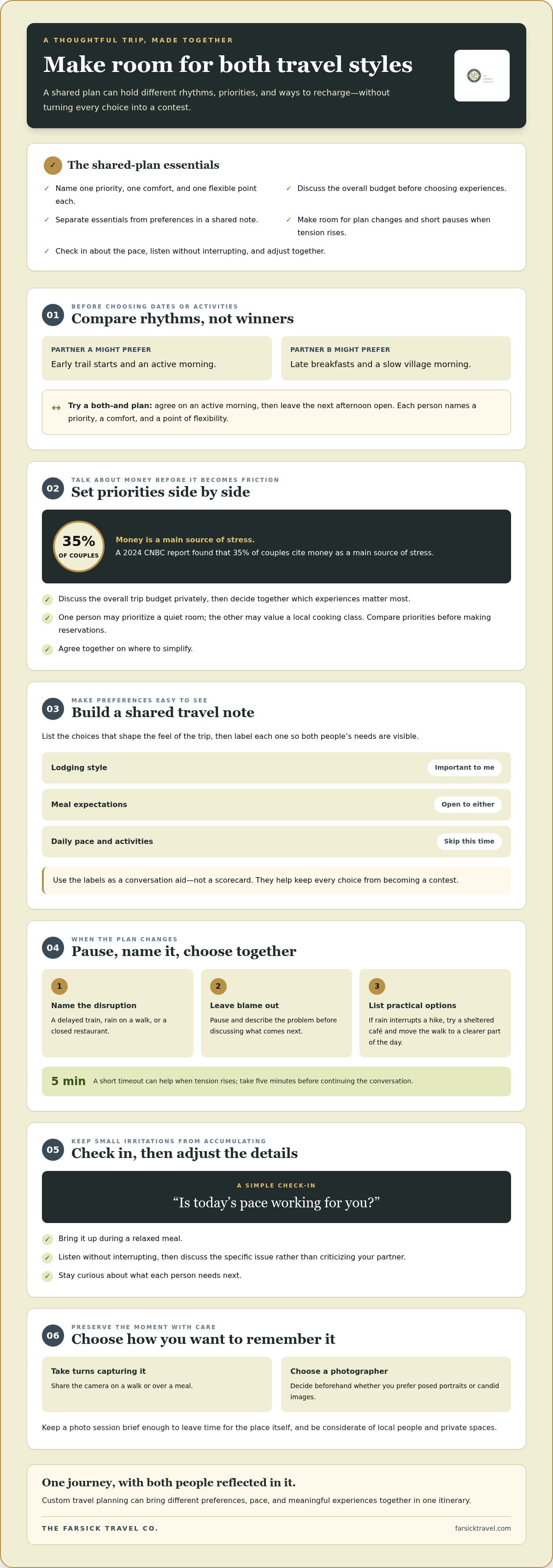
One partner may want early trail starts; the other may prefer late breakfasts and a slow village morning. Neither preference needs to win. Before choosing dates or activities, each person can name a trip priority, a comfort, and a point of flexibility. For example, agree on an active morning, then leave the next afternoon open.
Money deserves its own conversation. A 2024 CNBC report found that 35% of couples cite money as a main source of stress. For a trip, discuss the overall budget privately and decide together which experiences matter most. One partner might prioritize a quiet room, while the other values a local cooking class. Compare priorities before making reservations, and agree on where you’ll simplify.
Use a shared note to separate essentials from preferences. Include lodging style, meal expectations, daily pace, and planned activities. Label each item “important to me,” “open to either,” or “skip this time.” This helps both partners express their needs without turning every choice into a contest. It also makes decision-making more balanced.
Unfamiliar places can bring disruptions: a delayed train, rain during a planned walk, or a closed restaurant. Pause and name the problem without assigning blame. Then list practical options together. If rain interrupts a hike, for example, choose a sheltered café and move the walk to a clearer part of the day. A short timeout can help when tension rises; take five minutes before continuing the conversation.
Regular check-ins keep small irritations from accumulating. The American Psychological Association identifies communication, including regularly checking in with each other, as a key part of a healthy relationship. During a relaxed meal, ask, “Is today’s pace working for you?” Listen without interrupting, then discuss the specific issue rather than criticizing your partner. Curiosity makes it easier to understand what each person needs next.
Photographs can preserve moments you both want to remember. Hiring a professional photographer while traveling every couple of years is one option; another is taking turns capturing a shared walk or meal. If you choose a photographer, decide beforehand whether you want posed portraits or candid images. Keep the session brief enough to leave time for the place itself, and be considerate of local people and private spaces.
Different priorities can still shape one coherent journey. If planning feels tangled, custom travel planning can bring your preferences, pace, and meaningful experiences together in one itinerary. The goal isn’t identical tastes. It’s a plan where both partners can see their priorities reflected.
3. Discussing expectations before a trip
For a meaningful connection, choose a destination that supports what you both want to share. A quiet coastal town, a walkable village, or a trail region can invite exploration without filling every hour. Couples retreats are worth considering when guided activities or a planned rhythm suit your goals; independent travel gives you more control over timing and choices.
For a first trip as a couple, choose a manageable plan with one clear shared highlight. A nearby weekend exploring a new town can be easier to shape than a complicated itinerary. Agree on the destination, travel pace, and one activity you’re both curious about. The memories often come from how you move through the day, not how far you go.
Before making reservations, each partner can name a trip goal, preferred activities, budget boundaries, and ideal pace. Compare your answers and shape an itinerary you both agree on. For example, pair a morning walk with a leisurely lunch and an open afternoon. Discuss downtime, too: one person may recharge with conversation, while the other needs quiet.
To balance relaxation and shared activities, plan one anchor experience each day and leave the rest flexible. A guided walk can lead into an unhurried village afternoon, while a free evening leaves room to choose dinner together. Decide in advance which activities need reservations and which can stay spontaneous.
Divide practical tasks before departure so one person isn’t carrying every detail. One partner can manage navigation while the other tracks bookings or packs snacks. Switch responsibilities during the trip if the arrangement feels uneven. This gives both people a role and makes small decisions easier to handle.
Use travel time for a conversation beyond the itinerary. Ask about your partner’s dreams for the next five years, then listen without turning the answer into an immediate plan. A train ride or quiet walk can make space for hopes that daily routines often crowd out. Share your own thoughts, too.
A trip-end ritual can help you revisit what mattered. On the last night, raise a toast over dinner and each name a favorite moment, a kindness, and something you’d like to do together next. Some couples make a bottle of bubbly their final-night tradition. The point is to share a small pause before returning home.
For lower prices and fewer crowds, consider dates outside a destination’s busiest periods and compare how local seasons affect weather, access, and activities. Weekdays may also feel quieter in places popular for weekend visits. Choose dates that suit the experience you want, then plan around the conditions that will make it comfortable.
4. Novel activities and romantic connection
For a romantic weekend in the United States, choose a setting that suits the mood you both prefer. In a coastal town, walk as salt air and gull calls drift over the shore; in a small town, browse local galleries as late-afternoon light warms the storefronts. A mountain community may offer pine-scented air and cool shade along nearby trails. Choose one base, then let its pace shape your plans.
Novelty works best when it feels inviting, not like a test. Include an activity neither partner has tried before, such as a pottery class, guided kayak outing, or beginner dance lesson. Choose together, and agree that curiosity matters more than skill. A shared first attempt can spark laughter and become a story you remember long after the weekend.
Make the activity specific to the place. In a coastal town, learn about local marine life with a responsible guide. Near a small farm community, take a cooking class centered on regional ingredients, where fresh herbs and warm bread offer a taste of local foodways. On a forest trail, join a naturalist-led walk and listen for birdsong beneath the canopy. Stay on marked paths and respect wildlife and natural spaces.
Active listening gives a new experience room to deepen your connection. After a class or walk, ask your partner what surprised them. Let them finish before responding, then reflect one detail you heard, such as “You enjoyed learning the steps more than performing them.” Listening without interruption or defensiveness can build trust and understanding, especially when one person feels uncertain about an activity.
Sometimes, connection needs a little space, too. Set aside a short solo window: one partner might browse a bookstore while the other rests at the inn, then meet for dinner. Or take separate morning activities and share what you noticed over coffee. Agree on the plan and meeting place beforehand, so time apart feels restorative rather than confusing.
Give the itinerary a gentle rhythm. For example, take a morning class, leave the afternoon open, and choose dinner together after resting. Pack comfortable shoes, a light layer for changing conditions, and any clothing needed for the activity. If your plans involve a quiet trail or beach, visit during a less busy part of the day and follow local guidance.
At the end of the day, trade one favorite moment and one thing you’d try differently next time. A novel activity can open the door; attentive listening and room to recharge help keep it open.
A coastal town, a small town with local galleries, or a mountain community can make a romantic weekend getaway, depending on the mood you both prefer. Choose a place with a shared new activity, such as a guided kayak outing, cooking class, or naturalist-led walk.
5. Working through a shared travel bucket list
A shared travel bucket list can turn distant wishes into choices you make together. One partner may dream of walking a pilgrimage route; the other may want to learn regional cooking in a small town. Couples trips to really connect begin by exploring what each experience means, then choosing a journey that honors both stories.
Start with separate lists. Each person writes down places, landscapes, and experiences they genuinely want, then explains the reason beside each entry. “See the desert at dawn” might mean quiet, open space; “visit a historic city” might reflect a love of architecture. These conversations reveal the feeling beneath the destination and make it easier to find common ground.
Next, sort the ideas into three groups: shared priorities, one person’s personal dream, and possibilities for later. A partner’s goal doesn’t need to become your own before you can support it. If one person longs to visit the Seven Wonders of the World, discuss what draws them to that ambition. Then find a first step that feels meaningful to both.
Choose an experience by comparing its practical demands with your everyday lives. Consider travel time, the season, the pace on the ground, and how much rest you’ll want. A remote hiking route may call for preparation and steady walking; a village stay may leave more room for local meals and unplanned conversations. Choose what fits your energy, not an imagined ideal.
Turn the chosen wish into a small plan. Write down the destination, the experience you’re prioritizing, and what each person hopes to feel or learn. Then identify the next decision, such as choosing a season or deciding whether a guide would deepen the experience. Couples trips to really connect take shape through these shared choices, not a long list of landmarks.
Leave room for the unexpected. If a planned visit becomes impractical, ask what mattered most about it. A couple dreaming of a famous mountain trek may discover that a quieter local trail offers the solitude and shared effort they wanted. Follow trail guidance, stay on marked paths, and choose local experiences that treat the community and landscape with care.
Revisit the list after each trip. Add what surprised you, note which moments felt most meaningful, and let either person suggest the next direction. The list can evolve as your interests shift. A dream that once felt distant may become a journey you shape together, while another can wait without losing its importance.
The strongest shared list isn’t a race through landmarks. It’s a living record of what you hope to discover and how you choose to make room for each other along the way.
Plan a custom journey around your shared travel bucket list
The Farsick Travel Co.: Custom Travel Planning
The Farsick Travel Co. can shape your travel ideas into a custom itinerary with a thoughtful pace. Custom Travel Planning brings together the places and experiences that matter to you, whether you’re imagining a nature-focused escape or a meaningful milestone trip.
Couples can explore Proposal & Honeymoon Planning, while friends planning a celebration can consider Bachelorette Party Planning. Signature Hiking & Yoga Retreats and Skillcations offer shared ways to move, restore, or learn. Solo Travel Experiences are designed for individual journeys, too.
Let Your Next Journey Begin With Intention
A meaningful trip doesn’t need to resolve every difference or follow a perfect plan. It can begin with one shared choice: the landscape you want to wake up in, the activity you’re curious to try, or the kind of time you hope to make for each other. Let that choice guide the pace. Leave room for quiet mornings, unexpected conversations, and small moments that feel like yours.
Couples trips to really connect start with attention, not an ambitious itinerary. Decide what you want to carry home together, then let your plans reflect it. Maybe it’s confidence from a new trail, a recipe learned in a village kitchen, or simply the ease of an afternoon without a schedule. The destination matters, but so does the care you bring to experiencing it.
If you’re ready to shape a journey around what matters to you both, take the next step together.
Your next shared memory can begin with a conversation and one thoughtful decision.
Frequently Asked Questions
Couples Who Travel Together Stay Together?
Traveling together doesn’t determine whether a couple stays together; the relationship depends on how partners treat and support each other. A trip can reveal habits around decisions, patience, and shared responsibility, but it isn’t a measure of a relationship’s future. Notice how you handle ordinary moments, such as choosing where to eat or adapting when plans change. Use what you learn to start an honest conversation at home.
What activities help couples reconnect on a trip?
Choose an activity that gives you something to do and notice together, such as a tandem bike ride on a quiet route or stargazing away from bright town lights. Beforehand, agree on a comfortable pace and what would make the experience enjoyable for each of you. Afterwards, share one thing that surprised you. The activity creates a fresh setting for conversation without requiring either partner to plan a perfect romantic moment.
What should couples discuss before booking a trip together?
Talk about the details that affect comfort, not just the destination. Compare sleep preferences, dietary needs, mobility considerations, and expectations around phone use. Discuss lodging privacy and whether you’re comfortable with shared bathrooms or remote stays. Before paying for reservations, read the cancellation terms together and agree on who keeps booking details accessible. These conversations can prevent a practical mismatch from overshadowing the experience you hope to share.
What travel risks or stressors can affect a couples vacation, and how can they be avoided?
An overpacked schedule, uncertain navigation, and misplaced booking details can create avoidable friction. Leave breathing room between planned activities, save key reservation information for offline access, and carry a charged power bank if you rely on your phone for directions. Agree on a simple backup plan, such as choosing a nearby café if you lose your way. These preparations reduce last-minute decisions and make it easier to stay present together.
Article by
Ursula Akin
Ursula Akin created The Farsick Travel Co. to help travelers step away from rigid, multi-stop checklists and step into intentional, deeply rooted experiences. Specializing in custom travel design, solo escapes, and curated retreats, Ursula combines local insights with leave-no-trace ethics to turn wanderlust into seamless, unforgettable journeys.
Disclaimer
The information provided on this website and within our articles is for general informational and inspirational purposes only. While we make every effort to ensure accuracy regarding travel logistics, recommendations, and local details, conditions can change rapidly. Readers are encouraged to verify current travel requirements, weather, safety advisories, and local regulations independently. The Farsick Travel Co. is a travel design and curation service and is not responsible for any actions, changes, or incidents occurring during independent travel.


