

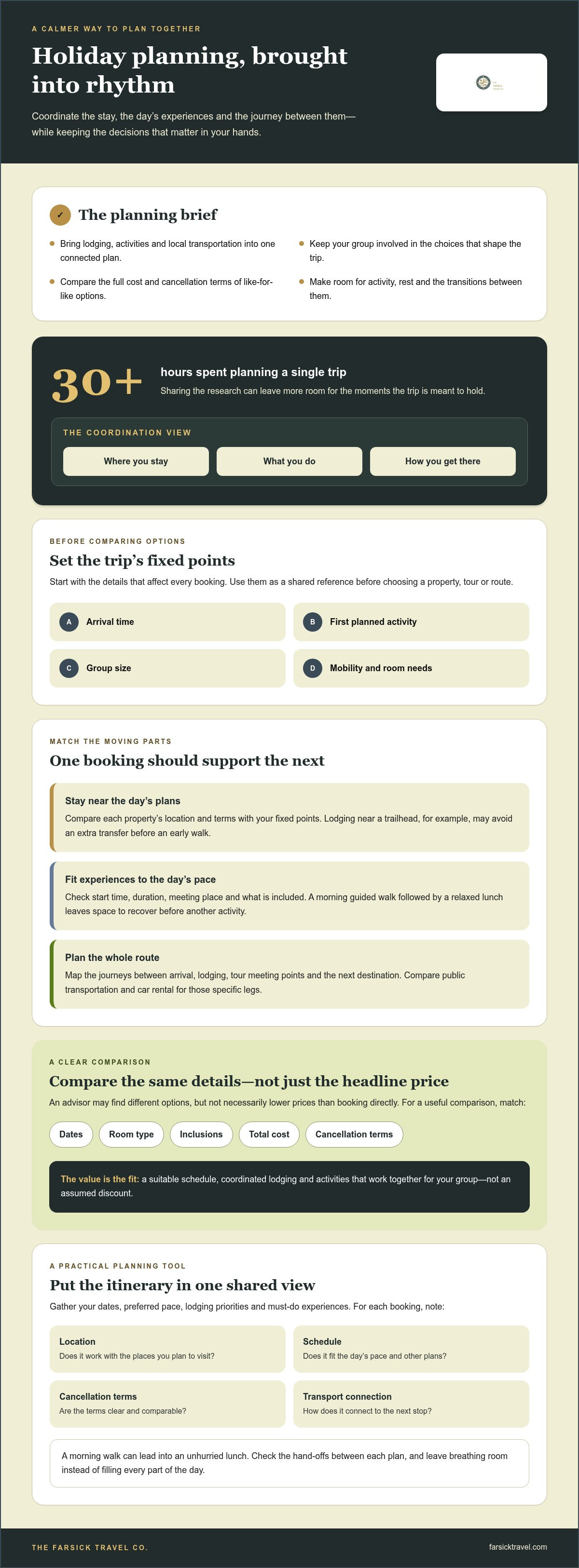
Holiday travel planning can become a second job. Why you should outsource your holiday travel planning this year comes down to time, coordination, and a calmer path to decisions: a planning professional can research places to stay, activities, and local transportation, then shape those pieces around your group. Travelers spend over 30 hours planning a single trip, so sharing the research can leave more room for the moments the trip is meant to hold.
It makes sense to want a say in where you go and how your days unfold, especially when family or friends have different needs. Outsourcing doesn’t mean giving up the choices that matter. It means considering thoughtful options instead of sorting through endless tabs, bookings, and details on your own.
This article explores how outside planning support can bring bookings into a coherent rhythm, help you make decisions about dates and experiences, and ease the mental load of traveling together. You’ll also find practical ways to align group expectations, balance active plans with unhurried time, and prepare for a holiday that feels considered from the first decision to the journey home.
Key Takeaways
- Bring lodging, activities, and local transportation together around the pace and needs of your travel group.
- Clarify which comforts and experiences matter most so you can make thoughtful choices about where to spend your time and attention.
- Compare possible travel dates by weighing seasonal conditions, availability, and the trade-offs of quieter periods.
- Share the research and coordination while staying involved in the decisions that shape your trip.
- Set group expectations early by discussing spending limits, priorities, and special requests before plans take shape.
1. Coordinating hotels, tours, and transportation
A holiday itinerary works best when each booking supports the next. A hotel near your planned activities may reduce daily transfers, while a well-timed tour can leave room to rest. Coordinating these choices takes more than finding open dates. Compare lodging, room types, cancellation terms, tour schedules, luggage needs, and travel between each stop.
A travel advisor may find different flight and hotel options, but not necessarily lower prices than booking directly. Compare the total cost and cancellation terms for matching dates, room types, and inclusions. The value may be a clearer fit: a suitable schedule, coordinated lodging, and activities that work together for your group.
Before booking a hotel, write down the trip’s fixed points: arrival time, first activity, group size, and any mobility or room needs. Then compare each property’s location and terms against that list. For example, a family planning an early nature walk may prefer lodging near the trailhead rather than a distant property that adds a transfer before sunrise.
For tours, match the start time and duration to the day’s pace. A morning guided walk followed by a relaxed lunch leaves time to recover before another activity. Check meeting locations, what the tour includes, and whether its schedule conflicts with hotel check-in or travel between destinations. Booking activities in advance can reduce last-minute decisions and time lost during your holiday.
Plan transportation for the whole route, not just your arrival. List each journey between the airport, lodging, tour meeting points, and next destination. Then compare public transportation and car rental options for those specific legs. A rental car may suit scattered trailheads; a walkable town with nearby services may call for a different plan.
Compared with planning a holiday yourself, an advisor can research and compare options around your dates, preferences, and travel party. You still make the decisions that matter, while the planning process brings lodging, tours, and transportation into one view. Self-planning offers direct control, but leaves you responsible for matching every booking and its terms.
Start planning by gathering your dates, preferred pace, lodging priorities, and must-do experiences in one shared document. Add a column for each booking’s location, schedule, cancellation terms, and transport connection. This makes gaps easier to spot before anything is booked. For a family holiday, it also gives everyone a clear view of how the days fit together.
For a family vacation, it also helps parents see which details still need attention before they commit. Outsourcing travel planning can save parents time spent comparing hotels and researching tours, while holiday planning can involve researching destinations, hotels, flights, room types, transfers, luggage, cancellation terms, and reviews. Family-focused travel advisors can create custom itineraries that combine adventure, downtime, transfers, and dining logistics.
Booking flights and accommodation early can help secure your plans and reduce uncertainty. Booking ahead may also give you more room categories, views, and flight schedules to choose from. After arrival, plan how to get around by comparing public transportation and car rental options, so your transport fits the rest of the itinerary.
2. Access to upgrades and exclusive experiences
An upgrade matters when it changes how a trip feels, not simply what a room is called. A quieter room, a locally run guesthouse, or a guided experience shaped around your interests may bring more value than an added amenity. Ask whether each option supports the way you want to spend your days.
Travel planning can surface boutique accommodations and immersive activities that fit a family’s style. Imagine arriving at a small coastal inn, dropping your bags, then joining a locally guided shoreline walk before the afternoon crowds gather. The aim is a stay connected to its setting, not a schedule packed with standard stops.
To assess an accommodation upgrade, compare the details that affect your routine. Consider the room’s location, included meals, access to places you plan to visit, and time saved getting there. A room closer to a trail entrance, for example, may make an early walk easier, while a quieter setting may suit a slower family morning.
Experiences can feel more meaningful when they reflect a specific interest. If your group enjoys food, look for a small cooking session that makes time to learn about local ingredients. Nature lovers might consider a guided walk focused on the landscape and respectful observation. These activities leave room for conversation and discovery, not just another item to check off.
Before adding an experience, use a simple filter: name the interest it serves, the feeling you want from it, and how it fits the day. A hands-on craft visit may suit travelers keen to understand local traditions better than a crowded attraction. Leave time afterward to linger over lunch or explore nearby streets at an unhurried pace.
Season and timing shape the experience, too. A popular market is often easier to enjoy early, before walkways fill and vendors begin packing up. A guided outdoor activity may feel different in cool morning air than under the midday sun. Build the day around opening hours, local rhythms, and the conditions you expect during your visit.
Curated options still call for thoughtful comparison. Read what an experience includes, where it begins, how long it lasts, and whether its pace suits everyone traveling. Choose fewer activities, with room to engage deeply. In natural places, follow local guidance, stay on established paths, and leave wildlife and cultural sites undisturbed.
If you’re imagining a journey built around distinctive stays and meaningful activities, start planning a nature-led itinerary shaped by your interests and preferred pace.
3. Choosing and committing to travel dates
Dates shape the whole holiday: lodging choices, activity availability, seasonal conditions, and everyone’s time away. Start by listing your group’s fixed commitments, then mark the dates that remain flexible. A family tied to school breaks may have fewer options; friends with flexible schedules can compare several departure windows before choosing.
Planning well ahead can give travelers more time to compare options for travel, lodging, and activities. October and November can also be a good time to set a holiday spending plan before the calendar fills. Compare the whole trip across possible dates, not just one flight or hotel. Note how a change affects room options, arrival times, and the activities you hope to enjoy.
Off-season travel may reduce costs, but it can also mean closed attractions, shops, or restaurants. Before committing, look up the destination’s seasonal rhythm and decide which experiences matter most. If a family’s priority is a particular local market or guided outdoor activity, dates should align with its operating schedule. Last-minute planning usually costs more for travel, accommodations, and activities, while early decisions can reduce rushed choices.
When choosing a travel advisor, look for a clear planning process, recommendations tailored to your travel style, and written terms explaining the service. Share your dates, interests, spending limits, and travel party, then consider whether the proposed approach addresses those priorities. A useful advisor compares options and explains trade-offs, such as choosing a quieter week over a busier period with more attractions open.
Are travel advisor fees refundable if plans change or are canceled? Refundability depends on the advisor’s stated fee terms and the work already completed; supplier cancellation terms apply separately to reservations. Read both before committing, and keep copies with your itinerary.
Common risks include unclear fee terms, cancellation costs, and reservations that don’t suit the group’s needs. Reduce avoidable surprises by reviewing dates, inclusions, and change policies before agreeing to a plan. Ask for the itinerary’s key commitments in writing, including what has been reserved and which decisions remain open.
If a flight delay or weather disruption affects the trip, an advisor can help review alternate arrangements and resequence activities. Keep reservation details and supplier policies accessible, and build flexibility into days with weather-sensitive plans. A later start, an indoor alternative, or an unhurried afternoon can preserve the trip’s rhythm when conditions change.
Before committing, compare each date option against three priorities: the group’s availability, seasonal access, and total spending plan. Then choose a window and reserve the experiences most central to the trip. Leave less essential activities flexible, especially when weather or opening schedules could change the day.
4. Reducing the mental load of family travel planning
Family planning often means balancing different ages, interests, routines, and energy levels. One person may compare accommodations while another researches activities, meal options, and travel times. A short intake sheet can gather dates, dietary needs, preferred pace, and each traveler’s top priority before research begins. That gives the family a shared starting point without requiring everyone to investigate every option.
Begin with a shared page listing each traveler’s needs. Include dietary preferences, mobility considerations, sleep routines, and must-do experiences. Parents traveling with young children, for example, might prioritize a kitchen, nearby groceries, and a quiet afternoon after an active morning. A teenager may value independent time or a hands-on local activity.
Then sort decisions into three groups: essential, preferred, and flexible. Essential choices might include dates and suitable accommodation. Preferred choices could include a guided nature walk or a particular neighborhood. Keep flexible activities open until the family sees how the days feel. This framework helps prevent every option from becoming a family debate.
A travel advisor can research options around your group’s ages, interests, and travel style while you stay involved in meaningful choices. Instead of comparing every lodging page, you can review a considered shortlist against your priorities. Ask the family to choose between clear alternatives, such as a central stay with easy access or a quieter base with more room to unwind.
Planning fees vary with the scope of the work, trip complexity, and services included. The price depends on the case and is given after a quote request. Before moving ahead, understand what the planning work covers and how changes to your plans affect the arrangement.
Use one shared itinerary to keep details visible. Record arrival plans, accommodation notes, activity times, and who is responsible for each decision. One parent might manage meal preferences while another tracks the children’s packing needs. With plans in one place, family members can contribute without duplicating research or relying on scattered messages.
Build recovery time into the schedule. Follow a morning trail walk, for instance, with a leisurely lunch and an open afternoon rather than another timed activity. That rhythm gives children time to rest and adults room to enjoy the destination. For a nature outing, pack water, weather-appropriate layers, and a small bag to carry out any rubbish.
Outsourcing research doesn’t mean handing over every choice. Decide together which details matter most, then let a planning professional coordinate options around them. With shared priorities, one clear itinerary, and space between activities, family members can spend less time managing logistics and more time present with each other.
5. Managing group travel and special requests
A group trip brings different budgets, routines, and ideas of a good day into one plan. Before comparing destinations, ask each traveler to share a spending limit and one priority. One person may value a private room, while another hopes for guided time outdoors. Naming these preferences early helps the group choose a trip that feels considerate rather than compromised.
Choose one person to gather responses in a shared document. Record each traveler’s budget, room needs, dietary preferences, and must-have experiences. Then sort ideas into shared priorities and individual requests. A morning walk might suit the whole party, while free time afterward gives everyone room to choose their own pace.
Special requests work best when they’re specific and written down. Note who prefers a quieter room, who needs a slower walking pace, and which meals need attention during planning. Keep those details beside the itinerary and compare options against them. This makes it easier to spot a mismatch before the group commits to a stay or activity.
An advisor can organize options around the group’s preferences while travelers make shared decisions. Agree on who will lead decisions and when to respond about lodging, activities, and other key choices. If the group can’t agree on every outing, select one shared experience and leave the rest flexible. That allows for connection without requiring identical interests.
Understanding why you should outsource your holiday travel planning this year can start with a simple question: who has time to coordinate everyone’s details? A planner can bring requests and preferences into one itinerary while the group stays involved in the choices that shape the trip. For friends with different interests, that might mean arranging a shared outdoor experience and leaving an afternoon open.
Make spending visible before anyone commits. A shared tracker can show expenses, who has paid, and what remains. When considering a credit card purchase, note when the bill will arrive, which funds will cover it, and any interest if someone expects to carry a balance. Record the full purchase price when committing, even if payments are divided into installments.
Why you should outsource your holiday travel planning this year may be especially clear when special requests overlap. A group coordinator can keep room preferences, dietary notes, and activity choices together, reducing the chance that details get lost in separate conversations. Before departure, share the final itinerary and make sure each traveler knows which plans are fixed and where the schedule remains open.
Finally, agree on a process for changes. Keep reservation details and payment records together, and decide who will handle updates if plans shift. If weather could affect an outdoor activity, identify an alternative and leave breathing room in the schedule. A flexible afternoon can help the group adapt without losing the trip’s shared rhythm.
Plan a thoughtful group trip
The Farsick Travel: Custom Travel Planning
The Farsick Travel Co. creates custom itineraries around your interests, pace, and travel group. Its Custom Travel Planning is a natural next step when you want thoughtful coordination for a holiday or a more personal occasion.
Explore experiences designed for different ways of traveling: Solo Travel Experiences, Signature Hiking & Yoga Retreats, Skillcations, Proposal & Honeymoon Planning, and Bachelorette Party Planning. Each offers a distinct starting point, from time outdoors and learning something new to celebrating together.
Make room for the journey you want
Understanding why you should outsource your holiday travel planning this year begins with a simple choice: how much energy belongs to organizing, and how much to the experience itself? A trip can be more than a sequence of reservations. It can offer space to reconnect, follow a quieter pace, and let a place shape the day.
You don’t need to surrender the decisions that matter. Bring your priorities, questions, and hopes for the trip, then let thoughtful planning turn them into a coherent direction. The Farsick Travel Co. creates custom journeys, including Signature Hiking & Yoga Retreats and Solo Travel Experiences, for travelers drawn to meaningful movement and time outdoors.
Start with what you want to feel when you return: restored, closer to your companions, or more connected to a place. That intention can guide the choices ahead and help your holiday feel like your own.
Your next journey can begin with a clear intention and room to breathe.
Frequently Asked Questions
What are the benefits of outsourcing holiday travel planning to a travel advisor?
Outsourcing can give you a clearer planning process while keeping you involved in the decisions that shape the trip. If relatives have different interests, for example, an advisor can help organize a plan around shared priorities and leave room for independent time. You can focus on choosing what matters most, such as a nature experience or a slower pace, instead of coordinating every detail yourself.
What travel planning services do holiday travel advisors provide?
Services vary, but The Farsick Travel Co. offers Custom Travel Planning that creates personalized itineraries, including transport logistics, accommodation recommendations, and activity coordination. If you’re drawn to a more focused experience, its Signature Hiking & Yoga Retreats, Solo Travel Experiences, and Skillcations offer distinct ways to travel. Share your interests and preferred rhythm to explore which planning approach fits the holiday you have in mind.
Article by
Ursula Akin
Ursula Akin created The Farsick Travel Co. to help travelers step away from rigid, multi-stop checklists and step into intentional, deeply rooted experiences. Specializing in custom travel design, solo escapes, and curated retreats, Ursula combines local insights with leave-no-trace ethics to turn wanderlust into seamless, unforgettable journeys.
Disclaimer
The information provided on this website and within our articles is for general informational and inspirational purposes only. While we make every effort to ensure accuracy regarding travel logistics, recommendations, and local details, conditions can change rapidly. Readers are encouraged to verify current travel requirements, weather, safety advisories, and local regulations independently. The Farsick Travel Co. is a travel design and curation service and is not responsible for any actions, changes, or incidents occurring during independent travel.


