

Cold-weather relief doesn’t require a crowded resort or a packed itinerary. This guide to 7 sun-drenched destinations to swap cold weather for coastal relaxation spans Procida and Menorca, with quieter shores around Mljet, Gozo, and Lastovo among its Mediterranean and Adriatic escapes. Expect pastel fishing villages, protected coves, and room to let the days unfold at an easier pace.
After a long stretch of cold days, spring sunshine and the sound of water can feel like a welcome reset. The best coastal escape is about more than finding a warmer shoreline: choose a place where you can linger, walk, and connect with local life without rushing between stops.
Each destination has its own character. Explore what to expect in spring, when the coast may feel quieter, and how to shape your days around unhurried village visits and time outdoors. Thoughtful planning can make a shoreline escape feel more restorative.
Key Takeaways
- Choose Procida for pastel harbor scenes and village life, then explore at an unhurried pace beyond the waterfront.
- On Menorca, seek out protected coves and quieter stretches of coastline; its Biosphere Reserve designation dates to 1993.
- Compare Mediterranean and Adriatic escapes such as Mljet, Gozo, and Lastovo to find the coastal atmosphere that suits your trip.
- Spring can bring fewer visitors, moderate temperatures, and calmer conditions for kayaking or paddleboarding.
- Use the winter-climate section to weigh seasonal warmth against the slower, quieter coastal experience you want.
1. Procida's fishing villages and pastel waterfront
Procida rewards a slow arrival. Begin at Marina Corricella, where pastel homes rise above a working harbor. Watch the fishing boats, then follow the lanes uphill toward Terra Murata. The short walk offers changing waterfront views and a gentle first outing before you settle into the island’s quieter rhythm.
For US travelers visiting Procida in Italy or Gozo in Malta, entry and passport requirements depend on current rules and trip details. Travel with a valid US passport, and review official Italian and Maltese entry guidance before departure to understand the requirements for your stay.
There’s no typical total for a winter beach trip: airfares and accommodation rates vary by dates, route, length of stay, and lodging style. Compare these costs together, then choose a base that limits unnecessary transfers, such as a walkable area near Marina Corricella or a village in Gozo.
On Procida, pair time at Marina Corricella with a swim or shoreline walk near Chiaiolella. On Gozo, explore the rugged coast around Dwejra or spend time by Ramla Bay, whose shoreline contrasts with the island’s rocky headlands. Gozo is the second-largest Maltese island, so choose one coastal area each day rather than racing between bays.
Gozo’s cliffs, clear water, and quieter village lanes invite unhurried exploration. Take a coastal stroll in Xlendi, then pause for lunch rather than treating the island as a string of photo stops. In Procida, visit the waterfront earlier in the day for softer light and a glimpse of the harbor at work.
Kayaking offers a view of both coastlines from the water. Choose a calm morning, follow a sheltered shoreline, and keep a comfortable distance from boats, cliffs, and wildlife. Spring can bring smoother seas, but conditions change. Follow local guidance and stay ashore if the water or wind feels unsettled.
Beach and water safety depend on conditions at each cove, the weather, and your own ability. Before swimming or launching a kayak at Chiaiolella, Dwejra, or Ramla Bay, note local warnings, watch the water, and avoid exposed areas when conditions are rough. Bring drinking water and footwear suited to rocky approaches.
On Procida, walk between Marina Corricella and Terra Murata, using local transport if the steep return feels tiring. On Gozo, plan around ferry connections and village buses. Try locally prepared seafood and regional dishes, speak quietly near working harbors, and leave beaches as you found them.
2. Menorca's protected coves and undeveloped scenery
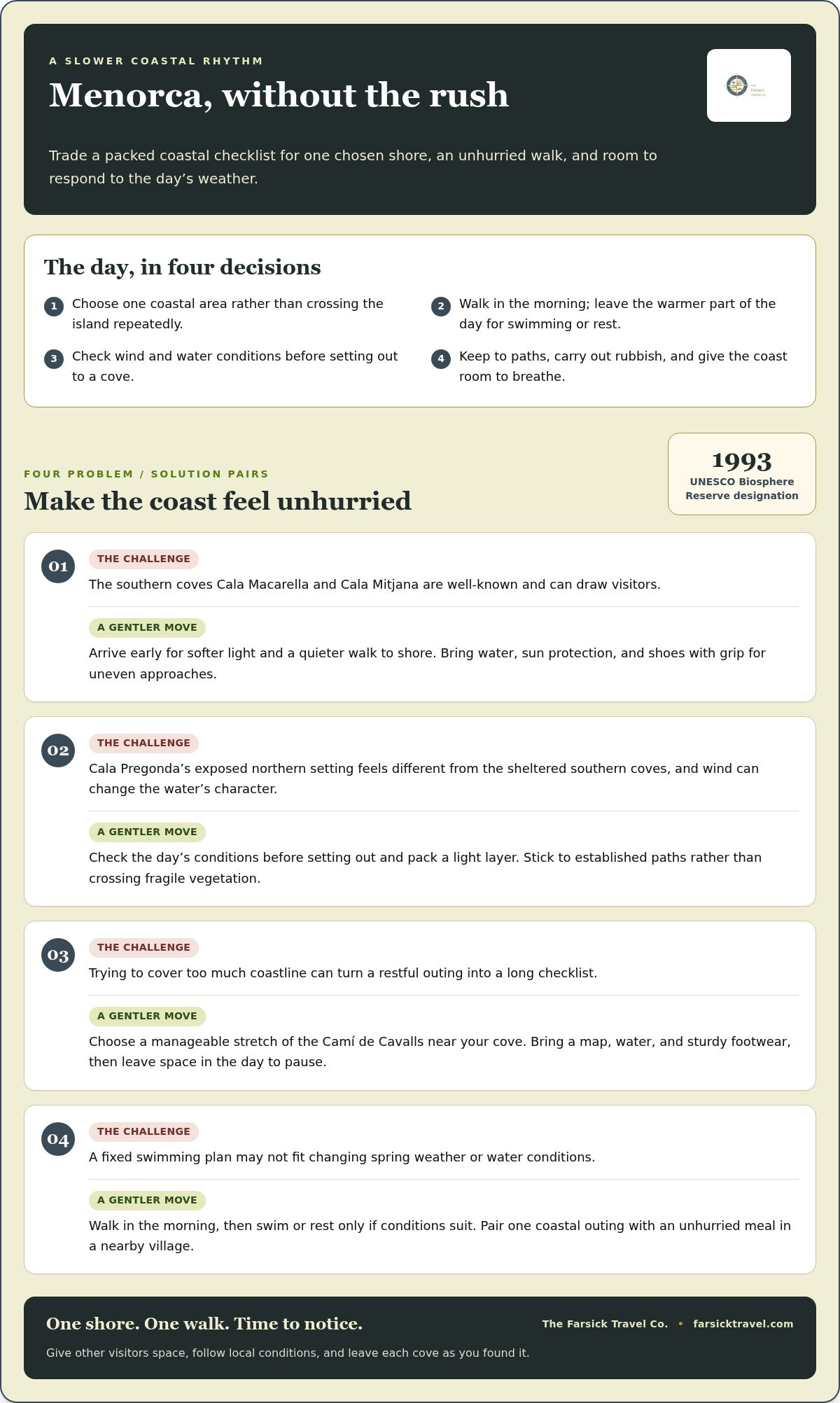
Menorca’s coastline rewards a deliberate pace, especially around its sheltered coves and open stretches of Mediterranean scrub. The island was declared a UNESCO Biosphere Reserve in 1993, a designation that reflects its distinctive relationship between natural landscapes and human life. Let that slower rhythm shape your visit: choose one coastal area, walk its paths, and leave time to notice the wind moving through pine branches.
On Menorca’s southern coast, Cala Macarella and Cala Mitjana pair pale sand and clear water with steep green surroundings. Their well-known names can draw visitors, so arrive early for softer light and a quieter walk to the shore. Pack water, sun protection, and shoes with grip, since sandy approaches can give way to uneven ground. Take all rubbish, including food wrappers, with you.
For a different palette, head north to Cala Pregonda, where ochre-toned rocks meet the sea. Its exposed setting contrasts with the sheltered southern coves, and wind can change the feel of the water. Check the day’s conditions before setting out, and bring a light layer. Stick to established paths rather than crossing fragile vegetation for a closer photograph.
The Camí de Cavalls follows Menorca’s shoreline, connecting coastal scenery with stretches of the island’s interior. Rather than attempting a long route, choose a manageable section near your chosen cove. Walk in the morning, when the light is gentler, then swim or rest during the warmer part of the day. A map, water, and sturdy footwear make it easier to adapt the outing.
Spring lends Menorca’s landscape a fresh quality: coastal paths are inviting, and the coves offer quiet pauses between walks. Water and weather still vary, so plan around the day’s conditions rather than a fixed swimming schedule. A compact towel, refillable water bottle, and wind-resistant layer help you move between shore, trail, and village without overpacking.
Base your days near one area instead of crossing the island repeatedly. Pair a morning walk on the Camí de Cavalls with an unhurried meal in a nearby village, then return to the coast if conditions suit. At Cala Macarella or Cala Pregonda, give other visitors space, avoid disturbing plants, and leave the cove as you found it. Menorca’s quieter beauty is best enjoyed without a rushed checklist.
3. Quiet Mediterranean and Adriatic coastal destinations
For a quieter island rhythm, consider Croatia’s Mljet and Lastovo, then compare them with Gozo in Malta. Each offers a different way to spend a day by the sea: forested paths, small harbors, or rugged limestone coast. Choose one island as your base instead of turning every morning into a transfer.
Mljet pairs coastal time with green inland scenery. Mljet National Park was founded on 11 November 1960, and its landscape makes a good fit for walks between water and woodland. Plan an early outing, carry water, and leave time for a slow meal afterward. Staying near your chosen area gives the day a gentler shape than trying to cover the whole island.
Lastovo suits travelers drawn to a more remote Adriatic atmosphere. The Lastovo Islands were declared a nature park in 2006. Use a village as a starting point, then explore nearby paths and coves at a measured pace. Bring sturdy shoes for uneven ground, pack out all rubbish, and keep noise low near quiet shoreline habitats.
Gozo offers a different kind of coastal escape, with rocky headlands, clear water, and village life close to shore. As the second-largest Maltese island, it has room for a full day around one area. Choose a coastal walk near Dwejra or a relaxed stop by Xlendi, then leave time for a village meal rather than packing the itinerary.
The best island for you depends on your travel style. Families may value a simple base and shorter outings; couples might prefer unhurried coastal walks and coves that feel secluded. Budget travelers can shape spending through lodging style, meal choices, and how often they move between places, rather than relying on a fixed island-wide cost.
For US travelers, flight duration depends on the departure city, route, and connections. The onward journey matters too: reaching Mljet, Lastovo, or Gozo means planning a transfer from the arrival airport to the relevant ferry or local transport.
Keep the pace restful by grouping activities by area. On Mljet, combine a morning walk with an afternoon beside the water; on Lastovo, let a village visit lead to a nearby coastal trail. In Gozo, choose one shoreline before lunch, then linger over local food instead of crossing the island repeatedly.
Quiet shores reward considerate travel. Follow marked paths, avoid disturbing plants, and take litter with you from Dwejra, Mljet National Park, and Lastovo’s coves. Spring can bring a calmer feel to coastal outings, but wind and sea conditions still shape the day. Leave room to change plans and experience each island on its own terms.
4. Spring weather and quieter coastlines
Spring is a good time to visit Procida, Menorca, Mljet, Gozo, and Lastovo if you want coastal time without peak-season intensity. Moderate temperatures can make walks and shoreline outings more comfortable than extreme heat, while fewer visitors may bring a quieter feel to coves and village lanes. Choose spring for a balance of outdoor activity and breathing room.
A guide to 7 Sun-Drenched Destinations to Swap Cold Weather for Coastal Relaxation can help you compare spring conditions with the kind of days you want. Across these islands, conditions vary by place and date. Plan around the local forecast rather than expecting identical weather in Procida and Lastovo.
Spring weather can shift over the course of a coastal day. A calm morning in Menorca may feel different from an exposed afternoon near Cala Pregonda, where wind shapes the experience. Pack a light layer, sun protection, and comfortable walking shoes. Keep your plans flexible, with a village visit in mind if the coast turns windy.
Coastal kayaking can be appealing in spring, when seas may be smoother. Choose a sheltered route near shore, paddle with a qualified local guide, and avoid launching if conditions look unsettled. A calm bay offers a quieter view of the coast, but wind and waves still affect comfort and control.
Spring paddleboarding may also bring less wind and smoother water. Choose a protected cove over an exposed headland, and start earlier, when conditions are often calmer. On Gozo, opt for a sheltered stretch instead of crossing open water. Bring drinking water and keep a dry layer nearby for the return.
Fewer visitors change the pace at places such as Menorca’s Cala Mitjana and Procida’s Marina Corricella. Arrive in the morning for softer light and less foot traffic, then leave the busiest shore areas for a slower village afternoon. Respect residents, keep paths clear, and take all rubbish with you.
For anyone weighing 7 Sun-Drenched Destinations to Swap Cold Weather for Coastal Relaxation, seasonal risks deserve a place in the plan. Rough seas and rainy spells remain possible in spring, so check local weather and sea updates before kayaking, paddleboarding, or swimming. If wind picks up, swap water time for a coastal walk or an easy meal nearby.
Build each day around one main outing. Walk a Menorca coastal path in the morning, rest through the warmer hours, then return to a sheltered cove if conditions suit. On Procida, pair harbor time with an inland stroll. This flexible rhythm makes spring’s moderate temperatures and quieter shores easier to enjoy.
Fewer visitors create a quieter environment, which can make a spring outing feel less like a checklist and more like time to pause. Leave room in the day to linger where you are, rather than treating every stop as something to hurry through. If a shoreline visit feels busy despite the season, step back and choose a different moment or place. Keeping expectations flexible helps preserve the slower pace, while letting the day follow the conditions and your own comfort.
5. Which destinations are warmest during winter months, and what are average temperatures?
For a winter escape, compare Procida, Menorca, Mljet, Gozo, and Lastovo by their coastal settings, not sunshine alone. A sheltered harbor may feel comfortable on a bright afternoon, while wind can make an exposed headland feel cooler. The right choice depends on how you want to spend the day: walking, lingering outdoors, or swimming.
Average temperatures describe broad patterns, not the feel of a particular beach or village. Daytime sun, evening cloud, wind exposure, and shelter all affect comfort. A coastal afternoon in Gozo can feel different from a breezy walk along Menorca’s shore, even in the same winter month.
For a winter escape, plan around outdoor time rather than assuming beach weather means swimming weather. Procida’s harbor lanes and pastel waterfront make an easy setting for a walk between cafés and the water. In Mljet, choose a sheltered path and pause by the coast; keep swimming optional instead of making it the day’s main activity.
Gozo and Lastovo offer a useful contrast for travelers drawn to open coastal scenery. Gozo’s rugged shoreline invites walks between villages and headlands, while Lastovo’s quieter island atmosphere suits a slower day based in one place. In either destination, wind direction and cloud cover affect comfort more than a sunny forecast alone.
Pack layers for changing conditions: a light wind-resistant jacket, comfortable walking shoes, and sun protection for clear midday stretches. Bring a small day bag for water and an extra layer. Shoes with grip help on Menorca’s coastal paths and Procida’s uphill lanes when surfaces turn uneven.
To compare winter conditions, consider the same factors for each destination: daytime and nighttime patterns, rainfall, wind, and coastal exposure. Match those conditions to your plans. A traveler seeking quiet walks and village meals may enjoy a different kind of winter day than someone hoping to spend hours in the sea.
Build a flexible itinerary for the coast you choose. Set aside a morning for a shoreline walk, leave the afternoon open for a sheltered village, and adjust water activities to the day’s conditions. That approach can make Procida, Menorca, Mljet, Gozo, or Lastovo feel restorative without relying on a particular temperature.
Plan a custom winter coastal itinerary
Moderate temperatures without extreme heat are one advantage of spring coastal activities. For winter travelers, that’s a seasonal comparison, not an estimate of winter temperatures. It doesn’t give an average for any destination or predict how warm a particular day will feel. Choose based on the outdoor time you want, treating seasonal comfort as one part of the decision. If mild conditions matter most, spring activities may suit you better. If you’ve chosen winter, keep plans flexible and don’t treat spring’s advantages as a promise about winter weather. This distinction helps align expectations with the season and the activities you hope to enjoy.
The Farsick Travel: Custom Travel Planning
The Farsick Travel Co. can shape a coastal escape around your preferred pace and experiences, from quiet village mornings to time on the water. Its Custom Travel Planning brings destination choices, transport logistics, accommodations, and activities together in a considered itinerary. It can be especially helpful when you’re weighing several islands or want a trip shaped around your own rhythm.
Choose a Solo Travel Experience for a trip built around your interests, or explore Signature Hiking & Yoga Retreats and Skillcations for a journey focused on movement or learning. The goal is a thoughtful route, not a rushed checklist.
Ready to shape a coastal trip around what matters to you? Contact The Farsick Travel Co.
Make Space for a More Intentional Escape
Let the 7 sun-drenched destinations to swap cold weather for coastal relaxation be a starting point, not a checklist. Choose the place that fits the kind of pause you need, then shape the days around it: a quiet walk, a lingering meal, a little room for plans to change. A meaningful coastal trip doesn’t need to cover more ground. It needs to make space for what brings you back to yourself.
The Farsick Travel Co. can help shape that next step through Custom Travel Planning, Signature Hiking & Yoga Retreats, or Solo Travel Experiences. Bring your preferred pace, interests, and hopes for the journey into the planning process, and let them guide the itinerary.
Your next restorative day could begin with salt air, an open path, and nowhere you need to hurry.
Frequently Asked Questions
What are the 7 sun-drenched coastal destinations for escaping cold weather?
The article features five distinct coastal destinations: Procida, Menorca, Mljet, Gozo, and Lastovo. Marina Corricella is a village on Procida, while Cala Macarella and Cala Mitjana are coves on Menorca, not separate destinations. Use these specific places to decide which shoreline or village experience you’d like to include in your trip.
Which destinations are easiest to reach from major US cities, and how long are flights?
Flight duration depends on the departure city, route, and connections. Reaching Mljet, Lastovo, or Gozo also requires planning an onward transfer from the arrival airport.
How much do flights and accommodations typically cost for a winter beach trip?
There’s no typical total: airfares and accommodation rates vary by dates, route, length of stay, and lodging style. Compare these costs together and consider a walkable base to reduce unnecessary transfers.
What is the best time of year to visit each destination for warm, dry weather?
Spring suits Procida, Menorca, Mljet, Gozo, and Lastovo for coastal time, with moderate temperatures and fewer visitors. Weather and sea conditions still vary.

Article by
Ursula Akin
Ursula Akin created The Farsick Travel Co. to help travelers step away from rigid, multi-stop checklists and step into intentional, deeply rooted experiences. Specializing in custom travel design, solo escapes, and curated retreats, Ursula combines local insights with leave-no-trace ethics to turn wanderlust into seamless, unforgettable journeys.
Disclaimer
The information provided on this website and within our articles is for general informational and inspirational purposes only. While we make every effort to ensure accuracy regarding travel logistics, recommendations, and local details, conditions can change rapidly. Readers are encouraged to verify current travel requirements, weather, safety advisories, and local regulations independently. The Farsick Travel Co. is a travel design and curation service and is not responsible for any actions, changes, or incidents occurring during independent travel.


