

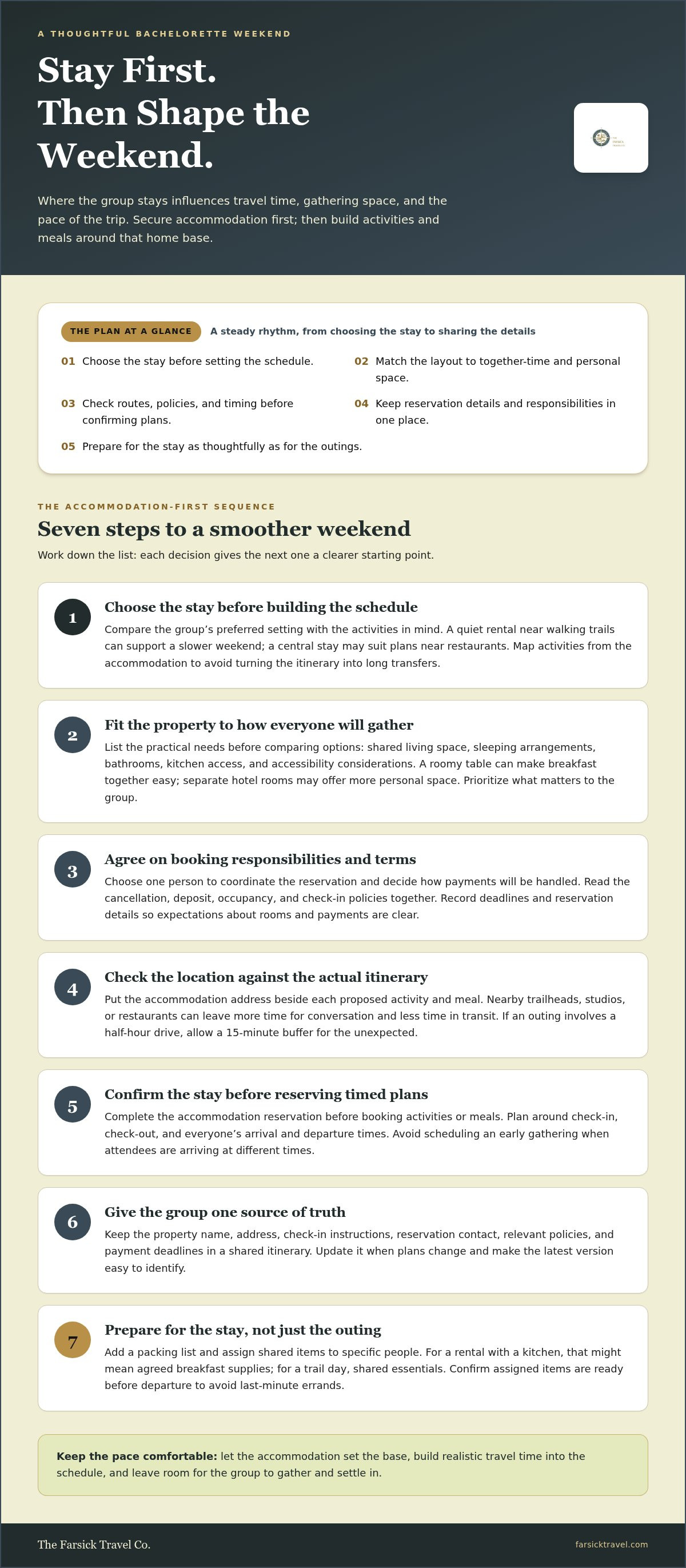
The best bachelorette weekend starts with a place to stay, not a packed itinerary. A bachelorette party travel planner can help the group choose a destination, gather preferences in a survey, and select dates around attendees’ availability, weather, and local attractions. Book accommodations before planning activities and meals, since where you stay shapes the rhythm of the trip.
It’s easy to focus on the big moments and overlook how everyone will feel moving between them. Making room for different budgets, energy levels, and unhurried time together helps the plan feel thoughtful. This guide covers choosing a destination, collecting preferences, setting dates, booking suitable accommodation, and leaving breathing room in the itinerary. The aim isn’t to fill every hour. It’s to make the celebration feel like your group.
Key Takeaways
- Choose a destination that fits the bride’s preferred pace, interests, and the season.
- Gather date options, budget comfort, dietary needs, and location preferences in one simple survey.
- Set dates by weighing the group’s availability alongside weather and local attractions.
- Secure accommodations first, then shape activities and meals around the location and style of stay.
- Leave open space in the itinerary so the group can rest, connect, and enjoy the celebration without rushing.
Booking accommodations before activities
Book the group’s accommodation before choosing activities or meals. Its location and layout shape travel time, space to gather, and the pace of the weekend.
- Choose the stay before building the schedule. Compare the group’s preferred setting with the activities you’re considering. A quiet rental near walking trails, for example, supports a slower weekend, while a central stay may suit plans near restaurants. Once the location is set, map each activity from that base. This keeps an appealing itinerary from turning into a string of long transfers.
- Match the property to how the group will gather. List practical needs before comparing options: shared living space, sleeping arrangements, bathrooms, kitchen access, and accessibility considerations. A house with a roomy table may make breakfast together easy; separate hotel rooms may offer more personal space. Prioritize what matters to the group, then choose a lodging style that allows for both connection and quiet.
- Agree on booking responsibilities and terms. Choose one person to coordinate the reservation and decide how the group will handle payments. Before committing, read the property’s cancellation, deposit, occupancy, and check-in policies together. Record deadlines and reservation details in one shared itinerary. Clear expectations help prevent assumptions about rooms or payment arrangements the booking doesn’t provide.
- Check location against the actual itinerary. Put the accommodation address beside each proposed activity, then compare travel routes and meal locations. A nearby studio, trailhead, or restaurant can leave more time for conversation and less time in transit. If the group plans a half-hour drive to an activity, leave a 15-minute buffer for unexpected situations. Add the travel time to the schedule before confirming the outing.
- Confirm the stay before reserving timed plans. Complete the accommodation reservation before booking activities or meals. Then plan around check-in and check-out times, as well as the group’s arrival and departure schedule. For instance, avoid an early gathering if attendees are arriving at different times. The lodging details make it easier to choose realistic start times and a comfortable meeting point.
- Give the group one source of truth. Add the property name, address, check-in instructions, and reservation contact to the shared itinerary. Include relevant policies and payment deadlines. Share the itinerary so everyone can find the same information without searching through a long group text. Update it when plans change and make the latest version easy to identify.
- Prepare for the stay, not just the outing. Add a packing list to the itinerary and assign shared items to specific people. Confirm that each person has their assigned item ready before departure. For a rental with a kitchen, the list might include agreed breakfast supplies; for a trail day, it might include shared essentials. Clear assignments help prevent last-minute errands from disrupting time together.
Choosing dates and considering weather
Choose dates by weighing attendees’ availability, expected weather, and the local attractions the group wants to enjoy. Start with dates that work for the group, then shape the trip around the season and the experience everyone hopes to have.
Set Dates and Planning Lead Time
Start planning once the group has date options and a shortlist of destinations. There’s no single lead time that suits every trip; the right window depends on attendee schedules, lodging choices, and activities that require reservations.
- Gather date options first. Ask attendees to share weekends they can realistically attend instead of proposing one fixed date. Compare the overlap, then identify a preferred option and a backup. This gives the group direction while leaving room to adjust if the accommodation or experience doesn’t fit.
- Compare availability with local events. Check what’s happening at the destination during each possible weekend. A seasonal festival or popular local event may add atmosphere, but it can also affect the pace and availability of places the group wants to visit. Choose the date that best fits the bride’s priorities.
- Set a decision point for the group. Give attendees a clear date to share preferences and confirm availability. Once the group has decided, communicate the dates and key plans in one shared itinerary. Don’t leave the decision open while preferred accommodation or activities are under consideration.
Consider Weather and Safety Risks
Compare seasonal weather with the group’s activities and the destination’s setting. Consider conditions that could affect outdoor plans, transportation, or attendees’ comfort. Build flexibility into the schedule rather than relying on one forecast.
- Match the season to the activity. Consider how rain, heat, or cooler conditions could change an outdoor walk. A spring trail outing, for example, may call for a flexible plan and layers, while a warm-weather afternoon may suit a shaded route and a slower pace.
- Review conditions close to departure. Check the forecast for the destination and the specific area where the group plans to spend time. Use it to decide whether to keep an outdoor activity, change its timing, or choose an indoor alternative. Don’t let one weather-dependent outing determine the whole weekend.
- Plan for safe transitions. Consider how attendees will travel between the accommodation, activities, and meals, especially if the weather changes. Leave room to adjust plans and choose a clear meeting point. For a trail outing, share the route and bring suitable layers, water, and footwear.
- Protect the group’s comfort. Ask attendees to share relevant needs when discussing dates, then choose plans that let people participate at their own pace. A flexible afternoon after an outdoor activity gives everyone time to rest, change, or regroup if conditions shift.
Collecting attendee preferences with a survey
Use a survey form, such as Google Forms, to gather date options, budgets, allergies, and location preferences. Track shared expenses in a spreadsheet, note who pays each cost, and agree on payment deadlines before committing. Ask about accessibility needs privately, then choose plans that account for different budgets and ways of participating.
- Choose a simple survey tool. Use a form instead of collecting every preference in a long group text. A survey keeps answers organized and makes it easier to compare dates, destination ideas, budget comfort, and food allergies. Share the form with attendees and explain that their responses will guide the first draft of the weekend.
- Ask questions that shape real decisions. Invite each person to mark available dates, preferred locations, and activities they’d enjoy. Include options such as a nature walk, a relaxed meal, or unscheduled time. Add a short free-response question for details the choices might miss. Keep the questions focused so the answers help narrow the plan.
- Make budget preferences specific. Ask attendees what feels comfortable for shared lodging, meals, and activities. Don’t treat silence as agreement. A private response option can help someone share limits without explaining them in a group chat. Use the replies to build a plan with meaningful choices instead of assuming everyone wants to spend the same amount.
- Include allergies and access needs. Ask about food allergies, mobility considerations, and other needs that could affect lodging or activities. Let attendees respond privately if they prefer. Use their answers when comparing restaurants, walking routes, or a rental’s layout. Give people a chance to clarify practical details before the group commits.
- Summarize the results before proposing a plan. Share a concise overview of date availability, location preferences, and activities that drew interest. Keep private budget and access details confidential. For example, you could say that the group prefers a quieter destination and a flexible outdoor activity. This gives everyone a clear basis for responding to the next draft.
- Make shared costs visible. List shared expenses separately from personal choices, such as an optional treatment or individual shopping. Assign a coordinator to record payments and update the shared spreadsheet. Agree on who pays each expense and when contributions are due. Clear records help attendees understand the plan without repeatedly asking for totals in the group chat.
- Offer choices without creating a second trip. Use the survey answers to identify shared plans, then offer optional activities that don’t exclude anyone from the main celebration. The group could meet for a leisurely lunch while some attendees choose a walk and others take free time. Keep the meeting place and timing clear so everyone knows how to join.
- Close the loop with the group. Share the proposed dates, destination, cost outline, and itinerary draft in a shared document. Invite corrections before making the next decisions. Update the document when preferences change or costs are assigned. A single current version reduces confusion and helps attendees see how their input shaped the trip.
Google Forms works well for collecting dates, budgets, preferences, allergies, and access needs. Use a shared spreadsheet to track expenses, who pays each cost, and payment deadlines. A form makes answers easier to compare than a long group text.
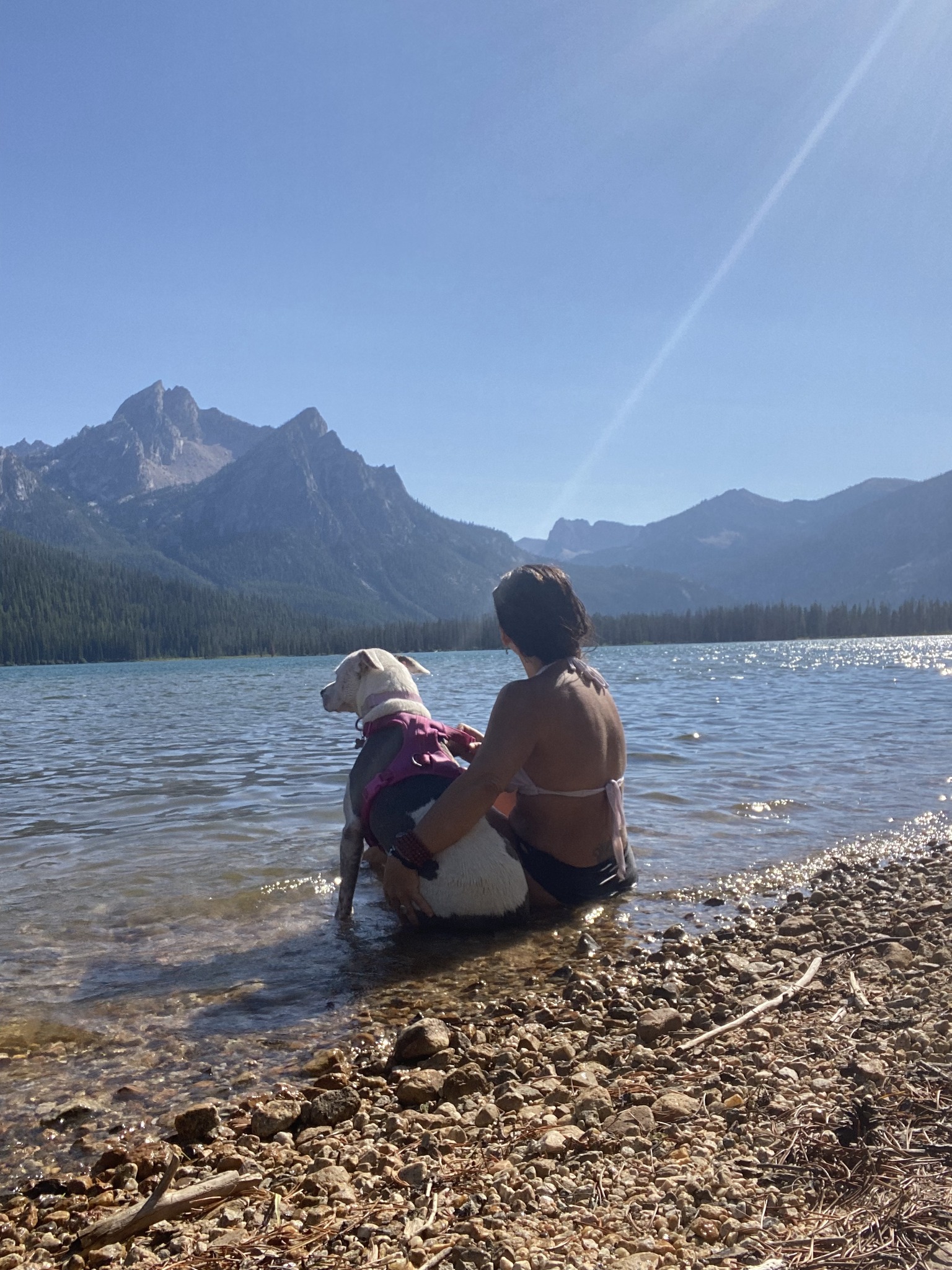
Scheduling downtime
Leave open time alongside meals, activities, and travel between them. A bachelorette itinerary should give the group room to relax, connect, and enjoy the destination without rushing.
- Mark open blocks before adding optional plans. Look at the weekend as a whole and reserve unstructured time first. For example, leave the afternoon after a morning walk free instead of filling it with another reservation. Treat that open block as part of the celebration, not a gap that needs filling.
- Give mornings and evenings different rhythms. Schedule a gentle activity, such as a short walk, earlier in the day. Follow it with a leisurely meal or quiet time at the accommodation. If the group has evening plans, avoid stacking demanding activities beforehand. This helps the itinerary feel considered rather than relentless.
- Build a pause after travel or arrival. Leave time for attendees to unpack, freshen up, and settle in before the first group plan. For example, make the first gathering a relaxed meal near the accommodation instead of a timed activity across town. A calm arrival gives latecomers room to join without disrupting the group.
- Keep meal times spacious. A shared meal can be a highlight of the weekend, not just a stop between reservations. Allow time for conversation, ordering, and enjoying the setting. In a small town, an unhurried lunch might lead naturally into browsing local shops. Avoid scheduling the next activity so tightly that everyone has to leave early.
- Make participation flexible. Choose plans that let attendees step away or rejoin without confusion. After a group breakfast, for instance, some people might take a quiet hour while others explore nearby. Set a clear meeting place for the next shared plan. This gives individuals choice while keeping the group connected.
- Use the accommodation as a resting point. If the schedule includes an outdoor outing, return to the lodging before evening plans when the location allows. Attendees can change clothes, refill water, or take a quiet moment. That transition is especially useful after time on a trail or in changing weather.
- Reduce unnecessary transfers. Group activities by location so the day doesn’t become a string of rides and departures. Pair a neighborhood walk with lunch nearby, for example, then leave the later afternoon open. Fewer transitions create more time for conversation and make it easier to adapt when the group’s energy changes.
- Share the itinerary with downtime clearly labeled. In the shared schedule, distinguish open time from missed or undecided plans. Add the next meeting place and essential details, such as whether attendees should bring walking shoes. When everyone knows a free afternoon is intentional, the group can enjoy it without wondering what comes next.
Selecting a destination
Choose a place that fits the bride’s interests, the group’s practical needs, and the season. Compare its atmosphere and daily rhythm, not just its activity list.
- Begin with the bride’s idea of a good day. Ask whether she’d rather walk a quiet trail, linger over lunch, or explore a lively neighborhood. Use her answer to shape a shortlist of destinations. A morning outdoors followed by an unhurried afternoon calls for a different setting than a celebration centered on dining and evening events.
- Match the landscape to the season. Consider how seasonal conditions could shape the experience. If fall foliage matters, look for wooded areas and routes where leaves and changing light are part of the outing. Check that the group’s preferred activities suit the season, then leave room for the weather to affect the day’s pace.
- Picture the sensory details of a day there. Look for practical clues about the setting: shaded paths or open terrain, nearby road noise or quieter surroundings, and places to pause. Imagine arriving in soft morning light, hearing birds or wind through trees, then finding a local café for lunch. Treat these as details to assess, not promises about a destination.
- Compare travel effort with time together. Consider how the journey to each candidate destination affects the time available for the celebration. A closer option may leave more room for shared meals and rest. A longer journey may feel worthwhile when the landscape or local experiences closely match what the bride wants.
- Choose a base with activities close together. Identify the neighborhoods, trails, restaurants, or cultural experiences the group most wants to enjoy. Favor destinations where these fit naturally into nearby areas. Pair a walk with lunch in the same community, for example, instead of building the day around repeated long transfers.
- Look beyond the busiest attractions. Consider a smaller town, a less-traveled route, or a locally rooted experience. To avoid crowds, plan popular outdoor stops for early morning or visit on a weekday when the schedule allows. In natural spaces, stay on marked paths, carry out what the group brings, and leave wildlife undisturbed.
- Check whether the destination supports everyone. Compare the group’s preferences with practical needs, including mobility, food options, and comfort with outdoor activities. Consider route surfaces, shade, and places to rest. If interests vary, choose a destination with nearby alternatives, such as a gentle walk and a café where everyone can meet afterward.
- Test the destination with a sample day. Sketch a morning, afternoon, and evening before deciding. Imagine a walk during cooler morning hours, a relaxed lunch, and an open afternoon. If the plan feels rushed or depends on distant stops, choose a more suitable base or simplify the itinerary.
The Farsick Travel Co.: Custom Travel Planning
The Farsick Travel Co. offers Custom Travel Planning for groups who want a bachelorette trip shaped around their shared preferences. Turn to this service when coordinating dates, accommodation, and activities feels difficult, or when the group wants a more intentional pace. The itinerary can reflect the bride’s interests and leave room to slow down instead of crowding every day with plans.
For a nature-led celebration, thoughtful planning can balance an outdoor experience with unhurried time together. The result can feel cohesive, personal, and comfortable for everyone attending.
Shape a celebration that feels like her
Start by deciding what you want the weekend to mean, not just what the group wants to do. A bachelorette party travel planner can turn that intention into a shared experience, whether the bride imagines quiet time in nature, a skill-building escape, or a slower celebration close to home.
The Farsick Travel Co. offers Custom Travel Planning, Signature Hiking & Yoga Retreats, and Solo Travel Experiences. Each reflects a different way to travel with purpose, from spending time outdoors together to making room for personal discovery. For a group celebration, thoughtful planning can connect the setting and itinerary to the bride, rather than relying on a generic checklist.
Let the trip become a meaningful pause before a new chapter, with room for laughter, conversation, and being fully present together.
Frequently Asked Questions
What does a bachelorette party travel planner do?
A bachelorette party travel planner turns the group’s ideas into a coordinated trip plan. They can shape the itinerary around the bride’s interests, connect lodging and activities into a workable schedule, and keep key details organized. For example, the plan might include a creative workshop, a relaxed dinner, and time to explore independently. The aim is a cohesive experience, not simply a list of reservations.
What are the best U.S. destinations for a bachelorette party weekend?
The best U.S. destination is one that matches the bride’s preferred atmosphere and the group’s shared interests. For a restorative weekend, look for a quieter setting with nature experiences and locally owned places to eat. For a culture-focused gathering, choose a walkable area with galleries, performances, or workshops. Compare the seasonal feel and nearby experiences, then select a destination that supports one clear vision for the celebration.
How do you choose a bachelorette party destination based on budget and group size?
Choose a destination by comparing the trip’s shared expenses with the group’s preferred lodging arrangement. A larger group may benefit from shared accommodation and communal meals, while a smaller group might value private rooms and fewer scheduled activities. Consider how room layouts affect comfort, and separate essential plans from optional extras. This makes it easier to create a welcoming celebration without expecting everyone to participate in every expense.
Article by
Ursula Akin
Ursula Akin created The Farsick Travel Co. to help travelers step away from rigid, multi-stop checklists and step into intentional, deeply rooted experiences. Specializing in custom travel design, solo escapes, and curated retreats, Ursula combines local insights with leave-no-trace ethics to turn wanderlust into seamless, unforgettable journeys.
Disclaimer
The information provided on this website and within our articles is for general informational and inspirational purposes only. While we make every effort to ensure accuracy regarding travel logistics, recommendations, and local details, conditions can change rapidly. Readers are encouraged to verify current travel requirements, weather, safety advisories, and local regulations independently. The Farsick Travel Co. is a travel design and curation service and is not responsible for any actions, changes, or incidents occurring during independent travel.


