

What if your next journey didn't just leave you with a camera roll full of landmarks, but left the destination itself breathing a little easier? Many of us know the specific exhaustion that follows a vacation spent rushing through checklists. It's a hollow feeling to return home more tired than when you left, perhaps even carrying a quiet guilt about your footprint on the land. You want to feel a pulse, a rhythm, and a genuine connection to the places you visit, yet traditional tourism often keeps you at arm's length.
This guide to regenerative travel planning offers a different path. It's a framework designed for the traveler who seeks depth over volume and restoration over mere sightseeing. We'll show you how to move with intentionality, replacing the frantic pace of the crowd with the steady hum of the wilderness or the slow afternoon light in a quiet village. You'll learn to design travel that restores your own spirit while actively contributing to the health and vitality of the communities that welcome you. It's about moving from being a consumer to becoming a mindful guest.
In this guide:
- The shift from "sustainable" to "regenerative" and why it matters for your internal narrative.
- How to build an itinerary based on personal rhythm rather than a crowded bucket list.
- Concrete ways to contribute to the health of local ecosystems and communities.
- Strategies for finding off-the-beaten-path locations that offer authentic connection.
- Planning tips for solo travelers and groups seeking deep, unhurried discovery.
Key Takeaways
- Move beyond the "do no harm" baseline of sustainability toward a regenerative approach that actively improves ecosystems and local communities.
- Replace the frantic sightseeing checklist with a deliberate rhythm that prioritizes slow movement and sensory depth over a high volume of stops.
- Master the art of regenerative travel planning by identifying your internal intentions before choosing a destination or mapping out logistics.
- Discover how choosing off-the-beaten-path locations and seasonal timing can prevent overtourism while fostering authentic, restorative connections.
- Understand how custom itinerary design transforms travel from a series of logistics into a cohesive narrative of self-renewal and positive impact.
What is Regenerative Travel Planning?
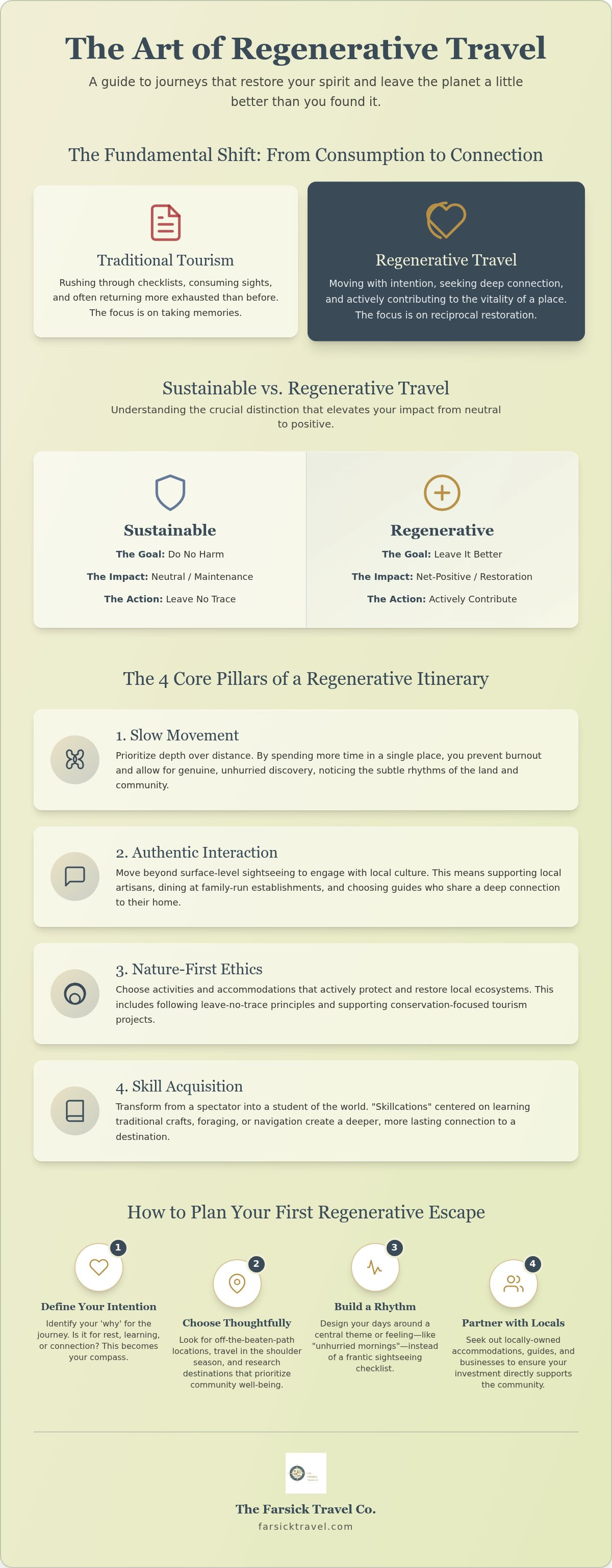
Travel is often presented as a collection of sights to be ticked off a list, yet this approach frequently leaves the traveler depleted and the destination strained. Regenerative travel planning represents a fundamental shift in how we move through the world. It moves beyond the traditional model of consumption, where we take memories and leave footprints, and instead focuses on a reciprocal relationship. In this framework, the journey is designed to restore both the environment and the individual soul. It's the difference between passing through a landscape and becoming part of its recovery.
Moving Beyond "Do No Harm"
While sustainable tourism principles focus on minimizing negative impacts, regeneration aims for a net-positive result. Sustainability is about maintenance; it's a baseline that asks us to leave no trace. Regeneration asks us to leave a place better than we found it. Regenerative planning is the intentional design of journeys that replenish local ecosystems and communities. This might mean choosing stays that actively reforest their surroundings, supporting indigenous-led tourism, or simply slowing down so that your presence nourishes the local economy. You shift from being a spectator to becoming a contributor.
The Internal Shift: Why We Design for Rhythm
The health of a destination is inextricably linked to the peace of mind of the traveler. When we rush from one landmark to the next, we miss the subtle details that make a place feel alive. We miss the scent of crushed sage on a morning trail walk, the specific, cool humidity of a valley at dusk, or the rhythmic sound of local artisans at work. This frantic pace leads to travel burnout, a state where the beauty of the world becomes a blur of logistics and fatigue.
We embrace the role of the Mindful Architect, viewing travel as a design challenge that requires both expertise and emotional intelligence. This means designing an itinerary around a deliberate rhythm rather than a high volume of stops. We prioritize:
- Uninterrupted mornings spent listening to the awakening forest or the low hum of a waking village.
- Unhurried afternoons where the pace is dictated by curiosity and local connection, not a rigid schedule.
- Deep connection with the land through physical movement that grounds you in the present moment.
By slowing the tempo, you create the necessary space for self-renewal. When you aren't fighting a checklist, you can actually hear the wind in the ancient hemlocks and feel the pulse of the community. This intentionality is the foundation of any truly restorative journey.
The Core Pillars of a Regenerative Itinerary
A regenerative journey is built on a foundation of deliberate, soulful choices. It moves away from the chaotic energy of mass-market tourism, where the goal is often to consume as much as possible in a short window. Instead, regenerative travel planning treats time as a precious resource for restoration. We focus on four central pillars: slow movement, authentic interaction, nature-first ethics, and skill-acquisition. These skill-cations transform you from a spectator into a student of the world, whether you're learning traditional navigation, ancestral foraging, or local craftsmanship.
The concept of slow travel is often misunderstood as simply being passive. In reality, it's an active choice to prioritize depth. By spending a week in a single valley rather than rushing across a continent, you begin to notice the nuances of the land. You see how the morning mist clings to the riverbed, how the local community moves with the seasons, and how the light shifts across the valley floor. This approach prevents the burnout associated with sightseeing checklists and allows for a genuine sense of unhurried discovery.
Designing for Connection and Meaning
Meaningful travel happens in the spaces between the landmarks. Imagine an unhurried afternoon in a remote village, where the only schedule is the setting sun. You might smell the sharp, comforting scent of woodsmoke or hear the rhythmic clink of a blacksmith's hammer. These sensory details are the markers of a true connection. Small-group experiences are essential here. A curated group allows for intimate conversations with local guides that mass-market tours can't provide. When you stay in accommodations woven into the local fabric, such as a family-run mountain lodge or a community-owned coastal retreat, your presence directly supports the health of the destination.
Wilderness and Wildlife: A Mindful Approach
Our interaction with the natural world requires a high level of emotional intelligence and leave-no-trace ethics. We design itineraries that respect microclimates and seasonal nuances, often suggesting visits during shoulder seasons to avoid the strain of peak crowds. Observing wildlife is a lesson in patience and presence. It's about the soft lighting of dawn hitting a ridge or the quiet snap of a branch in the undergrowth. We prioritize the preservation of quiet, ensuring that our curiosity never disrupts the local ecosystem. This nature-first design fosters a restorative mindset, grounding you in the steady, unhurried pace of the wild. If you're ready to move with this kind of intention, consider how custom travel planning can transform your next escape into a restorative narrative.
Sustainable vs. Regenerative: Why the Distinction Matters
Sustainability is a baseline; it's the practice of "doing no harm." While noble, it essentially aims for a neutral footprint, leaving a place exactly as you found it. Regeneration, however, is the goal. It's a proactive commitment to healing and growth. When we engage in regenerative travel planning, we aren't just looking to minimize damage. We're looking to spark a revival. This distinction matters because it changes the fundamental question of your trip from "How do I take less?" to "How do I leave more?"
Some travelers worry that this shift is simply more expensive. In reality, it's a matter of value over cost. A mass-market cruise might offer a lower entry price, but the hidden costs to local ecosystems and the shallow nature of the experience often leave the traveler feeling disconnected. A regenerative journey supports a circular local economy, ensuring your investment stays within the community. This circular approach ensures:
- Capital remains within the local community, funding conservation and education.
- Traditional crafts and skills are preserved through direct, fair-trade support.
- The traveler gains access to genuine, non-commercialized cultural exchanges.
Through the lens of regenerative travel planning, every choice becomes an opportunity for restoration, supporting the hands that craft the textiles you admire and the guides who know the secret history of the forest trails.
The Myth of the "Green" Checklist
Skipping plastic straws or reusing a towel is a start, but it's not the heart of a regenerative journey. These are often surface-level "green" checklists that fail to address the systemic impact of travel. True regeneration requires an end-to-end coordination of logistics to ensure a net-positive impact. It's the difference between "sightseeing," which is an act of taking a visual record, and "regeneration," which is an act of giving back to the soil and the soul. We prioritize meaningful movement, choosing ground transport that allows you to see the changing microclimates of the terrain, like the transition from damp coastal forests to high, arid plateaus, rather than skipping over them.
Active Restoration in Practice
Restoration isn't just a concept; it's a physical practice. It might look like spending a morning assisting with trail restoration in a fragile alpine meadow or participating in a workshop that preserves a dying local craft. These activities aren't performative add-ons. Through custom travel planning, we ensure these interactions are authentic and requested by the local community. Signature hiking and yoga retreats often serve as the perfect entry point for this, blending physical challenge with quiet reflection. You aren't just a visitor; you're a partner in the destination's health. This is the ultimate form of self-renewal, knowing your presence contributed to the resilience of a place you now love.
How to Plan Your First Regenerative Escape
Planning a regenerative journey requires a departure from the traditional booking process. It starts with a quiet inquiry into your own state of mind. Before you look at a map, identify the internal transformation you seek. Are you looking to shed the noise of a digital life, cultivate a deeper patience, or reconnect with physical movement? This "why" serves as your compass. Once your intention is clear, choose destinations based on seasonal nuances rather than popularity. Focus on shoulder seasons and microclimates that offer respite from the heat or the weight of crowds. This approach ensures your presence is a gift to the local infrastructure rather than a burden.
Logistics for the Mindful Traveler
The rhythm of your day determines the depth of your experience. We suggest reclaiming the cool blue hour before dawn for your most active movements. There is a specific, hushed quality to the air at 5:00 AM, a time when the wildlife is most active and the lighting is soft and forgiving. Packing for such a journey requires intentionality. Focus on high-quality, nature-ready gear that prioritizes durability over fast-fashion trends. Your kit should be a collection of essentials that facilitate a leave-no-trace ethic, such as a high-performance water filtration system or sustainably sourced wool layers. Transport should follow the natural pace of the land, avoiding the rush of mass-market schedules that prioritize efficiency over observation.
Selecting the Right Setting
Finding the right setting is an exercise in seeking out intentional solitude or authentic local interaction. For those navigating solo travel planning, the value of solitude cannot be overstated. It's in the quiet spaces of a solo trail walk that the internal narrative begins to shift. Alternatively, look for skill-based holidays, or skillcations, that allow you to engage with a culture through its crafts. This might mean learning the art of dry-stone walling or traditional weaving from a local mentor. These interactions are grounded in mutual respect and shared curiosity. By focusing on these steps, identifying your why, timing your visit, designing your rhythm, researching impact, and packing with care, you ensure your journey is as restorative for the destination as it is for you.
Regenerative travel planning is a design challenge that rewards the patient. It requires you to look past the obvious and seek the meaningful. When you design for rhythm and connection, you don't just visit a place; you begin to understand its pulse. This is the path to a journey that feels both premium and grounded, a bespoke experience that leaves you, and the land, more whole than when you began.
Start designing your custom regenerative itinerary today.
Elevating Your Journey with Custom Regenerative Design
While anyone can attempt to map out a trip, true regenerative travel planning is a sophisticated design challenge that benefits from a professional, high-touch approach. At The Farsick Travel Co., we act as your Mindful Architect, viewing each itinerary as a living narrative rather than a set of bookings. We don't just secure accommodations; we curate a sequence of experiences that foster an internal transformation. This involves understanding the specific "why" behind your departure and matching it with destinations that require your presence as much as you need their quietude. Our planning fees reflect this level of craftsmanship, ensuring that every hour spent designing your journey is focused on purpose, connection, and restorative impact.
The Farsick Approach to Custom Itineraries
Our design philosophy centers on the specific, unhurried rhythm of a journey. We believe in the restorative power of a morning trail walk where the air is thick with the scent of damp earth and the only sound is the rhythmic crunch of gravel underfoot. This physical grounding is followed by village afternoons spent in the slow, golden light of a town square, perhaps observing the intricate patterns of local masonry or listening to the low hum of conversation at a community-owned cafe. This balance prevents the burnout common in mass-market tourism.
High-touch coordination ensures that your experience is seamless. When the logistics are frictionless, your mind is free to engage with the internal shift that travel should provide. We manage the delicate balance between adventure and stillness, ensuring that every local interaction is authentic and every natural space is traversed with leave-no-trace ethics. This level of intentionality is what sets a custom itinerary apart from a generic search result. We prioritize depth of experience over a high volume of sights, allowing you to truly inhabit the places you visit.
Your Next Step Toward Meaningful Movement
It's time to move beyond the faceless booking engine toward a curated experience that respects both the traveler and the land. A computer cannot understand your need for rhythm or your desire to leave a destination better than you found it. Whether you're seeking a solo travel experience to find your own center or planning a bespoke honeymoon that prioritizes connection over consumption, our approach is tailored to your personal narrative. We specialize in designing for individual states of mind, ensuring that your journey feels both premium and grounded.
Our signature hiking and yoga retreats offer a structured entry point into this way of moving, blending physical challenge with quiet reflection. For those who want to deepen their engagement, our Skillcations provide a path to learning that respects and preserves local craftsmanship. From intentional group trips to bachelorette parties designed with depth, we ensure that every journey is a step toward restoration. You aren't just visiting; you're becoming a partner in a destination's health and vitality.
Plan your custom regenerative itinerary with us
The Path to Restorative Discovery
Choosing a path that honors both the land and your own well being is a profound act of intentionality. We have explored how regenerative travel planning transcends simple sustainability by aiming for a net-positive impact on every destination. It's about trading the frantic energy of the mass market for a deliberate rhythm; morning trail walks and unhurried afternoons allow for true self-renewal. By focusing on leave-no-trace ethics and authentic local connections, you transform from a visitor into a mindful guest.
The Farsick Travel Co. serves as your Mindful Architect, ensuring every detail of your journey is curated with craftsmanship and care. Our custom travel planning fees guarantee an itinerary tailored to your personal rhythm, whether you're embarking on a solo travel experience or a signature hiking and yoga retreat. We specialize in nature-based adventures that prioritize meaningful movement and deep connection.
Start designing your intentional journey with The Farsick Travel Co.
Your next journey doesn't have to be a race against time. It can be a steady, unhurried progression toward discovery and restoration. Embrace the opportunity to move through the world with purpose.
Frequently Asked Questions
What is the main difference between sustainable and regenerative travel?
Sustainable travel is a baseline that focuses on maintenance and leaving no trace. Regenerative travel moves beyond this neutral footprint to actively improve and restore a destination. It's a holistic approach that considers the health of the soil, water, and local community. While sustainability asks you to take less, regeneration asks you to leave a place better than you found it, creating a net-positive impact for both the land and the people.
How do I know if a travel company is actually regenerative or just greenwashing?
True regeneration requires transparency and verifiable data. Avoid companies that rely on surface-level claims like skipping plastic straws without addressing deeper systemic impacts. Look for recognized third-party certifications like B-Corp or EarthCheck. A genuine provider will focus on community-led experiences and long-term conservation projects. They should be able to explain exactly how your presence contributes to the destination's health rather than just offering a green checklist.
Can I plan a regenerative trip on my own, or do I need a consultant?
While independent planning is possible, professional regenerative travel planning provides a level of curation and logistical expertise that's difficult to achieve alone. A consultant acts as a Mindful Architect, coordinating end-to-end details that align with your personal rhythm. We have access to off-the-beaten-path projects and authentic local interactions that aren't listed on mass-market booking engines. This ensures your journey is seamless, frictionless, and deeply impactful for both you and the destination.
Is regenerative travel suitable for solo travelers?
Regenerative journeys are exceptionally well-suited for those seeking solo travel experiences. These trips prioritize internal transformation and intentional solitude, allowing you to reconnect with your own narrative without the distractions of a group. You can focus on your own rhythm, whether that's a quiet morning trail walk or a slow afternoon in a remote village. It's an opportunity for self-renewal that traditional, high-energy tourism rarely provides.
How does regenerative travel planning help with burnout?
Traditional tourism often leads to burnout because it prioritizes a high volume of sights over the quality of the experience. Regenerative planning prevents this by designing an itinerary around a deliberate rhythm. By balancing physical movement with unhurried stillness, you create space for your mind to rest. This shift from sightseeing to meaningful movement ensures you return home feeling restored rather than depleted by a frantic checklist of landmarks.
What kind of destinations are best for regenerative travel?
Destinations that offer deep nature connection and authentic local culture are ideal for this approach. We prioritize off-the-beaten-path locations where your presence can actively support reforestation, wildlife monitoring, or the preservation of indigenous traditions. These settings often have unique microclimates and seasonal nuances that reward unhurried discovery. The goal is to find places where tourism acts as a tool for ecological and social restoration rather than a source of strain.
Does regenerative travel mean I have to volunteer during my trip?
You don't have to spend your trip volunteering to have a regenerative impact. While hands-on conservation can be part of the experience, regeneration is often achieved through your choices in transport, lodging, and commerce. Supporting local craftsmanship, staying in community-owned lodges, and respecting leave-no-trace ethics are all powerful ways to contribute. It's about being a mindful guest who participates in a circular local economy rather than just a consumer of sights.
How much more does a custom regenerative itinerary cost compared to a standard one?
A custom regenerative itinerary focuses on value and long-term impact rather than the lowest entry price. While mass-market packages may seem cheaper, they often carry hidden costs for the destination and offer shallow experiences for the traveler. Custom travel planning fees ensure that every detail is tailored to your specific goals and rhythm. This investment supports a more purposeful journey that nourishes the local community and provides a deeper sense of personal discovery.
Article by
Ursula Akin
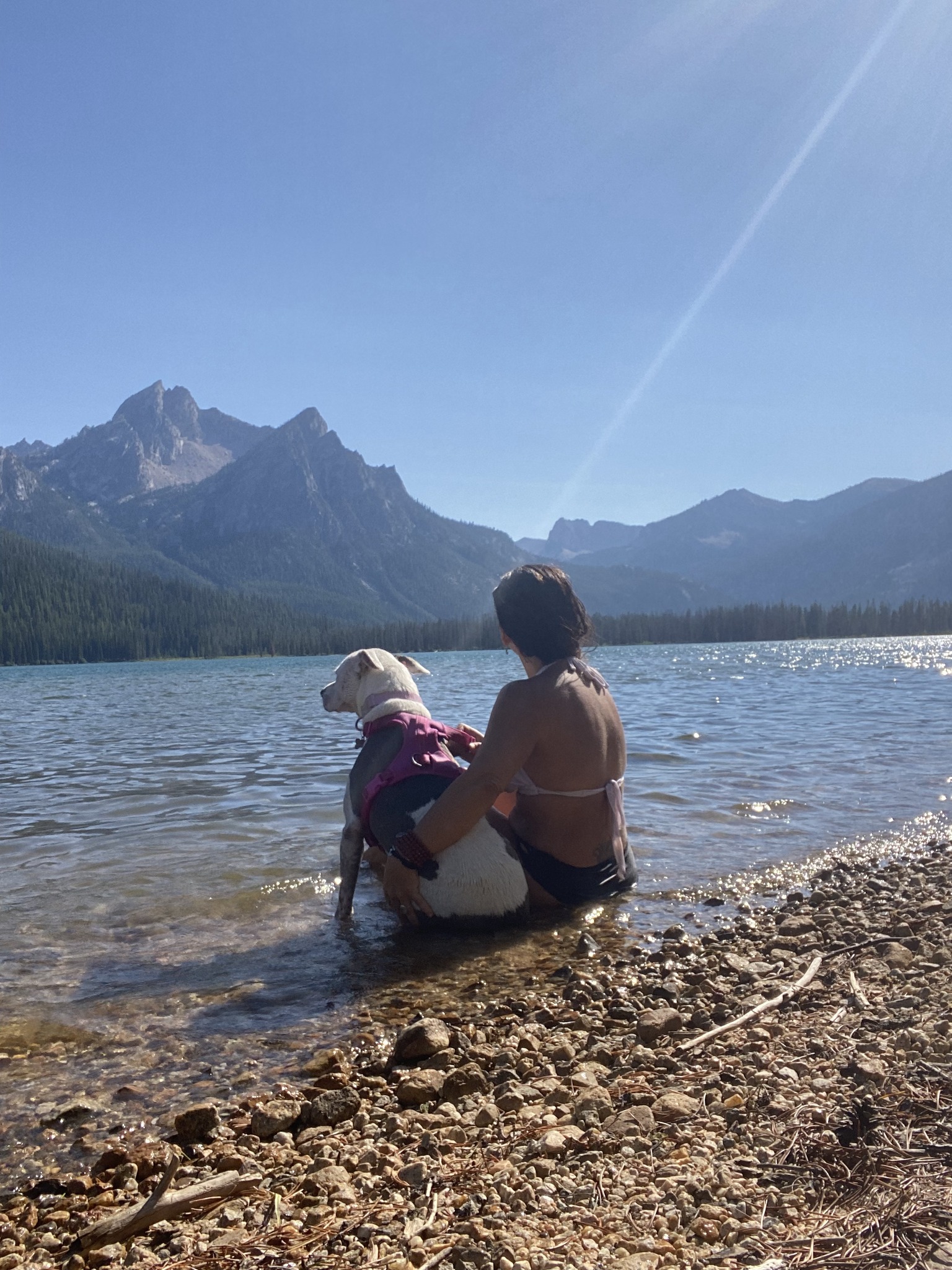
Ursula Akin created The Farsick Travel Co. to help travelers step away from rigid, multi-stop checklists and step into intentional, deeply rooted experiences. Specializing in custom travel design, solo escapes, and curated retreats, Ursula combines local insights with leave-no-trace ethics to turn wanderlust into seamless, unforgettable journeys.
Disclaimer
The information provided on this website and within our articles is for general informational and inspirational purposes only. While we make every effort to ensure accuracy regarding travel logistics, recommendations, and local details, conditions can change rapidly. Readers are encouraged to verify current travel requirements, weather, safety advisories, and local regulations independently. The Farsick Travel Co. is a travel design and curation service and is not responsible for any actions, changes, or incidents occurring during independent travel.


