

What if the secret to a truly restorative journey isn't found in the number of sights you see, but in the space you leave between them? It's a common exhaustion; you spend months curateing a list of must-visit spots, only to find yourself viewing local culture through a lens rather than feeling the pulse of the land. By embracing mindful escape planning, you can trade the weight of an over-researched itinerary for a sense of unhurried discovery. You deserve a transition that feels less like a logistical marathon and more like a purposeful return to your own center.
This approach moves beyond the rigid checklist to design a travel rhythm that fosters deep connection and lasting mental clarity. We'll explore how to align your movements with the quiet hum of nature and the authentic heartbeat of a destination. Instead of acting as a spectator, you'll learn to curate a journey that prioritizes internal restoration. This guide provides the framework for an escape that doesn't just fill a photo album, but ensures the peace you find on a remote trail follows you all the way home.
- Shift from a checklist mindset to an intentional, rhythmic travel design.
- Reduce decision fatigue by prioritizing presence over sightseeing volume.
- Connect with nature and local culture through unhurried discovery.
- Achieve lasting mental restoration that persists after you return home.
Key Takeaways
- Learn to design a travel rhythm that balances expansive discovery with contractive stillness to prevent the common need for a vacation after your vacation.
- Discover how to select off-the-beaten-path settings that serve as a vibrational match for your specific emotional and physical restoration goals.
- Master the essential steps of mindful escape planning, beginning with a mental audit to ensure your journey addresses your true internal needs.
- Understand how high-touch curation removes logistical friction, allowing you to move through your itinerary with quiet confidence and presence.
The Philosophy of the Mindful Escape: Beyond the Bucket List
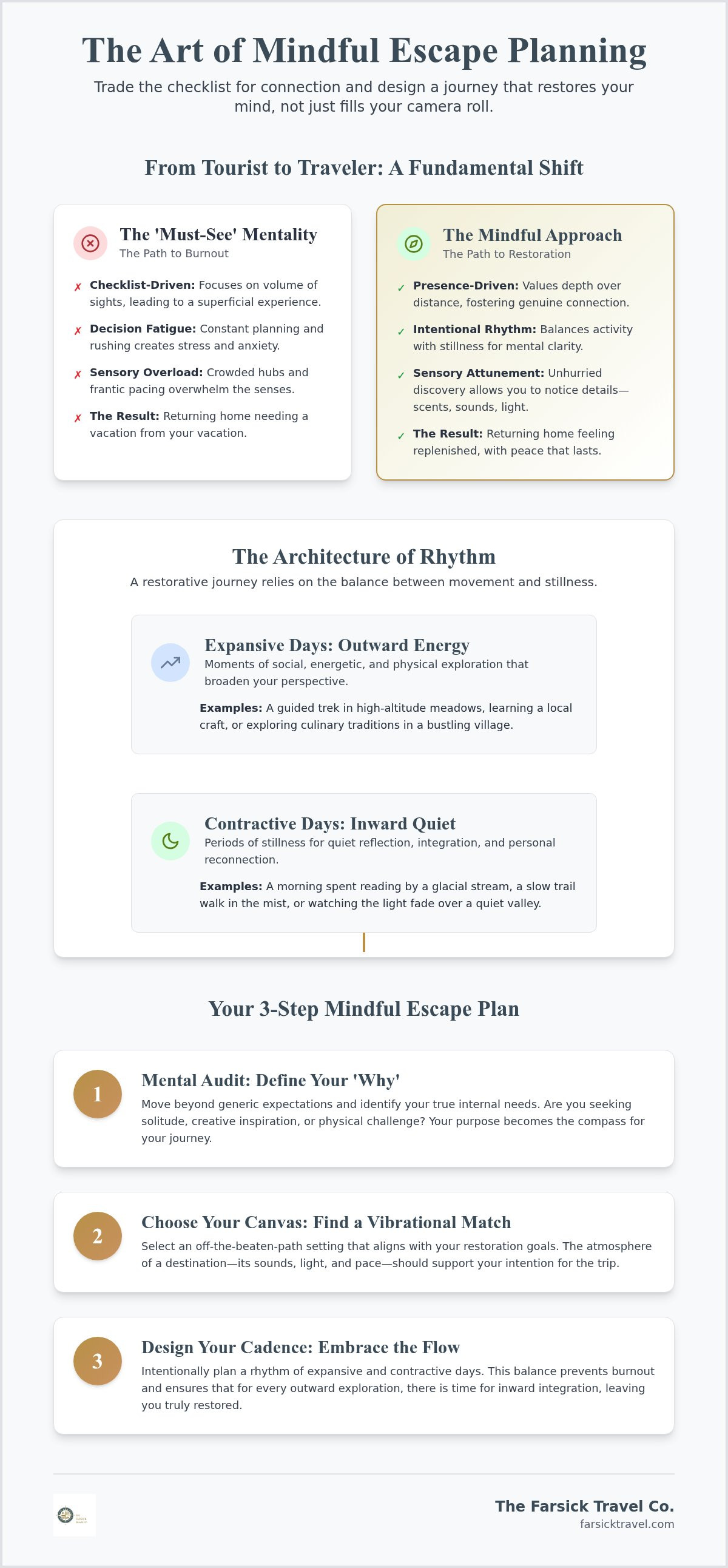
Mindful escape planning is the intentional design of a journey that values the internal transformation of the traveler over the external logistics of the trip. It's a deliberate choice of depth over distance; a commitment to experiencing one place fully rather than several places superficially. By mastering the art of mindful escape planning, you reject the checklist mentality of the mass-market industry. Instead, you embrace the presence mentality of slow travel. When you move with intention, travel shifts from a temporary distraction into a lasting restoration. It becomes a way to reconnect with your own center.
This practice is rooted in The Philosophy of the Mindful Escape. It allows you to detach from the frantic pace of daily life and realign with a more natural cadence. The foundational element of this journey is rhythm. Just as a piece of music relies on the space between notes, a restorative escape relies on the balance between movement and stillness. It's about creating a cadence that mirrors your own needs, allowing for moments of expansive discovery and periods of quiet reflection.
Why We Travel: Shifting from Sightseeing to Soul-Searching
Most traditional itineraries focus on what you'll see. A mindful approach focuses on who you'll become. This requires an internal shift. You must move away from generic expectations and toward a deeper why. Are you seeking the quiet solitude of a wilderness trail to clear your mind? Perhaps you want to engage in a skillcation to master a local craft. Maybe you need the restorative power of a signature hiking and yoga retreat. When you define your purpose, travel becomes a tool for regenerative personal growth and mental wellness. It's about finding a vibrational match between your current state of mind and the destination's unique atmosphere.
The Cost of the 'Must-See' Mentality
The modern traveler often suffers from the paradox of choice. We're told we must see every monument, eat at every top-ten restaurant, and visit every crowded hub. This leads to a specific kind of exhaustion. You find yourself in a sensory-overloaded square, surrounded by the smell of diesel exhaust and the persistent hum of other people's conversations. The light is harsh; the pace is frantic. This over-scheduled approach creates decision fatigue and anxiety. It turns a vacation into a logistical marathon. You return home feeling like you need another break just to recover from the first one. By choosing a custom travel planning experience, you can bypass this burnout and reclaim your time for what truly matters.
The Architecture of Rhythm: Designing Your Travel Cadence
Rhythm is the heartbeat of a restorative journey. It's the alternating pulse between activity and stillness, between the outward energy of exploration and the inward quiet of reflection. In mindful escape planning, we treat time as a resource for restoration rather than a container for tasks. Most itineraries fail because they only offer expansion. They demand constant outward focus, social engagement, and physical effort. A balanced cadence recognizes that for every mile hiked or village explored, your mind requires a moment of quiet integration. Expansion requires contraction.
We categorize these as expansive and contractive days. An expansive day might involve a guided trek through high-altitude meadows or a deep dive into local culinary traditions. These are social and energetic. Conversely, a contractive day is inward-facing. It's a morning spent reading by a glacial stream or an evening watching the light fade over a quiet valley. This balance ensures you return home feeling replenished. It's the difference between a trip that drains you and one that builds you back up.
Morning Stillness and Afternoon Discovery
Imagine waking to the soft, rhythmic call of mountain chickadees. The air is cool and smells of damp cedar and crushed pine needles. You start with a slow trail walk as the morning mist clings to the forest floor. There's no rush to reach a summit; the movement itself is the goal. By the time you reach an unhurried afternoon in a quiet village square, you aren't just a spectator. You're a participant in the local rhythm. You notice the way the light hits the weathered cobblestones or the specific scent of woodsmoke in the air. These sensory details anchor you in the present moment, creating memories that feel textured and real.
The Science of Slow: How Rhythm Affects the Nervous System
Slowing your pace isn't just a lifestyle choice; it has scientifically supported benefits for our well-being. A deliberate rhythm lowers cortisol levels and allows the nervous system to shift from a state of 'fight or flight' to 'rest and digest'. This transformation is amplified by biophilia, our innate biological need to connect with natural systems. By designing itineraries that prioritize these connections, we foster cognitive clarity and emotional resilience. It's a biological reset that persists long after you return home.
Circadian travel is the practice of aligning your itinerary with natural light cycles to optimize sleep and energy levels. We achieve this by leaving significant white space in your schedule. This unplanned time is where the magic of travel happens. It's the canvas upon which your journey is painted. If you're ready to design a journey that honors your internal pace, consider custom travel planning to build a cadence that actually restores.
Choosing Your Canvas: Settings That Support Stillness
The success of mindful escape planning depends heavily on the vibrational match between your current mental state and the destination's environment. If you're seeking grounding, the dense, loamy floor of an ancient forest might be your ideal canvas. If you need clarity, the sharp, thin air of a high-altitude meadow offers a different kind of medicine. We prioritize off-the-beaten-path locations because they allow the destination's true character to emerge without the filter of mass tourism. In these quiet pockets, you aren't fighting for space; you're simply existing within it.
Microclimates play a vital role in your restoration. Consider the sensory contrast between a humid coastal cliffside, where the air is thick with salt spray and the constant roar of the ocean, and a dry desert plateau where the silence is so profound you can hear your own heartbeat. Each setting requires a different level of presence. When choosing a wilderness setting, we emphasize Leave No Trace ethics. This isn't just a set of rules. It's a mindful commitment to ensure that your presence leaves no physical or energetic footprint on the land. Respecting these boundaries is a core part of the restorative process.
Wilderness vs. Village: Finding Your Perfect Backdrop
Deep solitude in the wilderness offers a specific type of reset. It's a chance to strip away social roles and reconnect with your basic senses. However, a rural village provides a different rhythm. Here, you can observe the slow, purposeful movements of local life, such as the morning market setup or the evening communal meal. These settings are perfect for skillcations, where you might spend a week learning traditional weaving or regenerative gardening from a local master. Authentic interaction always offers more depth than a curated tourist show.
Seasonal Nuances and Crowd Avoidance
Timing is everything. We often suggest visiting during the shoulder seasons. These are the transitional weeks when the weather is shifting and the crowds have thinned. The light is longer and softer during these periods. The air might be crisper. You'll find that the local pace slows down, allowing for more spontaneous and genuine connections. To maximize tranquility, plan your nature-based activities for the blue hour of dawn or the golden hour of dusk. These micro-windows offer the most evocative lighting and the quietest atmosphere for reflection. If you're ready to find your canvas, schedule a consultation to begin your custom travel planning.
A Step-by-Step Guide to Mindful Escape Planning
Effective mindful escape planning requires a shift from logistical obsession to emotional intelligence. It's a structured process that prioritizes your state of mind over your seat assignment. By following a deliberate sequence, you can ensure your journey serves as a true catalyst for restoration. This isn't about finding the fastest route; it's about finding the most meaningful one.
- Step 1: Audit Your State of Mind. Begin by identifying exactly what you need to escape from. Is it the digital noise of the city, the weight of professional responsibility, or a lack of creative inspiration? Understanding the 'why' informs every subsequent choice.
- Step 2: Define Your Core Theme. Choose a focus that aligns with your audit. This might be deep solo solitude, a rugged wilderness adventure, or skill-based growth through a skillcation. A clear theme provides a North Star for your itinerary.
- Step 3: Map Frictionless Movement. Design your transitions to be as smooth as possible. This means coordinating transport and stays so you never feel rushed or confused. Logistics should disappear into the background.
- Step 4: The One-Thing-a-Day Rule. Limit your scheduled activities to one primary experience. Whether it's a guided foraging walk or a village pottery workshop, give that experience your full attention. Leave the rest of the day for spontaneous discovery.
- Step 5: Pack for Presence. Move beyond weather-appropriate gear. Include tools that foster mindfulness, such as a quality journal, comfortable boots, and a curious mind.
Logistics Without the Stress: The Farsick Approach
Removing the friction of travel is essential for maintaining presence. When you aren't worried about the details of a remote transfer or the check-in time of a boutique stay, your mind is free to wander. Personalized travel logistics eliminate decision fatigue, allowing you to simply arrive and exist. We focus on end-to-end coordination that feels seamless and invisible. It's the difference between managing a trip and actually experiencing one.
Schedule your custom travel planning consultation
Creating a 'No-Phone' Protocol for Your Journey
A true escape requires a digital detox. Start by establishing a 'no-phone' protocol before you depart. This might mean designating specific times for checking essential messages or leaving the device in your room entirely during trail walks. Instead of viewing the world through a screen, document your experiences through sensory notes. Record the specific scent of a local spice market or the way the morning light filters through a canopy of ferns. These handwritten reflections create a deeper neurological imprint than a digital photo ever could. If you need help designing a journey that supports a full digital reset, reach out through our contact page to begin.
The Mindful Architect: Why Professional Curation Matters
The Farsick Travel Co. functions as the Mindful Architect for those who seek a profound realignment with their own inner rhythm. We view mindful escape planning as a sophisticated design challenge, one that requires both real-world expertise and a deep sense of emotional intelligence. While a standard booking agent focuses on the external logistics of a trip, a high-touch itinerary designer prioritizes the internal transformation of the traveler. We don't simply fill a calendar with stops; we curate a sequence of moments that foster personal resonance and lasting restoration. This bespoke approach ensures that every decision, from the choice of a remote trail to the selection of a quiet village stay, serves your specific narrative.
Custom Itineraries vs. Mass-Market Packages
Mass-market packages often prioritize efficiency and high-volume sights, which can leave you feeling like a spectator in a pre-packaged play. In contrast, our unhurried approach emphasizes depth over distance. Our signature hiking and yoga retreats illustrate this commitment to connection, offering a balanced flow of physical movement and mental stillness. Whether you are planning a solo travel experience or a bespoke honeymoon, professional mindful escape planning removes the logistical friction that leads to decision fatigue. We handle the intricacies of coordination so you can remain entirely present in the experience of your surroundings.
Beyond simple relaxation, we specialize in skillcations and intentional group retreats that foster genuine growth and community. These aren't just vacations; they're learning expeditions designed to help you reclaim your energy and focus. By choosing a partner who understands the "why" behind your journey, you ensure that your escape becomes a regenerative chapter in your personal story. We take the time to understand your needs for solitude, adventure, or skill-building, creating a journey that feels both premium and grounded. This level of curation ensures your time is spent in harmony with the local rhythms you've traveled so far to find.
Planning Your Next Chapter: How to Get Started
Your next chapter begins with a single, intentional step toward clarity. If you're ready to design a journey that honors your need for presence, we invite you to schedule a consultation via the calendar app. For those who are ready to share the specific details of their vision, our custom planning form provides a comprehensive way to outline your next escape. Reclaiming your time requires a deliberate choice to move away from the generic and toward the curated.
Let us design the rhythm you’ve been searching for.
Reclaiming Your Natural Pace
Embracing mindful escape planning means trading the exhaustion of a crowded itinerary for the quiet clarity of a curated journey. You've learned that true restoration isn't found in the distance traveled but in the depth of connection you foster with yourself and the land. By balancing expansive discovery with contractive stillness, you create a travel rhythm that actually repairs the nervous system.
The Farsick Travel Co. acts as your Mindful Architect; we specialize in bespoke journeys that prioritize regenerative, eco-friendly planning. Whether you're drawn to signature hiking and yoga retreats or a solo adventure into the wilderness, our expertise ensures every detail aligns with your personal narrative. We remove the friction of logistics so you can focus entirely on the microclimates, local scents, and internal shifts that make travel transformative.
Schedule your custom itinerary design consultation with The Farsick Travel Co.
Your next chapter of unhurried discovery is waiting to be designed. It's time to step away from the noise and return to your own center.
Frequently Asked Questions
What exactly is mindful escape planning?
Mindful escape planning is the deliberate process of designing a journey that prioritizes your internal state of mind over external logistics. It moves beyond the traditional bucket list to focus on rhythm, connection, and deep restoration. By curating a cadence that balances activity with stillness, you ensure the journey serves as a catalyst for personal growth. This approach transforms travel from a temporary distraction into a lasting, restorative experience that stays with you.
How do I avoid over-scheduling my itinerary?
You can avoid over-scheduling by adopting the one-thing-a-day rule, which designates a single primary experience for your full attention. This creates essential white space in your schedule for spontaneous discovery and quiet integration. Instead of rushing between landmarks, focus on the sensory details of a single trail or village square. A professional architect of travel can help you design this balance, ensuring your itinerary feels unhurried, steady, and purposeful rather than like a marathon.
Can I plan a mindful escape even if I only have a few days?
You can absolutely experience a restorative journey within a shorter timeframe because mindfulness is about depth rather than distance. A long weekend spent fully present in a single high-altitude meadow or a quiet coastal village can be more regenerative than a week of multi-stop travel. The key is to remove logistical friction through high-touch planning. By narrowing your focus to one microclimate, you allow your nervous system to settle and truly connect.
What is the difference between slow travel and regular tourism?
Regular tourism often positions you as a spectator who views culture through a lens and follows a rigid, high-volume checklist. Slow travel, however, invites you to become a participant who aligns with local rhythms and natural light cycles. It prioritizes the quality of interaction over the quantity of sights. This purposeful movement emphasizes intentionality, connection, and the internal narrative of the traveler. It's a shift from consuming a destination to experiencing its unique pulse.
How can I incorporate 'skillcations' into my travel planning?
Incorporating a skillcation involves centering your journey around the acquisition of a specific local craft or knowledge. You might spend your mornings learning regenerative gardening or traditional weaving from a local master, followed by unhurried afternoons of reflection. This provides a clear, purposeful theme for your travel while fostering a deep connection to the local culture. It's an opportunity for personal growth that combines the joy of learning with the restorative power of nature.
Is mindful travel suitable for solo travelers?
Mindful travel is exceptionally well-suited for solo travelers seeking solitude, clarity, and self-discovery. Moving through the world alone allows you to set your own rhythm without the compromise of a group's pace. It creates a fertile ground for internal transformation as you navigate wilderness trails or quiet villages at your own speed. Our custom travel planning ensures that solo journeys are designed with high-touch coordination, providing a sense of quiet confidence throughout your restorative escape.
How do I choose a destination that isn't overrun by tourists?
Selecting a destination requires looking beyond mainstream tourist hubs and prioritizing off-the-beaten-path locations that offer a vibrational match to your goals. This intentional approach to mindful escape planning ensures your canvas supports stillness rather than the sensory overload of crowded squares. We often suggest exploring microclimates in rural areas or wilderness settings that remain untouched by mass-market industry trends. Visiting during shoulder seasons also ensures the crowds have thinned and the light is long.
What role does nature play in a restorative escape?
Nature serves as the primary catalyst for restoration by engaging our innate biophilia and aligning us with natural light cycles. The scent of damp earth, the sound of early morning birdsong, and the feel of a cool forest breeze all work to lower cortisol levels. These sensory anchors help ground the mind and foster cognitive clarity. By designing nature-based adventures that respect leave-no-trace ethics, we ensure the environment remains a source of harmony and personal growth.
Article by
Ursula Akin
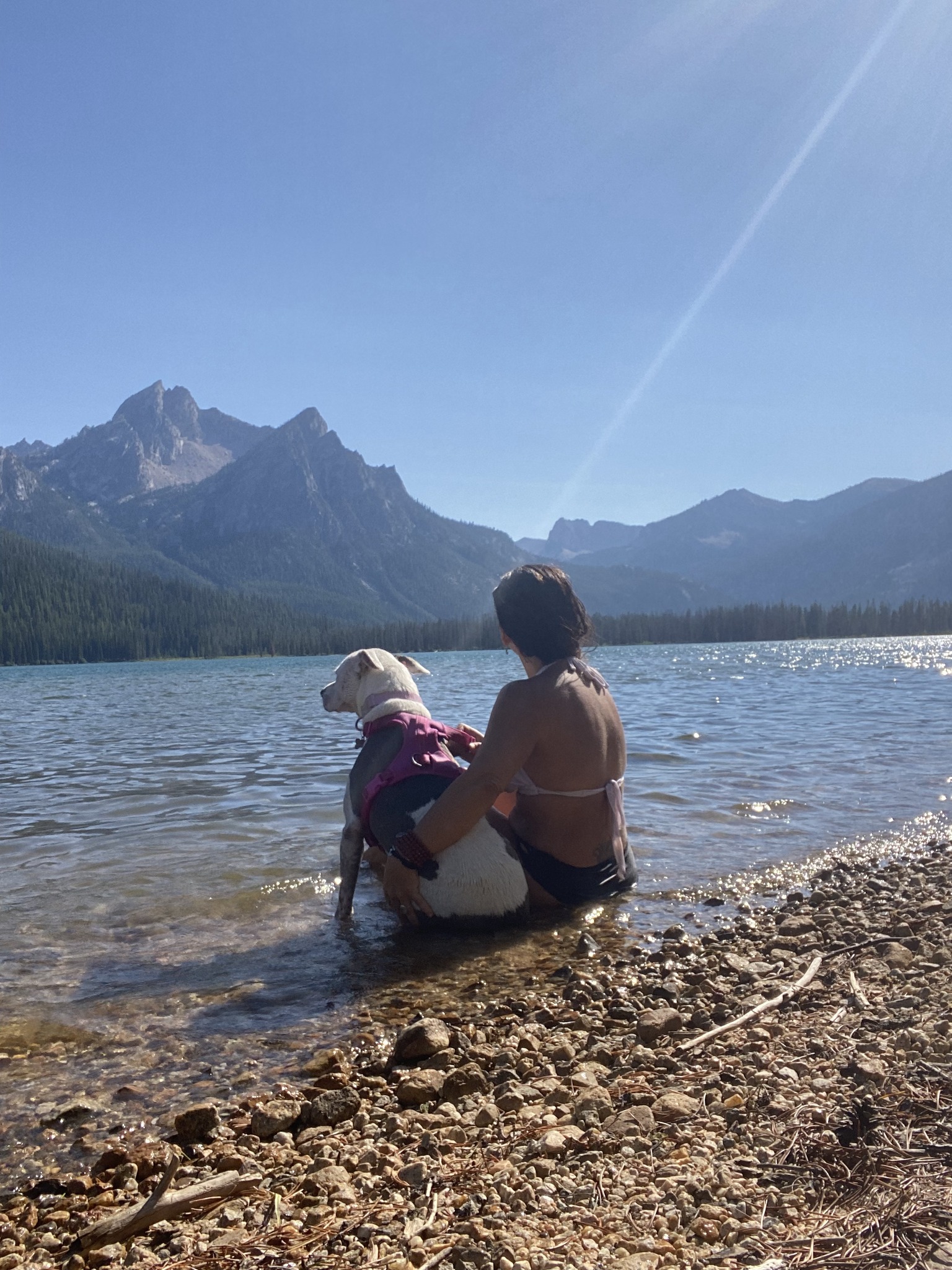
Ursula Akin created The Farsick Travel Co. to help travelers step away from rigid, multi-stop checklists and step into intentional, deeply rooted experiences. Specializing in custom travel design, solo escapes, and curated retreats, Ursula combines local insights with leave-no-trace ethics to turn wanderlust into seamless, unforgettable journeys.
Disclaimer
The information provided on this website and within our articles is for general informational and inspirational purposes only. While we make every effort to ensure accuracy regarding travel logistics, recommendations, and local details, conditions can change rapidly. Readers are encouraged to verify current travel requirements, weather, safety advisories, and local regulations independently. The Farsick Travel Co. is a travel design and curation service and is not responsible for any actions, changes, or incidents occurring during independent travel.


