

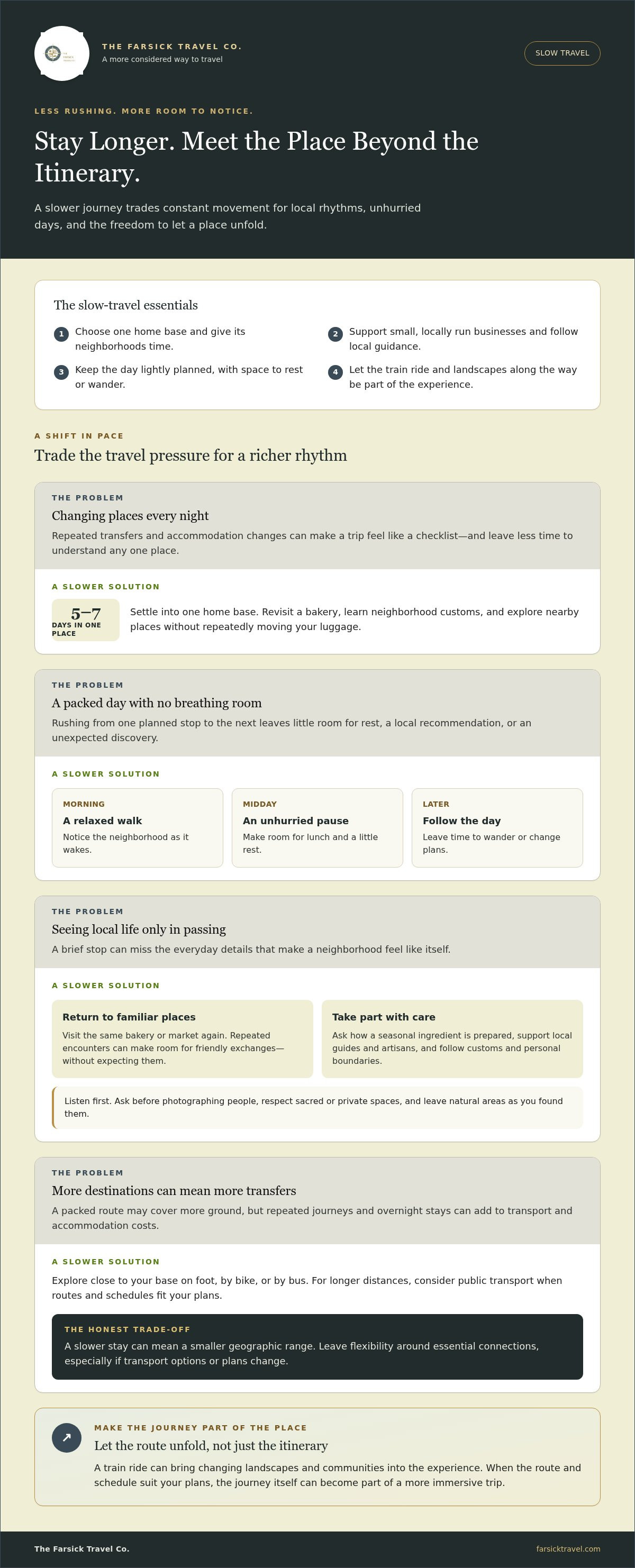
A train ride can be part of the destination, not just the way there. The benefits of slow travel include deeper local connections, less pressure, room for spontaneous discoveries, and a more immersive journey. Staying 5-7 days in one place can give those experiences time to take root.
It’s easy to assume a good trip means seeing as much as possible. But lingering over breakfast at a market, learning a neighborhood’s rhythm, or watching landscapes change from a train can leave a more lasting impression than rushing from stop to stop.
Here, you’ll learn how a slower pace can bring you closer to local life, ease the strain of constant movement, and leave room for plans to change. You’ll also find practical ways to shape an unhurried itinerary, travel considerately, and make the journey itself part of the experience.
Key Takeaways
- Choose a home base and spend time in its neighborhoods to let everyday local life become part of your trip.
- Support small, locally run businesses and explore markets, food, music, and traditions with care.
- Keep the day lightly planned, leaving space to rest, follow a local recommendation, or wander beyond the usual routes.
- Consider the train as part of the experience, and shape your route around the landscapes and communities along the way.
- Custom itinerary planning can help bring a slower pace to a solo escape, hiking and yoga retreat, or skill-focused trip.
Slow Travel & Tourism: What is it and What are the Benefits?
Slow travel means spending longer in one destination, choosing considered transport, and making local life part of the experience. Staying 5-7 days in one place can create more opportunities for cultural immersion than moving between accommodations each night.
Connections with Local Residents
Cultural immersion means joining everyday community rhythms rather than only visiting the best-known sights. Staying in one neighborhood gives you time to recognize familiar faces, learn local customs, and notice how the area changes through the day. A morning visit to the same bakery, for example, can turn a quick purchase into a friendly exchange.
Small interactions can build understanding. Ask a market vendor how a seasonal ingredient is prepared, or listen when a resident recommends a quieter street. Follow local guidance, respect personal boundaries, and avoid treating people as attractions. Repeated encounters make room for conversation without demanding it, which is one of the benefits of slow travel.
Travel Costs Compared with Fast-Paced Trips
Slow travel can reduce transport and accommodation costs by limiting repeated journeys and overnight stays. Instead of changing hotels across several towns, choose one base and explore nearby places on foot, by bike, or by bus. For example, staying in one small town lets you shop at its market and take local day trips without repeatedly moving your luggage and accommodation.
The trade-off is a smaller geographic range. A packed itinerary may cover more destinations, while a slower stay gives you more time to understand one. Limited transport options or a change in plans can also affect a longer stay, so leave flexibility around essential connections. The right balance depends on the destination and your priorities.
Stress, Well-Being, and Cultural Understanding
A slower pace can ease the strain of constant movement by reducing rushed transfers and giving daily routines more room. A relaxed morning walk, an unhurried lunch, and time to return to the same lodging can help you settle into local rhythms. Fewer daily transitions also leave more attention for conversations, meals, and your surroundings.
A steadier pace supports cultural understanding by giving you time to notice details a brief stop might miss. See when a neighborhood market is busiest or how residents use a public square in the evening. Be considerate: ask before photographing people, follow signs in natural areas, and leave places as you found them. These choices make travel more attentive and connection more thoughtful.
Experiencing local culture, cuisine, music, and daily life
Slow travel can benefit local communities when visitors spend with neighborhood businesses and choose lower-impact ways to explore. For travelers, local food, music, and everyday routines can make the experience richer.
Local Culture and Daily Life
Experience local culture by joining everyday activities with curiosity and respect, not by treating traditions as performances. Visit a neighborhood market, ask how a seasonal ingredient is used, then prepare it where you’re staying. A small music venue or community festival can also reveal local rhythms, provided you follow its customs and give people space.
These details can make a place easier to understand. The smell of bread near a morning market, a familiar song drifting from a café, or the evening bustle around a public square can show how residents use shared spaces. Take time to listen, learn a greeting, or ask before taking photographs. Meaningful exchanges grow from attention, not expectation.
For a considerate visit, support cultural experiences led by local people. A neighborhood guide can explain the meaning behind a craft or gathering, while a locally run workshop lets you learn in a way that respects the host’s knowledge. Follow their guidance, respect sacred or private spaces, and leave natural areas as you found them.
Support for Local Businesses and Communities
Slow travel can support local economies when visitors spend with small, family-run businesses and stay long enough to discover them. Buy produce at a local market, eat at an independent café, or choose a locally owned place to stay. These choices help keep more travel spending in the community and connect your experience to the people who live there.
Small decisions shape the day. Ask a market seller which ingredients are in season, then cook a simple meal instead of relying on imported or packaged options. Choose a local guide or artisan when an activity calls for specialist knowledge. Hotels can also work with local guides, tour operators, and craftspeople to create experiences rooted in place.
Transport choices matter, too. Walking and cycling can reduce travel-related environmental impact while bringing you closer to street life, small shops, and local cafés. For longer distances, consider public transport when routes and schedules suit your plans. Fewer journeys between places leave more time to make thoughtful choices, from locally run lodging to activities that respect community priorities.
These choices connect environmental care with support for local livelihoods. Slow travel isn’t about consuming every tradition or finding hidden places before others do. It’s about noticing who makes a place what it is, spending thoughtfully, and following local guidance. This approach can help sustain culture, cuisine, and community life for residents and future visitors.
Reduced stress and enhanced well-being
A slower itinerary replaces repeated transfers with steadier days and fewer competing demands. That shift can make room for rest, attention, and a more meaningful connection with a destination.
Stress Relief and Relaxation
Slow travel can support relaxation by giving each day a clear rhythm instead of a packed checklist. Take a quiet morning walk, pause for lunch, then leave the afternoon open. Fewer transitions can mean less time watching the clock and more time noticing your surroundings.
Keep the plan simple: choose one special activity, then let the rest of the day breathe. In a small town, that might mean visiting a local museum before a long café break. On a nature trip, it could be an easy trail followed by an unhurried evening. These choices help you immerse yourself without turning every hour into a task.
Studies have found that travel may have lasting health effects, including lower stress levels and a possible association with living longer. This isn’t a reason to treat travel as a health prescription. Instead, use a trip as an opportunity to step away from familiar pressures and choose activities that feel restorative, such as reading in a garden or sharing a relaxed meal.
A sustainable pace also means listening to your needs. If a busy market feels overwhelming, visit earlier, when the lanes are quieter. If a steep walk leaves you tired, choose a shorter route next time. Small adjustments can make a trip feel more personal and enjoyable.
Reduced Travel Fatigue
Travel fatigue is the weariness that can build through disrupted routines, repeated packing, and frequent movement. More than 25% of people experience some form of travel fatigue. Staying longer in one place can reduce the strain of switching accommodations and constantly planning the next transfer.
For example, unpack once, learn the route between your lodging and a nearby café, and give yourself time to settle. Matching your sleep and waking hours to the local community can also support a steadier routine. A friendly greeting from the same shopkeeper may become part of a familiar daily pattern.
Build time to recover into the itinerary rather than waiting until exhaustion arrives. After a travel day, keep the evening quiet and choose a simple meal close to where you’re staying. The next morning, consider a gentle walk before scheduling an outing. These practical pauses can help you stay present instead of rushing through each experience.
Slower movement won’t suit every trip. A short visit built around a fixed event may require tighter timing, while remote places can have limited transport options. Weigh those constraints against your energy and priorities. When flexibility allows, fewer location changes can create more rest and a more attentive travel experience.
Leaving unscheduled time in an itinerary
An itinerary with open space can make a trip feel less like a sequence of appointments and more like a lived experience. Slow travel lets you follow your curiosity, rest when needed, and notice details a tightly timed schedule can miss.
A slow travel experience can fit into a trip of just a few days. Choose one compact area, keep travel between activities simple, and leave part of each day unplanned so there’s room to pause or change course.
Build a gentle frame for each day, not a minute-by-minute script. Plan 1-2 special activities, such as a morning walk and an afternoon museum visit, then leave the remaining hours flexible. In a village, that open stretch might become a long lunch or a quiet wander through side streets.
A two-week holiday can also work well with one home base. Choose accommodation near the places you want to experience, then let the weather, local recommendations, or your energy shape each day. This can be more mindful than racing between distant stops, especially when your aim is to understand a place’s character.
Flexible plans still need a few anchors. Reserve essential transport and lodging, note opening days for a museum or market, and keep a nearby alternative in mind. If rain interrupts a planned trail walk, a local gallery or covered market can make the day feel intentional rather than lost.
Leave room for the ordinary, too. A slower morning may reveal a bakery opening its doors, while an unplanned pause in a public square can offer a glimpse of daily life. These aren’t guaranteed highlights to collect. They’re moments that can become meaningful memories because you weren’t already hurrying elsewhere.
Open time also helps you respond respectfully to a destination. If a trail is crowded, choose another route or return when it’s quieter. If a local event welcomes visitors, follow its guidance rather than treating it as a spectacle. A flexible itinerary makes considerate choices easier.
Compare that rhythm with a fast-paced 10-day guided tour through Europe, where fixed departures and daily transfers can leave little breathing room. A slower itinerary trades a long list of stops for time in fewer places. Before each day, ask what matters most, keep one priority, and let the rest remain open. That balance preserves structure without crowding out spontaneity.
That openness gives slow travelers time to relax, explore, and discover places beyond the usual tourist routes. Two weeks in one destination can leave room for curiosity and local conversations.
Rail journeys as part of slow travel
A train can make transport part of the destination, not simply a way to reach it. Instead of rushing between terminals and landmarks, watch the landscape change beyond the window. A route through farmland, river valleys, or mountain foothills gives the journey its own rhythm. The benefits of slow travel include having time to notice the journey itself.
Rail can also support lower-carbon choices. Air travel produces more carbon dioxide than train travel, so choosing rail can reduce a trip’s transport impact. Spending longer in one destination makes this choice easier: take a train there, then walk, cycle, or use local buses instead of making repeated long-distance transfers.
Build the rail journey into your itinerary from the start. Choose a destination that connects naturally with the national rail network, then plan your stay around one or two accessible towns. For example, travel by train to a regional hub, settle into nearby accommodation, and explore the surrounding area on foot or by bus.
Give the route room to breathe. Before departure, note which station you need, how long it takes to get there, and any connection that shapes your day. Keep essentials close, such as water, a light layer, snacks, and a book. A flexible plan helps you enjoy the view instead of worrying about the next step.
Rail travel can reveal transitions between places that a faster journey hides. Notice when dense streets give way to open fields, or when coastal air shifts to cooler inland weather. If a station stop allows time, explore the town respectfully, follow local signs, and return with enough time for your onward journey.
Seasonal conditions can change the feel of a rail-based trip. In warm weather, pack sun protection and water for walks after arrival. In cooler or rainy periods, bring a waterproof layer and choose indoor alternatives near your accommodation. Leave natural spaces as you found them, and stay on marked paths when exploring beyond town.
The key takeaway: choose rail when the route suits your plans, then let the landscape shape the pace. A thoughtful journey can make the in-between hours part of the experience, while fewer transfers leave more time to immerse yourself in each destination.
Ready to experience these benefits firsthand? Contact The Farsick Travel Co. to plan a rail-centered custom itinerary for your next adventure.
The Farsick Travel Co.: Custom Travel Planning
The Farsick Travel Co. can shape a custom itinerary around the pace, places, and experiences that matter to you. Turn to Custom Travel Planning when you want practical details to support a slower rhythm, from nature-based adventures to time for local discovery.
For a restorative outdoor escape, Signature Hiking & Yoga Retreats bring movement and mindful pauses together. Solo Travel Experiences offer independent travelers a thoughtfully shaped journey, while Skillcations make room to learn through travel. Each provides a different way to make a trip personal rather than packed with stops.
If you’re ready to put a more intentional itinerary into motion, contact The Farsick Travel Co.
Let Your Next Journey Begin With Intention
Before choosing where to go, decide how you want to feel while you’re there. More grounded? Curious? Rested enough to notice the small things? That intention can guide your trip, from the places you choose to the space you leave between plans. The benefits of slow travel become personal when your journey reflects what you need, rather than what you feel expected to fit in.
Start with one meaningful anchor: a landscape you want to walk through, a skill you hope to learn, or a community you’d like to understand with care. Let that choice guide the rest. A thoughtful itinerary doesn’t need to prove how far you’ve gone. It can give you room to arrive, pay attention, and return with a story that feels like your own.
Your next trip can begin with one clear intention and room to follow it. Take that first step at your own pace.
Frequently Asked Questions
When did the slow travel movement start?
Slow travel’s modern roots are commonly associated with Italy’s slow food movement in the 1980s. The idea gained traction in the mid-1980s after a Rome resident campaigned against a McDonald’s opening in Piazza di Spagna. Slow travel later carried that resistance to speed and standardization into tourism, encouraging travelers to consider how their choices shape the places they visit.
What is slow travel, and how does it differ from traditional tourism?
The difference lies less in a trip’s label than in how you use its time and attention. A conventional itinerary may prioritize landmark visits and tightly timed transfers; a slower approach can make room for learning, rest, and curiosity. For example, build a trip around a regional cooking class or craft workshop, then leave nearby hours open instead of adding another distant attraction.
What are the main benefits of slow travel for travelers?
Beyond a calmer pace, a longer stay can give you repeated chances to practice useful local phrases in real situations. You might learn a greeting at a café, recognize ingredients at a market, or understand a sign on a familiar route. Gradual learning can make daily tasks more engaging and help you approach a destination with greater confidence and curiosity.
What are the environmental benefits of slow travel?
Time to research can help you make more considered choices beyond transportation. Compare accommodations by their stated environmental practices, choose activities that avoid disturbing wildlife, and follow marked paths in natural areas. These decisions can reduce pressure on sensitive places and encourage more respectful visits. Pack reusable essentials you already own, such as a water bottle, and take litter away with you.
How can travelers plan a slow travel itinerary?
Start by marking your arrival point, departure point, and the places you’re most interested in on a map. Group nearby activities, then choose accommodation that makes those plans practical. Check seasonal daylight and typical weather for your destination before arranging outdoor outings. Reserve only experiences that need advance planning, and keep the rest of your schedule flexible for changing conditions or new interests.
Which transportation options are best for slow travel in the United States?
Walking and cycling work well for exploring locally, while buses and trains can suit longer distances when routes and schedules fit your plans.
Article by
Ursula Akin
Ursula Akin created The Farsick Travel Co. to help travelers step away from rigid, multi-stop checklists and step into intentional, deeply rooted experiences. Specializing in custom travel design, solo escapes, and curated retreats, Ursula combines local insights with leave-no-trace ethics to turn wanderlust into seamless, unforgettable journeys.
Disclaimer
The information provided on this website and within our articles is for general informational and inspirational purposes only. While we make every effort to ensure accuracy regarding travel logistics, recommendations, and local details, conditions can change rapidly. Readers are encouraged to verify current travel requirements, weather, safety advisories, and local regulations independently. The Farsick Travel Co. is a travel design and curation service and is not responsible for any actions, changes, or incidents occurring during independent travel.


