

Silence isn’t empty; it gives your attention room to settle. A silent retreat creates that space by setting aside conversation and everyday distractions, often alongside meditation, mindful meals, or quiet walks. Possible silent retreat benefits include more room for reflection, self-compassion, creativity, focus, and memory, though everyone’s experience is different.
A retreat’s daily rhythm is often simpler than the inner experience: fewer inputs, more time to notice your thoughts, feelings, and surroundings. Quiet can feel restorative, but it can also bring restlessness or difficult emotions to the surface. Understanding the format before you go helps you prepare for both.
This article explains what happens during a silent retreat and how silence may support self-reflection, creativity, focus, and memory. It also offers a grounded look at possible mental health benefits and practical ways to decide whether this slower kind of escape suits you.
Key Takeaways
- Learn how a retreat’s quiet rhythm, from meditation to mindful walks, can create room to notice your thoughts.
- Explore ways silence may help you observe stress and respond to yourself with greater patience.
- See how stepping away from constant input may make space for creative ideas and steadier attention.
- Understand what a silent retreat can and can’t offer for mental well-being, so you can consider whether it suits your needs.
- Discover how thoughtful travel planning can shape a slower escape around reflection, nature, and personal priorities.
Can silence create more room for self-reflection?
Yes, silence can reduce interruptions and make thoughts easier to observe. Research on meditation offers relevant evidence, but it doesn’t show that silence alone causes every effect.
Mental Clarity and Reflection
Mental clarity means noticing thoughts with enough distance to consider what they mean. During a quiet walk, for instance, a recurring concern may become easier to distinguish from passing distractions. A possible silent retreat benefit is having more room to reflect before reacting. Try noting the thought, the feeling it brings, and the question it raises. This can turn rumination into a more useful inquiry.
Clarity in Thought and Action
Clarity in thought and action means separating what happened from the conclusion you draw about it. If a delayed reply makes you think a friend is upset, pause and name the fact: no reply has arrived. Then consider what you know and what remains an assumption. A silent retreat may give you time to practice this pause, so everyday decisions feel less driven by immediate interpretations.
A notebook can make reflection concrete. After meditation, write down one concern and identify a small action within your control. If an unfinished task keeps returning to mind, for example, decide when to begin it instead of revisiting the worry. This brief record connects observation with a practical choice, without requiring you to solve every question during the retreat.
Emotional Calm and Clarity
Emotional calm means feeling an emotion without letting it dictate your next response. If frustration rises while sitting quietly, notice where it appears in your body and name it before acting. The pause may help you work out whether you need rest, a boundary, or a conversation. It doesn’t mean suppressing the feeling; it lets you meet the moment with more care and choice.
Research on Silence and Meditation
Mindfulness research provides context for meditation practices, not proof that silence itself produces a specific result. More than 16,000 studies involving mindfulness appeared in scientific journals between 1966 and 2021. A longitudinal study found replicable changes in brain oscillatory activity during meditation after intensive meditation training, according to the U.S. Environmental Protection Agency. The finding concerns meditation, so it shouldn’t be presented as evidence that every retreat has the same effects.
To carry reflection into daily life, choose a quiet moment after returning home and write down what captured your attention. A recurring thought, a feeling, and a next step can reveal what you want to bring into your routine. This small practice connects retreat reflection with ordinary decisions, making clarity something you can revisit rather than a feeling you have to hold onto.
How does a silent retreat work?
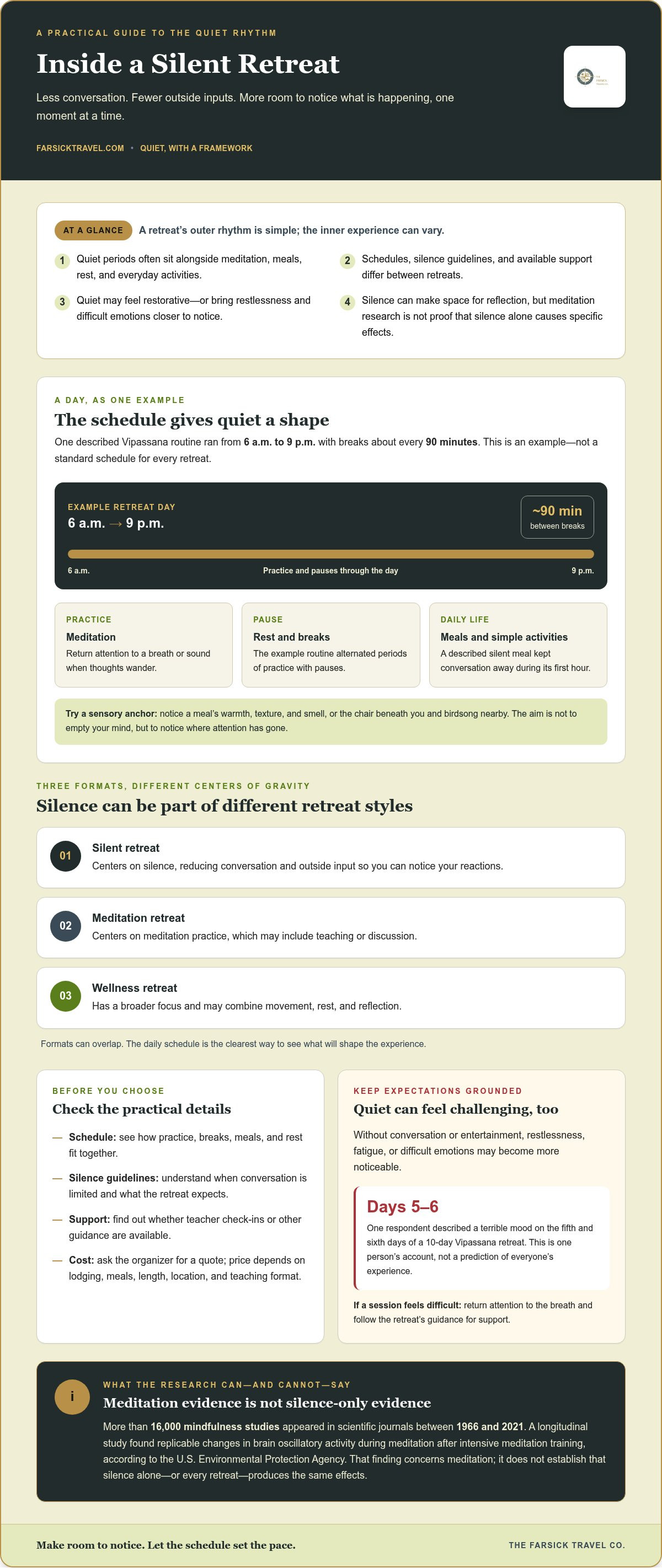
A silent retreat reduces conversation and outside input, creating more space to notice your reactions. Its rhythm usually combines quiet periods with meditation, meals, rest, and simple daily activities.
A silent retreat centers on silence; a meditation retreat centers on meditation practice, which may include teaching or discussion. A wellness retreat has a broader focus and may combine movement, rest, and reflection. These formats can overlap, so the daily schedule shows what will shape the experience.
There’s no single cost for a silent retreat in the United States. The price depends on factors such as lodging, meals, length, location, and teaching format. Organizers provide the specific cost when you request a quote.
Possible challenges include restlessness, fatigue, and difficult emotions becoming more noticeable without conversation or entertainment. One respondent described a terrible mood on the 5th and 6th days of a 10-day Vipassana retreat. If a session feels difficult, return attention to the breath and follow the retreat’s guidance for support.
Presence and Sensory Awareness
Presence and sensory awareness mean noticing immediate sensations, such as a chair beneath you or birdsong outside, without rushing to interpret them. That attention gives the mind a concrete place to rest when worries pull it elsewhere. During a meal, notice the food’s warmth, texture, and smell before taking another bite. A simple sensory anchor can make quiet feel more manageable.
Present-Moment Awareness
Present-moment awareness means returning attention to what’s happening now instead of following every memory or prediction. This matters because stress often gathers around imagined conversations and unfinished tasks. When your thoughts drift during meditation, notice and return to one breath or sound. The aim isn’t to empty your mind, but to recognize where your attention has gone.
The schedule provides a framework for this practice. One described Vipassana routine ran from 6 a.m. through 9 p.m., with breaks about every 90 minutes. That example shows how retreat days can alternate sustained practice with pauses, rather than filling every moment with activity. Another retreat’s silent meal involved not talking for the first hour, allowing attention to settle on eating.
Silence also removes some habitual cues to respond. Without your phone or casual conversation, you may notice the impulse to reach for a distraction, then choose whether to follow it. Brief teacher check-ins can provide structure without replacing personal observation. The schedule varies, so reviewing its rhythm, silence guidelines, and available support helps you arrive prepared.
Self-compassion and reduced self-judgment
A quiet retreat can make the inner critic easier to hear. When a familiar thought comes up, such as “I should have handled that better,” pause before accepting it as the whole story. Notice the words, name the feeling beneath them, and consider what you would say to a friend in the same situation. This shift leaves room for accountability without turning a mistake into a verdict on your worth.
Self-compassion doesn’t mean pretending every choice was harmless. It means acknowledging what happened without adding unnecessary punishment. If you regret an impatient reply, recognize its impact, identify a repair, and plan a calmer response next time. During silent practice, your mind may return to the same scene. Each time, you have a chance to meet the thought with curiosity rather than repeat the original criticism.
Using blessing and compassion practices
A blessing practice offers kind wishes to yourself or others through quiet, deliberate phrases. Sit comfortably, bring a specific person to mind, and repeat words such as, “May I meet this moment with patience.” If that feels difficult, begin with someone you care about, then include yourself. The point isn’t to force a feeling; it’s to give your attention a compassionate phrase to return to during meditation.
Compassion practices can also include someone with whom you share a difficult history. Keep the exercise grounded: name the situation, acknowledge your reaction, and offer a wish for steadiness without denying harm. For instance, “May we find clarity” doesn’t require reconciliation or agreement. It replaces a rehearsed argument with an intention that leaves room for boundaries and thoughtful action.
Kindness without self-judgment
Kindness becomes practical when it changes how you respond to ordinary needs. If sitting still feels uncomfortable, adjust your posture or take a mindful walk instead of criticizing yourself for struggling. If fatigue interrupts a session, notice it and rest when appropriate. These aren’t failures of discipline; they’re ways of listening carefully and treating your limits with respect.
To continue the practice after a retreat, choose a believable phrase, such as, “I can learn from this without attacking myself.” Use it when self-blame appears during a familiar task, like reviewing a work mistake or remembering a tense conversation. Then ask what repair or next step fits. Compassion doesn’t erase responsibility; it supports clearer action with less shame.
Silence can also make shared humanity easier to recognize. Other retreatants may sit quietly with their own frustration, grief, or uncertainty, even when no one speaks. Let that awareness soften assumptions about yourself and others. To close the day, recall one difficult moment, one kind response you offered, and one intention to bring into the next day.
Creativity, focus, and memory
Quiet can create better conditions for creative work: fewer interruptions leave attention available for ideas. During a retreat, a thought that might disappear beneath notifications or conversation can stay in view long enough to explore. Take a small notebook on a quiet walk. Record an image, question, or phrase that catches your attention, then return to it later without demanding an immediate solution.
Creativity often begins with noticing connections, not producing a finished piece. For example, a walk past a creek might bring back a childhood memory, which suggests a scene for a story. One retreat writer hadn’t written a poem for 10 years before writing one during a retreat. That experience illustrates possibility, not a promised outcome. Give an idea room to arrive, and let revision wait.
Focus means placing attention on a chosen task and noticing when it wanders. A practical retreat exercise is to read one page, mark each time your mind drifts, and gently return to the next line. The marks aren’t a score; they show where your attention went. Later, try the same approach with a work task: choose one clear action, silence alerts, and return whenever you get distracted.
Memory also depends on deliberate attention in everyday moments. To remember a conversation, for instance, notice the speaker’s main point, the setting, and your response before moving on. Recalling those details later gives your mind something specific to retrieve. Research has linked meditation to changes in gray matter in brain regions involved in perspective-taking, emotional regulation, and memory. This connection is relevant, but it doesn’t establish that every retreat improves recall.
Use quiet time to make reflection concrete. After meditation, write down one new idea, one detail you want to remember, and one task that needs your focus. Keep entries brief enough to revisit. If an idea feels unfinished, add a question rather than forcing an answer. This turns an unhurried stretch into a record you can return to after the retreat.
Protect the conditions that help your attention settle. Leave your phone outside a writing or reading period, choose a simple activity, and notice when your mind shifts. A slow walk, a few handwritten lines, or reading without switching tasks can make the practice tangible. The aim isn’t to produce more; it’s to give each thought enough attention to see where it leads.
What are the mental health benefits of a silent retreat?
A silent retreat can create structured time for meditation, rest, and reflection, away from ordinary demands. A meta-analysis of 21 studies on multi-day meditation retreats found significant positive effects on anxiety, stress, and depression. That finding offers a reason to explore the format, not a promise that every participant will feel the same change.
One possible benefit is recognizing stress patterns before they dictate your day. For example, you might notice work-related thoughts returning during each meditation session. Writing down the recurring concern and one practical next step can help distinguish reflection from rumination. The value lies in seeing the pattern clearly, then choosing how to respond when everyday routines resume.
Retreats can offer a pause from constant social and digital demands. Without a phone, messages, or conversation, some people find more room to rest and attend to their needs. Yet silence can also bring difficult feelings into sharper focus. If unease rises, take a break, use the retreat’s support structure, and return to a grounding activity such as a gentle walk.
One author’s three-day silence retreat helped them trust its benefits. This personal account shows how a shorter retreat can make the experience tangible: a set rhythm, time to practice, and space to notice what changes. It doesn’t establish that three days suits everyone. The schedule, setting, and support all shape the experience, so consider these details alongside your reasons for going.
Keep expectations grounded. A retreat is a structured pause, not a diagnosis or treatment plan. Before attending, consider what helps you feel supported, how you’ll respond if emotions intensify, and what quiet time is like in your daily life. Afterward, make room to rest and reflect before returning to a full schedule. You might note one practice to continue, such as a quiet morning walk.
For a retreat that pairs quiet reflection with gentle movement in nature, explore a thoughtfully planned escape.
Plan a restorative retreat
The Farsick Travel Co.: Custom Travel Planning
The Farsick Travel Co. can shape your intention for quiet, reflection, or time outdoors into a thoughtfully paced journey. With Custom Travel Planning, build in practical choices: walk early for a quieter trail, check seasonal conditions before setting out, and pack layers, water, and a small bag to carry out your waste. Stay on marked paths and follow local guidance to care for the places you visit.
Carry the quiet into your next journey
Let a retreat’s insights become a small, repeatable part of everyday life. Choose one quiet practice that fits your days, perhaps a phone-free walk, a few minutes of meditation, or a brief pause before responding to stress. Consistency matters more than an elaborate routine. The silent retreat benefits you value most can guide travel shaped around rest, reflection, and a more deliberate pace.
If you’d like that intention to guide a larger escape, The Farsick Travel Co. offers Custom Travel Planning, Signature Hiking & Yoga Retreats, and Solo Travel Experiences. A thoughtfully paced itinerary can make room for quiet mornings, time outdoors, and meaningful connection without turning every day into a checklist. The Farsick Travel Co. can help shape a journey around what you hope to make space for.
Start with the pace that feels right, and let the journey unfold one considered choice at a time.
Frequently Asked Questions
What should you know before attending?
Before attending, find out what the retreat’s silence includes and how its daily schedule is structured. Consider whether silence applies during meals, free time, and group activities, and how participants can communicate practical needs. Review the meditation schedule, rest periods, and teacher support. Knowing these details helps you choose a setting that suits your comfort level and prepare for fewer conversations and everyday distractions.
Who might be drawn to a quieter retreat?
A quieter retreat may appeal if you want uninterrupted time to reflect, step back from busy routines, or spend time with fewer social demands. Someone facing a personal transition, for example, might value space to consider priorities without filling every pause with conversation. Others may simply enjoy contemplative practice. Consider what you hope to make room for and whether quiet feels restorative or stressful right now.
Can a silent retreat reduce stress, anxiety, or depression?
A meta-analysis of 21 studies on multi-day meditation retreats found significant positive effects on anxiety, stress, and depression. This supports meditation retreats as a possible wellbeing practice, but the finding describes study results rather than an individual outcome. If you’re seeking help for depression or anxiety, use a retreat as a complement to appropriate care, not as a substitute for the support already in your life.
How long should a beginner attend a silent retreat to experience benefits?
Retreats can last two to 10 days, but duration alone doesn’t determine what you take away. A beginner can weigh their familiarity with meditation, tolerance for extended quiet, and responsibilities waiting at home. A shorter format may feel more approachable if sustained silence is new. Look for a schedule with clear guidance and opportunities to rest, then choose a length that leaves room to return gradually.
What happens during a typical silent retreat schedule?
Schedules differ, but meditation, meals, rest, and quiet activities commonly shape the day. One described Vipassana schedule ran from 6 a.m. through 9 p.m., with breaks about every 90 minutes. Treat that as an example, not a universal timetable. Before choosing a retreat, consider how its practice periods, meals, movement, and downtime fit your energy and experience with structured meditation.
What are the rules and expectations at a silent retreat?
Expect shared guidelines around conversation and distractions, with details set by each retreat. Some formats restrict phone use and ask participants to avoid screens or entertainment; others include brief teacher check-ins. Find out how silence works during meals and whether practical conversations are allowed. Knowing the rules helps you arrive prepared, protect the quiet for everyone, and avoid surprises.
Who should avoid a silent retreat or consult a doctor first?
If you’re in an acute mental health crisis, experiencing severe distress, or concerned that extended silence could make your situation harder, speak with a qualified health professional before attending. Consider whether you can access the support you need throughout the retreat and whether a less intensive setting would feel more suitable. A retreat’s quiet and reduced contact may not match everyone’s circumstances or current care needs.
How can beginners prepare for their first silent retreat?
Prepare by easing into quieter periods before you leave. Try a meal without screens, a short meditation, or a walk without audio, then notice what feels challenging. Arrange work and household responsibilities so they don’t demand your attention during the retreat. Pack comfortable layers and a notebook for practical reflections, and review the schedule and silence guidelines beforehand. A simple plan can help you feel more settled when you arrive.

Article by
Ursula Akin
Ursula Akin created The Farsick Travel Co. to help travelers step away from rigid, multi-stop checklists and step into intentional, deeply rooted experiences. Specializing in custom travel design, solo escapes, and curated retreats, Ursula combines local insights with leave-no-trace ethics to turn wanderlust into seamless, unforgettable journeys.
Disclaimer
The information provided on this website and within our articles is for general informational and inspirational purposes only. While we make every effort to ensure accuracy regarding travel logistics, recommendations, and local details, conditions can change rapidly. Readers are encouraged to verify current travel requirements, weather, safety advisories, and local regulations independently. The Farsick Travel Co. is a travel design and curation service and is not responsible for any actions, changes, or incidents occurring during independent travel.


