

What if the most restorative part of a sabbatical isn’t getting away from work, but reconnecting with the people and practices that make you want to create? A creative sabbatical can help when you need space to reset, explore a fresh interest, or rethink what you want your work to become. The best creative sabbatical ideas make room for both solitude and connection.
It’s natural to hope time away will bring clarity. But an open calendar can feel less like freedom and more like drift unless you give your days a gentle rhythm and a few points of connection.
Here, you’ll find practical ways to prepare for a sabbatical, meet other creatives without turning every conversation into networking, and shape retreats or longer trips around what you want to explore. You’ll also consider the benefits of stepping away, from restoring creative energy to learning a skill, and how to choose an experience that feels restorative rather than overplanned. Think purposeful mornings, unhurried afternoons, and room for unexpected inspiration.
Key Takeaways
- Shape your sabbatical around what you need from the pause, with a gentle daily rhythm and space for self-care.
- Build creative connection into your time away through thoughtful conversations and shared interests, not just networking.
- Choose a retreat or extended trip that matches your energy, curiosity, and preferred pace of travel.
- Use time away to explore new skills, clarify your creative direction, or focus on one interest at a time.
- Consider solo projects and small personal challenges that make your sabbatical feel meaningful and distinctly your own.
1. What should I do to plan for my sabbatical?
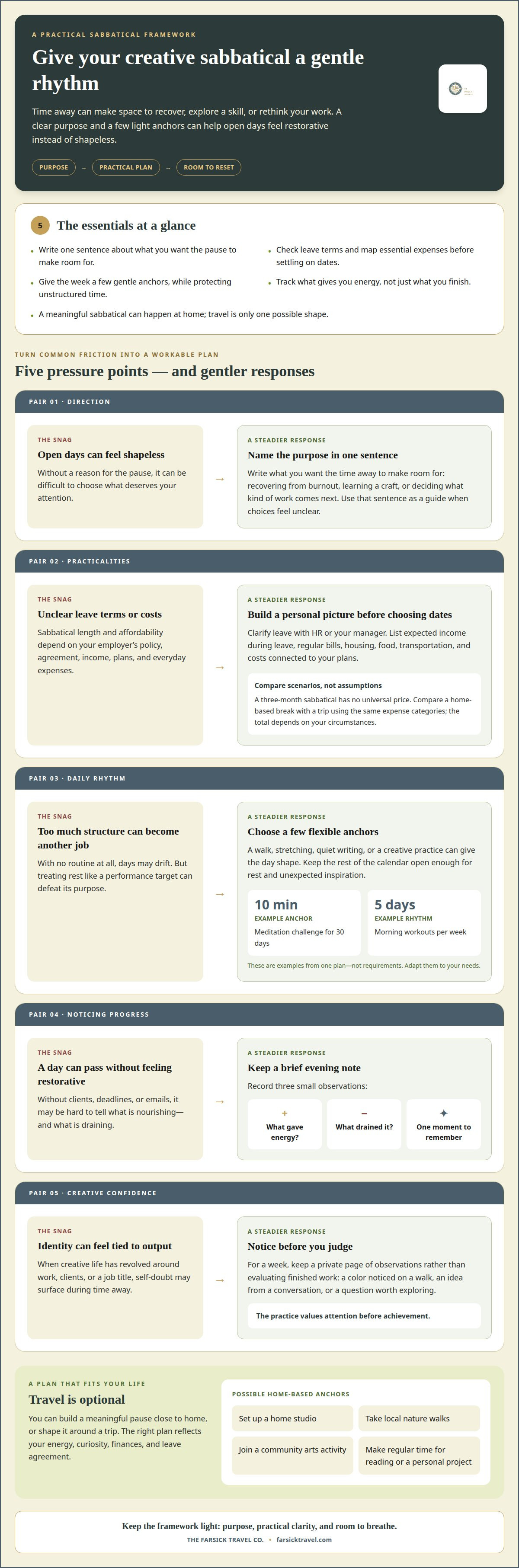
Start with a clear purpose, then build a practical framework around it. Write down what you want the pause to make room for: recovering from burnout, learning a craft, or deciding what kind of work comes next. A single sentence can guide your choices when open days begin to feel shapeless.
Before setting dates, find out how much leave your employer allows and how long you can afford to take. Sabbatical length depends on your employer’s policy and your specific agreement with HR or a manager. Sketch the basics: expected income during leave, regular bills, housing, food, transportation, and costs tied to your plans.
There’s no universal price for a three-month sabbatical. Costs depend on where you stay, whether you travel, your everyday expenses, and your income or benefits during leave. Compare a home-based break with a trip by listing those categories. The total will reflect your circumstances, not a standard rate.
Give your days a light structure without turning rest into another performance target. For example, one sabbatical plan set a 10-minute meditation challenge for 30 days and scheduled morning workouts five days per week. Treat those as adaptable examples, not requirements. A walk, stretching, or quiet writing can provide a gentler anchor.
Protect unstructured time, but create a few markers to help you notice progress. Without clients, deadlines, or emails, it can be hard to tell whether a day felt restorative or simply slipped by. Try a brief evening note: record what gave you energy, what drained it, and one moment you want to remember.
Self-doubt may surface when your creative identity has been tied to output, clients, or a job title. For a week, keep a private page of observations instead of judging finished work: a color noticed on a walk, an idea from a conversation, or a question worth exploring. This practice values attention before achievement.
You can have a meaningful sabbatical without traveling. Set up a home studio, take local nature walks, join a community arts activity, or reserve regular time for reading and personal projects. To learn a creative skill, choose one focus, such as watercolor or songwriting, then pair short practice sessions with a specific project.
The risks include financial strain, uncertain workplace arrangements, isolation, and feeling adrift without routine. Prepare by clarifying leave terms with your manager or HR, mapping essential expenses, and choosing a manageable weekly rhythm. Include rest, movement, and one point of connection. Adjust the plan if it starts feeling like another job.
2. Connecting with other creatives
A creative sabbatical can feel solitary, especially when your usual colleagues and deadlines disappear. Make room for connection without turning every conversation into networking. One sabbatical began with a simple aim: connect with at least two creatives each month. That’s a useful model, not a quota. Choose a pace that leaves room for quiet, too.
Start with people whose work genuinely interests you. Write down a few names, such as a former collaborator, a local ceramicist, or a writer whose reading you enjoyed. Send a brief, personal invitation that mentions what caught your attention and suggests a low-pressure conversation. A walk, studio visit, or coffee can feel more open than a formal meeting.
Make the invitation specific. Instead of “Let’s connect sometime,” try, “Would you like to talk about how you develop a first draft?” A clear topic gives both people something to consider beforehand. Keep the conversation curious: ask what they’re exploring, share what you’re learning, and listen for an idea you can bring into your own practice.
Shared activities can make conversation easier. Attend a community writing circle, bring a sketchbook to a figure-drawing session, or join a neighborhood craft workshop. Choose gatherings that welcome participation rather than demand polished work. If a group feels too large, arrive early and speak with one person before the room fills.
Travel can also create natural opportunities to connect. In a small town, spend an unhurried afternoon at a community art event or local market, and let conversation arise respectfully. Ask before photographing people or their work, follow the host’s guidance, and avoid treating local culture as material to collect. Thoughtful attention matters more than a packed itinerary.
Keep a small record after each meeting. Note one useful question, one resource someone mentioned, and one follow-up you genuinely want to make. Send a thank-you that refers to a specific moment, such as a book recommendation or an unexpected shared interest. This makes your appreciation personal without pressuring a new contact to become a lasting collaborator.
Some conversations will lead to a skill exchange; others may simply widen your perspective. You might trade feedback on a short story for help choosing colors, or invite another photographer to compare notes on light. Agree on what each person hopes to get from the exchange before beginning. Clear expectations help keep generosity balanced and the experience enjoyable.
If you want connection to grow through a shared landscape, shape a nature-led creative escape around a slow walk, a local workshop, and unhurried time to talk. Leave natural spaces as you found them, and let the day’s rhythm make room for both companionship and solitude.
3. Retreats and extended trips
A retreat gives a sabbatical a temporary shape: a place to practice, a shared focus, and room away from familiar demands. Choose the format by asking what you want the days to hold. A Spanish, surfing, or yoga program lasting 1 or 2 weeks can offer a defined period for learning and practice without committing to a longer stay.
Before choosing an experience, decide whether you want instruction, independent time, or both. For a yoga retreat, look for a daily rhythm that leaves space to rest and explore nearby surroundings. For a surfing program, consider whether you want daily lessons or time to practice at your own pace. The right challenge should invite curiosity, not crowd out recovery.
Longer work-anywhere programs come in different forms. Some offer a 1-week retreat, a month-long trip, journeys lasting 4 months, or journeys lasting 12 months. These options suit different sabbatical goals. A short retreat can introduce a new routine; a longer stay can support a sustained project or a slower adjustment to unfamiliar surroundings.
For a lower-cost sabbatical in the United States, keep the retreat close to home and reduce the need for lodging. Try a series of day trips, a home-based writing retreat, or a local class paired with quiet afternoons outdoors. A nearby trail or public cultural space can offer a change of scene without building the whole break around a distant destination.
Plan practical details around the season and daily conditions. For a summer trail walk, start early to enjoy cooler air and softer light. In colder months, choose a shorter route and dress in layers. Pack water, weather-appropriate clothing, a notebook, and only the gear your planned activities require. Check access and conditions before setting out.
Slow travel can make an extended trip feel less like a checklist. Choose one home base, learn the local walking routes, and leave open time between planned activities. A morning walk followed by an unhurried afternoon at a neighborhood café creates a different rhythm from crossing several destinations in quick succession. Respect local customs and leave natural places as you found them.
A change of setting can be mentally demanding, even when the trip is welcome. Give the first days room for practical adjustments, such as finding groceries, understanding local transit, and settling into your workspace. If you’re working remotely, set a clear work window before planning excursions. That boundary can protect both creative focus and time away.
Build a small creative practice into the itinerary rather than expecting the destination to supply inspiration. Carry a pocket notebook, photograph patterns in morning light, or write a few lines after a class. Retreats and longer journeys work best when their pace supports the intention behind your sabbatical, with enough structure to begin and enough freedom to follow an unexpected idea.
4. Benefits of time away from work
A career break can create distance from work patterns that have become draining. If you’re experiencing burnout, use the pause to notice what supports your well-being before planning a return. For example, track which parts of a typical workday leave you depleted, then identify the conditions that help you recover. That information can shape more thoughtful choices about your next role.
Time away can also make learning possible without competing deadlines. A designer might take a drawing class, practice a new digital tool, or study a different creative discipline. The point isn’t to collect skills for their own sake. Choose learning that opens a door you’re curious about, including the possibility of moving into another industry.
A sabbatical can help clarify what you want your work to become. Consider three questions in a journal: What do I want to create? Who do I want to work with? What goals feel meaningful now? A writer might discover a preference for collaborative projects over solo assignments, or a photographer might want more time for documentary work.
For full-time employees considering freelancing, a break can offer space to explore the transition. Use a sample project to test your workflow, from defining a scope to setting a revision process. You can also reflect on the kinds of clients and assignments that suit you. These exercises won’t replace the practical demands of self-employment, but they can clarify your priorities.
When you’re juggling several interests, time away can help you give one of them sustained attention. Pick a single project, such as drafting a short story or learning pottery, and set a modest milestone. Keep other interests nearby without requiring yourself to pursue them all. A narrower focus can show whether that subject holds your attention over time.
Notice how your energy and curiosity change as the break unfolds. Feeling physically and mentally ready, gaining new skills, or feeling a renewed drive to create can signal readiness to rejoin the workforce. So can feeling understimulated or missing work’s structure and challenges. These signs are personal clues, not a test to pass.
Make the benefits visible with a simple weekly review. Write down one discovery, one skill practiced, and one question about your next step. For example, you might note that morning writing feels natural, client meetings drain you, and teaching appeals. Compare notes over time, then use recurring themes to guide decisions about your career, creative practice, and return to work.
5. What are creative sabbatical ideas for individuals?
Choose a personal project that feels inviting, not like another deadline. If you’ve wanted to learn watercolor, set up a small workspace and paint familiar objects, such as a mug or houseplant. If writing calls to you, keep a notebook nearby and collect images, overheard phrases, and questions. Let the practice begin with attention, not a polished result.
Return to an interest you’ve postponed. One person had wanted to take golf lessons for several years before doing so during a sabbatical. That kind of delayed curiosity can be a strong starting point. Try a beginner lesson, borrow or rent equipment where possible, and notice whether the activity brings enjoyment beyond the idea of being good at it.
Make a self-directed skill project concrete. Choose one craft, find a beginner resource, and decide what you’d like to make or practice. For example, learn simple bookbinding and finish a notebook for field sketches. A visible outcome can help you stay engaged, while a forgiving pace keeps the project from becoming a substitute job.
A solo creative day can also become a small retreat close to home. Spend the morning walking a quiet local trail, observing textures and sounds, then use the afternoon to sketch or write. Carry water, weather-ready layers, and a notebook. Stay on marked paths, respect wildlife, and leave the place as you found it.
For a change of scene, choose one town or landscape rather than racing through several stops. Visit a neighborhood market in the morning, ask before photographing people or handmade work, and leave the afternoon free for a personal project. Traveling slowly can make room for genuine local interactions while keeping the day centered on your own curiosity.
You could also create a personal study around one subject. Photograph doorways, write short profiles of familiar places, or learn to identify local birds through careful observation. Keep a record of what you notice, and avoid disturbing wildlife or entering private spaces. At the end of each week, choose one entry to develop into a finished piece.
Give your chosen idea a simple beginning and ending. Gather the materials before starting, set aside a regular time, and decide what “enough” looks like. For a ceramics project, that might mean attending lessons and shaping a small set of useful bowls. For a writing practice, it could mean completing a short piece rather than forcing a full manuscript.
A sabbatical doesn’t need a grand personal transformation to matter. A new skill, a return to golf, or a quiet series of field sketches can offer a meaningful shift in perspective. Choose the idea that fits your energy, leave room to change course, and let the experience show you what deserves more attention.
The Farsick Travel Co.
The Farsick Travel Co. can help turn your sabbatical intentions into a considered journey, balancing exploration, learning, and room to pause. Its Custom Travel Planning can shape a personal itinerary, while Solo Travel Experiences, Skillcations, Signature Hiking & Yoga Retreats, bespoke honeymoons, and intentional group or bachelorette trips offer different ways to weave connection and creative renewal into time away.
Consider this support when you know what you want from your break but need help bringing the details together, or when choosing a destination and pace feels overwhelming. A thoughtfully shaped itinerary can make space for a morning walk, a hands-on class, and an unhurried afternoon without filling every hour.
Let your next chapter take shape
Your sabbatical doesn’t need to produce a finished portfolio, a new career plan, or a perfect answer. It can begin with a quieter intention: noticing what draws your attention when urgency falls away. Let creative sabbatical ideas be a starting point, then give yourself permission to adapt as your interests shift. The next step might be choosing a place to explore, deciding how you want your days to feel, or making room for a skill you’ve long wanted to try.
If you’d like help shaping a journey around that intention, The Farsick Travel Co. can bring the details into focus and create an itinerary with space to explore at your own pace.
Take the pause one thoughtful step at a time. Your next idea may arrive when you finally have room to hear it.
Frequently Asked Questions
Is taking a sabbatical a good idea?
A sabbatical can be a good idea if the time away supports a clear personal or creative need and you can manage the practical transition. For example, a designer who feels stuck might use a break to explore a different medium before deciding what work to pursue next. Consider your financial situation, workplace arrangements, and support network alongside your hopes. A sabbatical is a choice to plan, not a guaranteed solution.
How to take a year off work?
Begin by identifying the kind of leave your employer permits, then discuss timing and return expectations with your manager or HR. Build a budget around regular obligations, savings, and any income you expect during the break. Decide what you want the year to make possible, such as a personal project or time with family. Before leaving, document ongoing responsibilities and agree on how your role will be handled.
So why does one need a break?
A break can create space to notice whether your current pace, workload, or creative direction still fits. Someone who has spent years producing client work, for instance, may want time to make something without an external brief. Time away can also support attention to health during burnout and make room to explore new skills. The value lies in what the pause lets you reconsider, not in staying busy every day.
What should I do to plan for my sabbatical?
Set a purpose, confirm your leave arrangements, and make a realistic plan for expenses before choosing activities. Then decide what needs attention at home, such as pet care, bills, or shared family responsibilities. For example, arrange recurring payments before departure and leave a trusted person clear instructions for urgent household matters. Keep your sabbatical intentions flexible enough to change as you learn what restores your energy.
How can I plan and budget for a creative sabbatical?
Separate essential costs from optional plans, then estimate each category based on your circumstances. Include housing, food, health-related expenses, transportation, project materials, and ongoing obligations. Compare a home-based break with a travel-based plan, since lodging and transportation can substantially change the budget. Set aside a reserve for unexpected needs, and shape activities around available funds rather than relying on income or outcomes you can’t count on.
What are popular artist residencies and creative retreats in the US?
Examples of established U.S. artist residencies include MacDowell, Yaddo, and Ucross. Their programs and eligibility differ, so consider the medium, setting, work expectations, and application process that suit your practice. Creative retreats can also focus on writing, visual art, craft, or contemplative time without a formal residency structure. Before applying, prepare a concise project description and samples that represent the work you want to develop.
Article by
Ursula Akin
Ursula Akin created The Farsick Travel Co. to help travelers step away from rigid, multi-stop checklists and step into intentional, deeply rooted experiences. Specializing in custom travel design, solo escapes, and curated retreats, Ursula combines local insights with leave-no-trace ethics to turn wanderlust into seamless, unforgettable journeys.
Disclaimer
The information provided on this website and within our articles is for general informational and inspirational purposes only. While we make every effort to ensure accuracy regarding travel logistics, recommendations, and local details, conditions can change rapidly. Readers are encouraged to verify current travel requirements, weather, safety advisories, and local regulations independently. The Farsick Travel Co. is a travel design and curation service and is not responsible for any actions, changes, or incidents occurring during independent travel.


