

A restorative digital detox doesn’t have to mean sitting in silence with your phone locked away. The most useful digital detox retreat ideas pair clear boundaries around screens with experiences that bring your attention back to the present: a quiet trail walk, slow morning yoga, or an unhurried hour of journaling. That rhythm can make room for rest, focus, and more attentive connection.
It’s natural to wonder how time offline will affect family, friends, or the routines you rely on. A little preparation can make it easier to step away, whether you’re taking a gentle break from social media or choosing a retreat with more time away from devices.
Explore the potential benefits of a digital detox, practical ways to let people know you’ll be offline, and restorative activities to shape your time away. You’ll also find guidance for comparing retreat listings across the United States, so you can choose a setting and pace that suit the kind of reset you want.
Key Takeaways
- Choose a clear offline boundary, from silencing notifications to taking a complete break, that fits the kind of reset you want.
- Build in time outdoors and notice how a slower, screen-free rhythm can make space for creative thought.
- Tell close contacts how long you’ll be offline and when you expect to reconnect to make the transition easier.
- Shape each day around restorative alternatives such as yoga, mindful walks, breathwork, and journaling.
- Explore U.S. retreat listings by considering the setting, pace, activities, and length of stay that suit your needs.
What Are the Benefits of a Digital Detox?
A digital detox creates a deliberate pause from devices, leaving more attention for nature, activities, and the present moment. To make that pause restorative, choose a setting and daily rhythm that suit your needs.
- Choose a natural setting where unplugging feels practical. A woodland trail, lakeshore, or desert campsite can replace screen-led downtime with birdsong, moving water, or changing light. Look for comfortable walking options and room to rest, rather than packing each day with destinations. Follow Leave No Trace principles: stay on established paths, carry out what you bring, and observe wildlife from a respectful distance.
- Spend four days in nature if creative problem-solving is your focus. A University of Utah study reported a 47-50% improvement in creative problem-solving after four days of nature immersion combined with disconnection from technology. A replicated study of a six-day wilderness canoeing trip reported a 50% improvement in creative thinking. These findings offer a reason to make room for outdoor time, not a guaranteed result for every retreat guest.
- Build mindfulness into ordinary outdoor activities instead of filling every hour. On a morning walk, notice the path’s texture, the temperature beneath the trees, and the sound of the wind. Pause at a safe resting spot to breathe slowly, then jot down a few observations. These digital detox retreat ideas keep your attention on the present without turning a nature retreat into a demanding itinerary.
- Compare each retreat’s central practice before choosing a wellness or meditation stay. A digital detox retreat makes device boundaries part of the experience, while a wellness retreat may focus more broadly on restorative activities. A meditation retreat centers its schedule on meditation, but may not include screen limits. Read the daily schedule and choose the structure that best matches your intention.
- Try a simple alternative by planning a screen-free day at a nearby park or public trail. Bring water, lunch, a notebook, and weather-appropriate layers, then leave nonessential devices at home. For a more social option, invite a friend for a walk and an unhurried picnic. Choose a familiar route and follow posted guidance, so logistics don’t take over the day.
- Pack for comfort and practical offline needs: walking shoes, layered clothing, a reusable water bottle, a notebook, and a pen. Check the forecast and adjust your layers to the setting. For a DIY retreat at home, choose a device-free window, silence notifications, and plan simple activities such as a garden walk, stretching, and journaling. Tell close contacts when you’ll return, then leave your schedule spacious.
Potential benefits for stress, sleep, focus, and relationships
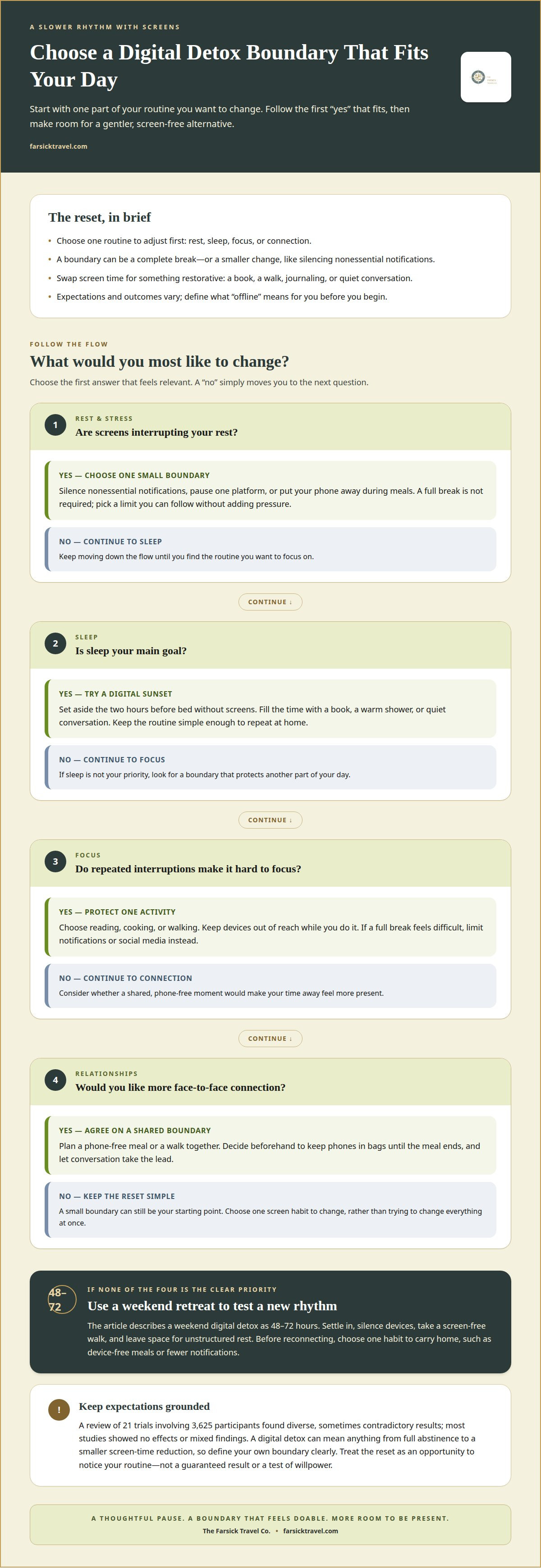
To make time away useful, choose one area of your routine to change first. A break from devices may support rest and attention, but outcomes vary: a review of 21 trials involving 3,625 participants found diverse, sometimes contradictory results, with most studies showing no effects or mixed findings.
- Set a boundary that targets stress. Notice when screens interrupt your rest, such as checking work messages during dinner or opening social media before bed. Then choose a practical limit: silence nonessential notifications, pause one platform, or put your phone away during meals. A digital detox can mean a complete break or a partial one, so choose a boundary you can follow without adding pressure.
- Give your evenings a screen-free rhythm. Try a digital sunset with no screens for two hours before bed, then fill that time with a book, a warm shower, or quiet conversation. If sleep is your main goal, a screen-free evening routine may help support better rest. Keep the routine simple, so it feels repeatable after the retreat rather than like a temporary escape.
- Protect focus from repeated interruptions. Choose one daily activity, such as reading, cooking, or walking, and keep devices out of reach while doing it. Even a day or two without screens may help clear mental static and support concentration. Treat that as an opportunity to notice your attention, not as a test of willpower. If a complete break feels difficult, limit notifications or social media instead.
- Make room for face-to-face connection. Plan a phone-free meal with a friend, or take a walk where conversation matters more than photos. Agree beforehand on a shared boundary, such as keeping phones in bags until the meal ends. Making the choice together reduces the pull of checking messages. A written note or direct conversation can also replace quick online reactions.
- Use a weekend retreat to test a new routine. A weekend digital detox is described as lasting 48-72 hours. Plan a gentle sequence: settle in, silence devices, take a screen-free walk, and leave space for unstructured rest. Before reconnecting, decide which habits to carry home, such as device-free meals or fewer notifications. Reviews have found that “digital detox” can describe very different interventions, from full abstinence to small screen-time reductions, so define your own boundary clearly.
Telling family and friends about time offline
Set expectations before disconnecting, so people know when you’ll be reachable again. A clear message lets you settle into retreat time without leaving close contacts guessing.
Set Expectations Before Going Offline
Tell frequent contacts your offline dates, expected return, and best way to reach you before you leave. For example, let family know you’ll be unavailable during a weekend retreat and will reconnect Sunday evening. Set the same expectation with friends and work contacts who expect quick replies. Avoid vague updates such as “I’ll be away,” which don’t say when communication will resume.
Clarify Phone Surrender Expectations
Read the retreat’s device policy before you travel, then decide what boundary feels manageable. Retreats differ: some help guests manage device use, while others offer a space free from digital distractions and encourage guests to stay offline. Surrendering your phone is not a standard requirement. If you plan to keep yours, silence it and put it away.
- Choose your boundary. Decide whether you’ll take a complete break, limit social media, or turn off notifications. A specific plan, such as checking messages before departure and after returning, gives people a clear expectation. Share your choice with the contacts most likely to reach out, rather than making a broad, undefined announcement about a digital reset.
- Send one clear update. Include when you’re leaving and returning, how long you’ll be offline, and what you’ll do about urgent matters. For example: “I’m taking a break from screens this weekend and expect to reconnect Sunday evening.” Keep the wording calm and direct. A group message can update several friends; tell close family personally.
- Prepare for essential responsibilities. Before leaving, arrange coverage for tasks that can’t wait, such as collecting a child from practice or feeding a pet. Give the person taking over the details they need. This practical handoff helps you disconnect without carrying unfinished logistics into a quiet retreat.
- Make expectations reciprocal. Ask friends joining you to agree on a shared boundary, such as keeping phones away during meals. If someone needs a device for a specific responsibility, agree when they’ll use it. A thoughtful agreement supports deeper conversation without turning the trip into a test of who can stay offline longest.
- Remember that offline travel is gaining attention. In the 2025 Hilton Trends Report, 27% of adults planning to travel said they intended to reduce social media use during holidays. Use that idea practically: choose a limit that fits your trip, tell companions what you’re taking a break from, and leave room for unplanned conversation.
Yoga, meditation, breathwork, hikes, and journaling
Choose activities that give your day a calm rhythm instead of filling every hour. A morning practice, a mindful walk, and a few quiet notes can help you stay connected to the experience.
Practice Yoga and Meditation
Begin with a yoga or meditation session that matches your energy that morning. You might try gentle stretching before breakfast, then sit quietly outdoors and notice nearby sounds. Retreat programs may include yoga and meditation, but the schedule should leave room to pause. Don’t treat each practice as another task to complete; let the final minutes remain unhurried.
Add Breathwork and Hiking
Pair a simple breathwork practice with a walk on a suitable trail. Before setting out, choose a route that fits your comfort and the day’s conditions. Pause in a safe place to rest, notice the air and surrounding sounds, then continue without rushing. Stay on established paths, respect wildlife, and carry out anything you bring into the natural space.
Include Journaling
Bring a notebook to capture details you might otherwise photograph or scroll past. After a walk, write down the morning light’s color, a bird call, or a thought that surfaced during meditation. A short prompt, such as “What held my attention today?” gives journaling direction without requiring polished writing.
- Give the day a gentle sequence. Try morning yoga, breakfast without screens, and a guided hike later. Leave an open stretch afterward for reading or rest. This curated pace offers structure without turning every hour into an appointment.
- Set a device boundary for each activity. Silence notifications before meditation or a trail walk, then put your phone away. If you’re keeping it for practical needs, decide when you’ll use it instead of checking between activities.
- Let the landscape guide your attention. On a forest path, notice damp earth and shifting shade. Near a meadow, pause for birdsong without approaching nests or disturbing wildlife. Choose a quiet time when the trail is less busy, and follow local signs.
- Use breathwork as a transition. Before moving from a hike to journaling, sit comfortably and take a few unforced breaths. Notice whether your attention returns to the breeze, your steps, or a lingering thought. Keep the practice gentle and stop if it feels uncomfortable.
- Make space for creative reflection. After an activity, sketch a trail detail, list sensory impressions, or write a few lines about the day. These small prompts turn a screen-free pause into a personal record without asking you to create something shareable.
Digital detox retreat listings in the United States
Use U.S. retreat listings to compare more than scenery: review the program, device boundaries, pace, and setting. Listed stays range from two to three days to 15 days or more, so match the length to the reset you want.
- Choose your weekend rhythm. For a short retreat, look for a clear sequence rather than a packed itinerary. A useful program might pair a quiet arrival with a screen-free morning walk, a restorative afternoon, and an unhurried evening. Check whether activities are guided or self-directed. Choose a program that leaves time to settle in, disconnect, and notice how the setting feels.
- Define what “digital detox” means in the listing. Some retreats help guests manage device use; others offer a space free from digital distractions and encourage guests to stay offline. Look for details about phone access, Wi-Fi, and scheduled screen breaks. A program that explains its approach helps you choose a level of disconnection that feels right.
- Compare settings through daily logistics. Consider how you’ll spend time beyond scheduled sessions. A forest stay might suit you if you want shaded walks and quiet evenings; a desert setting may offer open skies and strong sun. Read seasonal notes alongside the itinerary: shorter daylight can shape outdoor plans, while warmer periods may call for earlier walks and midday rest. Favor options that respect local landscapes and wildlife.
- Read the full cost details before comparing listings. Retreat costs depend on the length of stay, accommodation, included meals, guided activities, and destination. Compare what each listing includes instead of treating the headline price as the whole picture. A simple stay with independent activities differs from a structured program with lodging and guided sessions. Use those details to judge which format fits your priorities.
- Choose for the feeling you want to leave with. If burnout has left you depleted, prioritize rest and a gentle schedule over a demanding activity plan. If you want to feel focused, look for space for quiet reflection and fewer transitions. Read the whole itinerary: arrival, meals, activities, free time, and departure should form a sustainable rhythm. Check whether the season supports the outdoor time you hope to enjoy.
- Make a shortlist, then compare like with like. Note each retreat’s length, device policy, setting, accommodation, and daily structure. Compare programs with similar inclusions, and set aside listings that don’t explain how offline time works. Consider seasonal daylight and likely conditions when weighing outdoor activities. A focused shortlist clarifies your decision and helps you choose a retreat aligned with your needs, not just its photographs.
The Farsick Travel: Signature Hiking & Yoga Retreats
The Farsick Travel Co. can help shape a restorative retreat around movement, quiet, and time outdoors. Its Signature Hiking & Yoga Retreats combine two screen-free activities, while Custom Travel Planning can tailor a nature-based itinerary to your preferred pace and interests.
Consider this next step if you want more than a retreat listing and would value a journey shaped around your priorities. Solo Travel Experiences offer another way to make room for reflection, while Skillcations combine travel with time spent developing a skill. The Farsick Travel Co. can also plan bespoke honeymoons and intentional group or bachelorette trips. Each approach can give your offline plans a clearer rhythm, from morning movement to slower afternoons.
Contact The Farsick Travel to discuss your retreat plans.
Make Space for Your Next Reset
Let the digital detox retreat ideas that resonate point toward one intention: more spacious mornings, steadier attention, or richer time with people you care about. That intention can guide your choice of setting and the boundaries you carry into the trip. It can also help you decide what you want to bring back into everyday life.
You don’t need to redesign every habit at once. Start by noticing which part of your routine is ready for a different rhythm, then shape your next escape around that feeling. A thoughtfully planned journey can make room for meaningful movement, quiet pauses, and genuine connection without overfilling your days.
If a personal approach would help you turn that intention into a retreat, begin a conversation with The Farsick Travel Co.
Your next reset can begin with a simple choice: make space, step outside, and be present for what matters.
Frequently Asked Questions
Can’t find the perfect retreat?
Use a promising listing as a starting point, then identify what you’d change. Perhaps you want more quiet time, a gentler activity schedule, or a different balance between guided sessions and independent exploration. Write down your priorities and the device boundaries you want. If a ready-made program doesn’t match your ideal rhythm, Custom Travel Planning can shape a nature-based escape around your preferences.
Where will I sleep?
Your accommodation depends on the retreat listing and its arrangements. Read the lodging description for details such as private or shared rooms, bathrooms, and whether accommodation is part of the program. If sleep is central to your reset, consider how the room supports quiet and privacy. Note the daily schedule too, since early activities or evening gatherings may shape your rest.
What activities are included in a digital detox retreat?
Activities vary by program, so review the schedule rather than assuming every retreat offers the same mix. One may emphasize guided outdoor time, while another centers on quiet reflection or creative workshops. Notice how much free time remains between sessions. If you prefer to move at your own pace, a program with open space in its itinerary may suit you better than a tightly scheduled stay.
Where can I find digital detox retreats near me in the U.S.?
Start with listings across the United States, then narrow your options by how far you’re willing to travel and the setting you want. Compare each retreat’s device policy, accommodation, activities, and total length before focusing on location alone. If nearby choices don’t fit, broaden your search to other U.S. settings and weigh travel time against each program’s pace and structure.
What are the benefits and risks of taking a digital detox?
A planned break can make more room for focused activities, in-person conversation, and an evening routine without screens. The practical challenge is being unavailable when someone expects a quick reply or when you rely on your phone for everyday logistics. Before leaving, arrange coverage for essential responsibilities, save needed travel details offline, and tell close contacts when you’ll reconnect.
How much does a digital detox retreat cost in the United States?

Article by
Ursula Akin
Ursula Akin created The Farsick Travel Co. to help travelers step away from rigid, multi-stop checklists and step into intentional, deeply rooted experiences. Specializing in custom travel design, solo escapes, and curated retreats, Ursula combines local insights with leave-no-trace ethics to turn wanderlust into seamless, unforgettable journeys.
Disclaimer
The information provided on this website and within our articles is for general informational and inspirational purposes only. While we make every effort to ensure accuracy regarding travel logistics, recommendations, and local details, conditions can change rapidly. Readers are encouraged to verify current travel requirements, weather, safety advisories, and local regulations independently. The Farsick Travel Co. is a travel design and curation service and is not responsible for any actions, changes, or incidents occurring during independent travel.


