

What if a restorative nature therapy vacation doesn’t require a remote wilderness or a packed itinerary? People have reported better health and well-being after spending as little as 17 minutes a day in a natural setting. Nature therapy means spending time in nature with intention, making space to slow down, notice your surroundings, and support your mental well-being.
It makes sense to look to time outdoors for a break from daily pressure. The experience doesn’t have to be strenuous: a quiet stretch of green, a mindful walk, or time among trees can invite a gentler pace. Nature isn’t a substitute for professional care, but it can be a meaningful part of a restorative routine.
Here, you’ll learn what nature therapy involves, how it may affect stress and mood, and how forest bathing and mindful walking can shape time outdoors. You’ll also find ways to turn that time into a slower, more intentional escape, with room for the landscape, local rhythms, and your own needs.
Key Takeaways
- Learn how even brief, intentional time outdoors can support well-being, and why a steady rhythm matters more than a packed itinerary.
- Explore forest bathing as a slow practice of noticing the woodland’s sounds, scents, and changing light.
- Understand how nature therapy and ecotherapy can take different forms, from mindful walks to outdoor activities.
- See how time in green spaces may support stress relief and mood, while complementing rather than replacing professional care.
- Find ways to bring mindful walking and outdoor meditation into a restorative nature-focused escape.
How much time in nature is needed for health benefits?
A useful starting point is 17 minutes a day in a natural setting, an amount associated with reported improvements in health and well-being. Nature therapy means intentionally spending time outdoors to support growth and healing, especially mental health. A short pause among trees can be a practice in its own right.
One review examined 14 studies involving college-aged adults and found that sitting or walking in nature for at least 10 minutes had a beneficial impact on mental health. The findings suggest that a brief visit can matter; longer walks or a full retreat aren’t prerequisites for beginning. Choose a nearby green space and make the time unhurried.
Potential mental health benefits include lower stress, a more positive mood, and improved attention or memory. Even a view of trees from a window or nature photographs may support mood and life satisfaction. A quiet lunch near a garden, for example, offers a change of scene without requiring a trail or special equipment.
Physical wellness can be part of the experience, too. A walk through a park adds gentle movement, while daylight and a regular outdoor rhythm may support sleep. Gardening is another option: tending plants involves light activity and attention to a living environment. These are accessible ways to bring nature into an ordinary week.
Nature therapy and ecotherapy describe intentional activities that connect people with natural settings. Examples include mindful walking, gardening, outdoor yoga, and meditation. Adventure-based approaches may include hiking, kayaking, camping, or backpacking. The activity matters less than choosing a pace and setting suited to your purpose, whether that’s calm reflection or shared challenge.
When choosing a retreat or guide, look for clear information about qualifications, experience, activities, and group expectations. A thoughtful program also explains its approach to accessibility, changing weather, and participant safety.
Guided walks and wilderness stays call for practical safeguards: match the route to your ability, prepare for local weather, carry water, and follow land-manager guidance. A shaded woodland path, for example, may call for different clothing and footwear than an exposed coastal trail.
Retreat costs vary with duration, lodging, meals, location, and guided activities. Inclusions differ, too: one program may bundle accommodation and meals, while another focuses on guided sessions. Compare the actual itinerary and what it includes, not just the retreat label.
Benefits may include a calmer mood, time for movement, and a stronger connection with place. Risks can include exposure to weather, uneven paths, or activities beyond your comfort level. A slower route, suitable clothing, and breaks can make an outing more manageable.
The best U.S. destination depends on the experience you want. Consider a quiet forest, a coastal path, or a botanical garden. Community gardens, parks, and nature centers offer options, while spring blooms, summer shade, autumn color, and winter walks each bring a different experience depending on local conditions.
Forest bathing and shinrin-yoku
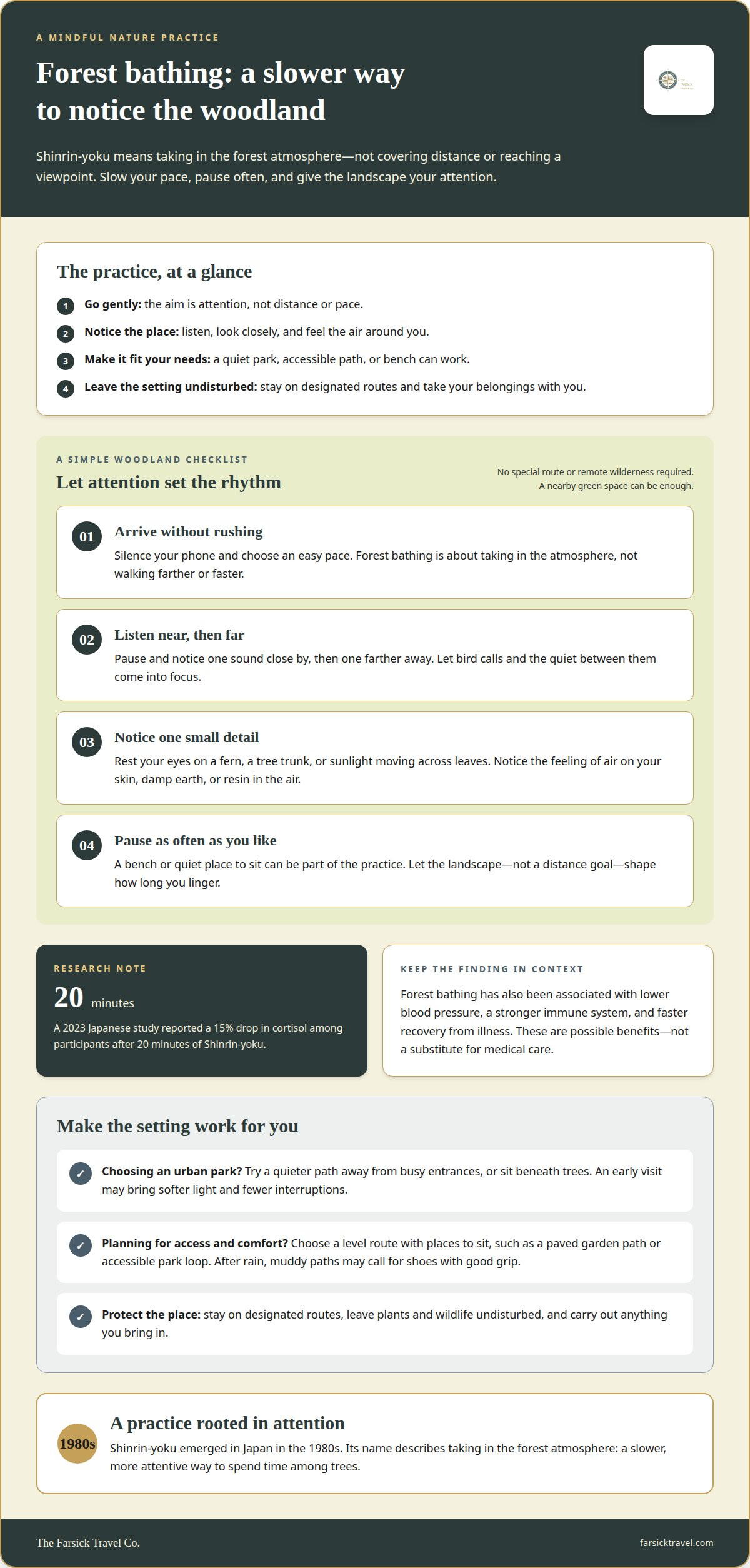
Shinrin-yoku, or forest bathing, emerged in Japan in the 1980s as a mindfulness practice. The phrase describes taking in the forest atmosphere, not bathing in water. Move slowly, pause often, and notice the green layers, shifting light, bird calls, damp earth, and resin in the air. The aim is to connect with the place through attention, rather than cover distance or reach a viewpoint.
Try this simple sequence on a woodland path: silence your phone, walk at an easy pace, then pause to listen. Notice one nearby sound, one farther away, and the feeling of air on your skin. Let your eyes rest on a fern, a tree trunk, or sunlight moving across leaves. A bench can be part of the practice, too. Sitting quietly in a park or forest and paying attention to your surroundings is forest bathing.
A 2023 Japanese study reported a 15% drop in cortisol among participants after 20 minutes of Shinrin-yoku. Forest bathing has also been associated with lower blood pressure, a stronger immune system, and faster recovery from illness. These findings describe possible benefits, not a reason to treat a walk as medical care. Keep the practice gentle: a short pause beneath trees can be enough to begin noticing how the setting affects your feeling and focus.
Urban parks can be a calming alternative when a remote forest isn’t practical. Choose a quieter path away from playgrounds or busy entrances, then walk slowly or sit beneath trees. An early visit may bring softer light and fewer interruptions. After rain, paths can be muddy, so shoes with good grip help. Stay on designated routes, leave plants and wildlife undisturbed, and carry out anything you bring in.
If you have limited mobility, choose a level route with places to sit, such as a paved garden path or accessible park loop. If asthma affects your outdoor plans, bring your prescribed inhaler and choose a setting where you can pause comfortably. For anxiety or depression, time in nature can complement treatment, but shouldn’t replace medication or therapy. A licensed mental health professional can help you consider how it fits your care.
Nature and adventure itinerary planning can make room for quiet woodland time alongside a thoughtful travel rhythm. A morning forest walk followed by an unhurried afternoon gives you space to experience the landscape, rather than simply pass through it.
Nature therapy and ecotherapy
Nature therapy uses contact with natural settings to support well-being and personal growth. Ecotherapy is a closely related term, often used for structured activities that connect people with nature. The terms can overlap: a therapist might lead a walk-and-talk session, while a community program might invite participants to care for a garden.
The difference often lies in the setting and structure, rather than a strict boundary. Nature therapy can refer broadly to time outdoors, while ecotherapy commonly involves purposeful activities in nature. A therapist might use a park conversation to support a client’s goals; a school garden project might focus on shared care, observation, and connection.
Some approaches are guided by a mental health professional. Walk-and-talk therapy brings conversation into a park, trail, or green space, where the therapist and participant move at a manageable pace. Animal-assisted activities offer another approach: time with horses or dogs can create opportunities for emotional support and social interaction. Each has a different focus, so the setting and activity should suit the person’s needs.
Other programs invite participants to learn through challenge. Wilderness and adventure therapy may use activities such as rafting or rock climbing to address behavioral or mental health concerns. A long hike or overnight stay can encourage participants to practice cooperation, patience, or problem-solving in a new environment. These experiences differ from ordinary outdoor excursions because they have an intentional therapeutic or developmental purpose.
Nature-based work may also support people living with specific challenges. Research summaries describe potential improvements in PTSD symptoms, quality of life, hope, and everyday functioning. Nature activities that encourage social interaction and positive feelings may help people with autism, while outdoor experiences may support body connection for people with eating disorders. These are potential areas of support, not promises of a particular outcome.
Pack for the activity and setting when preparing for an ecotherapy trip. For a guided woodland session, bring comfortable layers, sturdy shoes, water, and a small notebook for reflection. A coastal outing may call for wind protection; a garden program may need only clothes suitable for the soil and weather. Keep gear simple, follow the guide’s instructions, and carry out everything you bring.
Choose a program whose purpose, pace, and support match your intentions. A reflective walk differs from a skills-focused wilderness experience, just as a school garden differs from therapist-led care. For anxiety, depression, or other mental health concerns, nature-based activities can complement professional treatment, not replace it.
Nature’s effects on stress and mood
A natural setting can offer a change of pace, sensory detail, and room for gentle movement. Research on walking, gardening, and waterways points to several ways these experiences may relate to stress and mood.
Nature’s Effects on Stress and Cortisol
Cortisol is a hormone involved in the body’s stress response, and outdoor experiences may influence stress-related measures. The American Horticultural Therapy Association states that regular gardening can lower stress hormones by up to 12%. That finding gives a practical example: caring for plants can pair focused attention with gentle activity, even without a wilderness trip.
Walking offers another useful frame. A study found that a 90-minute walk in a natural setting reduced participants’ neural activity in a brain area linked to rumination. This doesn’t make distance the goal. A steady route through a green space, with pauses to notice birdsong or changing light, can create a quieter rhythm than rushing through a list of sights.
Anxiety, Stress, and Depression
Nature may support people experiencing anxiety, stress, or depression by creating space for movement, attention, and connection. The Center for Nature Informed Therapy states that 1 in 4 people experience stress, anxiety, or depression. That figure speaks to how common these concerns are, not to a guaranteed response to outdoor time.
For a grounded outing, choose a familiar park path and walk at a comfortable pace. Notice three details, such as leaves moving, soil after rain, or sunlight shifting across a bench. This simple practice gives your attention a clear focus. Time outdoors can complement care for anxiety or depression, but it shouldn’t replace medication or therapy.
Water can shape the experience, too. Researchers surveyed 18,000 people about how they felt near waterways. The survey topic offers a useful planning cue: consider whether a river path, lake edge, or coastal setting feels more calming than a busier green space. Stay on marked paths and give wildlife room.
Research on Nature and Stress
Research examines different settings and activities, so findings don’t point to one perfect outing. Harvard researchers found that mindful walking in green spaces reduced cortisol levels by 12% more than indoor treadmill walking. For readers, the practical lesson is to choose a walk that allows attention to the surroundings, rather than treating outdoor time as exercise alone.
Choose a quieter park loop and let its pace guide your walk. Notice the sounds, textures, and temperature, then pause if your attention starts to race. A natural setting can be part of a stress-supporting routine, while anxiety and depression still deserve appropriate professional care.
Outdoor meditation and mindful walking
Outdoor mindfulness brings attention to the present through movement, stillness, or simple sensory observation. A park bench, garden path, or quiet forest clearing can become a place to pause. The practice isn’t about achieving a particular emotional state; it’s about noticing what’s around you: birdsong, cool air, changing light, and the ground beneath your feet.
Mindful walking gives your attention a gentle anchor. Choose a familiar route, tuck your phone away, and notice each step as it meets the path. When your thoughts wander, return to a nearby detail, such as wind moving through grass or the texture of a tree’s bark. A slow walk beside a stream can feel different from a busy paved loop, so choose a setting suited to your energy and comfort.
Outdoor yoga and meditation are forms of ecotherapy you can practice on your own. For a simple session, bring a mat to a level patch of grass, take a few steady breaths, and move through familiar poses without forcing a stretch. Seated meditation works just as well: listen for nearby sounds, notice the temperature, and rest your attention on one sensation at a time. Choose ground that’s dry and stable.
Tai Chi can also bring deliberate movement into an outdoor routine. In a quiet garden, move through familiar forms at an unhurried pace, leaving enough space around you to move comfortably. Forest therapy may include walking, sitting, cycling, or hiking while taking in the forest’s sights and sounds. These practices share an attentive quality, though their movements and settings differ.
Timing and preparation shape the experience. An early morning park visit can offer softer light and fewer interruptions. In cooler weather, add a warm layer that’s easy to remove as you move. Bring water, a light mat if you plan to practice yoga, and shoes suited to the path. Stay on established trails, avoid disturbing wildlife, and leave plants where they grow.
Outdoor reflection can include writing or sketching. A 2020 UK study found that expressive writing and sketching outdoors improved creativity scores by 28% compared with indoor journaling. Try noting a few details from a walk, such as leaf shapes, shifting cloud cover, or the sound of water. This gives the mind a specific focus without turning a quiet outing into a checklist.
For a slower escape shaped around walking, movement, and time to pause, plan a nature-focused itinerary.
The Farsick Travel Co.: Nature and adventure itinerary travel planning
The Farsick Travel Co. shapes nature-focused journeys around the pace and experiences you want, from quiet trail time to a fuller adventure itinerary. Turn to nature and adventure itinerary planning when you want outdoor experiences thoughtfully woven into a trip, rather than assembled as a rushed checklist.
Custom travel planning shapes each journey around your preferences. Choose signature hiking and yoga retreats, skillcations, solo travel, bespoke honeymoons, or intentional group and bachelorette trips, with room for restorative pauses, local connection, and mindful time in the landscape.
Ready to plan a custom itinerary or retreat? Contact The Farsick Travel Co.
Make room for a slower kind of travel
Let the next step be small and personal. Choose a setting that helps you feel present, then give it enough space in your day to notice what changes: a quieter morning, an easier pace, or renewed attention. Nature therapy vacations don’t need to be defined by distance or difficulty. They can begin with the experience you want more of, whether that means moving gently, exploring a new landscape, or leaving room for stillness.
As you imagine your trip, consider its rhythm as carefully as its destination. A walk before the day grows busy, time to rest afterward, and respectful encounters with local places can make an itinerary feel more grounded. A meaningful journey leaves room for your own pace and curiosity.
Your next restorative moment can start with a thoughtful choice and grow from there.
Frequently Asked Questions
What is nature therapy?
Nature therapy is an intentional activity that uses contact with natural surroundings as part of a well-being practice. Its purpose distinguishes it from simply being outdoors: someone might reflect while caring for plants or use a walk as structured time for observation. To decide whether an activity fits, consider its aim, how it’s guided, and whether its pace feels comfortable for you.
Can people with limited mobility or conditions like asthma also gain the benefits of a practice like forest bathing?
Yes. Nature therapy can focus on engaging with nature rather than covering a trail. You might spend time in a garden, courtyard, or another outdoor place suited to your mobility and comfort. If you have asthma, plan around your personal needs and familiar routines. Choose a setting and activity that allow you to participate without making distance or strenuous movement the measure of success.
How can this practice benefit people with mental health conditions like anxiety or depression?
Nature-based activities can offer a structured change of scene and a gentle focus for your attention. If open-ended plans feel overwhelming, choose a familiar place, a clear start and finish, and one simple intention, such as noticing seasonal changes. Keep the outing flexible, with permission to pause or leave early. That makes it easier to adapt the experience to changing energy or concentration.
What are the health benefits of outdoor mindfulness practices like forest bathing, or shinrin-yoku?
For a practical session, choose one sensory focus rather than trying to notice everything at once. Follow the movement of leaves, listen for nearby and distant sounds, or observe how light changes during a pause. This gives the practice shape without turning it into a task list. Adapt the experience to a garden, park, or woodland, depending on what feels inviting.
What to Pack for an Eco Therapy Trip?
Pack with care for the place as well as for yourself. A reusable food container, refillable water bottle, and small bag for personal waste can help reduce disposable items during an outing. Add materials required for your activity, such as garden gloves for a planting session. Keep belongings compact, avoid collecting natural objects, and leave the site as you found it.
What types of nature therapy vacation programs are available, such as forest bathing or wilderness retreats?
Programs differ in how much structure and guidance they offer. Some center on individual reflection, while others involve shared activities or instruction. Settings can range from cultivated gardens to remote landscapes. As you compare formats, consider whether you prefer quiet participation, group connection, or a more active challenge. A program’s stated purpose and daily rhythm can help you choose an experience that matches your intentions.
What should I pack and how should I prepare for a nature therapy vacation?
Before packing, note what you hope the trip will make room for, such as solitude, learning, or time with others. Use that intention to shape a realistic daily pace, including unplanned rest. Review the planned activities and pack only what supports them. If the trip includes local communities or wildlife, follow your host’s guidance and approach each encounter with respect and care.
Are nature therapy vacations accessible for people with disabilities or mobility limitations?
Nature-based experiences can be shaped around different ways of participating, though accessibility depends on the specific setting and activities. Consider more than trail distance: time in a garden, a guided conversation outdoors, or an activity based in one location may suit different needs. Think about surfaces, transitions between activities, and places to pause when planning. A thoughtful itinerary makes room for participation at an individual pace.
Article by
Ursula Akin
Ursula Akin created The Farsick Travel Co. to help travelers step away from rigid, multi-stop checklists and step into intentional, deeply rooted experiences. Specializing in custom travel design, solo escapes, and curated retreats, Ursula combines local insights with leave-no-trace ethics to turn wanderlust into seamless, unforgettable journeys.
Disclaimer
The information provided on this website and within our articles is for general informational and inspirational purposes only. While we make every effort to ensure accuracy regarding travel logistics, recommendations, and local details, conditions can change rapidly. Readers are encouraged to verify current travel requirements, weather, safety advisories, and local regulations independently. The Farsick Travel Co. is a travel design and curation service and is not responsible for any actions, changes, or incidents occurring during independent travel.


