
A trip can leave you with more than photographs: it can leave you with a skill you’re ready to keep practicing. A vacation focused on learning a new skill centers on an activity such as cooking, painting, or photography, while leaving room to experience the place around you. The aim is personal growth, not instant mastery.
A skill-focused trip offers a change of pace and a reason to travel beyond familiar sights. The right activity can give your days a gentle rhythm: focused practice, time to rest, and unhurried moments with local culture and landscapes. Choose what you want to learn first, then shape the destination and schedule around it.
A rewarding skill-focused trip can also be restorative, whether you’re drawn to an outdoor adventure or a creative workshop. Practical choices about your goal, course, and schedule help you build a journey around your curiosity, your pace, and what you hope to bring home.
Key Takeaways
- Choose a skill that genuinely interests you, then let it guide the destination and pace of your trip.
- Set a clear, achievable learning goal so you can enjoy progress without expecting mastery by the end.
- Balance practice with space to rest, explore local culture, and take in the landscape at an unhurried pace.
- Consider how adventure activities and creative pursuits, such as surfing or painting, shape the kind of experience you want.
- Explore examples of skill-focused trips to find an approach that fits your interests and travel rhythm.
1. Skill-focused travel as an alternative to bucket-list tourism
A skill-focused trip gives one activity a central place in your itinerary, instead of organizing every day around famous sights. In the United States, you might build a journey around surfing, photography, cooking, or pottery. The aim is to learn through participation, not to master a subject before you leave. The experience can make familiar travel feel more attentive and personal.
Begin with the activity, then choose a destination and course that support it. If you’re interested in photography, decide whether you’re drawn to wildlife, landscapes, or street scenes. That choice helps narrow the setting and teaching style. Write down a realistic learning goal, such as composing a clear landscape image or preparing a dish in a cooking class.
Hands-on classes connect learning with the character of a place. A pottery workshop introduces clay and technique through making; a cooking class lets you handle ingredients and practice methods with an instructor. Leave time after the session to visit a local market or walk nearby. Ask permission before photographing people, and follow local guidance in shared cultural and natural spaces.
Practice doesn’t need to occupy the whole day. Sketch a simple rhythm: a morning lesson, lunch, then a slower afternoon activity that doesn’t compete with your focus. After a surfing class, for instance, you could rest or explore the nearby community on foot. A schedule with breathing room makes it easier to absorb instruction and enjoy the destination beyond the course.
Entry expectations vary by activity and course. A beginner class and an advanced course may require different experience or qualifications, so choose a program that suits your background and intended level.
A local workshop, community class, or shorter introductory course can be an alternative to a trip built entirely around instruction. Scholarships vary by program, so treat them as a possibility, not an expected part of your vacation.
To plan your trip, choose the skill and define your goal, then arrange instruction and travel around the course schedule. Pack for the activity and setting: a photography workshop may call for a camera, while a cooking class may require only comfortable clothing and a way to take notes.
Adventure and learning can involve risks, especially with activities such as surfing or hiking. Review the course’s safety information and your travel insurance terms, including whether the planned activity and equipment are covered. Your experience level, the setting, and the nature of the activity all matter.
Imagining a successful end-of-trip experience
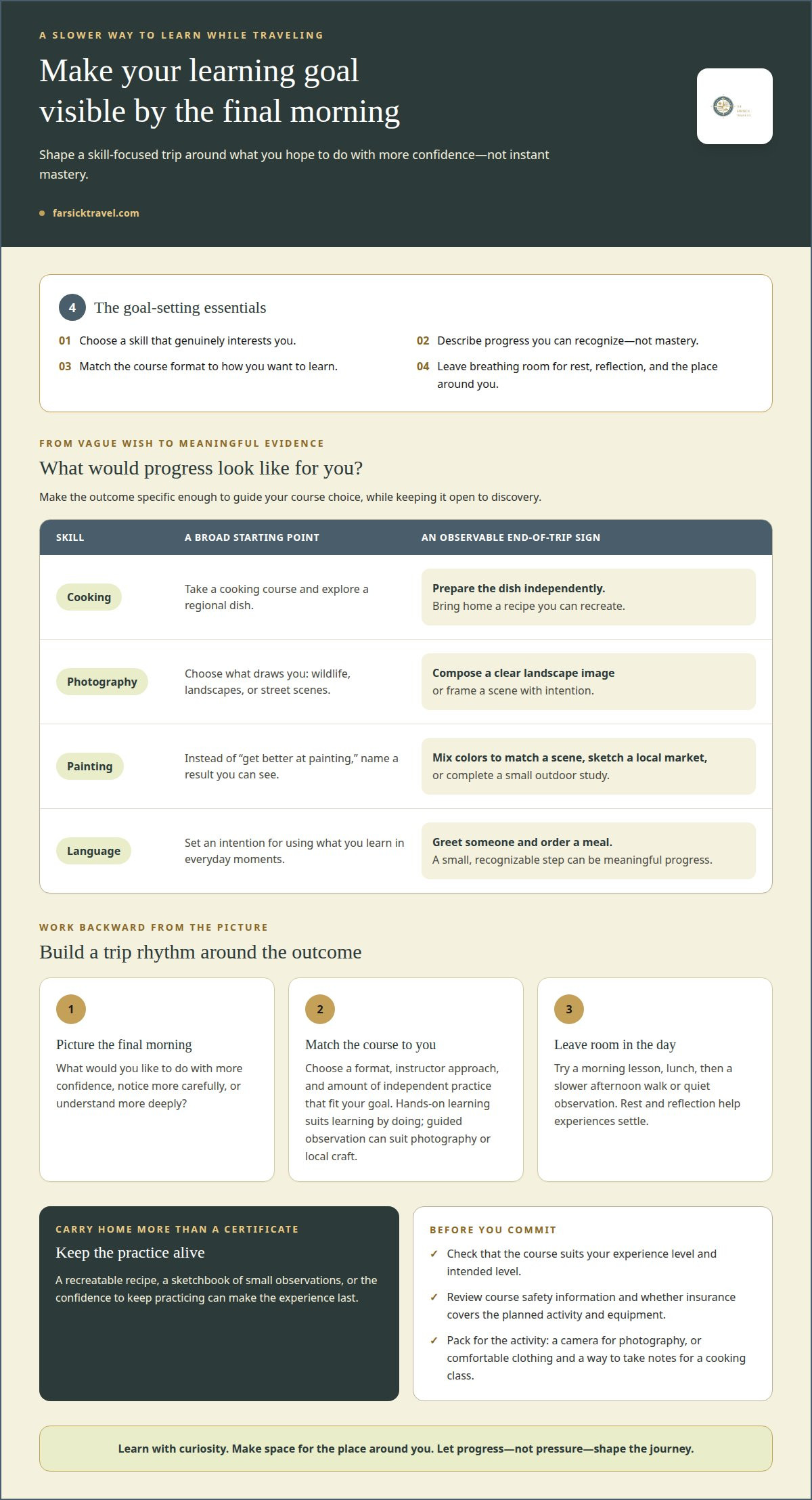
Picture the final morning before choosing a course or destination. What would you like to do with more confidence, notice more carefully, or understand more deeply? Someone taking a cooking course might hope to prepare a regional dish independently. A photography student might want to frame a landscape with intention. Those are meaningful outcomes, even without mastery.
Make your goal observable. Instead of writing “get better at painting,” describe a result you can recognize: mix colors to match a scene, sketch a local market, or complete a small outdoor study. For a language course, success might mean greeting someone and ordering a meal. A clear intention helps you choose a course that matches your curiosity, rather than simply adding activities to your itinerary.
Let a U.S. destination support the experience you want to remember. If you’re drawn to landscape painting, picture a morning class followed by a quiet afternoon observing light across a nearby field or shoreline. Learning can shape how you spend time in a place, while local conversations and customs add context. Approach communities with respect and curiosity, rather than treating them as scenery.
Success also depends on the rhythm around practice. Sketch a typical day before you commit: where will you learn, when can you rest, and what will help you connect with the destination? A ceramics course could be followed by a quiet walk, while a writing workshop might leave space for journaling in a shaded courtyard. Avoid filling every open hour; reflection helps experiences settle.
Use these prompts to make your end-of-trip picture specific:
- Skill: What will you try, such as cooking a dish or composing a photograph?
- Evidence: What will show progress, such as a finished sketch or a conversation?
- Feeling: How should the trip leave you, more curious, capable, or connected?
Then work backward from that picture. Match your goal to the course format, instructor’s approach, and amount of independent practice you want. A hands-on class suits someone who learns by doing; guided observation may fit a traveler drawn to photography or local craft. For a solo journey, thoughtful solo trip planning can align learning time with the pace and places that matter to you.
Finally, decide what you want to carry home beyond a certificate or finished project. A recipe you can recreate, a sketchbook of small observations, or the confidence to keep practicing can make the experience last. When your goal, daily rhythm, and destination reinforce one another, the trip becomes more than a class away from home.
3. Adventure skills
Adventure learning gives a landscape a purpose beyond passing through it. A surf lesson on a U.S. coastline, for example, turns attention toward timing, balance, and changing water. The experience is active, but it needn’t fill every hour. Leave room for a quiet meal, a walk, or simply watching the light move across the shore.
Choose an activity that suits your interests and starting point. If you’re considering a new outdoor skill, look for instruction designed for your experience level. A beginner can focus on foundational techniques before taking on more demanding practice. During a first lesson, listen, try each movement, and notice what feels unfamiliar. Progress can mean greater comfort, not instant expertise.
Adventure skills can also connect with other interests. Pair a guided hike with landscape photography, or take a cooking class after a morning spent exploring on foot. A language course can bring practice into everyday moments: ordering lunch, asking directions, and greeting people you meet. These activities create different ways to engage with a place, rather than viewing it only as a backdrop.
Shape the day around your energy and the conditions. A morning session may suit an outdoor activity when the setting is quieter, while an indoor lesson can offer a slower afternoon rhythm. Local weather and the course schedule should guide the order. Pack practical layers, comfortable clothing for movement, and a small notebook for recording new terms or techniques. Leave natural spaces undisturbed, and follow local guidance around wildlife and shared trails.
Before choosing a course, compare its teaching style with your goal. A beginner lesson should make room for questions and repeated attempts; a more advanced course may expect prior experience. Read the description closely, note what the class covers, and decide how much independent practice you want. If you’re planning several activities, schedule the main learning session first, then build lighter experiences around it.
Adventure travel feels most rewarding when challenge and attention move together. Taking time to learn a skill can change how you notice a coastline, trail, or neighborhood. Instead of racing between places, you begin to recognize details: the sound of surf before a lesson, the texture of a path underfoot, or a new phrase exchanged over lunch. That’s a lasting kind of discovery.
4. Art and painting holidays
An art holiday can make a place feel less like a backdrop and more like a subject worth studying. Imagine setting up near a New England harbor, where weathered boats, painted storefronts, and shifting cloud cover offer changing shapes to interpret. A course gives that close observation structure through demonstrations, guided exercises, and time to develop your own approach. The destination becomes part of the work.
Across the United States, painting courses can take shape in many settings: a desert town in the Southwest, a coastal community, or a mountain region. Each setting presents different colors, textures, and patterns to explore. Before choosing a class, consider what draws your attention. You might want to study reflected light, capture the lines of a landscape, or work with a limited palette. That interest can guide your choice of subject and location.
Course format shapes the journey. Some classes focus on studio technique before moving outdoors, while others make observation and field practice central. Consider how you learn best: do you value demonstrations, individual feedback, or time to experiment between lessons? An instructor might introduce color mixing in the morning, then invite students to interpret a nearby scene. A clear teaching approach helps you understand how the days will unfold.
Local culture can enrich an art-focused trip without becoming a checklist. A small-town gallery, an artist-run space, or a makers’ market can offer insight into how people interpret their surroundings. Take time to look, listen, and ask thoughtful questions when conversation is welcome. If you paint in shared public places, keep paths clear, respect private property, and avoid disturbing wildlife or fragile areas.
- Before choosing: Compare course subjects, teaching format, and the balance of studio and outdoor work.
- For a smoother day: Bring a portable surface and supplies that suit the instructor’s approach.
- Between sessions: Leave time to revisit a subject and notice details you missed at first.
Season and time of day can change the conditions for outdoor painting. Build your schedule around the course plan and local weather; a breezy coast may call for a sheltered place, while a bright afternoon can make a studio session more comfortable. Choose a quieter setting when you want space to concentrate, and keep your materials organized so setup doesn’t take over your practice time.
At the end of the trip, preserve the process as well as the finished work. Keep a short record of the places, techniques, and choices that shaped each piece. A collection of studies can show how your attention changed across the journey and give you a meaningful starting point for painting again at home.
5. Examples of skill-focused trips
The right example depends on what you want to learn and how you like to spend your days. A photography workshop in Maine can center on bird and landscape images, while a cooking course in the American South could explore regional ingredients and techniques. Treat each idea as a starting point: the learning format, setting, and time available shape the trip as much as the skill itself.
In Maine, a photography workshop offers a hands-on way to practice observation and composition. Taking time to interact with a subject can help them feel more comfortable being photographed. That patient approach can guide a portrait session or a wildlife observation from a respectful distance. Choose a workshop whose subject interests you, and leave room to review images rather than moving on immediately.
For a food-focused journey, imagine taking cooking classes in a regional community and learning how local ingredients shape familiar dishes. A class can combine demonstration with preparation, giving you something practical to carry home. If you’re traveling with friends, shared cooking creates a natural way to participate together, while a market visit can add context without turning the day into a packed schedule.
Creative skills can also anchor a quieter escape. A painting workshop near a U.S. coastline might pair studio instruction with time to sketch weathered docks or changing cloud forms. A pottery class in a small town could introduce hand-building before leaving space to explore local craft traditions. In either case, ask what the session emphasizes: technique, experimentation, or a finished piece.
Outdoor learning offers another direction. A beginner sailing course on a U.S. lake, for example, could introduce basic boat handling and time on the water. A guided birding workshop in a national or state park could help you practice observation and identification. Follow local guidance, keep wildlife at a respectful distance, and choose experiences that fit your comfort and experience level.
Where can you find hands-on skill-learning vacations in the United States? Maine’s photography workshop is one example, centered on attentive interaction and making images. You can also look for local cooking, art, or outdoor courses, then plan nearby travel around their schedules and your preferred pace.
Compare a course’s format, length, and skill level before shaping the rest of the trip. A resort setting may place lessons close to accommodations, while a community workshop can bring you closer to local makers. Look for a program that leaves room to practice, rest, and connect with the destination. The best fit gives learning a clear place in your journey without crowding out everything else.
Plan a custom nature and adventure itinerary
The Farsick Travel: Skillcations
The Farsick Travel Co. can shape a skillcation around what you want to learn and how you want to travel. Its Custom Travel Planning brings the course, setting, and daily rhythm together, with room for practice and unhurried time in place. Turn to this service when you have a skill in mind and want help building the wider journey around it.
If your learning trip also calls for time outdoors, Signature Hiking & Yoga Retreats or nature and adventure itinerary planning may suit your interests. Solo Travel Experiences offer another way to give a personal learning goal space to unfold at your own pace.
Carry Your Curiosity Into the Next Chapter
A vacation focused on learning a new skill can change what you notice long after the journey ends. Let the experience become a starting point, not a finished accomplishment. Choose one small way to keep learning at home, whether that means setting aside time to practice, recording new ideas, or sharing what you learned with someone who inspires you.
You don’t need to turn a new interest into another demanding goal. Give it room to grow at a sustainable pace. A few thoughtful choices can help preserve the openness you felt while traveling: stay curious, make time for reflection, and seek experiences that bring you closer to the places and people around you.
If you’re ready to shape a journey around your interests, begin with the experience you want to carry forward. A considered itinerary can bring learning, restoration, and discovery together naturally.
Your next meaningful journey can begin with one curious idea. Let it unfold in its own time.
Frequently Asked Questions
What is a Learning Vacation?
A learning vacation is a trip designed around gaining knowledge or practicing a skill, with travel experiences arranged to support that intention. It might center on a craft, language, outdoor activity, or creative subject. A vacation focused on learning a new skill can be introductory rather than intensive: the point is to participate, learn through experience, and return with something you’re curious to continue.
What is a learning vacation or skill-based vacation?
These terms describe travel where learning is a central purpose, rather than an incidental activity between sightseeing stops. A skill-based trip gives one subject a clear role in the itinerary while leaving space to experience the destination. For example, you might schedule lessons and use free time to explore nearby communities, taste local food, or reflect on what you’ve practiced.
What are popular types of vacations focused on learning a new skill?
Popular formats include creative workshops, cooking courses, language learning, music instruction, and outdoor lessons. Each offers a different kind of engagement: a craft workshop develops hands-on technique, while language learning brings practice into everyday interactions. To narrow your choice, decide whether you want to make something, spend time outdoors, communicate in a new language, or build confidence through guided practice.
How do I choose a reputable learning vacation provider?
Look for a clear description of the learning experience, including its intended skill level, teaching format, schedule, and what participants will practice. The travel plan should make the relationship between lessons and free time easy to understand. The Farsick Travel Co.’s Custom Travel Planning can coordinate a tailored itinerary around your interests, including accommodations and activities, while considering sustainable travel choices.
What should I look for when comparing course length, class size, and skill level?
Choose a course length that leaves room to absorb instruction and practice without making every day feel scheduled. Class size can affect how much individual guidance is available, while the stated skill level helps you judge whether the material suits your experience. Compare learning time with the time available for independent practice, rest, and enjoying the destination at your own pace.
Article by
Ursula Akin
Ursula Akin created The Farsick Travel Co. to help travelers step away from rigid, multi-stop checklists and step into intentional, deeply rooted experiences. Specializing in custom travel design, solo escapes, and curated retreats, Ursula combines local insights with leave-no-trace ethics to turn wanderlust into seamless, unforgettable journeys.
Disclaimer
The information provided on this website and within our articles is for general informational and inspirational purposes only. While we make every effort to ensure accuracy regarding travel logistics, recommendations, and local details, conditions can change rapidly. Readers are encouraged to verify current travel requirements, weather, safety advisories, and local regulations independently. The Farsick Travel Co. is a travel design and curation service and is not responsible for any actions, changes, or incidents occurring during independent travel.


