

What if your first solo trip didn’t ask you to be fearless, only to take the next manageable step? Finding your way through an unfamiliar place, eating alone, or handling a change of plans can feel like a lot to carry. If you’re thinking about overcoming fear of traveling alone, that hesitation deserves care, not a push to ignore it.
You don’t need to turn uncertainty into a grand challenge or plan every hour until nothing can surprise you. A thoughtful first trip can include a clear arrival plan, familiar comforts, and enough open space to find your own rhythm.
This guide will help you pinpoint what feels intimidating, prepare in practical ways without adding pressure, and shape a slower journey around your comfort level. Small choices, from a gentler itinerary to the kind of connection you want along the way, can help you feel grounded while keeping the trip yours.
Key Takeaways
- Identify which parts of solo travel feel uncertain. Nervousness doesn’t automatically mean it’s the wrong choice for you.
- Make arrival, accommodation, daily rhythm, and backup plans easier to picture before you go.
- Compare independent travel, custom itinerary support, and small-group experiences to find the balance of autonomy and connection that suits you.
- Take a gentle first step: name one concern, choose a manageable trip shape, and prepare for key transitions.
- Custom planning can coordinate transport, stays, and activities around your preferences, leaving more room to travel at your own pace.
Overcoming Fear of Traveling Alone Starts With Understanding What Feels Uncertain
You can want the freedom to choose your own pace and still feel uneasy about stepping into an unfamiliar place without a companion. Maybe you picture a quiet dinner by yourself, a confusing arrival, or a plan changing when there’s no one beside you to help decide what comes next. That tension doesn’t mean you’re being inconsistent. It means the idea matters enough to bring questions with it.
Fear often gathers around uncertainty: not knowing what a moment will ask of you or how you’ll respond. Ordinary apprehension isn’t, by itself, proof that solo travel is unsuitable. The term Hodophobia: The Fear of Travel refers to an intense, persistent fear of travel. Recognizing the distinction can help you avoid treating every first-trip worry as the same experience.
Naming a specific concern turns a vague fear into something you can plan around. Start there, rather than pressuring yourself to feel confident all at once.
Which part of traveling alone feels intimidating?
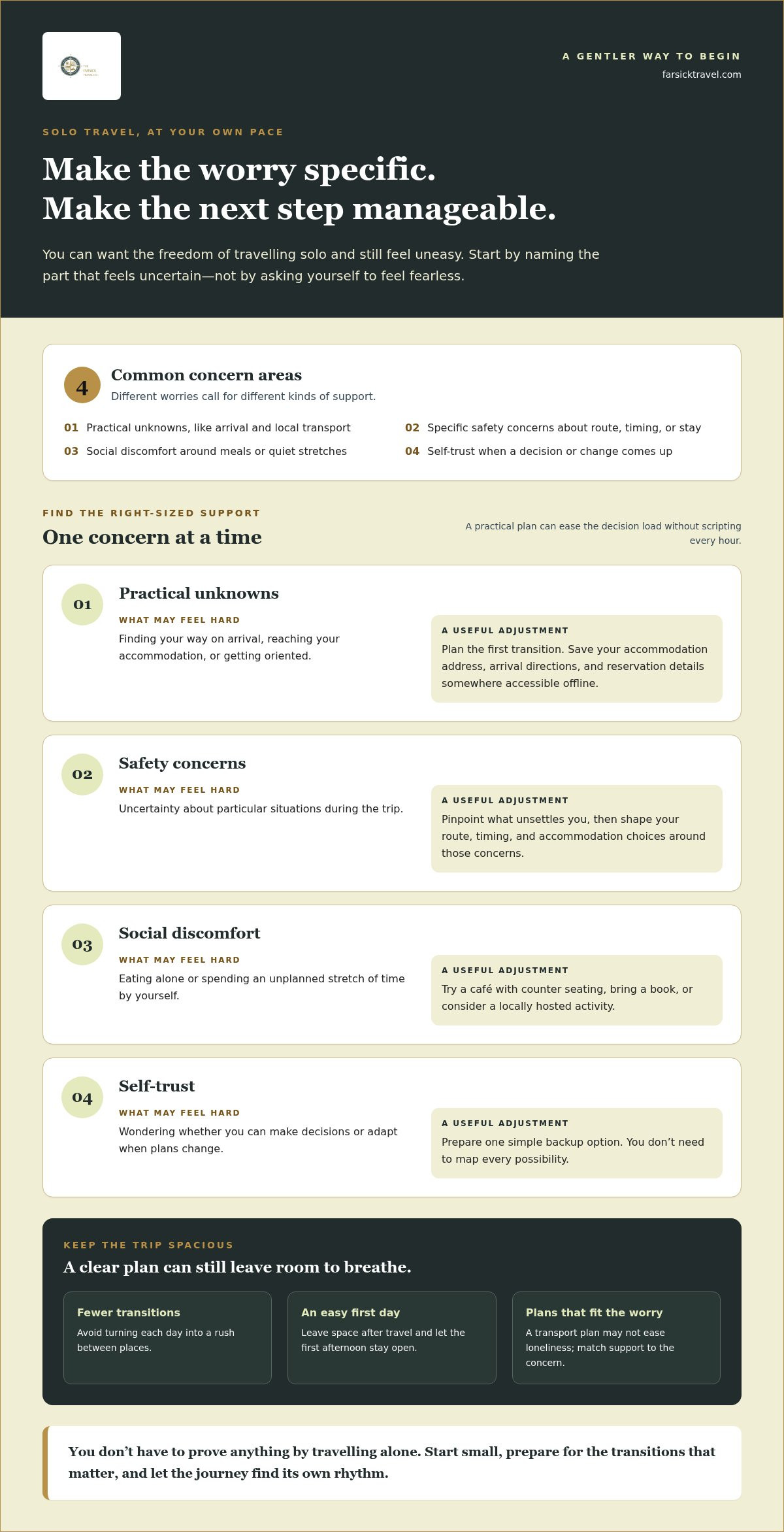
Bring the imagined moments into focus. What scene do you replay most clearly: arriving and finding your way to your accommodation, deciding where to eat, or spending an unplanned afternoon on your own? Each points to a different concern, so broad reassurance may not be what you need. Try sorting what comes up into a few areas:
- Practical unknowns: Arrival, local transport, or getting oriented in a new place may feel more manageable with a clear first-day plan and essential details saved somewhere accessible.
- Safety concerns: Think about which situations specifically unsettle you, then shape your route, timing, and accommodation choices with those concerns in mind.
- Social discomfort: Meals or quiet stretches may feel exposed. Consider whether a café with counter seating, a book, or a locally hosted activity would make those moments more comfortable.
- Self-trust: You may wonder whether you can make decisions or adapt if something changes. Preparing one simple backup option can help without requiring you to map every possibility.
These concerns can overlap, but they aren’t interchangeable. A transport plan won’t necessarily ease loneliness, and adding activities to every day may leave too little room to rest. Focus on what would help with the concern you actually have.
Does feeling afraid mean solo travel is not for you?
Not necessarily. Curiosity and fear can be present together. Readiness doesn’t have to arrive as a sudden feeling of certainty; it can grow as you make choices that feel proportionate to your comfort. You might start with a familiar style of accommodation, plan an easy first day, or leave the first afternoon open.
You don’t have to prove anything by travelling alone, and a trip isn’t a cure for emotional difficulty. If fear feels intense or persistent beyond travel planning, consider seeking appropriate professional support rather than asking a journey to resolve it. For travel itself, restorative pacing can mean fewer transitions, room to pause, and days shaped around how you want to feel, not just what you want to see. Your first step can be small. It can still be yours.
Why Solo Travel Can Feel Overwhelming, and What a Thoughtful Plan Can Change
A trip can feel daunting before it begins because you’re not imagining one decision. You’re imagining a chain of them: how to get from your arrival point to your stay, where to leave your bags, what to do if you’re tired, and how to adjust if a plan changes. Each choice may be manageable on its own. Stacked together, they can make the whole journey feel harder to picture.
Planning can ease that decision load without taking away your independence. The aim isn’t to script every hour. It’s to make the first few transitions clear, so you have more attention for the place itself and more freedom to choose what feels right as you go.
How unfamiliar logistics can amplify first-trip nerves
Picture arriving somewhere new after a long travel day. You still need to get oriented, reach your accommodation, and work out what comes next. If each detail is uncertain, even simple tasks can feel like a test. Knowing your intended route, where you’re staying, and how to reach it can make that first transition more manageable.
A clear first-day plan means fewer decisions to make while you’re finding your feet. Save essential details, such as your accommodation address, arrival directions, and reservation information, somewhere you can access offline. This won’t prevent every change, but it gives you a useful reference if you can’t get online. Keep the plan focused on what you’ll need next, rather than building an elaborate backup for every possibility.
How a slower itinerary makes room to settle in
Frequent accommodation changes and tightly packed days can make a new setting feel like a series of transitions instead of a place you have time to meet. Consider leaving space after a travel day, then letting the next morning begin gently: a quiet walk while the light is soft, time to notice birdsong or the rhythm of local life, and an unhurried afternoon without pressure to keep moving. If you explore natural areas, stay on established paths and leave what you find where it belongs.
Open time isn’t wasted time. It gives you room to rest, find a café or small local spot at your own pace, and notice what draws your attention. Anchor the day with a few dependable plans, then leave the rest flexible. That balance is at the heart of custom itinerary design: shaping the rhythm around what matters to you instead of filling a checklist.
If a blank page of travel decisions feels like too much, custom itinerary planning can organize transport, accommodation, and activities around your preferences while leaving the journey yours. For overcoming fear of traveling alone, structure can be a steady starting point, not a set of instructions you must follow every moment.
Choosing the Right Solo-Travel Structure: Independence, Support, or a Blend
Solo travel doesn’t have to mean doing every part alone, and accepting support doesn’t mean giving up independence. The useful question is how much structure helps you feel free to be present. You might enjoy choosing each day as it unfolds, prefer having the logistics shaped in advance, or want shared experiences woven into time that’s still your own.
Use this comparison to notice what suits you, not as a ranking. The right fit depends on which decisions you enjoy making, the company you want, and how much flexibility feels comfortable.
| Travel structure | Decision load | Social contact | Flexibility |
|---|---|---|---|
| Independent self-planning | You shape the logistics and daily choices. | Mostly chosen moment by moment. | Room to adjust plans as you go. |
| Custom itinerary support | Some planning decisions are shaped around your preferences. | You decide when and how to seek connection. | Personal time can sit alongside planned elements. |
| Curated small-group travel | Shared activities provide more structure. | Connection is part of the experience. | Depends on the itinerary, with personal space still worth prioritizing. |
When does independent travel feel like the right fit?
Independent planning may appeal if you enjoy making daily choices and want room to follow your energy. You could take a morning walk, then spend the afternoon lingering over lunch or exploring a quieter side street. Confidence doesn’t require extroversion, constant activity, or spontaneous decisions at every turn. Plan key transitions, such as arrival and your first night, then leave some days intentionally open.
When might custom planning or a curated group feel more supportive?
If comparing transport options or coordinating each moving part feels draining, custom planning can reduce that load while keeping decisions connected to your preferences. You retain your own pace; the structure gives the journey a considered shape. A curated group offers another rhythm: shared activities and the possibility of conversation, balanced with space to take a quieter moment when you want one.
Solo travel experiences can be shaped around different preferences, rather than one fixed idea of what traveling alone should look like. As you consider overcoming fear of traveling alone, ask what you want more of: unplanned time, prepared logistics, or occasional company. The answer may be a blend, and it can change as you grow more comfortable.
If having the trip’s structure thoughtfully shaped would help, explore custom solo travel planning with The Farsick Travel Co. Support can create breathing room without taking the journey out of your hands.
A Gentle, Practical Path to Your First Solo Journey
You don’t need to plan a grand expedition to begin. Think of preparation as a series of small choices that help the trip feel more familiar before you set out. Keep it practical, then leave enough room for the experience to surprise you.
- Name one concern. Choose the moment that feels hardest to picture, such as arriving, finding your way around, or spending an evening alone. Write down what would make that moment feel more manageable. One clear concern gives your planning a useful focus.
- Choose a manageable trip shape. Consider a place and itinerary that suit your current comfort, not an imagined version of how adventurous you ought to be. You might choose a familiar kind of setting, stay in one base, or make the first journey a short overnight. A slower itinerary leaves space to adjust as your confidence and energy take shape.
- Prepare the transitions. Think through how you’ll get from arrival to your accommodation, how you’ll begin the next day, and what information you’d want close by if plans shifted. When practical, plan to arrive in daylight. Keep the first day light, with room to settle in rather than a string of timed activities.
Prepare for arrival, daily movement, and changing plans
Save your accommodation details, directions, transport steps, and essential contacts in a format you can access offline. Review the route between major stops before you leave, and leave breathing room between transitions so a delay or pause doesn’t immediately unsettle the day. Check seasonal conditions and expected daylight for your chosen setting, since weather and temperatures can change across the day. Pack adaptable layers, comfortable footwear suited to your plans, and the essentials you’ll want within easy reach.
- A lightweight layer you can add or remove as conditions change
- Comfortable, already-worn footwear appropriate for your planned activities
- Offline copies of key travel and accommodation details
- A small day bag for water, personal essentials, and an extra layer
Build confidence through small, chosen experiences
Before committing to a longer journey, try a solo meal, an outing close to home, or an overnight stay. Afterwards, note what helped: perhaps knowing how you’d get there, choosing a relaxed pace, or having a simple plan for the evening. Notice what only added pressure, too. You don’t need a minute-by-minute schedule to feel prepared.
For women considering solo travel, this guide to intentional solitude offers a related perspective on making space for your own company. The useful measure isn’t whether every worry disappears, but whether your preparations support the experience you want. If you’d like help turning your preferences into a journey, explore custom solo itinerary planning with The Farsick Travel Co.
Make Solo Travel Feel More Personal With Thoughtful Planning
A solo trip can be independent without requiring you to carry every planning decision by yourself. Thoughtful itinerary design starts with your preferences: what you want your days to feel like, how much structure helps, and where you’d like room to choose as you go. The result isn’t a fixed script. It’s a considered framework for travelling at your own pace.
The Farsick Travel Co. creates custom itineraries around individual priorities and coordinates transport, accommodations, and activities as part of the plan. Considering these pieces together can reduce the mental load of planning, while you keep the freedom to linger, rest, or follow a local recommendation. One traveler might want a gentle start and an activity planned for later; another might prefer a few dependable anchors with open stretches between them.
What personal itinerary design can take off your mind
Instead of comparing every possibility alone, begin with the experience you want and let the itinerary take shape around it. Maybe you want a nature-based journey with time outdoors and unhurried evenings, or a quieter rhythm with room to explore independently. Coordinating transport, stays, and activities can make the sequence easier to picture, from arrival through the days that follow.
Planning doesn’t remove every unknown, and it shouldn’t remove your choices. Its value is in deciding which details you’d rather have thoughtfully arranged and which you want to discover for yourself. If talking through those preferences would help clarify your next step, you can schedule a travel-planning conversation.
Choose a journey shaped around your own reason for going
Your reason for travelling can guide the kind of experience you create. A nature-focused itinerary might make room for a mindful trail walk and time to appreciate a landscape without rushing through it. A wellness-focused escape can prioritize restorative pacing, while a skillcation centres on learning. Signature hiking and yoga retreats, bespoke honeymoons, and bachelorette trips offer other thoughtfully planned ways to travel, each shaped around a different intention.
A curated small-group experience offers shared activities and opportunities for connection, while solo travel experiences can be shaped around your preferences. A group isn’t a prerequisite for travelling alone, and independence doesn’t require avoiding company. Choose the balance that feels right, with room for personal time and authentic local encounters. In natural spaces, travel with care: follow established paths and leave the landscape as you found it.
Overcoming fear of traveling alone doesn’t require a single perfect itinerary. It can begin with a journey designed around what matters to you, with enough structure to feel considered and enough space to make it your own.
Ready to take that first step? Plan a custom solo itinerary with The Farsick Travel Co., shaped around your pace and the experiences you want.
Let Your First Step Be Your Own
You don’t have to wait for every doubt to disappear before you begin. Let your next step be modest and intentional: write down what you want from time away, then consider what would help you feel ready to take it. Overcoming fear of traveling alone can start before you leave, with a choice that honors both your curiosity and your comfort.
A solo journey doesn’t need to look a certain way to count. It might unfold through quiet mornings outdoors, a new skill learned at an unhurried pace, or moments of shared company balanced with time to yourself. If you’re ready to shape an experience that feels like yours, plan a custom solo journey around your pace, with room to pause, adapt, and discover what you enjoy.
There’s no need to rush toward a bigger adventure. One considered step is still a beginning, and the confidence you build can grow at the rhythm that feels right for you.
Frequently Asked Questions
Is it normal to feel afraid before traveling alone?
Yes, feeling afraid before a first solo trip is common, and it doesn’t tell you in advance how the journey will go. As you work through overcoming fear of traveling alone, write down the exact thought behind the worry, such as “I won’t know what to do if I miss my stop.” A specific concern is easier to address than a general sense of dread. If the fear feels intense or persistent, consider speaking with a qualified mental health professional.
Can I travel alone if I am introverted?
Yes. Solo travel doesn’t require you to be outgoing or spend your days meeting new people. You can choose experiences that suit your social energy, such as visiting a small museum during a quieter period, taking a self-guided walk, or having a brief conversation with a local shopkeeper. Decide in advance what kind of interaction you’d enjoy, and give yourself permission to return to quiet time afterward. Solitude can be part of the pleasure, not a problem to solve.
What should I do if I feel overwhelmed during a solo trip?
Pause and reduce the number of decisions in front of you. If you’re somewhere appropriate to stop, sit down, have some water, and check what you need next rather than trying to plan the rest of the day. You might return to your accommodation, choose a simple meal nearby, or postpone an optional activity. Keep important local contacts and accommodation details accessible so you can refer to them without relying on memory when you feel tired.
How can I feel less awkward eating alone while traveling?
Make the meal feel like a choice, not a test. Try a café at a quieter time, sit at the counter if that feels comfortable, or bring a book or journal to give your hands something to do. Ordering takeaway for a relaxed picnic is another option when appropriate. Choose a place where you can leave no trace and take your rubbish with you. You don’t have to turn every meal into a social experience.
Do I have to plan every detail before traveling alone?
No. Decide which details you want settled before departure, then leave low-stakes choices for the moment. For example, you might choose an evening activity after you’ve rested rather than deciding in advance where you’ll have every meal. Ask yourself whether a planning task makes you feel more prepared or simply keeps you searching. Stop when you have enough information to make the next important decision comfortably.
Can joining a small group still count as solo travel?
Yes. You can set out on your own and choose a small-group activity because you’re interested in sharing that particular experience. A guided nature walk or hands-on class, for instance, can create a point of connection without defining the rest of your trip. You can still choose how to spend your free time, whether that means exploring independently, resting, or joining another shared activity. Solo travel is about shaping the experience around your own intentions.
Article by
Ursula Akin
Ursula Akin created The Farsick Travel Co. to help travelers step away from rigid, multi-stop checklists and step into intentional, deeply rooted experiences. Specializing in custom travel design, solo escapes, and curated retreats, Ursula combines local insights with leave-no-trace ethics to turn wanderlust into seamless, unforgettable journeys.
Disclaimer
The information provided on this website and within our articles is for general informational and inspirational purposes only. While we make every effort to ensure accuracy regarding travel logistics, recommendations, and local details, conditions can change rapidly. Readers are encouraged to verify current travel requirements, weather, safety advisories, and local regulations independently. The Farsick Travel Co. is a travel design and curation service and is not responsible for any actions, changes, or incidents occurring during independent travel.


