

What if your first solo trip felt less like a test of courage and more like a day unfolding at your own pace? Planning my first solo trip can bring a tangle of decisions: where to go, how to get around, and what to do if loneliness or a change of plans catches you off guard. A little structure can help without requiring you to plan every hour.
The most memorable solo journeys leave room to settle in, follow your curiosity, and pause when you need to. A manageable destination, a comfortable place to stay, and a few well-chosen activities give you a steady foundation without turning the trip into a checklist.
This guide will help you choose a first destination that fits your interests and comfort level, prepare for practical details like transport, lodging, and safety, and make space for unplanned moments. You’ll find a calmer way to plan, with enough support to feel prepared and enough freedom to make the journey yours.
Key Takeaways
- Start planning my first solo trip by naming what you want from the journey, then choose a pace that supports it.
- Match your destination to the experience you want, from nature access to cultural connection and ease of getting around.
- Shape your itinerary around essential arrangements, while keeping some activities flexible for discovery and rest.
- Prepare key documents, route notes, suitable clothing, and a simple itinerary to share with someone you trust.
- Custom solo travel planning can bring transport, lodging, and activities together around your preferences, reducing decision fatigue.
Planning My First Solo Trip: Start with the Journey You Want
The thought of travelling alone can bring a rush of possibility, followed by a quieter question: will I feel comfortable once I’m there? Both reactions belong. You don’t need to erase uncertainty or map every hour before you go. Start by defining a first solo trip as a journey shaped around one person’s needs, choices, and pace: yours.
Before comparing destinations or saving activities, pause over the feeling you hope to bring home. Restoration, challenge, curiosity, or quiet can each lead to a different kind of trip. A useful first-trip plan makes the important decisions easier without scripting every moment.
Choose a purpose before choosing activities
Ask yourself what you want to experience, learn, notice, or leave behind. Perhaps you want unhurried mornings on a walking trail, a hands-on skill session with a local instructor, or meals without negotiating anyone else’s schedule. A clear intention helps you choose experiences that feel nourishing rather than merely impressive.
It also gives you a way to filter the pressure to see every famous attraction. Instead of building a day around a packed list, choose one meaningful anchor and let the rest of the day breathe. A locally guided craft session or a quiet route through natural surroundings may offer more connection than rushing between headline sights. In planning my first solo trip, let your priorities guide the setting, accommodation, and activities, not someone else’s idea of a perfect itinerary.
Decide what would make the trip feel manageable
Manageable doesn’t mean effortless, and it doesn’t have to mean staying close to home. It means noticing which parts of solo travel feel unfamiliar and choosing a trip shape that gives you room to settle in. Consider how you feel about finding your way on public transport, communicating across language differences, spending an evening alone, or adapting when plans shift.
- If unfamiliar transport feels daunting, look for a setting where key journeys are straightforward to understand and plan.
- If solitude feels uncertain, build in a few guided or shared experiences, with open time around them.
- If flexible plans make you uneasy, choose a comfortable place to stay and sketch out your first day before departure.
- If you want room to explore, keep some afternoons free instead of filling each one with reservations.
Think of these choices as supports, not limits. You might begin with a familiar style of accommodation, plan how you’ll reach it, and leave the next morning open for a gentle walk or a slow breakfast. Each decision can make the unfamiliar feel more navigable. Confidence grows through preparation and experience, not by proving you can handle everything at once.
Choose the version of solo travel that feels inviting enough to begin. The journey can stretch your comfort zone without asking you to abandon your own rhythm.
How to Plan a First Solo Trip Without Overloading the Itinerary
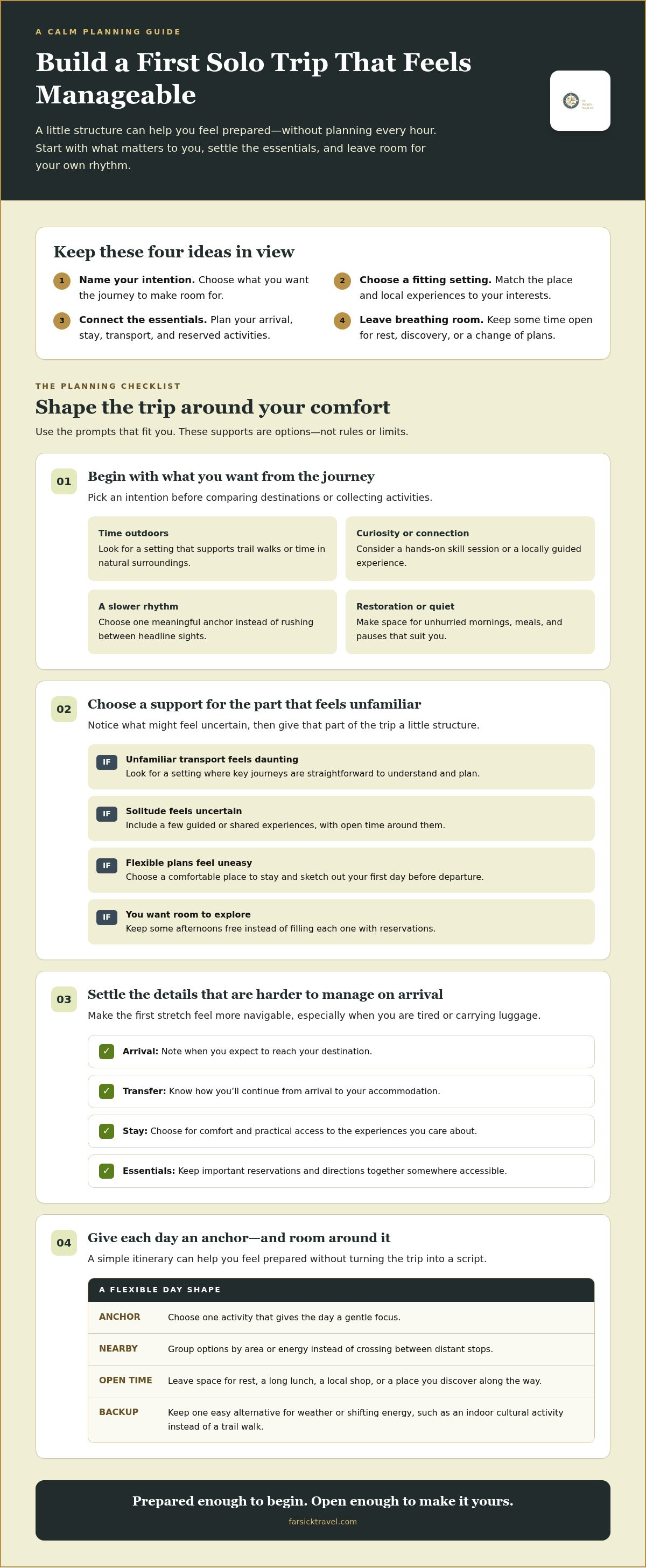
A thoughtful plan gives your trip shape, not a script. Move through the decisions in a calm sequence: name your intention, choose a setting that suits it, map the practical logistics, then leave breathing room. This keeps planning my first solo trip from becoming a second job while still making the important parts feel considered.
- Set your intention. Decide what you want the journey to make room for, such as time outdoors, a new skill, or a slower daily rhythm.
- Select a suitable setting. Consider the surroundings and local experiences that support that intention.
- Map the essentials. Connect your arrival, accommodation, local transport, and any activities that need advance arrangements.
- Leave open space. Keep some hours free for rest, a change of plans, or a place you discover along the way.
Settle the details that would be harder to manage on arrival: where you’ll stay, how you’ll reach it, and any experience that depends on a reservation. Other choices can wait. You don’t need to schedule every meal, walk, or quiet afternoon. A flexible itinerary secures the essentials and leaves space for discovery.
Build a simple itinerary with room to wander
Give each day one anchor activity, then arrange nearby options around it. Group experiences by area or energy instead of crossing back and forth between distant stops. For example, begin with a morning walk while the day is cool, then leave the afternoon open for a long lunch, a local shop, or rest. A slower pace makes room for more attentive encounters.
Keep one easy backup idea for weather or shifting energy, such as an indoor cultural activity instead of a planned trail walk. It’s a gentle alternative, not a second schedule to maintain.
Make transport and accommodation part of the plan
Think through your arrival as part of the itinerary. Note when you expect to reach your destination, how you’ll continue to your accommodation, and whether the transfer feels straightforward when you’re tired or carrying luggage. Save essential directions where you can access them without searching through a crowded terminal or unfamiliar streets.
Choose accommodation for practical access as well as comfort. A quiet base near the experiences you care about may support a nature-focused trip; a well-connected place may suit days built around local culture. Then check that your activities and transport form a coherent route, rather than a collection of disconnected plans.
- Keep essential reservations and arrival details together in one accessible place.
- Allow time between your arrival and your first planned activity.
- Have an alternate idea for weather, fatigue, or a change in mood.
If you’d like help bringing the route, accommodation, and activities into one considered plan, explore custom solo trip planning with The Farsick Travel Co.
First Solo Trip Choices: Match the Destination and Pace to You
The right first destination isn’t necessarily the closest, most familiar, or most talked about. It’s the setting that supports the kind of days you want and feels workable for your comfort level. As you plan, compare the daily experience you’re seeking: easy access to nature, opportunities for cultural connection, or straightforward ways to get around. A quieter setting can be deeply adventurous; a familiar one can still offer fresh perspective.
Choose a setting that supports your comfort and curiosity
Consider what you’d like your days to hold. Do you want space for long walks and early nights, creative learning with a local instructor, wellness practices, or conversations around food and culture? You can balance familiarity with novelty: choose a comfortable base while trying one new activity, or explore an unfamiliar setting through experiences that feel grounded and welcoming. Neither approach is more worthwhile. The best fit is the one that lets curiosity grow without crowding out ease.
Use these broad setting characteristics to compare possibilities, not rank destinations:
- Nature access: Look for nearby trails or outdoor spaces, and consider how you’ll reach them and return comfortably.
- Cultural connection: Seek locally guided experiences, small workshops, or everyday food traditions that invite respectful exchange.
- Ease of getting around: Consider how clearly you can connect your accommodation with the places and activities that matter to you.
- Rest and wellness: Prioritize a quieter pace, restorative activities, and room between plans to reset.
- Creative learning: Explore a skill-based activity that lets you spend time learning from someone with local knowledge.
Wherever you go, approach natural and cultural spaces with care. Follow local guidance, leave outdoor places as you found them, and treat conversations and traditions as invitations, not performances.
Use timing to shape a calmer experience
The same plan can feel entirely different depending on season, daylight, weather, and local rhythms. Before choosing dates, research typical seasonal conditions and check current opening patterns for the places or experiences you hope to visit. Daylight affects how much time you have for outdoor activities; shifting weather can change what to wear and whether a walk feels comfortable. Local events or reduced seasonal hours may also shape the flow of a day.
For popular outdoor areas or cultural sites, an early start can mean cooler air and a quieter beginning, where appropriate. In other places, a less busy weekday or a visit outside peak periods may feel more relaxed. Picture a trail at first light, with damp earth underfoot and birdsong carrying through the trees, compared with a warm afternoon when the path is busier and the shade more welcome. Build your timing around the conditions you prefer, and check local information before setting out.
When planning my first solo trip, let the calendar serve the experience rather than dictate it. A well-matched season, thoughtful timing, and respectful curiosity can turn a destination choice into a rhythm that feels distinctly your own.
Practical First Solo Trip Preparation for Safety, Comfort, and Flexibility
Good preparation isn’t about anticipating every problem. It’s about making important details easy to find, giving someone you trust a basic sense of your plans, and choosing what will help you feel settled. Use this checklist as a starting point, then tailor it to your destination and activities:
- Documents: Check that your identification and any required travel documents are current, and keep essential details accessible in a secure place.
- Reservations: Save accommodation confirmations and details for any activities or transfers you’ve arranged.
- Route notes: Record how you’ll reach your lodging and the key directions for your first outing.
- Clothing: Check the forecast and expected terrain, then pack layers and footwear suited to your plans.
- Shared itinerary: Send a trusted person your basic schedule, accommodation information, and a way to reach you.
Before departure, review current destination conditions through relevant official travel information and local sources. For an international trip, check the appropriate government travel advisory and the destination’s official guidance. Close to your travel date, look for updates that could affect transport, access, weather, or planned activities. Keep important confirmations and route notes somewhere you can reach even if you don’t have reliable internet access.
Prepare for the first arrival and the first evening
Choose your arrival route in advance and note how you’ll get from your arrival point to your accommodation. Consider your expected arrival time, available daylight, local transport patterns, and the weather. If you’ll arrive after dark or in poor conditions, a simpler transfer and a clear check-in plan can help you settle in with less friction. Keep the first evening light: unpack, find a nearby meal, and let your body adjust before taking on a demanding activity.
Pack for the actual journey, not every possibility
Build your bag around your planned activities, the forecast, and changes in terrain or temperature. Comfortable walking footwear matters if you expect to spend time on uneven paths; light layers can help as the day warms or cools. Keep essentials such as directions, confirmations, and any items you rely on easy to reach.
- Pack clothing suited to the expected weather and your activities.
- Bring a refillable water bottle and a small bag for carrying out any litter on outdoor outings.
- For nature walks, follow local guidance, stay on appropriate paths, and leave plants, wildlife, and natural features undisturbed.
- Leave space for a comfort item that helps you rest well, rather than packing for every imagined scenario.
A considered plan can make these decisions feel more manageable without making the journey rigid. The Farsick Travel Co. can shape a custom solo itinerary around your pace, practical needs, and the experiences you want to make room for.
How Custom Solo Travel Planning Can Make a First Trip Feel Easier
A first solo journey has many moving parts, and making every decision alone can take energy away from imagining what the trip might feel like. Custom planning brings those pieces into conversation: your reason for going, preferred pace, comfort level, transport, accommodation, and the experiences you want to make room for. The aim isn’t to make the journey rigid. It’s to help the practical details support the experience you actually want.
Turn personal priorities into a coherent journey
A considered itinerary begins with what matters to you. If you want time in nature but feel more comfortable with a clear daily structure, the plan might balance a guided outdoor activity with a quiet afternoon. If cultural connection is your priority, local activities can shape the route rather than being added as an afterthought. Your comfort level also informs the choices, from how you move between places to how much open time you leave in each day.
The Farsick Travel Co. offers custom travel planning and solo travel experiences shaped around individual preferences, with coordination of transport, accommodations, and local activities. Bringing these elements together can reduce decision fatigue and help the itinerary feel connected, instead of like separate reservations competing for your attention.
For a closer look at how personal priorities can guide an itinerary, explore Beyond the Checklist: The Art of Custom Itinerary Design Services. The central idea is simple: the structure should serve your trip, not the other way around.
Choose a curated experience that fits the reason for going
A solo trip might be a personal reset, a chance to spend more time outdoors, or an invitation to learn something new. Nature-based travel and wellness experiences can suit travelers seeking a slower rhythm; a skillcation can give curiosity a practical focus. The Farsick Travel Co. offers signature hiking and yoga retreats in a curated format, while solo travel planning can be shaped around your own aims and pace.
Other curated formats serve different occasions: bespoke honeymoons are designed for two, while intentional group and bachelorette trips center shared experiences. The right shape depends on who is travelling and what the journey is meant to hold. Each can be thoughtful without relying on a packed schedule or a procession of stops.
If you’re planning my first solo trip and would value support connecting your priorities with the practical details, share your solo travel priorities with The Farsick Travel Co. A personally tailored itinerary can give your plans a clear foundation while leaving room for the moments that make a journey feel like your own.
Let Your First Solo Journey Begin with One Clear Choice
You don’t need to become a different person to travel alone. You only need to choose a first step that feels true to you: the kind of place that draws your curiosity, the pace that lets you feel present, or the small challenge you’re ready to meet. Planning my first solo trip can begin with a simple question: what would make this journey feel like mine?
Let the answer guide your next decision. You might start by shaping a few days around a personal interest, or by choosing a setting that gives you space to recharge. The details can come together gradually. There’s no prize for making the plan more complicated than it needs to be.
If you’d like a thoughtful partner as you shape the experience around your priorities, take the next step at your own pace.
Your first solo trip doesn’t have to be perfect to be meaningful. It just has to leave room for you to arrive as you are, and discover what comes next.
Frequently Asked Questions
Is solo travel safe for a first-time traveler?
Solo travel can be safe for a first-time traveler when the destination and plans suit their circumstances, but no itinerary can remove every risk. Before you go, review current official travel guidance and local updates, and learn how you’ll get from your arrival point to your accommodation. Keep key contact and reservation details accessible. If conditions or your instincts change, it’s reasonable to adjust your plans rather than follow an itinerary that no longer feels right.
How do I avoid feeling lonely on my first solo trip?
You can make room for company without giving up the independence of travelling alone. When planning my first solo trip, choose one or two activities where conversation can grow naturally, such as a small workshop or guided walk, rather than expecting every interaction to become a friendship. Familiar rituals can steady quieter moments: visit a café for breakfast, keep a journal, or call someone you care about. Let solitude be an option, not an obligation.
What should I pack for a first solo trip?
Pack for the experiences you’ve chosen and leave out items included only for unlikely scenarios. If your plans involve a mix of indoor activities and outdoor walks, pack footwear you’ve already worn comfortably and clothing that can be layered. Keep a small day bag ready for the essentials you’ll use while exploring. Before leaving, check your bag against your plans: if an item doesn’t serve an activity or your comfort, consider leaving it behind.
Should I plan every day of my first solo trip?
No, you don’t need to decide every day in advance. Arrange the details that would be harder to manage on arrival, then let the rest respond to your energy and curiosity. For instance, reserve a place in a hands-on class if it’s central to your trip, but leave the hours afterward open. That way, an absorbing conversation, a restful pause, or an appealing local discovery can change the day for the better.
How can I feel comfortable eating alone while traveling?
Start with the dining setting that feels easiest, then decide whether you want to stretch your comfort zone. A casual lunch counter can feel less formal than a long dinner, while a market lets you choose a small meal and find a place to sit. If you’d like something familiar, bring a book or journal; if you’re curious, ask about a local dish. Eating alone is simply a way to enjoy a meal on your own terms.
What should I do if my solo travel plans change?
Pause, check what has changed, and handle the next practical decision first. If a weather shift makes an outdoor activity unsuitable, look at whether you can reschedule it or spend the time somewhere sheltered. For a transport disruption, contact the relevant provider and update anyone who’s expecting you. Keep confirmation details handy so you can make changes without searching through old messages. A revised plan is still your trip, not a failure of preparation.
Can I meet people while traveling solo without joining a large tour?
Yes. Look for a small, interest-led experience that gives people a natural reason to connect, such as a cooking session, craft workshop, or guided outdoor activity. Read the description so you understand the format and what the experience involves before committing. You might share a morning activity, then spend the afternoon independently. This creates an easy point of connection while keeping the overall trip personal and unhurried.
Article by
Ursula Akin
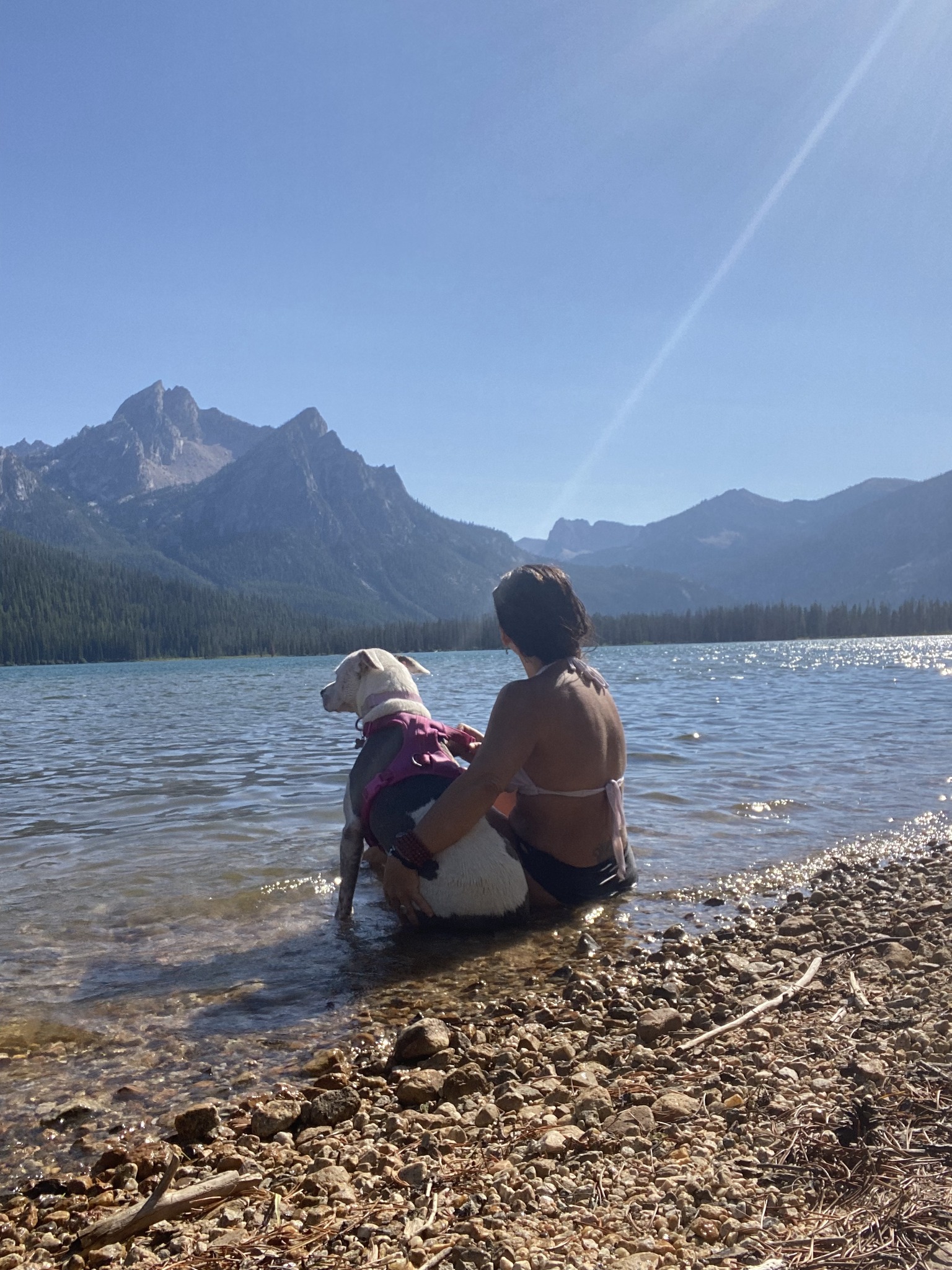
Ursula Akin created The Farsick Travel Co. to help travelers step away from rigid, multi-stop checklists and step into intentional, deeply rooted experiences. Specializing in custom travel design, solo escapes, and curated retreats, Ursula combines local insights with leave-no-trace ethics to turn wanderlust into seamless, unforgettable journeys.
Disclaimer
The information provided on this website and within our articles is for general informational and inspirational purposes only. While we make every effort to ensure accuracy regarding travel logistics, recommendations, and local details, conditions can change rapidly. Readers are encouraged to verify current travel requirements, weather, safety advisories, and local regulations independently. The Farsick Travel Co. is a travel design and curation service and is not responsible for any actions, changes, or incidents occurring during independent travel.


