

A year-end reset doesn’t need a dramatic escape. It can begin with a quiet morning hike. A practical way to spend the final weeks of the year resetting mind and body is to step outside early, then carry that slower rhythm into the rest of your day with nourishing food, reflection, and manageable goals. Small shifts can help you notice what you need before the calendar turns.
The holidays can leave you stretched between obligations, shorter days, and pressure to start again with a perfect plan. Wanting a reset is understandable, but restoration doesn’t have to become another demanding project.
Here are simple ways to nourish your body, care for your mental health, and set goals that feel possible in real life. You’ll also see how a morning walk in nature can help you pause, pay attention, and reconnect with the world beyond your to-do list.
Key Takeaways
- Make hydration and nourishing snacks part of your everyday rhythm, so caring for your body feels practical rather than complicated.
- Protect space to recharge after the holidays while keeping a gentle connection to the people and places that support you.
- Choose small, specific self-care goals that fit your real routine, then build on them gradually.
- Pause to notice your thoughts and feelings, and use reflection to decide what deserves your attention next.
- Try a morning nature walk to begin the day with fresh air, steady movement, and a quieter focus.
1. Hydration and nutritious snacks
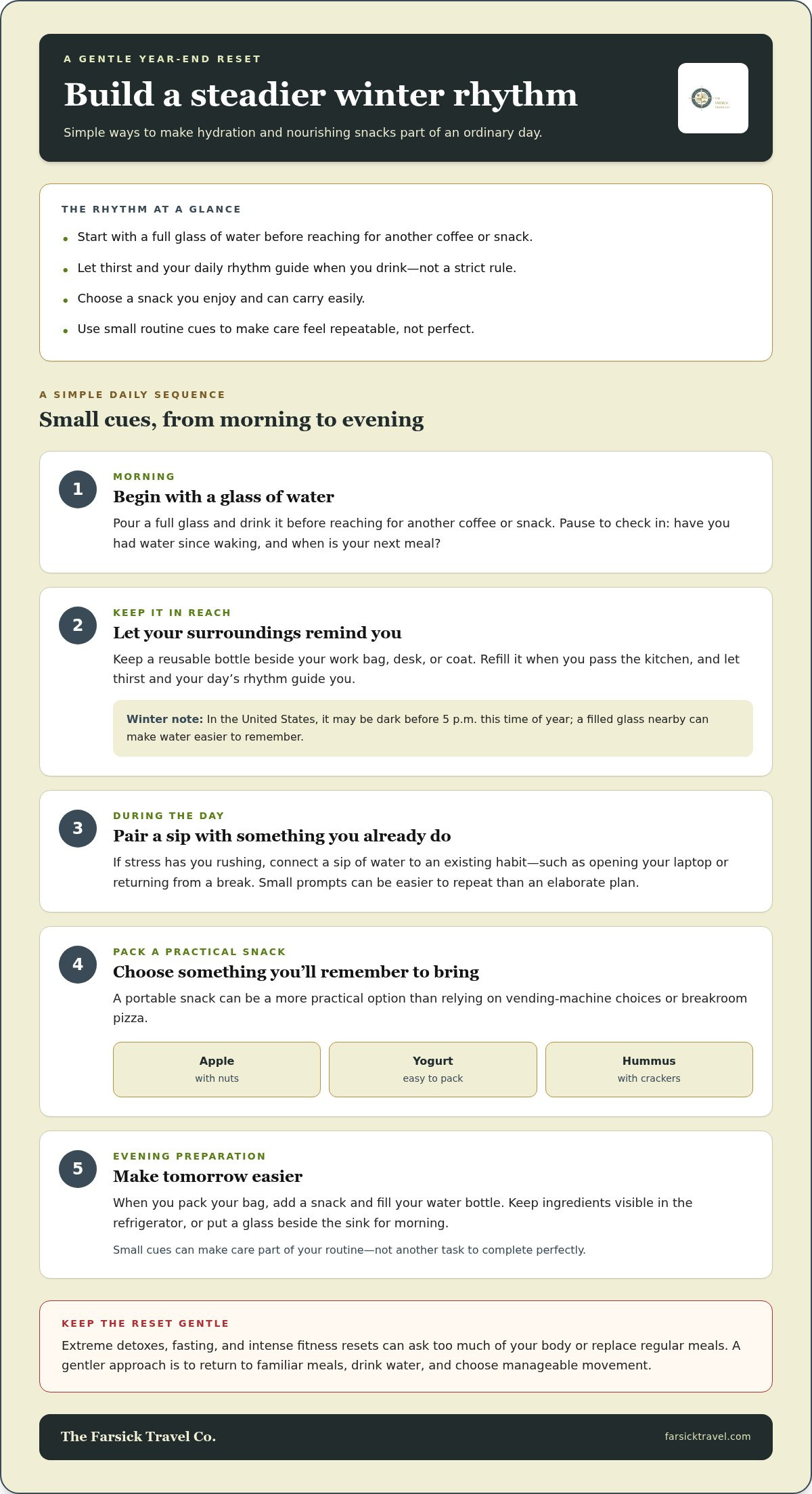
Start with a simple reset: pour a full glass of water and drink it before reaching for another coffee or snack. Pair that pause with a quick check-in: have you had water since waking, and when is your next meal? In the United States, winter routines can mean long stretches indoors, while it may still be dark before 5 p.m. this time of year. A filled glass nearby makes hydration easier to remember.
Let thirst and your daily rhythm guide when you drink, rather than turning hydration into another strict rule. Keep a reusable bottle beside your work bag, desk, or coat, and refill it when you pass the kitchen. If stress has you rushing through the day, pair a sip of water with an existing habit, such as opening your laptop or returning from a break. Small prompts are easier to repeat than an elaborate reset plan.
Food can support a steadier rhythm, too. Pack a snack for your work shift instead of relying on vending-machine options or breakroom pizza. An apple with nuts, yogurt, or hummus with crackers offers a few practical choices. Choose something you enjoy and can carry easily. The best snack is one you’ll remember to pack. Nourishing your body can also make room for a calmer mind.
Make preparation simple. When you pack your bag in the evening, add a snack and fill your water bottle. If you work near a breakroom, set aside fruit or another convenient option before the week begins. Keep ingredients visible in the refrigerator and put a glass beside the sink for the morning. These cues make self-care part of your routine, not another task to complete perfectly.
Extreme detoxes, fasting, and intense fitness resets can undermine steady nourishment by replacing regular meals or asking too much of your body at once. A gentler approach is to return to familiar meals, drink water, and choose manageable movement rather than punishing exercise.
Free or low-cost winter wellness options in the United States can include walking in a public park, visiting a library for quiet journaling, or stretching gently at home. A video call with a friend offers connection without the cost of dinner or a movie. Choose what suits your energy, the weather, and your access that day.
Treat these choices as care for the whole person: mind and body are connected, and nourishing one supports the other. A snack or glass of water doesn’t need to solve a difficult day to matter. It can be a modest response to what you need in the moment. Notice how a simple, familiar choice feels, and keep your approach flexible. The aim is not perfection, but a supportive routine that leaves room for changing energy and circumstances.
2. Prioritizing mental health after the holidays
After holiday gatherings, errands, and disrupted routines, make room for recovery instead of filling every open hour. Choose one or two days each week for quieter plans, lighter expectations, and activities that help you feel present. A slower day might mean reading at home, preparing a simple meal, or walking before evening. Give your attention somewhere calm to land, especially when stress has made the season feel crowded.
Sleep can shape how steady you feel during busy weeks. Most people need 7-8 hours of sleep to feel well-rested, and better sleep supports immunity, emotional health, and a sense of stability. Keep a consistent bedtime and wake time, rather than relying on weekend catch-up. Eating dinner around the same time each day can also help support a more regular sleep rhythm. A simple nightly ritual, such as putting away devices and reading a few pages, gives the day a clear ending.
Connection doesn’t have to mean another full evening out. Make one plan each week, such as a short video call with a friend or volunteering locally. If conversation feels like too much, choose a quiet activity in a public place. Read at a coffee shop or journal at a library, where you can be around others without needing to socialize. Modest plans help keep your days connected to the world beyond home.
Give your thoughts somewhere to go. Write worries, errands, and unfinished tasks in a notebook or phone note, then separate what needs attention today from what can wait. For example, put a grocery run under “this week” and a family message under “today.” A written list can make the next step easier to see when concerns compete for your attention.
When a destructive thought pattern starts repeating, try a brief mental cue such as “enough!” Pause, name what you’re feeling, and redirect your attention to one practical action. You might step outside, make tea, or send a supportive message. The cue isn’t a demand to ignore difficult feelings. It’s a way to interrupt the loop and choose what to do next.
For a low-pressure weekly plan, protect one quieter day, schedule one point of connection, and choose a consistent bedtime. Keep the plan visible on a calendar. If a gathering or deadline disrupts your routine, return to the next manageable step instead of treating the whole week as lost. Gentle structure can make room for rest, company, and everyday responsibilities.
3. Setting manageable self-care goals
Reflect on the past year by writing what you’re proud of, what drained you, and what you want more of. Turn one answer into a clear next step, such as calling a parent once a week or walking three times per week. A useful way to think about how to spend the final weeks of the year resetting mind & body is to choose changes that support the life you actually have, not an idealized routine.
During the holidays, set boundaries by deciding what you can realistically attend before accepting invitations. Tell family, friends, and coworkers what works for you, then protect time for rest, meaningful connection, and essential tasks. If you’re considering a new goal, ask how to spend the final weeks of the year resetting mind & body without adding pressure. The answer may be one change that makes your days feel more like your own.
Make goals small enough to fit an ordinary day, not just an ideal one. A daily self-care goal could be a mindful walk, an easy meal you enjoy, or a few minutes away from your phone. Other examples include taking a social media break, decluttering one drawer, scheduling an annual screening, or making a therapy appointment. Start with one action. A long list can turn care into another source of pressure.
For movement, name the activity and when it fits. Try walking three times per week, adding a short walk to an existing errand, or practicing yoga or meditation 3 to 5 days a week. Another option is spending at least 30 minutes each day moving your body and getting outside for 10 minutes daily. Treat these as possible starting points, not a test you must pass. If a packed day interrupts your plan, resume with the next manageable opportunity.
Keep goals specific and easy to track. “Save 5% of each paycheck” gives a clearer action than “be better with money.” “Stop drinking soda by March 1” sets a concrete deadline. Work backward from the outcome you want, then identify a small step for this week. For example, if your goal is to prepare more meals, choose one easy recipe and set aside time to make it.
Boundaries work best when they include a practical alternative. If a full evening gathering feels like too much, suggest a shorter visit or a video call. If work tasks compete with family plans, write down what needs doing this week and this month, then break the work into daily chunks. Limit non-urgent phone notifications for a few hours so you can focus on a chosen task.
Make room for pleasure, too. Each day during the holiday season, write a gratitude and pride list that notes a small moment or effort, rather than waiting for a major achievement. Choose one purposeful activity each week that has nothing to do with work, such as cooking a favorite recipe or visiting a quiet park. After planned tasks, give yourself permission to play. A sustainable goal leaves room for both intention and enjoyment.
Checking in with your thoughts and feelings
A brief pause can interrupt the rush of a crowded day. Set aside five minutes, step away from your task, and notice what’s happening without judging it. Name the feeling, such as irritation, worry, or relief. Then ask what might help in this moment: a glass of water, a quieter room, or a message to someone you trust. Naming the feeling gives you a clearer place to begin.
For a shorter reset, take a one-minute mental check-in between tasks. Notice your posture, unclench your jaw, and ask what needs your attention next. If your mind is jumping between errands and unfinished work, write each thought on paper. Circle one action you can take now, then leave the rest for a planned time. This pause can help you choose a response instead of reacting automatically.
Try a breathing pattern when stress makes it difficult to settle. Begin with five deep breaths. Then inhale through your nose for four seconds, hold for two seconds, and exhale through your mouth for six seconds. Repeat the pattern five times. Sit somewhere comfortable, keep your shoulders relaxed, and stop if the exercise feels uncomfortable. The steady rhythm gives your attention a specific point to follow.
A screen break can give your mind room to reset. Step away from your phone or computer for two to five minutes, look out a window, stretch, or refill your tea. When you return, choose one task rather than reopening every tab. For example, answer one necessary email before checking messages again. An intentional pause creates a small boundary between constant input and focused work.
Writing can turn a swirl of thoughts into something you can examine. Divide a notebook page into “what’s on my mind” and “what I can do next.” If you’re worried about a family visit, note the concern, then write one useful step, such as deciding when you’ll leave. This isn’t about forcing a positive spin. It helps you see what’s within reach and what may need more support.
At the end of the day, jot down one moment that felt difficult and one that brought ease. A chilly walk, a kind conversation, or finishing a small task can offer clues about what affects your mood. If feelings of depression are difficult to shake, schedule a doctor’s appointment. Seeking support is a practical next step, not a failure of self-care.
A five-minute pause can offer a brief reset during a stressful day, giving you a deliberate moment to step back before continuing.
5. Morning hikes and reconnecting with nature
A morning nature hike offers a grounded way to begin a year-end reset. Before the day fills with messages and obligations, choose a trail, park path, or quiet greenway nearby. Early light, cool air, and birdsong create a different pace from indoor routines. Walk without aiming for a set distance. Let the path give your attention somewhere steady to rest.
Keep the outing simple enough to repeat. Choose a route that suits your energy and the morning’s conditions, then check the local forecast and trail information before leaving. In winter, daylight is shorter, and a shaded path may feel colder than a sunny neighborhood loop. Wear adjustable layers, comfortable shoes with good traction, and a hat or gloves if the weather calls for them. Bring water and a small snack for afterward.
Give the walk a gentle rhythm: start slowly, notice what changes around you, and pause when something catches your eye. You might hear wind moving through bare branches, spot frost along a path, or notice warmer light reaching an open field. Keep your phone in your pocket unless you need it for directions or a practical check. The aim isn’t to document every moment, but to experience one morning more attentively.
Choose less-busy paths when you can, and treat the landscape as a place to care for, not a backdrop. Stay on established trails, carry out what you bring in, and give wildlife space rather than approaching for a closer look. If a path passes through a community or near a gathering place, move quietly and respect signs and shared spaces. A mindful visit leaves the place as you found it.
After the hike, make a small transition before returning to your schedule. Sit with a warm drink, stretch gently, or write down one detail you noticed, such as the scent of pine or the first birdcall. That specific memory can help the experience stay with you beyond the trail. If the weather is harsh, choose a sheltered path or take a short walk when conditions feel comfortable.
Treat the morning walk as an invitation, not another resolution to measure. One unhurried outing can help you notice what kind of movement and setting restore your focus. Repeat it when it suits your energy, or vary the route to discover a quieter spot close to home. Leave space afterward for breakfast, reflection, or an unhurried start to the day.
Plan a nature-centered itinerary with The Farsick Travel Co.
The Farsick Travel Co.: Custom Travel Planning
The Farsick Travel Co. can shape a restorative escape around the pace and experiences that matter to you. If time outdoors helps you reset, Custom Travel Planning can bring together nature-focused days, quieter local encounters, and room to slow down without turning the trip into a packed checklist.
Choose Signature Hiking & Yoga Retreats for guided movement and time to unwind, Solo Travel Experiences for a journey on your own terms, or Skillcations built around learning something new. Each offers a different way to step out of routine and reconnect with what feels meaningful.
If a thoughtfully planned nature escape feels like the right next step, contact The Farsick Travel Co.
Carry Your Reset Into the Year Ahead
A reset doesn’t need to end when the calendar changes. Let it guide how you choose your pace, notice what restores you, and make room for what matters. A quiet morning outdoors or an unhurried afternoon can remind you that meaningful change often begins with attention, not intensity.
Choosing how to spend the final weeks of the year resetting mind and body can also help you imagine the experiences you want more of. Think beyond a packed itinerary. Consider what you’d like to feel, learn, or reconnect with, then let that intention guide your next plans.
Give yourself permission to begin with one small choice, then let the next step emerge in its own time. Travel can make room for a different rhythm, deeper connection, and fresh perspective.
Carry that intention forward. The year ahead is yours to shape with care.
Frequently Asked Questions
What are practical ways to reset your mind and body during the final weeks of the year?
Choose a transition ritual that separates obligations from personal time. After work, put your phone aside, change into comfortable clothes, and notice how your body feels. Then decide what you need next, whether that’s quiet, company, or a simpler evening. A ritual that’s easy to repeat is more useful than a dramatic overhaul. Adjust it on busy days instead of treating a missed routine as failure.
How can I create a realistic year-end wellness routine in two to three weeks?
Build the routine in stages over two to three weeks. Start by noticing which parts of your day feel rushed or draining, then choose one change that addresses a real friction point. Once it feels familiar, add another practice that fits naturally, such as preparing your workspace before bed or pausing briefly between commitments. At the end, keep what feels sustainable and revise what consistently clashes with your schedule.
What mindfulness or journaling exercises help reduce year-end stress?
Try a brief sensory check-in: notice the room’s temperature, nearby sounds, and how your feet meet the floor. For journaling, describe a demanding moment, what you needed then, and what you might try next time. Keep the writing specific, such as “I needed a quieter arrival before dinner,” rather than judging yourself. These prompts can turn a tangled impression into clearer insight for future choices.

Article by
Ursula Akin
Ursula Akin created The Farsick Travel Co. to help travelers step away from rigid, multi-stop checklists and step into intentional, deeply rooted experiences. Specializing in custom travel design, solo escapes, and curated retreats, Ursula combines local insights with leave-no-trace ethics to turn wanderlust into seamless, unforgettable journeys.
Disclaimer
The information provided on this website and within our articles is for general informational and inspirational purposes only. While we make every effort to ensure accuracy regarding travel logistics, recommendations, and local details, conditions can change rapidly. Readers are encouraged to verify current travel requirements, weather, safety advisories, and local regulations independently. The Farsick Travel Co. is a travel design and curation service and is not responsible for any actions, changes, or incidents occurring during independent travel.


